Best Plasma Cutters for Gouging, Mesh Cutting and Rust Removal
You work faster and cleaner when your plasma cutter matches the job. This guide compares four plasma cutters for gouging, mesh cutting and rust removal, with options for garage mechanics, weekend fabricators and small-shop users who need cleaner starts on rusty, painted or expanded metal. You’ll see picks that prioritize raw cutting power, smart controls, workshop reliability and value, so you can choose a cutter that improves your workflow instead of adding more grinding and rework.
Quick verdict: Choose the YESWELDER CUT65 if you want the strongest all-around capability and dedicated modes. Pick the Reboot RBC6000 if value matters most. The ARCCAPTAIN CUT60 is the easiest garage-ready choice, while the ARCCAPTAIN CUT55 is best if app control and compact size matter to you.
Top Picks
|
Category |
Product |
Score |
|---|---|---|
|
🏆 Best Overall |
94/100 |
|
|
💰 Best Value |
90/100 |
|
|
🎯 Best for Garage Mechanics |
88/100 |
|
|
🚀 Best Smart Features |
86/100 |
How We Chose These Plasma Cutters
We focused on real-world gouging and cutting performance, looking at maximum cut and clean cut thickness, pilot arc reliability on rusty or expanded metal, and dual voltage flexibility for workshop and jobsite use. Portability and build quality mattered because you need a unit you can move without sacrificing durability.
Consumable availability and cost were included since ongoing use depends on replaceable tips and nozzles. Safety features such as non-high frequency starting were important for shops with sensitive electronics.
Finally we weighed user feedback on reliability and support and compared prices across the group, which range from $180.49 to $379.99, to balance features against value. Prices, ratings and availability can change, so verify the current details on Amazon before buying.
You’ll appreciate the CUT55 if you want a compact, feature-rich plasma cutter that handles gouging, expanded metal and rusty stock without much setup time. The app control and bright LED make it easier to adjust settings as you work, and the 55 amp capability on 240V gives it useful cutting power for plate projects.
On 120V, expect it to be better suited to thinner sheet and lighter repair jobs. It is positioned as a budget-minded machine for weekend fabricators who want smart controls and useful gouging performance without hauling a heavier industrial rig.
What People Say
Customers frequently praise the CUT55 for its cutting power on 240V, effective mesh and rust modes, and strong gouging performance for the price. Users like the compact size and the convenience of app and display controls, though some point out limits on 120V, the short torch lead, and an awkward air fitting that may need swapping.
A minority report inconsistent support or early failures, but most reviews reflect good value for hobby and light professional use.
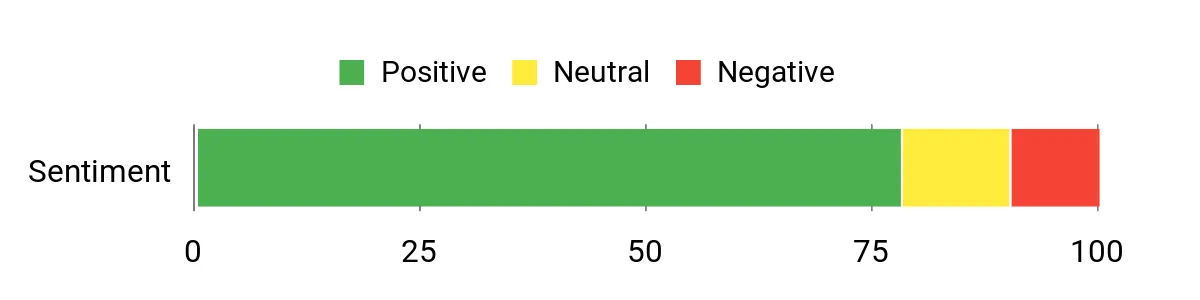
Overall Sentiment: Positive
Safety Features
Non-high-frequency blowback start reduces electrical interference with nearby electronics, and built-in air pressure detection helps you keep the torch in the right operating window. The unit ships with a ground clamp and standard consumable protections; you should still follow proper grounding, wear protective gear, and verify compressor pressure before cutting.
Start And Cutting Speed
The pilot arc engages quickly and delivers responsive cutting on 240V, so you can maintain a steady travel speed on thicker plates. Expect slower penetration and shorter continuous cut times on 120V circuits; consumable life and cut speed both depend on your travel rate and air pressure.
Pros
- Compact design works well in small garages and mobile repair setups
- App control and LED display make setting changes easier
- Useful mesh, rust and gouging modes for mixed metal work
Cons
- 120V performance is limited compared with 240V use
- Shorter torch lead may be restrictive around larger workpieces
- Some users mention support or fitting issues
Best For
Choose this model if you want a compact plasma cutter with smart controls for lighter fabrication, mesh cutting, rust removal and occasional gouging. Skip it if you mainly cut thick plate all day or need a longer torch lead out of the box.
Key Benefits
- App control and upgraded LED make adjustments quick and intuitive
- Blowback pilot arc handles rust and expanded metal well
- 55A output on 240V delivers solid gouging and plate cutting power
- Compact, portable design with essential accessories included
Rating: 4.4 (total: 442+)
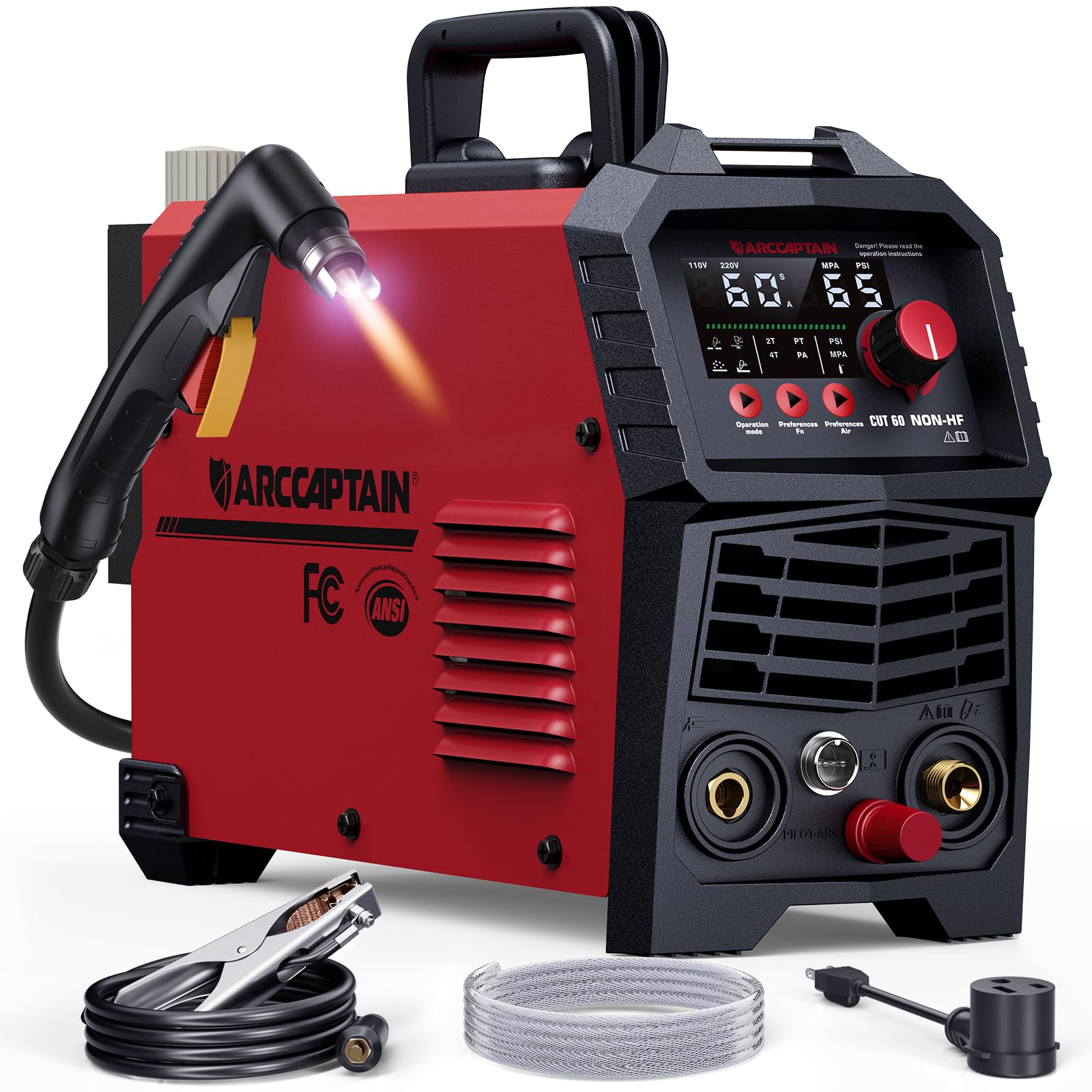
You get a straightforward, workshop-friendly plasma cutter aimed at garage mechanics and hobby fabricators. The 60 amp output on 220V gives it stronger plate-cutting potential than smaller 50–55 amp machines, and the upgraded LED makes tuning settings easier while you work.
It ships with a generous torch length and multiple consumables so you can get cutting quickly, and the non-high-frequency blowback start makes it kinder to nearby electronics. If you need a portable unit for plate cutting, mesh work and gouging without a lot of fuss, this is a practical pick.
What People Say
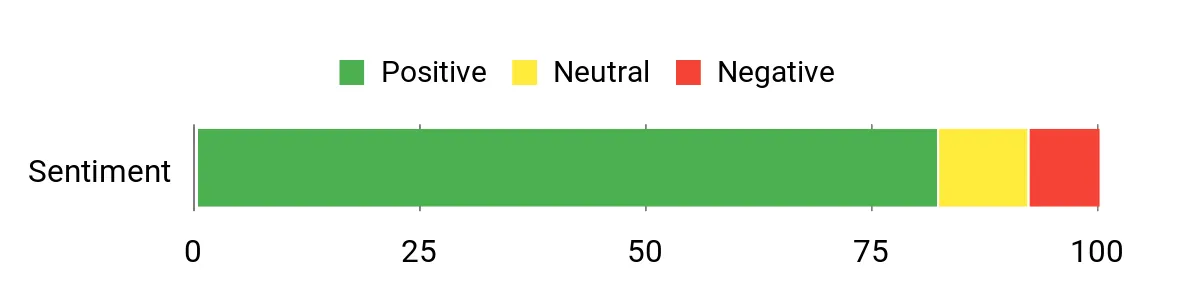
You’ll see many users praise how well it cuts on 220V and how easy it is to set up for garage tasks. People highlight the drag-tip torch and stable performance for automotive and metalwork, while some note that 110V use is limited and a few experienced buyers had customer support annoyances.
Overall the consensus leans toward dependable everyday performance for hobbyists and small shops.
Overall Sentiment: Positive
Safety Features
Non-high-frequency blowback start minimizes electrical interference with radios and controls, and the unit includes air pressure detection to help you keep cut quality consistent. Standard grounding and consumable protections apply, so follow normal PPE and shop safety when cutting.
Start And Cutting Speed
The pilot arc triggers quickly and holds steady on 220V, letting you maintain a consistent travel speed through thicker material. On 110V expect reduced penetration and slower cutting pace, and consumable life will vary with travel speed and air pressure.
Pros
- Higher 60A output suits garage fabrication and plate cutting
- Longer torch lead is useful around automotive projects
- Large LED display helps with quick setup
Cons
- 110V use is best treated as light-duty cutting
- Not as feature-heavy as app-enabled models
- Support feedback is not uniformly positive
Best For
Choose the CUT60 if you want a garage-focused plasma cutter for automotive brackets, repair panels, grates, plate work and occasional gouging. Skip it if app control matters more than raw garage utility.
Key Benefits
- Strong 60A performance on 220V for clean plate and gouging cuts
- Upgraded large LED display for quick, visible adjustments
- Includes longer torch and extra consumables for immediate use
- Non-HF blowback start reduces interference with sensitive equipment
Rating: 4.5 (total: 1436+)
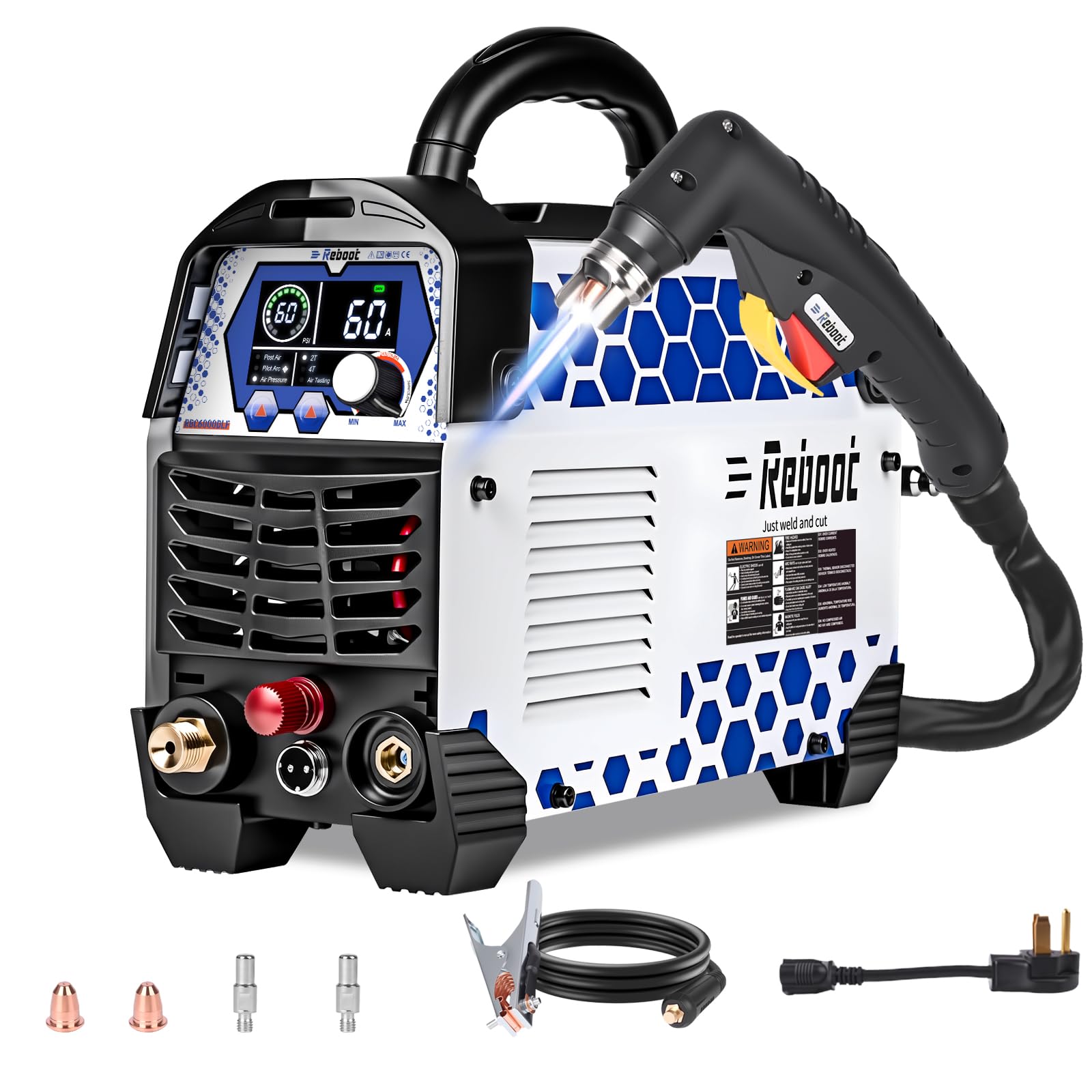
You get a compact, workshop-friendly cutter that emphasizes safe, predictable starts and easy operation. The non-high-frequency, non-touch pilot arc makes it feel quieter and less likely to interfere with nearby electronics, which is helpful if you work around sensitive gear.
The dual-voltage design means you can use common outlets for light tasks and switch to 240V when you need deeper penetration. It’s especially useful for mesh work, custom grates and weekend fabrication, and it’s simple enough that you can start cutting soon after setup.
What People Say
Most users highlight the cutter’s reliable starts, user-friendly controls and effectiveness on mesh and rusty stock. People like that it performs well even on 120V for lighter work, while hitting its stride on 240V for thicker cuts. A few mention the torch lead could be longer, but overall impressions lean toward a sturdy, no-nonsense tool for DIY and small shop use.
Overall Sentiment: Positive

Safety Features
The non-HF blow-back start reduces electrical interference and the non-touch pilot arc lowers the chance of accidental sparks when the torch is near metal. Built-in air pressure detection helps you keep cuts consistent, though you should still follow standard grounding and PPE practices.
Start And Cutting Speed
The pilot arc engages quickly and holds steady, so you can maintain a smooth travel speed on sheet metal and moderate plate. Expect slower penetration on 120V and faster, cleaner cutting on 240V; consumable wear and cut speed will vary with travel rate and air pressure.
Pros
- Strong value for buyers who want non-HF pilot arc cutting
- Large LED display and 2T/4T modes are beginner-friendly
- Good fit for mesh, sheet metal and light-to-medium fabrication
Cons
- Lower visible review count than some competing picks
- May not be the best choice for frequent heavy plate cutting
- Torch lead length may not suit every shop layout
Best For
Choose the Reboot RBC6000 if you want a value-focused plasma cutter for mesh, rusty stock, sheet metal and occasional gouging. Skip it if you need the most proven review base or the highest amperage in this group.
Key Benefits
- Non-touch pilot arc for safer, cleaner starts
- Large LED display and 2T/4T modes for easy control
- Works well on sheet metal and mesh with minimal slag
- Compact, lightweight design that’s easy to move
Rating: 4.8 (total: 13+)
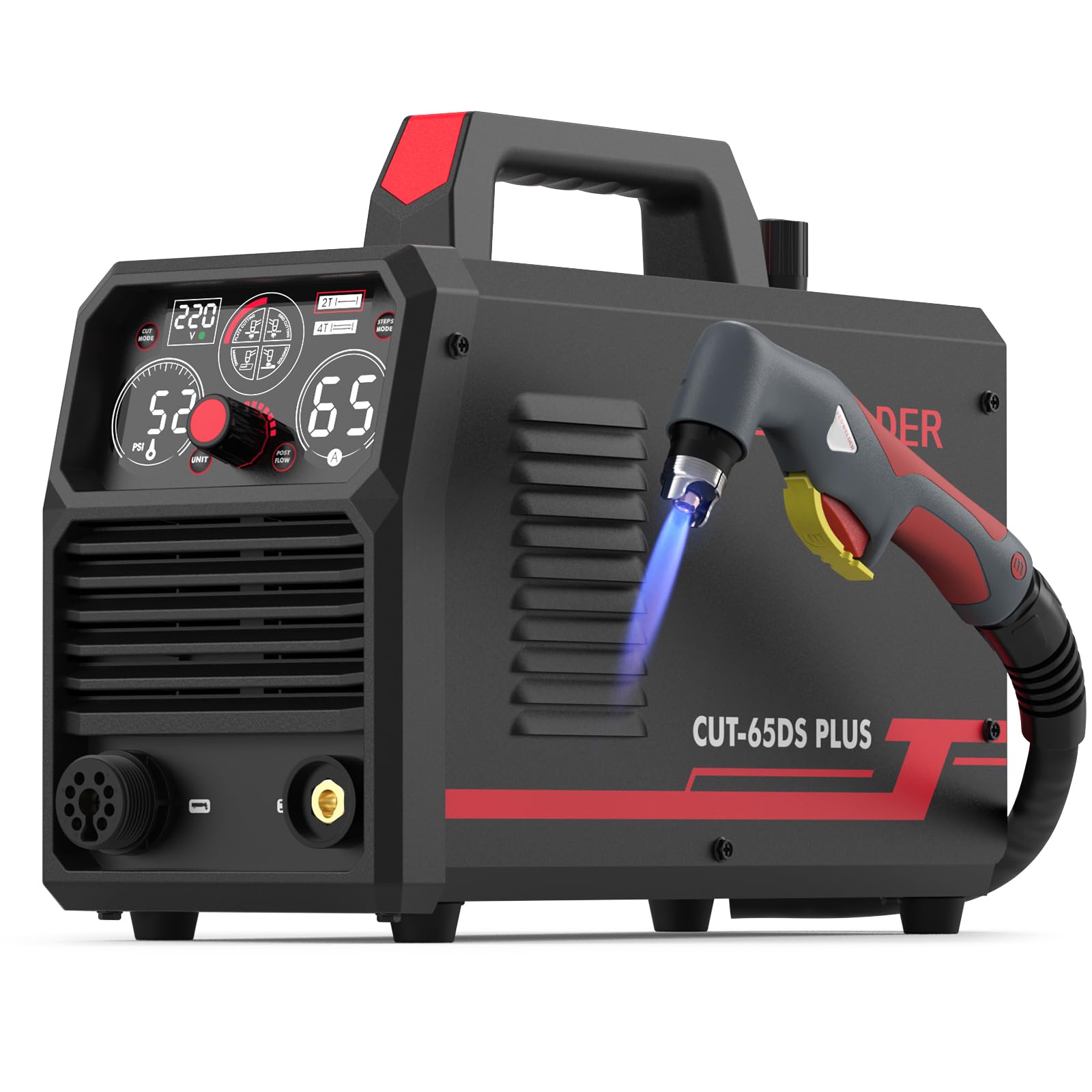
You get a capable, portable plasma cutter that handles everything from thin sheet work to heavier plate when you feed it 220V. The 4-in-1 modes let you switch between plate cutting, grid/mesh work, gouging and light marking without swapping machines, and the non-touch pilot arc helps start cuts cleanly on rusty or painted surfaces.
The clear display and straightforward controls make dialing in settings easier while you work, so it fits daily garage tasks and special projects like making a cutting table or custom grates. If you want one machine that expands what you can do around the shop, this is the most versatile pick here.
What People Say
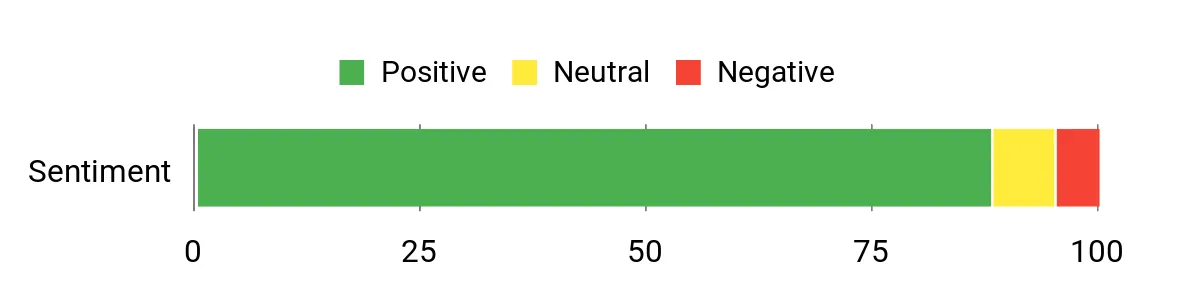
Most users praise the CUT65 for its versatility and clean cuts, especially when running on 220V. People often mention the sturdy build, easy-to-read display and how the grid mode makes mesh cutting much cleaner than an angle grinder. A few buyers note consumable wear or occasional quality-control hiccups, but the general impression is a powerful, workshop-ready tool that expands what you can tackle at home.
Overall Sentiment: Positive
Safety Features
Non-high-frequency blow-back start and non-touch pilot arc minimize electrical interference and accidental sparks, and the unit monitors air pressure to help keep cuts consistent; still follow standard grounding and PPE practices.
Start And Cutting Speed
The pilot arc fires quickly and holds steady, giving smooth travel speeds on plate when powered by 220V; expect reduced penetration and slower cutting pace on 110V circuits, with consumable life tied to travel speed and air pressure.
Pros
- Highest amperage rating in this roundup
- Dedicated modes for plate, grid, gouging and marking
- Strong fit for buyers who cut several material types
Cons
- Review count is lower than more established listings
- Consumable wear may be a concern during frequent gouging
- Buyers should verify current included accessories before ordering
Best For
Choose the YESWELDER CUT65 if you want one plasma cutter for plate, mesh, gouging and marking. Skip it if you only need occasional thin-sheet cutting and would rather spend less.
Key Benefits
- Four dedicated modes for plate, grid, gouging and marking
- Non-touch pilot arc for reliable starts on rusty or painted metal
- Dual-voltage flexibility so you can work from common outlets or a 220V supply
- Bright digital display and user-friendly controls for quick setup
Rating: 4.8 (total: 16+)
How to Choose the Right Plasma Cutter for Gouging and Mesh Work
Start with your power source. A dual-voltage plasma cutter is convenient, but most machines cut faster and cleaner on 220V or 240V. Use 110V or 120V for lighter work, thin sheet and quick repairs, then step up to the higher-voltage circuit when you need cleaner penetration on plate.
Next, check the starting method. Non-HF blowback and non-touch pilot arc systems are especially useful around rusty stock, painted metal, expanded mesh and electronics-sensitive shop areas. Finally, look at torch length, consumable availability, compressor requirements and whether the machine offers dedicated modes for gouging, grid cutting or marking.
FAQ
Do I Need 220V Or Is 110V Enough?
If you plan to cut thicker plate and do heavy gouging, 220V gives you the power and cleaner penetration you’ll want; on 110V you can handle thin sheet and small projects but you’ll notice reduced cut depth and slower travel speeds. Use a proper circuit and a short, heavy-gauge extension if you must run farther from the outlet, and switch to 220V when you need consistent plate performance.
How Do I Get Cleaner Gouges And Mesh Cuts?
Focus on the right mode, travel speed and air pressure: use the dedicated gouging or mesh/grid setting, move at a steady pace rather than rushing, and tune the pressure to the manufacturer’s recommendation for the torch. Keep consumables in good condition and swapped when worn, maintain a solid ground clamp, and use the LED or app controls to fine-tune amperage so you’re not overheating the tip or producing excessive slag.
Are Non-HF And Non-Touch Pilot Arc Features Important?
Yes, non-high-frequency blowback systems reduce electrical interference with nearby electronics and radios, and a non-touch pilot arc makes starting on rusty or painted metal easier while extending consumable life. You still need standard shop safety: proper grounding, PPE, and routine checks of fittings and torch leads, and it’s wise to keep spare consumables and know the vendor’s support options in case of early issues.
What Users Prefer
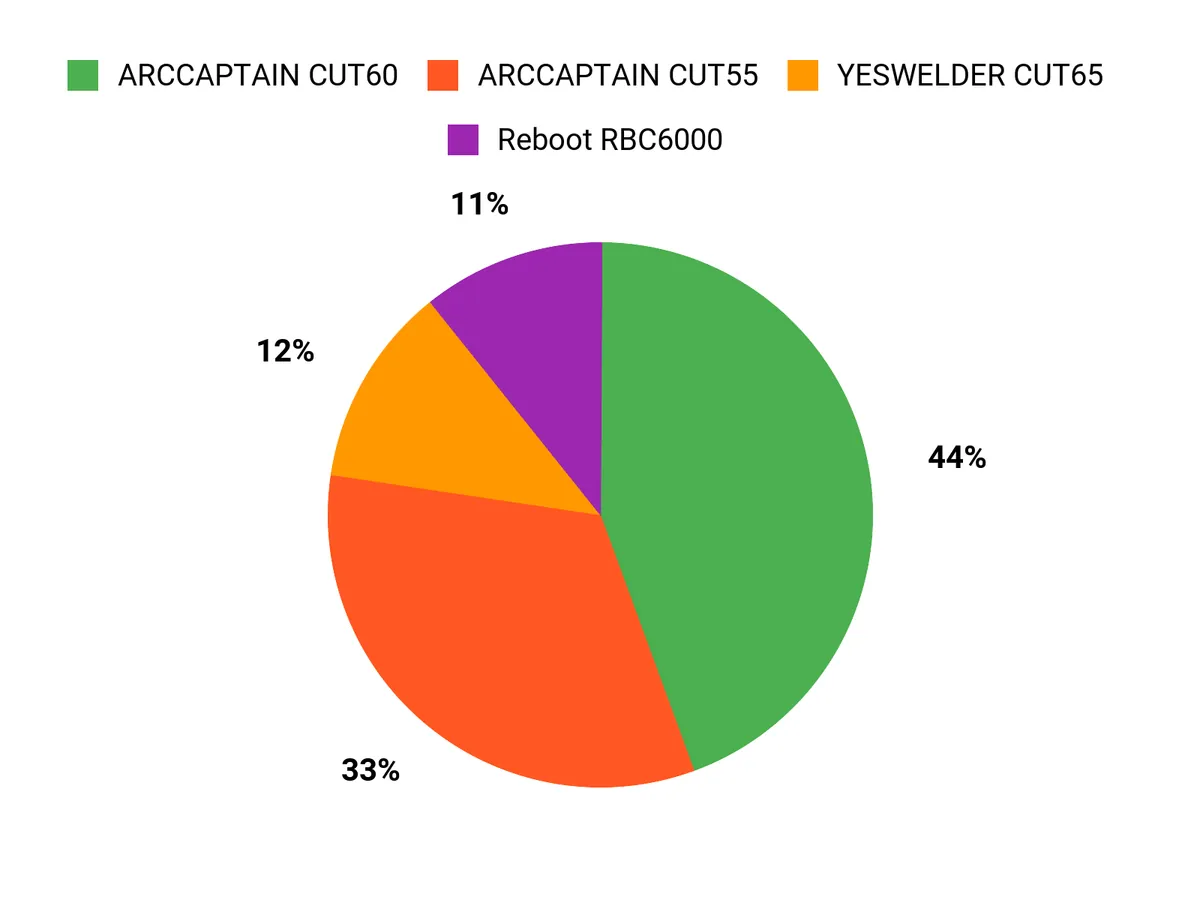
When you weigh these options you tend to prioritize cutting power and voltage compatibility first, then mode versatility, reliable pilot arc starts and how easy the unit is to move around the shop. Choose the CUT60 if you need garage-ready 60A plate performance, the CUT55 if you want compact gear with app control and strong gouging/mesh modes, and the Reboot RBC6000 if you want a lightweight, non-touch non-HF cutter that’s especially handy for mesh and light-to-medium fabrication.
Wrapping Up
Each cutter here has a clear strength tied to how you work. If you need the broadest capability and the highest amperage for heavy gouging and plate work, the YESWELDER CUT65 brings multifunction modes and strong 65 amp performance. If budget and portability are your priority, the Reboot unit delivers surprising capability at $180.49 and is a smart pick for light to medium duty projects. The ARCCAPTAIN CUT60 is tuned to garage and automotive use with reliable everyday performance, while the ARCCAPTAIN CUT55 stands out for app control and useful gouging and mesh modes when you want smarter controls.
Match the unit to your power availability, how often you cut thick plate, and whether you need non-high frequency operation around sensitive electronics to get the best results for your gouging projects. Before buying, confirm the current price, included torch and consumables, voltage requirements, and return options on Amazon.
| Product Name | Image | Rating | Max Cutting Thickness | Voltage | Included Components |
|---|---|---|---|---|---|
| ARCCAPTAIN iControl CUT55 MP |
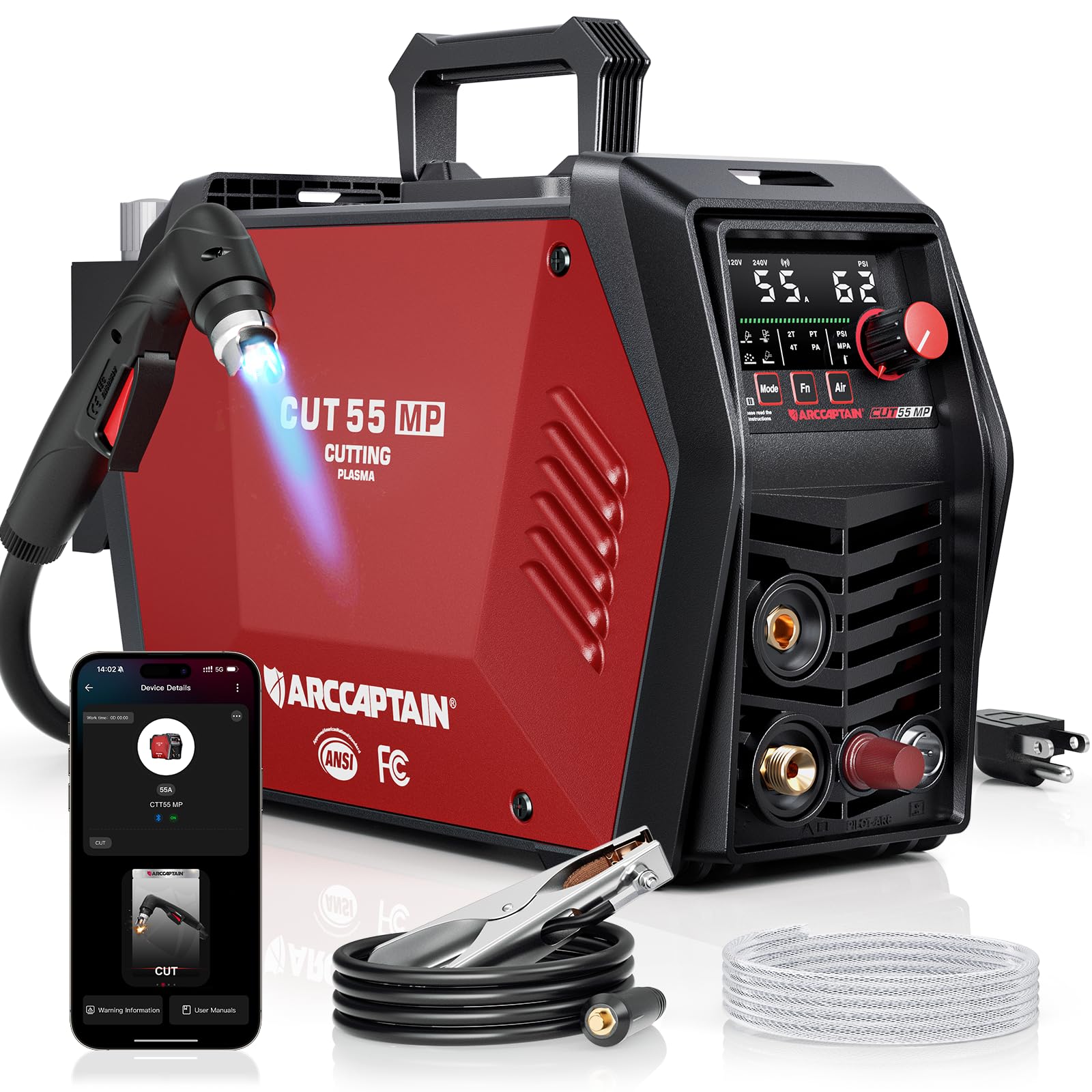 |
4.4/5 (442 reviews) | 5/8 inch | 120V/240V |
|
| ARCCAPTAIN 60Amp CUT 60 Non-HF |
 |
4.5/5 (1,436 reviews) | 3/4 inch | 110V/220V |
|
| Reboot Plasma Cutter RBC6000DLF |
 |
4.8/5 (13 reviews) | 5/8 inch | 120V/240V |
|
| YESWELDER CUT-65DS PLUS |
 |
4.8/5 (16 reviews) | 1 inch | 110V/220V |
|
This Roundup is reader-supported. When you click through links we may earn a referral commission on qualifying purchases.