Disclosure: As an Amazon Associate, we earn from qualifying purchases. If you click a link on this page and make a purchase, we may receive a small commission at no extra cost to you.
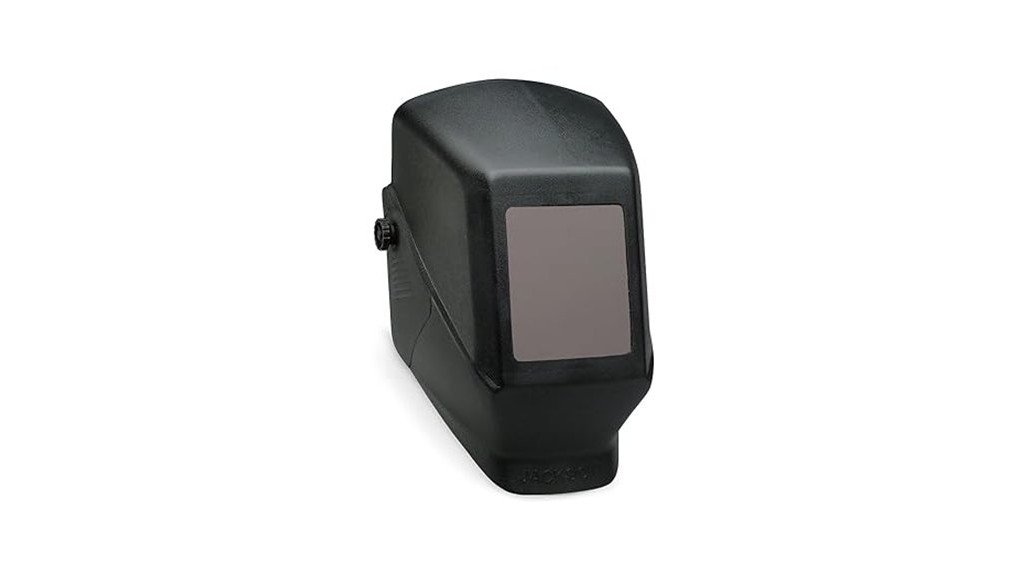
Choosing a welding helmet gets tricky when a product listing mentions auto-darkening but the base helmet ships as a passive fixed-shade hood. The Jackson Safety HSL-100 Welding Helmet, model 14975, is best understood as a durable shade 10 passive helmet that can be upgraded with compatible Jackson Safety ADF filters. This review helps you decide whether its narrow shell, extended front coverage, and ratcheting headgear fit your welding setup. It is a practical choice for cost-conscious welders, but it is not the right pick if you want an auto-darkening lens included out of the box.
Quick Verdict
Rating: 8.2/10
Best For: Welders who want a simple shade 10 passive helmet with tight-space access and upgrade flexibility
Bottom Line: The HSL-100 gives you trusted Jackson Safety coverage, a 4.5″ x 5.25″ viewing window, and a narrow shell that works well in confined positions. Its main tradeoff is that the base setup is passive, so you need a compatible ADF upgrade if you want automatic darkening.
| Specification | Detail |
|---|---|
| Brand | Jackson Safety |
| Model | HSL-100, product number 14975 |
| Product Type | Passive fixed-front welding helmet, ADF-upgradable |
| Color | Black |
| Viewing Area | 4.5″ x 5.25″ |
| Included Filter | Shade 10 polycarbonate filter with cover plate |
| Shell Material | ABS/polycarbonate blend |
| Design | Narrow HSL Shadow-style shell with extended front |
| Headgear | 370 Speed Dial ratcheting headgear |
| Hard Hat Use | Hard-hat adaptable with Jackson Safety product number 15968 |
| Safety Certifications | ANSI Z87.1 and CSA compliant |
| Best Use | MIG, stick, shop fabrication, repair work, and tight-space welding where shade 10 is appropriate |
| Important Note | Base helmet is passive. Confirm compatible ADF cartridge and adapter requirements before upgrading. |
What Is the Jackson Safety HSL-100 Welding Helmet?
The Jackson Safety HSL-100 Welding Helmet is a fixed-front passive welding hood made for welders who want simple face and eye protection without digital controls. The model 14975 version uses a black narrow shell and includes a 4.5″ x 5.25″ shade 10 polycarbonate filter.
Unlike a true auto-darkening helmet, the base HSL-100 does not automatically change shade when you strike an arc. Instead, it gives you a standard fixed shade setup, with upgrade paths for compatible Jackson Safety auto-darkening filters.
This makes it a better fit for buyers who want a durable, familiar welding hood now and the option to improve the lens later. You should skip it if you need variable shade control, grind mode, sensors, or digital lens settings included from day one.
Who Should Buy It?
Best For
- Welders who prefer a simple fixed shade 10 helmet for routine shop work
- Fabricators who need a narrow shell for tight corners, frames, and repair jobs
- Buyers who want a passive helmet with a possible ADF upgrade path
Skip If
- You want an auto-darkening lens included in the base purchase
- You need a large panoramic viewing area for production welding
- You want built-in grind mode, digital controls, or variable shade settings
Design and Build Quality
The HSL-100 uses a narrow shell design, which helps when you weld inside frames, tight machinery areas, or confined work positions. Larger helmets can bump into surrounding metal, but this profile gives you more room to move your head and torch.
The extended front increases throat and neck coverage from sparks, slag, fumes, and physical hazards. That extra front coverage is useful during overhead work, bench repairs, and jobs where spatter can travel toward your upper chest.
The ABS/polycarbonate shell gives the helmet a practical balance of impact resistance and manageable weight. It is not a premium digital helmet shell, but it feels purpose-built for everyday welding protection.
Lens, Shade, and Visibility
The helmet includes a 4.5″ x 5.25″ shade 10 polycarbonate filter plate. That size is a common welding lens format, so replacement cover plates and compatible filter options are easier to compare than with unusual lens sizes.
Because the base lens is passive, your view stays dark until you lift the helmet or position yourself before starting the arc. This can feel slower than auto-darkening if you do frequent tack welds or short starts.
For steady weld runs, the shade 10 setup can still make sense. It gives you a simple viewing system without batteries, sensors, delay settings, or shade controls to manage.
Before You Buy: Do not assume this base helmet includes an auto-darkening lens. Treat it as a passive shade 10 welding hood unless the seller clearly includes a compatible ADF cartridge in the package.
Comfort and Fit
The 370 Speed Dial ratcheting headgear is the main comfort feature. It lets you adjust the fit around your head, which matters when you wear the helmet for long repair sessions or switch between welding and inspection.
A secure fit also helps keep the viewing area aligned with your weld puddle. If the helmet sits too low, too high, or too loose, you may struggle to see the joint clearly before starting the weld.
The universal-size setup should work for many adult users, but fit still depends on head shape, cap use, and how tightly you set the ratchet. Take time to adjust the suspension before judging comfort.
Pro Tip: Adjust the headgear while wearing your welding cap and gloves. That gives you a more realistic fit than setting it barehanded on a workbench.
ADF Upgrade Compatibility
The HSL-100 is ADF adaptable, which means you may be able to install a compatible Jackson Safety auto-darkening filter instead of staying with the fixed shade setup. Listings commonly mention compatibility with Jackson Safety Insight, Tru Sight II, and NexGen-style filter options.
This upgrade path is useful if you want to start with a lower-cost passive helmet and improve lens performance later. It also helps if you like the HSL-100 shell shape but want better arc-start visibility.
You should still confirm the exact ADF cartridge, adapter, and fit before buying accessories. Compatibility can depend on the filter series, adapter hardware, and seller package.
Hard Hat Compatibility and Jobsite Use
The helmet is hard-hat adaptable with Jackson Safety product number 15968. That matters if your workplace requires overhead head protection along with welding face protection.
For home garage welding, you may never need the hard-hat setup. For construction, maintenance, or industrial environments, this feature can make the helmet more useful than a basic hobby hood.
Always follow your site rules and PPE requirements. A welding helmet protects your face and eyes, but it does not replace required respiratory, hearing, glove, jacket, or hard-hat protection.
Safety and Materials
The helmet meets ANSI Z87.1 and is listed as CSA compliant, giving you a recognized safety baseline for welding face protection. The fixed shade 10 lens helps protect your eyes when shade 10 is suitable for the welding process and amperage you use.
Shade needs can change by process, material, and current level. Before welding, match your lens shade to your process, your machine settings, and the safety guidance from your employer, welding chart, or helmet instructions.
Inspect the shell, filter plate, cover plate, and headgear before use. Replace cracked lenses, damaged cover plates, or worn headgear parts because small damage can reduce comfort, visibility, and protection.
How It Performs in Real Use
For Daily Shop Welding
For routine welds where shade 10 works for your setup, the HSL-100 gives you a simple and low-maintenance helmet. You do not need to manage batteries, solar cells, sensors, or shade menus.
For Tack Welding
The passive lens is less convenient for repeated tack welds because you need to position yourself with a dark lens or lift and lower the helmet. If you do many short arc starts, an ADF upgrade or true auto-darkening helmet may save time.
For Tight Space Fabrication
The narrow shell is one of the strongest reasons to choose this helmet. It helps when you weld inside frames, trailers, gates, brackets, equipment housings, or crowded repair areas.
For Maintenance and Repair Work
The extended front gives added coverage when sparks and slag move unpredictably. That makes the helmet useful for repair work where your position changes often and the workpiece may not sit at a clean bench angle.
Setup Tips Before First Use
Start by checking that the shade 10 filter and cover plate sit correctly in the helmet. A loose or scratched plate can affect visibility and may distract you while welding.
Next, set the ratcheting headgear so the helmet stays stable when you nod it down. If it drops too quickly or shifts while you move, tighten the adjustment before welding.
If you plan to add an auto-darkening filter, confirm the cartridge size, adapter needs, and Jackson Safety compatibility before ordering. Do not force an incompatible lens into the shell.
Pros and Cons
Pros
- Verified HSL-100 shell is built for tight-space welding access
- Includes a common 4.5″ x 5.25″ shade 10 polycarbonate filter
- Extended front improves throat and neck-area coverage
- 370 Speed Dial ratcheting headgear gives easy fit adjustment
- ADF upgrade path adds flexibility if your needs change later
Cons
- Base helmet is passive, not auto-darkening out of the box
- Shade 10 may not suit every process, amperage, or preference
- ADF and hard-hat upgrades may require separate compatible parts
Is It Worth the Price?
The Jackson Safety HSL-100 is worth considering if you want a simple passive helmet from a known PPE brand. Its value comes from the shell design, shade 10 included filter, adjustable headgear, and upgrade flexibility.
It is a smart buy for welders who do not need digital controls but still want ANSI-rated protection and a tight-space-friendly shape. The main limitation is that you may spend more later if you decide you need auto-darkening performance.
Buyers who already know they want variable shade control should compare true auto-darkening helmets first. That may cost more upfront, but it can be more efficient for tack welding and mixed-process work.
How It Compares to Alternatives
Compared to basic no-name passive helmets, the Jackson Safety HSL-100 gives you a more established brand, a recognized narrow shell design, and a clear upgrade path. Compared to helmets like 3M Speedglas or Lincoln Electric Viking models, it is simpler and less feature-rich.
If you want the lowest-complexity fixed shade hood, the HSL-100 makes sense. If you want variable shade, grind mode, larger viewing panels, or digital lens controls, a dedicated auto-darkening helmet will be a better match.
Frequently Asked Questions
Is the Jackson Safety HSL-100 an auto-darkening helmet?
The base model 14975 is a passive fixed-shade welding helmet with a shade 10 filter. It is ADF-upgradable, but you should not assume an auto-darkening lens is included unless the seller package clearly says so.
What lens size does it use?
It uses a 4.5″ x 5.25″ filter size. The included filter is a shade 10 polycarbonate plate with a cover plate.
Is shade 10 enough for all welding?
Not always. Shade 10 works for many common welding tasks, but the right shade depends on your process, amperage, material, and safety requirements.
Can you use it for TIG welding?
You can use it only when shade 10 is suitable for your TIG setup. For low-amp TIG, many welders prefer auto-darkening helmets with better low-amp arc detection and variable shade control.
Does it work with a hard hat?
Yes, it is hard-hat adaptable with Jackson Safety product number 15968. Confirm the adapter and hard-hat setup before using it on a jobsite.
What makes the narrow shell useful?
The narrow shell helps when you weld in corners, frames, machinery, or cramped repair spaces. It reduces the chance of the helmet bumping into the work area as you position your head.
Who should skip this helmet?
Skip it if you want auto-darkening performance included, a large viewing screen, grind mode, or variable shade controls. It is better for buyers who want a simple passive hood with upgrade flexibility.
What should you check before welding with it?
Check the shell, headgear, filter plate, and cover plate for cracks, looseness, or heavy scratches. Also confirm that shade 10 matches your welding process and amperage before starting work.
The Bottom Line
The Jackson Safety HSL-100 Welding Helmet is a strong choice if you want a simple, narrow-shell passive hood with shade 10 protection and room to upgrade later. It is best for welders who value durability, tight-space access, and basic safety over digital features.
Skip it if you need auto-darkening performance included from the start, variable shade settings, or a larger viewing panel. Its 8.2/10 rating reflects solid practical value with a clear limitation: the base model is passive.