Last reviewed: July 23, 2026
You want a plasma cutter that matches your metal thickness, available power, compressor, and workload without paying for capacity you will never use. This guide compares eight complete plasma cutting machines for sheet metal, auto-body work, metal art, farm repairs, home fabrication, and thicker plate.
The best choice is not simply the model with the highest amperage. A 120V cutter can be the smarter buy for portable thin-metal work, while a dual-voltage or 240V machine makes more sense for thicker material and longer cuts. Airflow, moisture control, consumable availability, torch style, and duty cycle also affect the quality of every cut.
Disclosure: This post contains Amazon affiliate links. We may earn a commission from qualifying purchases at no extra cost to you. Product details, warranty terms, review patterns, and availability can change, so confirm the current listing before ordering.
Quick Verdict
Best overall value: LOTOS LTP5800D for its balanced 58A output, dual-voltage input, pilot arc, and accessible controls.
Best for higher output: bestarc BTC800DP 80A when you have suitable 220V power and a compressor that can keep up.
Best for standard outlets: Forney Easy Weld 20 P when portability and 120V access matter more than thick-plate capacity.
Best without a separate compressor: FLARING FC450, provided you have the required 240V circuit.
Top Picks
| Category | Product | Best Suited To |
|---|---|---|
| Best High-Power Pick | bestarc 80A | Higher-output garage and fabrication work |
| Best Heavy-Duty Pick | LOTOS LTP6300D | Thicker plate and repeatable shop cuts |
| Best Portable 120V Pick | Forney 251 | Thin sheet, auto body, HVAC, and mobile work |
| Best Smart-Control Pick | ARCCAPTAIN iControl CUT60 Pro | App-assisted setup and mixed fabrication |
| Best Everyday Garage Pick | ARCCAPTAIN 55A | General garage, repair, and hobby fabrication |
| Best Multifunction Pick | YESWELDER CUT-65DS PLUS | Cutting, grid work, gouging, and marking |
| Best Built-In Compressor Pick | FLARING FC450 | Portable use without a separate compressor |
| Best Overall Value Pick | LOTOS LTP5800D | Balanced home-shop and light-fabrication use |
How We Chose These Plasma Cutters
This roundup prioritizes buyer fit rather than unsupported numerical scores. We compared input voltage, published amperage, pilot-arc or drag-torch operation, air requirements, portability, control layout, consumable support, included accessories, specialized modes, and stated cutting capacity where reliable product information was available.
We did not treat advertised maximum severance thickness as a normal working thickness. Clean-cut performance is the more useful comparison, and even that changes with metal type, power quality, air pressure and flow, moisture, consumable condition, and operator speed. Check the manual and current listing for the exact circuit, plug, compressor CFM, duty cycle, warranty, and included parts.
- Confirm whether your outlet is 120V, 220V, or 240V and whether the breaker can support the machine.
- Match the compressor’s delivered CFM at the required PSI, not only its tank size.
- Plan for dry, filtered air unless the cutter includes its own compressor.
- Check local availability and cost of electrodes, nozzles, cups, and torch parts.
- Use the manufacturer’s clean-cut rating as a guide, not a guarantee for every metal and setup.
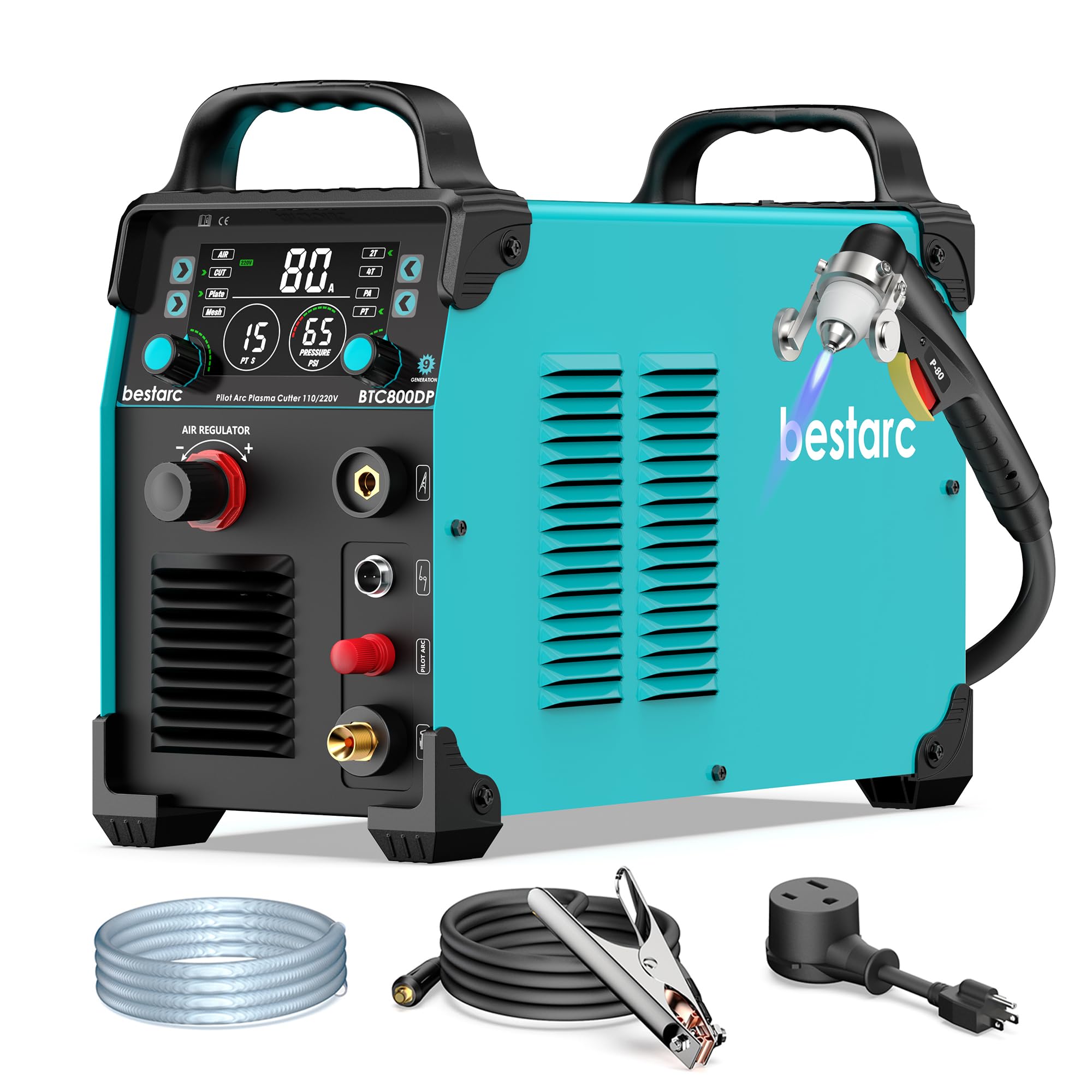
This is the power-focused option in the lineup. It can run from 110V for lighter work, but the main reason to choose it is the extra capacity available when you connect it to suitable 220V power and a compressor that can maintain clean, dry airflow.
Why you’ll like it: The large display, front controls, pilot-arc start, and dual-voltage design make it easier to move between thin sheet work and more demanding fabrication. The official product information lists the BTC800DP as an 80A dual-voltage machine with air-sensor technology.
Best for: Home fabricators who regularly cut mild steel, brackets, pipe, or thicker plate and already have a capable 220V circuit and compressor.
Who should avoid it: Buyers who only work on thin auto-body sheet, have a small compressor, or need a very light 120V-only machine.
Buyer Feedback Snapshot
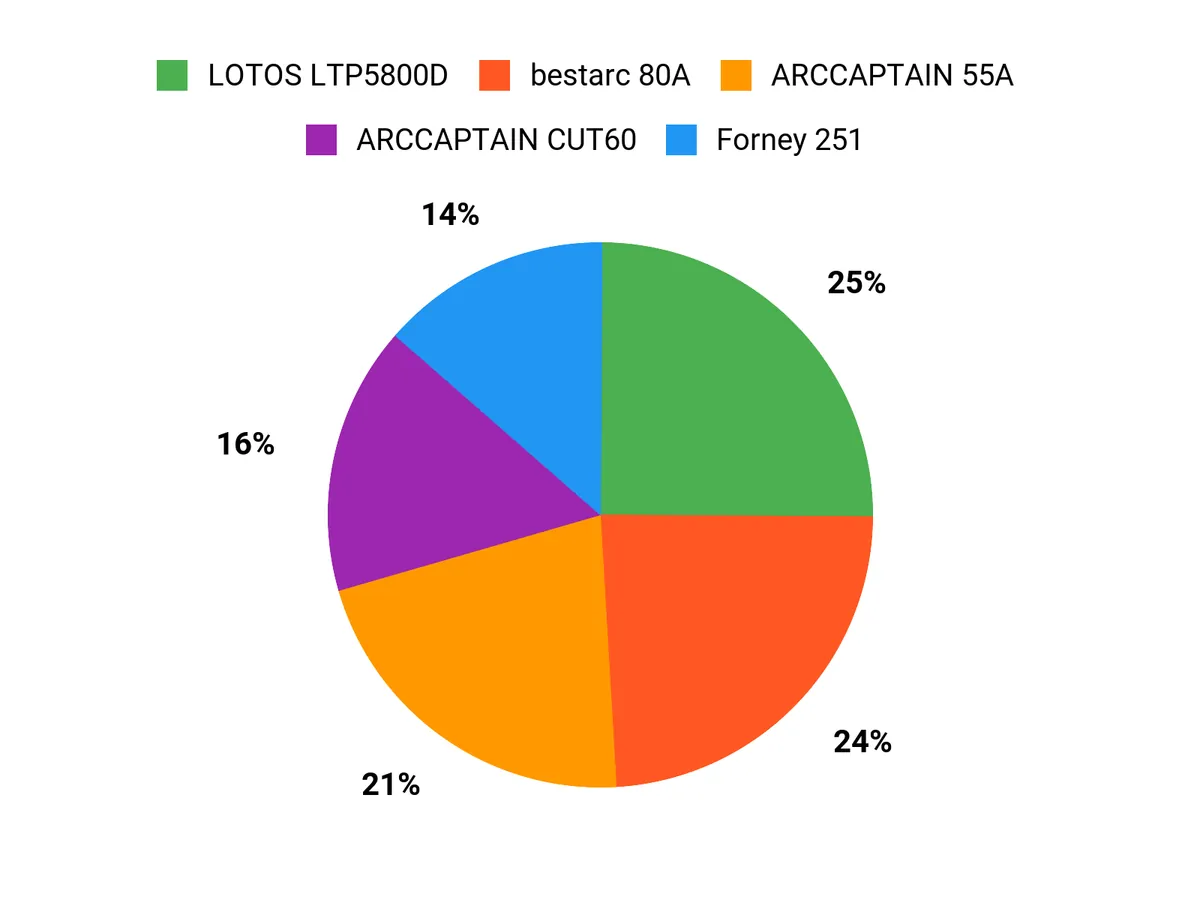
The supplied review snapshot emphasizes cutting speed, dual-voltage flexibility, and straightforward controls. It also notes that sustained cutting depends heavily on compressor output and air quality. Treat the chart below as a historical snapshot and check current Amazon feedback before buying.

Key Benefits
- Pilot-arc start for painted, rusty, or uneven conductive metal
- 110/220V input for lighter garage work and higher-output shop use
- Large LED display with front-mounted setup controls
- Air-sensing and regulation features that can simplify setup
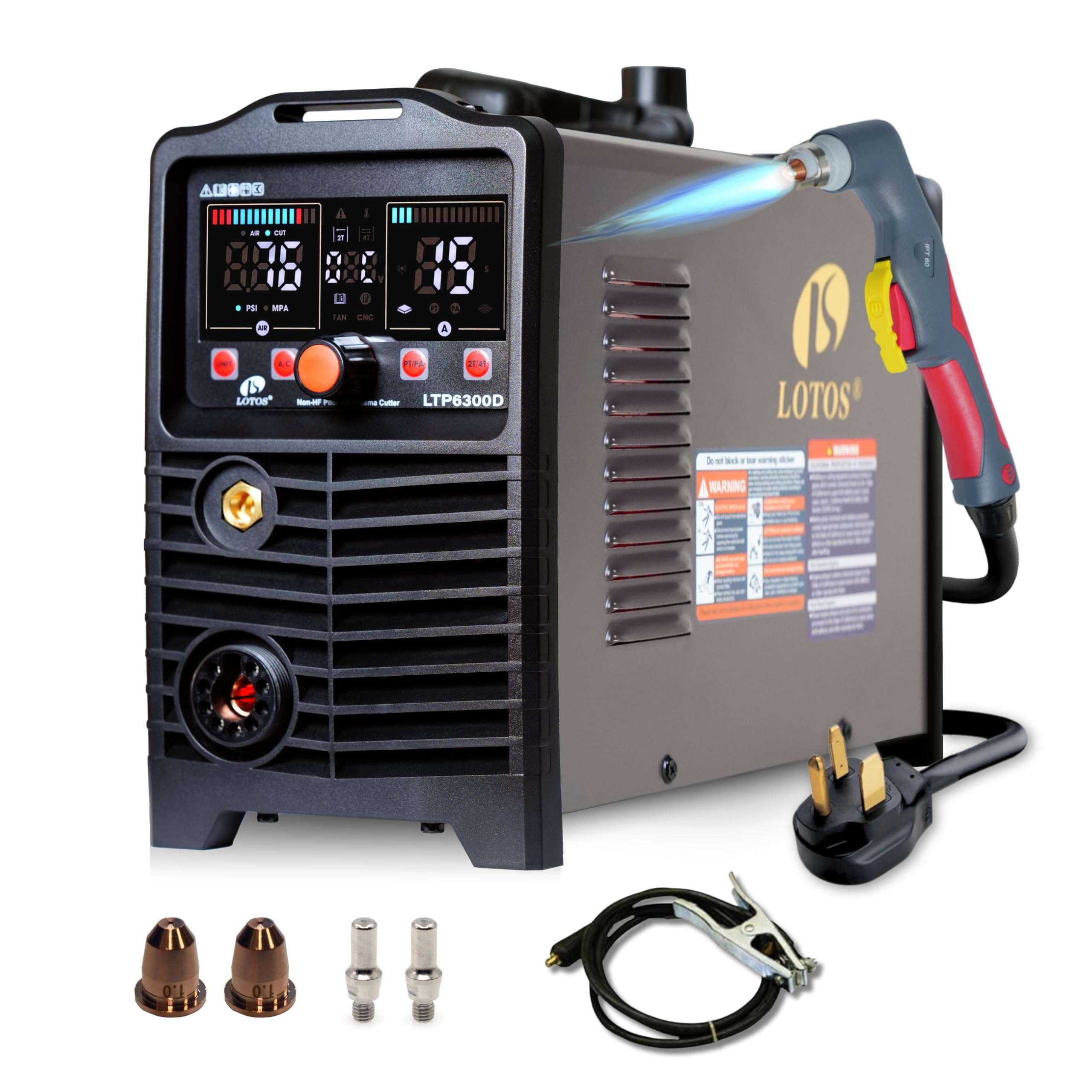
The LTP6300D is aimed at heavier home-shop and light-fabrication work. LOTOS publishes a 3/4-inch clean-cut and 1-inch severance capability under suitable conditions, but real results still depend on metal type, input power, air supply, consumables, and travel speed.
Why you’ll like it: The combination of non-touch starting, drag-cut support, dual-voltage input, and a longer torch reach makes it easier to work around larger benches, sheet, and fabricated assemblies.
Best for: Users who cut thicker plate more often than thin sheet and want a shop-oriented machine without moving to industrial equipment.
Who should avoid it: Anyone limited to a small compressor, a lightly loaded household circuit, or mostly thin-gauge bodywork.
Buyer Feedback Snapshot
The supplied feedback snapshot highlights clean cuts, useful torch reach, and solid performance when the power and air setup are correct. The repeated caution is air demand, so budget for moisture control and confirm compressor CFM before purchase.

Key Benefits
- 63A non-touch pilot arc for rough, coated, or rusty conductive metal
- Drag-cut support for steadier hand-guided cuts
- 110/220V input for flexible shop installation
- Published 3/4-inch clean-cut and 1-inch severance ratings under stated conditions
The Forney 251 is the simplest choice when easy power access matters more than maximum thickness. Forney lists it as a 120V, generator-friendly plasma cutter that requires compressed air and is intended for sheet metal through thin plate.
Why you’ll like it: You can carry it to a vehicle, farm repair, HVAC job, or small project without finding a 240V receptacle. The drag-torch design also reduces the learning curve for basic straight and template-guided cuts.
Best for: Beginners, mobile repair work, auto-body panels, HVAC, plumbing, metal art, and light DIY fabrication.
Who should avoid it: Buyers who regularly cut thick plate or expect the speed and duty cycle of a higher-amp 220/240V machine.
Buyer Feedback Snapshot
The supplied snapshot focuses on portability, simple setup, and good results on thin material once travel speed is learned. It also contains some longevity concerns from heavier users, which is another reason to keep this model within its intended light-duty range.

Key Benefits
- Standard 120V input and generator-friendly design
- Portable format for garage, farm, and job-site use
- Drag-torch operation for direct contact with the workpiece
- Manufacturer support, manuals, and model-specific consumables
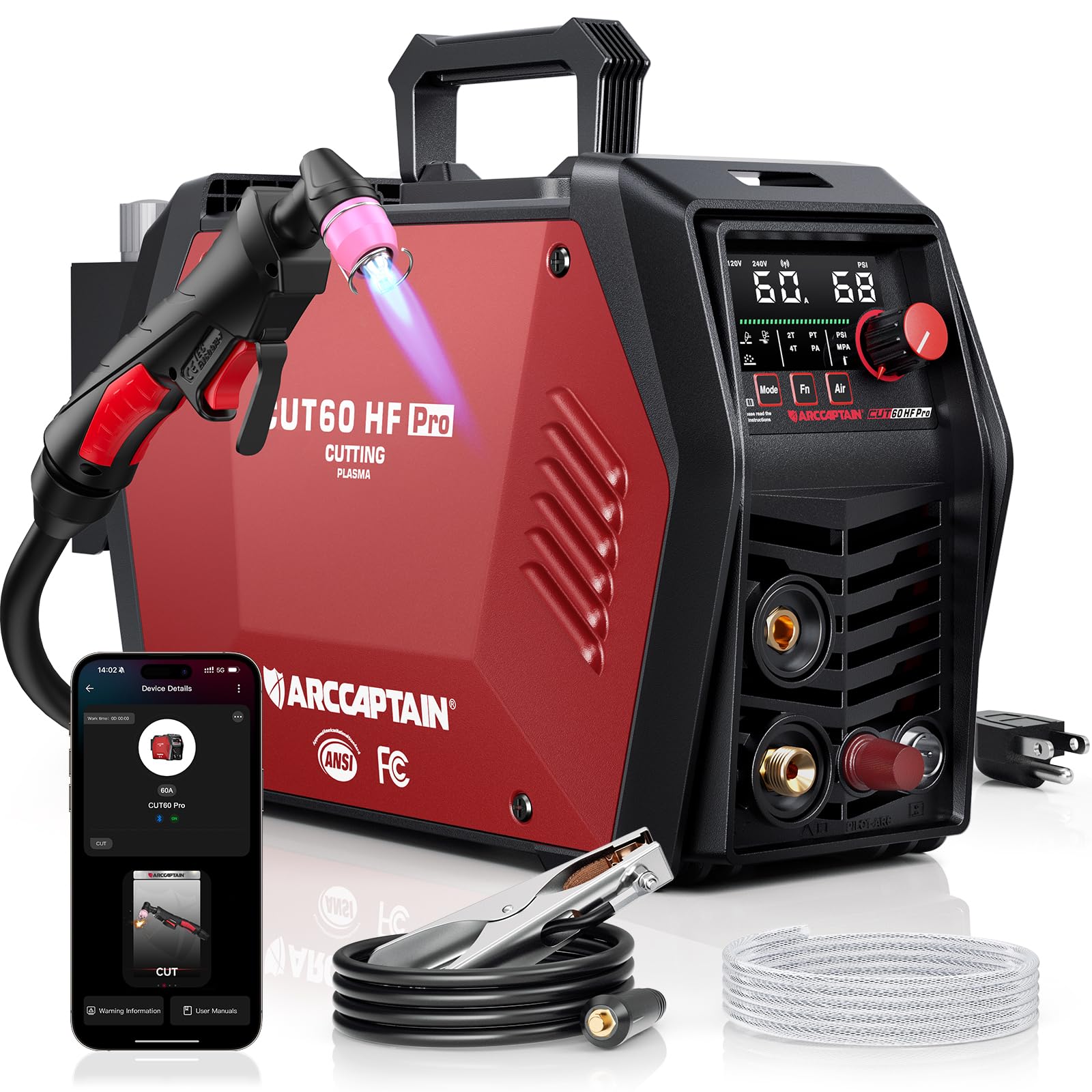
This model is for buyers who value digital setup tools as much as raw cutting output. The app can help with saved settings and remote adjustment, while the machine still provides physical controls for normal shop use.
Why you’ll like it: Its mix of pilot-arc starting, 120/240V input, digital controls, and specialized modes makes it flexible for metal art, repair work, expanded metal, and general fabrication.
Best for: Users who like app-assisted setup, saved presets, and a modern interface on a portable dual-voltage cutter.
Who should avoid it: Anyone who prefers a simple machine with no phone connection or who only needs occasional cuts in thin sheet.
Buyer Feedback Snapshot
The supplied snapshot highlights the compact footprint, useful modes, and strong performance for the size. It also notes that 120V operation and air-fitting setup can limit results, so confirm the included connections and use 240V for more demanding work.

Key Benefits
- App control for remote settings and saved presets
- Pilot-arc start for coated, rusty, or uneven surfaces
- Mesh-cutting and surface-cleaning modes
- 120/240V operation for garage and shop use
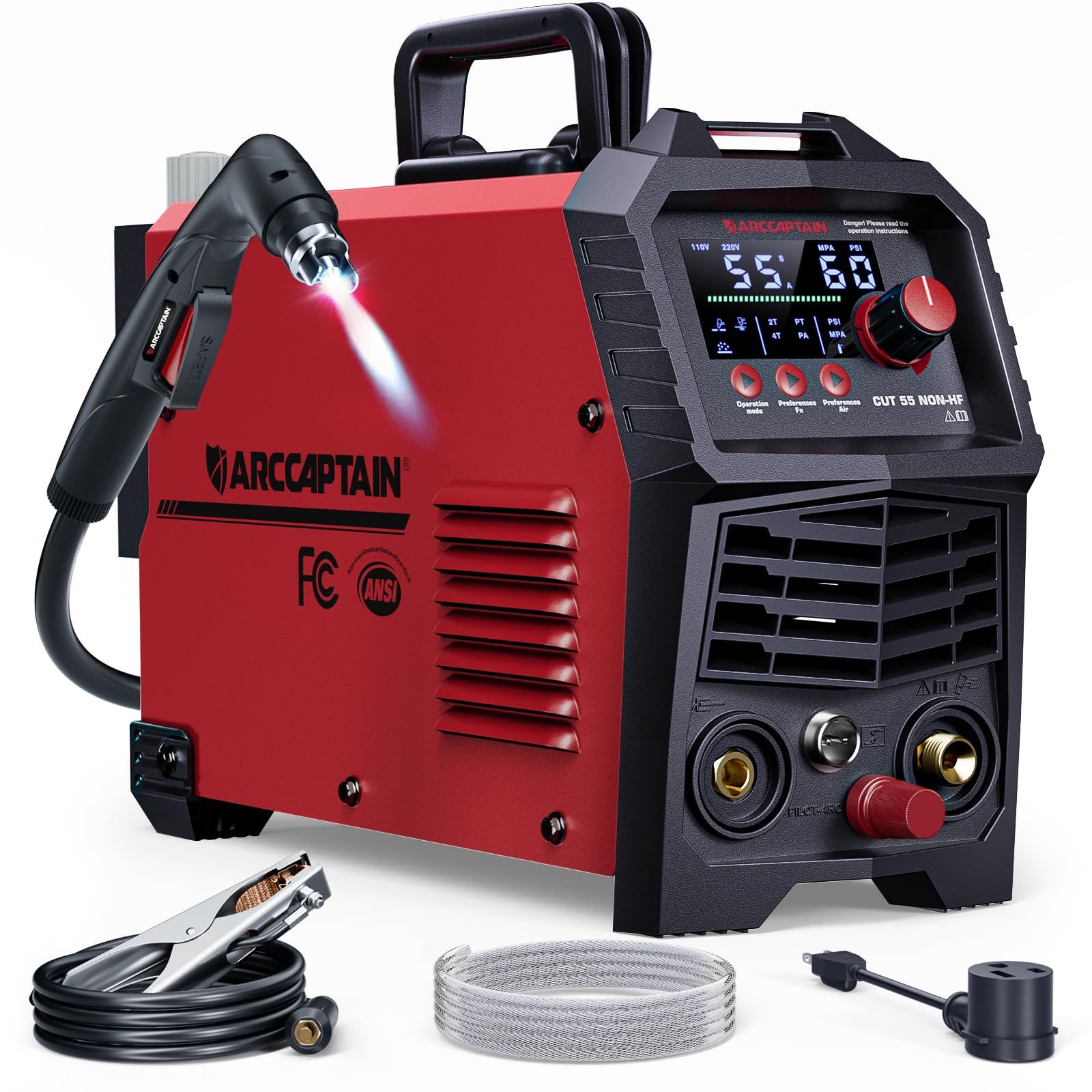
This is the practical middle-ground option for a home garage. It offers more capacity and flexibility than a basic 120V unit without pushing into the size and air demand of the highest-output models in the roundup.
Why you’ll like it: The non-HF blowback start can be a better fit around some electronics than traditional high-frequency start systems, while the LED panel and mode controls keep normal setup straightforward.
Best for: Weekend fabricators, auto-repair users, metal-art builders, and small shops that want dual-voltage flexibility.
Who should avoid it: Buyers seeking maximum amperage, a built-in compressor, or a machine specifically prepared for CNC table integration.
Buyer Feedback Snapshot
The supplied feedback snapshot favors the machine’s compact size, readable controls, and useful mode selection. The main cautions involve 110V limitations, air fittings, and compressor capacity.

Key Benefits
- Blowback non-HF pilot-arc starting
- 110/220V dual-voltage input
- LED controls with mesh and rust-removal settings
- Portable size for common garage and repair jobs
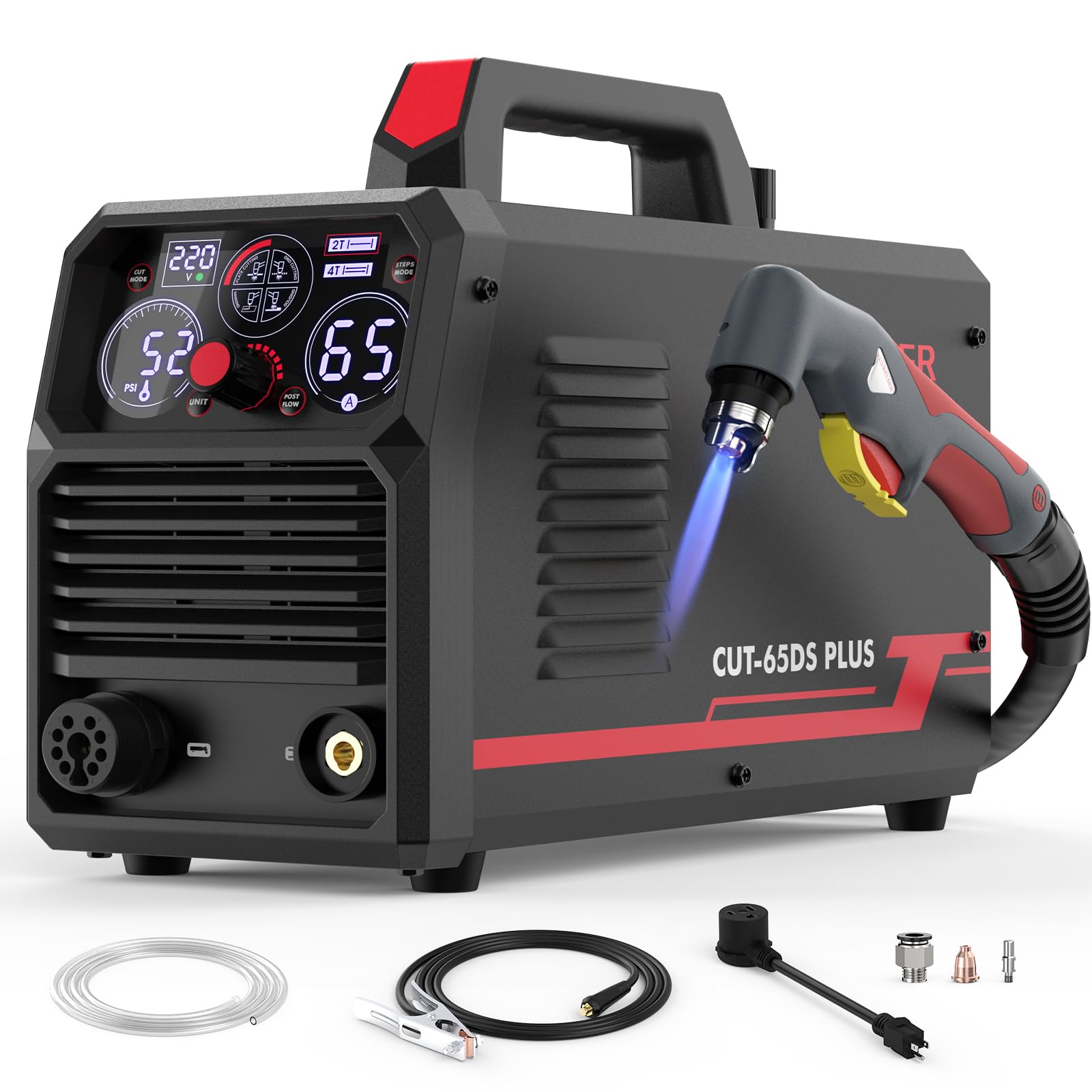
Choose this model when you want more than straight plate cutting. Its mode selection can reduce the need to switch tools when you need to cut expanded metal, remove material, or mark layout lines.
Why you’ll like it: The CUT-65DS PLUS combines 65A output, non-touch starting, dual-voltage operation, and a multifunction torch package in a portable format. The current listing also identifies gouging consumables and a two-year warranty among the included details.
Best for: Fabricators who will genuinely use plate, grid, gouging, and marking functions and have 220V power available for higher-output work.
Who should avoid it: Beginners who want the simplest setup, buyers with a small compressor, or anyone who does not need the extra modes.
Buyer Feedback Snapshot
The supplied snapshot is mixed rather than uniformly positive. It credits the machine’s cutting ability and mode range but also mentions setup quirks and occasional early failures. That makes warranty terms, return options, and current seller support important checks before purchase.

Key Benefits
- Four modes for plate cutting, grid cutting, gouging, and marking
- 65A non-HF non-touch pilot arc
- 110/220V dual-voltage operation
- Included torch, air components, ground clamp, and gouging consumables
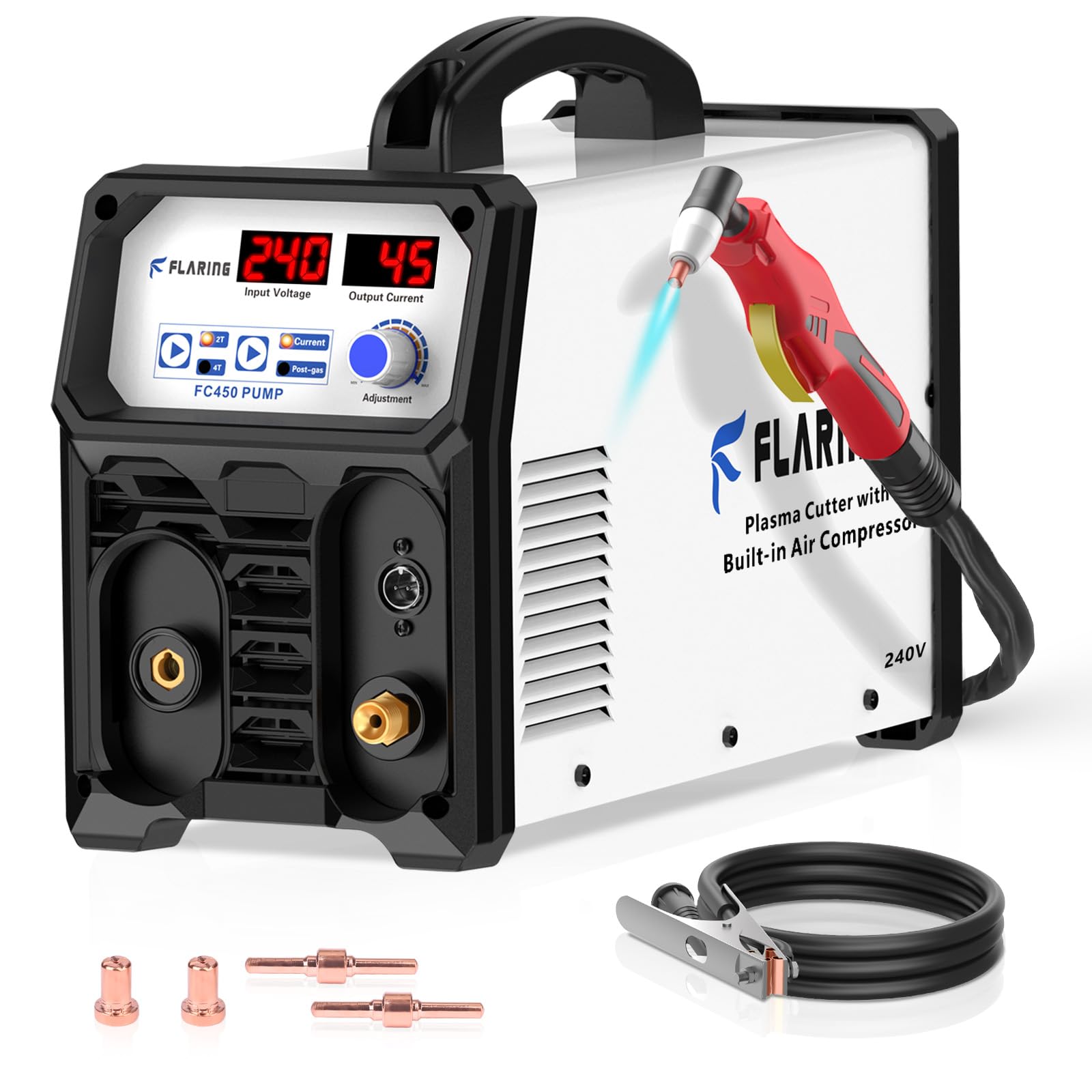
The built-in compressor is the main reason to buy this machine. It reduces the equipment you need to move and connect, which can be useful in a small garage or for field repairs where hauling a separate compressor is impractical.
Why you’ll like it: The FC450 combines its air source and cutter in one enclosure. That simplifies setup, but it is a 240V model, not a 110V machine, so confirm the receptacle, breaker, plug, and extension-cord requirements before ordering.
Best for: Small shops and mobile users who have suitable 240V power but do not want to buy, store, or transport a separate compressor.
Who should avoid it: Buyers limited to standard 120V outlets or anyone who already owns a strong dry-air system and wants maximum amperage for the money.
Buyer Feedback Snapshot
The supplied snapshot emphasizes the convenience of the integrated compressor and easy setup. Because the model is 240V-only, ignore older wording that suggests 110V operation and verify the exact plug configuration shown in the current listing.

Key Benefits
- Built-in compressor eliminates a separate air unit
- 240V input for the cutter and integrated pump
- Compact all-in-one format for small shops and field work
- Published 3/8-inch clean-cut and 5/8-inch maximum-cut claims under suitable conditions
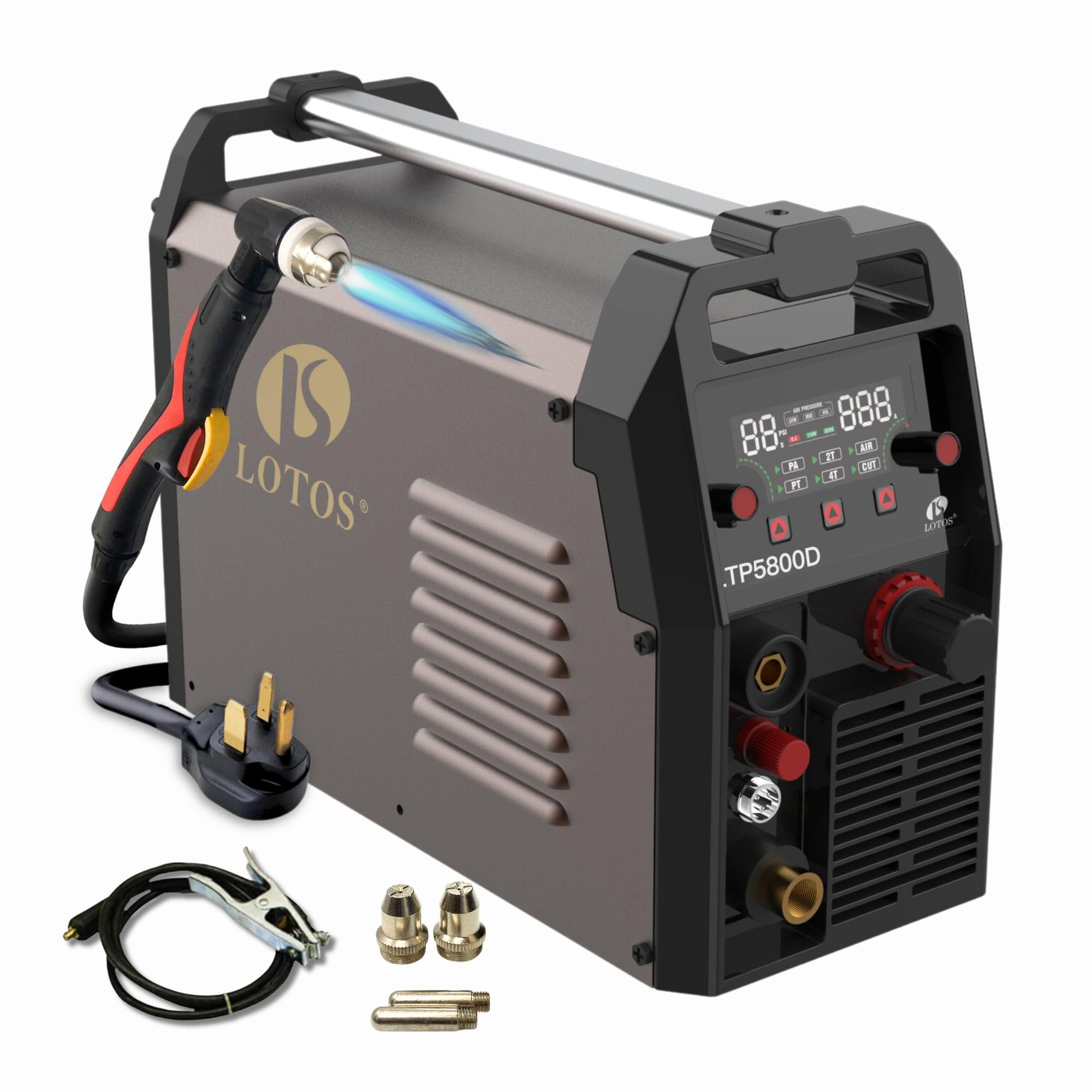
The LTP5800D is the easiest all-around recommendation in this group because it combines useful cutting capacity, dual-voltage input, non-touch starting, and accessible controls without specializing too heavily in one use case.
Why you’ll like it: LOTOS publishes a 5/8-inch clean-cut and 3/4-inch severance rating, plus adjustable pilot-arc and post-flow functions. Those features can help when cutting mesh and when managing torch cooling, provided the machine receives suitable power and dry air.
Best for: Home shops, auto repair, metal art, farm maintenance, and light fabrication where one portable dual-voltage machine needs to cover several jobs.
Who should avoid it: Buyers who need the highest amperage in the roundup or an all-in-one unit with its own compressor.
Buyer Feedback Snapshot
The supplied snapshot emphasizes consistent pilot-arc starts, a readable panel, and straightforward air adjustment. It also suggests checking the ground clamp and adding effective moisture control for longer cutting sessions.

Key Benefits
- 58A non-touch pilot arc for coated or rough conductive metal
- 110/220V operation for flexible garage and shop use
- LED panel with front-mounted air regulation
- Published 5/8-inch clean-cut and 3/4-inch severance ratings under suitable conditions
How to Choose the Right Plasma Cutter
Start With Normal Cutting Thickness
Buy for the thickness you cut most often, not the largest one-time severance claim on the box. Thin auto-body sheet, HVAC work, and metal art usually favor lower output, easier control, and portable 120V power. Brackets, pipe, farm repairs, and thicker plate benefit from a 220/240V machine with more amperage and duty-cycle headroom.
Match the Machine to Your Power Supply
A dual-voltage cutter is useful only when both circuits are properly installed. Output is normally reduced on 110/120V. Do not assume an adapter can turn a lightly loaded household circuit into full 220/240V performance. Follow the manual for breaker size, plug type, wire gauge, and extension-cord limits.
Check Compressor CFM and Moisture Control
Plasma cutting needs steady airflow, not only pressure. Compare the machine’s required CFM at its stated PSI with the compressor’s delivered rating. A small tank may handle short cuts but cycle constantly during longer work. Moisture and oil in the air can shorten consumable life and create rough, inconsistent edges.
Choose the Right Start and Torch Style
Pilot arc can start without touching the workpiece, which helps on paint, rust, mesh, and uneven surfaces. Drag-torch designs let the tip contact the metal and can feel easier for beginners. Non-HF blowback start may also be preferable around some electronic equipment, although you should still follow the manufacturer’s guidance for grounding and nearby devices.
Plan for Consumables and Support
Before ordering, search for the exact torch model and replacement electrodes, nozzles, cups, and shields. A low purchase price can lose its appeal if consumables are difficult to identify or seller support is unclear. Also confirm warranty length, return terms, and whether service is handled by the brand or marketplace seller.
FAQ
What Voltage and Air Supply Do I Need?
Use 110/120V for thin sheet and lighter repair work when portability is the priority. Choose 220/240V for higher output, thicker material, and longer cuts. For an external-air machine, match the compressor’s delivered CFM at the required PSI and use dry, filtered air. The FLARING FC450 is different because it has a built-in compressor and requires 240V power.
Is Pilot Arc Better Than a Drag Torch?
Neither is automatically best for every buyer. Pilot arc is useful on paint, rust, mesh, and uneven conductive surfaces because the torch can start without touching the metal. A drag torch can be simple to guide because the tip contacts the workpiece. Choose based on the material you cut and the technique you prefer.
Can a Plasma Cutter Cut Aluminum and Stainless Steel?
Yes. Plasma cutters can cut electrically conductive metals, including mild steel, stainless steel, aluminum, and copper. Cut quality, edge appearance, fumes, and speed vary by material, thickness, machine output, and consumable condition.
How Much Cutting Capacity Should I Buy?
Choose a clean-cut rating above your normal material thickness so the machine is not working at its limit on every job. Treat maximum severance capacity as an occasional ability to separate metal, not the thickness that will produce the cleanest edge.
What Parts Need Regular Replacement?
Electrodes, nozzles, tips, cups, shields, and swirl rings are common wear parts. Inspect the torch, work clamp, leads, air filter, regulator, and moisture separator as well. Correct air, proper standoff or drag technique, and respecting duty-cycle limits help reduce premature wear.
Quick Decision Guide
Choose the bestarc BTC800DP when higher amperage is your main priority and you can support it with 220V power and strong shop air. Choose the LOTOS LTP6300D when thicker-plate work, drag cutting, and shop reach matter most. Choose the LOTOS LTP5800D when you want the most balanced mix of power, controls, dual-voltage flexibility, and general garage usefulness.
The Forney 251 is the easiest fit for portable 120V work. The ARCCAPTAIN iControl CUT60 Pro suits buyers who value app-based settings, while the ARCCAPTAIN CUT55 Non-HF is a simpler everyday garage option. The YESWELDER CUT-65DS PLUS makes sense when gouging and marking are real needs, and the FLARING FC450 is the specialist choice when an integrated compressor is more important than maximum output.
The chart below is retained from the supplied review dataset as a historical comparison snapshot. Review patterns and listings can change, so confirm current buyer feedback on the product page.
Final Recommendations
For most home shops, the LOTOS LTP5800D offers the best balance of useful output, dual-voltage input, non-touch starting, and straightforward controls. Choose the bestarc BTC800DP when higher power matters more than compactness, or the Forney Easy Weld 20 P when you need a portable cutter for a standard 120V outlet.
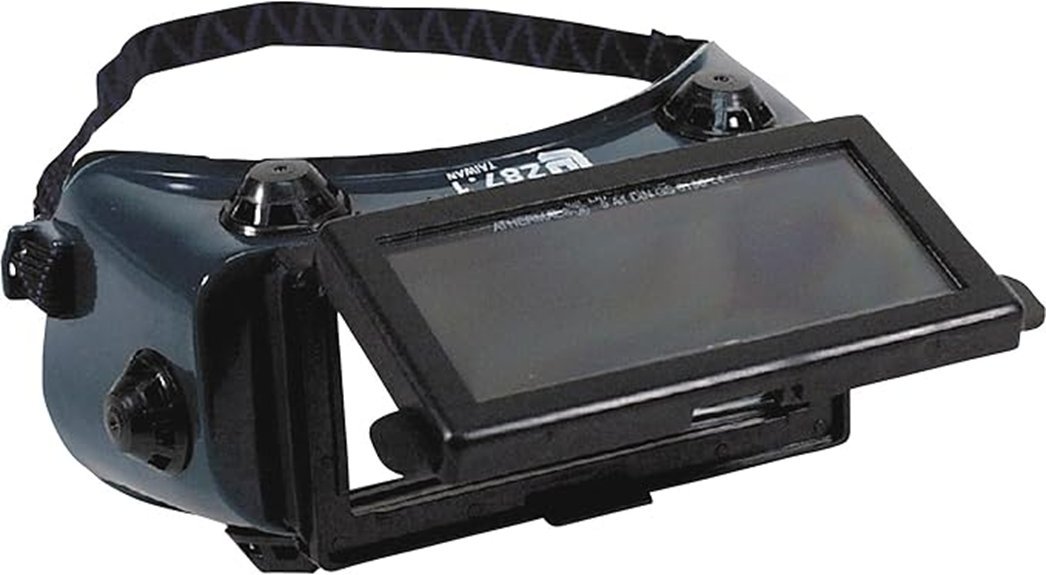
Before ordering, confirm your circuit, compressor CFM, plug type, duty cycle, warranty, and consumable availability. Keep spare torch parts on hand and use proper eye and face protection, ventilation, and flame-resistant PPE whenever you cut.
Full Comparison Table
| Product Name | Image | Best For | Input Power | Air Setup | Amazon |
|---|---|---|---|---|---|
| bestarc BTC800DP 80A |
 |
Higher-output garage and fabrication work | 110/220V | External compressor required | View on Amazon |
| LOTOS LTP6300D |
 |
Thicker plate and repeatable shop cuts | 110/220V | External shop compressor recommended | View on Amazon |
| Forney Easy Weld 20 P (251) |
 |
Thin sheet, auto body, HVAC, and mobile work | 120V | External compressor; Forney lists 1.5 CFM | View on Amazon |
| ARCCAPTAIN iControl CUT60 Pro |
 |
App-assisted setup and mixed fabrication | 120/240V | External compressor required | View on Amazon |
| ARCCAPTAIN CUT55 Non-HF 55A |
 |
General garage, repair, and hobby fabrication | 110/220V | External compressor required | View on Amazon |
| YESWELDER CUT-65DS PLUS |
 |
Cutting, grid work, gouging, and marking | 110/220V | External compressor required | View on Amazon |
| FLARING FC450 |
 |
Portable use without a separate compressor | 240V only | Built-in compressor | View on Amazon |
| LOTOS LTP5800D 58A |
 |
Balanced home-shop and light-fabrication use | 110/220V | External compressor required | View on Amazon |
This roundup is reader-supported. When you click an affiliate link, we may earn a referral commission on qualifying purchases at no extra cost to you.