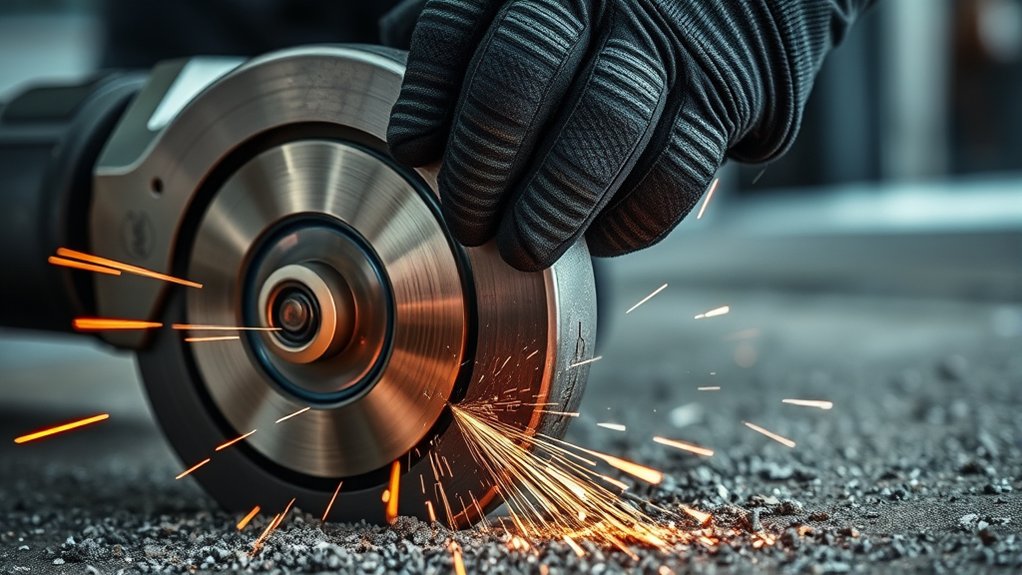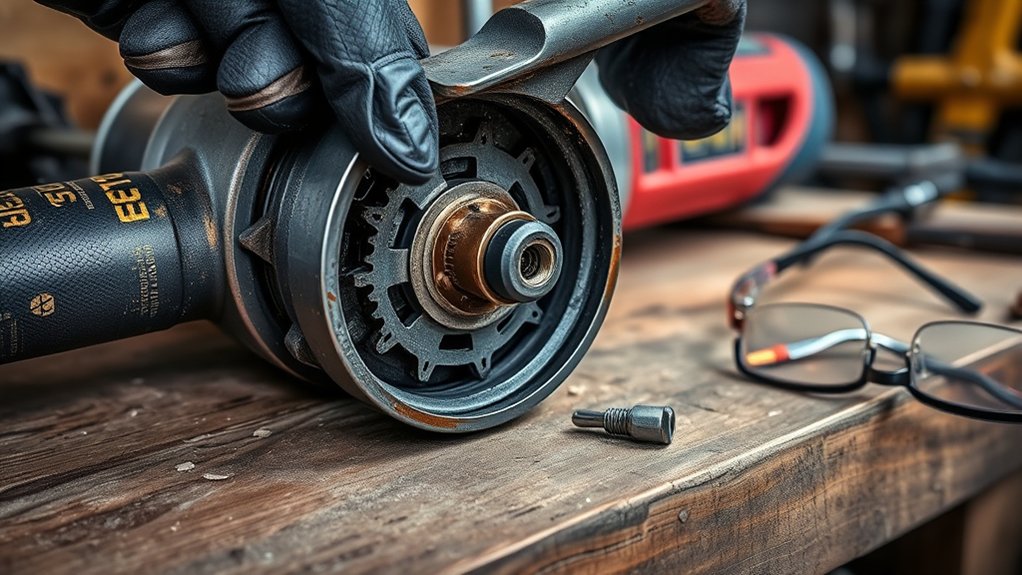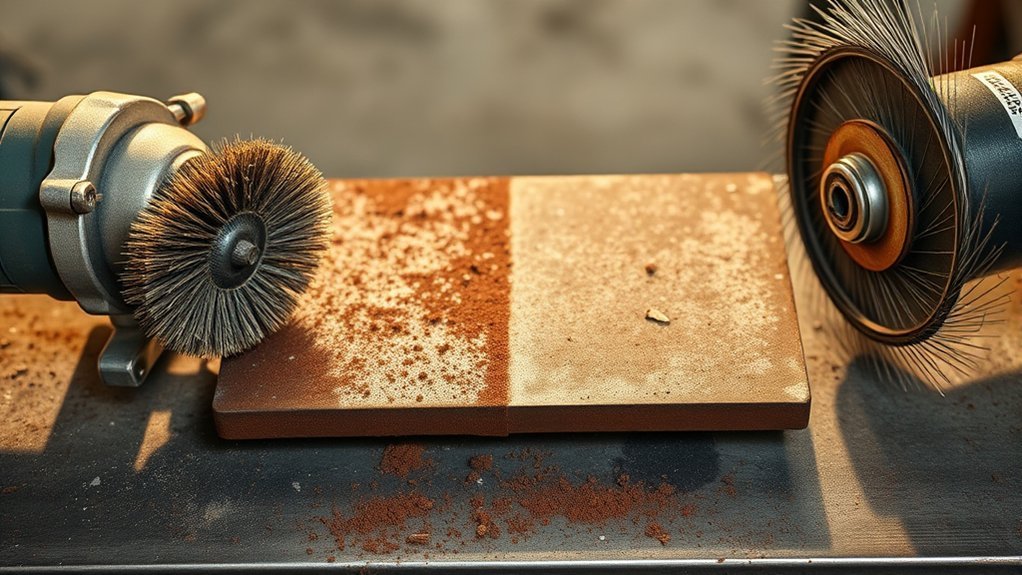
Rust removal forces a trade-off: clear a wide, rusty panel fast, or clean a tight edge without gouging the metal. Wire cup brushes and wire wheel brushes both work well, but they solve different problems. This guide shows you when to choose speed, when to choose control, and how to use each brush safely.
Quick Answer
Use a wire cup brush when you need fast rust removal on broad, open metal surfaces. Use a wire wheel brush when you need more control around seams, edges, corners, grooves, or tight spaces. For heavy rust, start with the more aggressive tool, then finish with a lighter touch so you don’t scar the base metal.
Key Takeaways
- Choose a wire cup brush for speed on large, flat, or open rusted areas.
- Choose a wire wheel brush for control in grooves, corners, weld seams, and tight spots.
- Match the wire type to the metal so you reduce contamination and surface damage.
- Let the wire tips do the work instead of pressing hard into the surface.
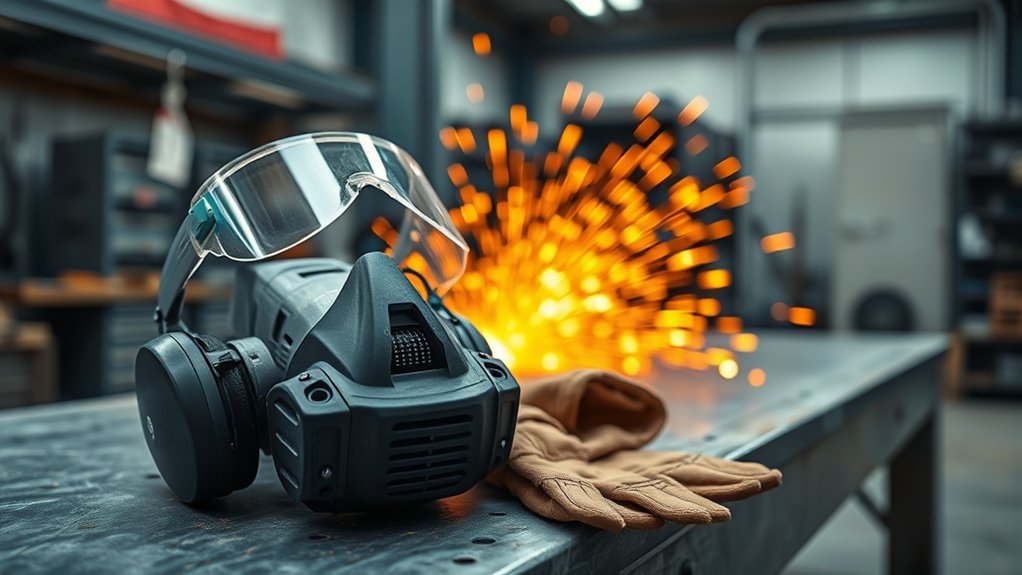
- Wear eye, face, hand, and body protection because wires and rust debris can fly loose.
Understanding Wire Cup Brushes: Key Advantages
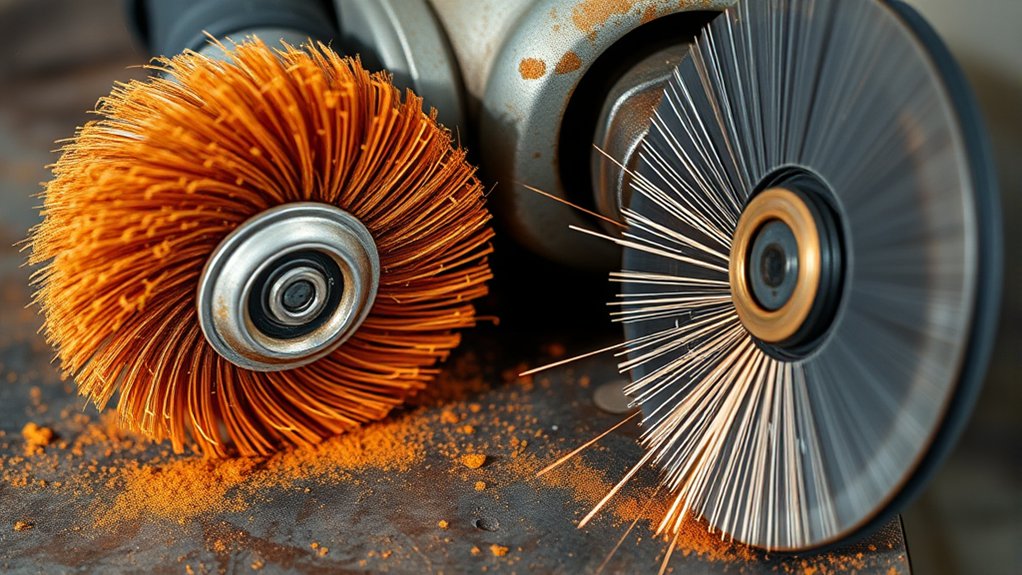
Wire cup brushes remove rust quickly because the cup shape gives them a broad contact area. They work best on larger surfaces such as frames, plates, panels, gates, and heavy brackets.
Crimped-wire cup brushes give you a less aggressive cleaning action. Knotted-wire cup brushes bite harder, so they suit thick rust, scale, and rough surface preparation.
You can also choose different wire gauges and knot styles based on the job. Thicker, stiffer wire removes heavy rust faster, while thinner crimped wire gives you a smoother finish.
Wire Wheel Brushes: Precision Tools for Cleaning
Wire wheel brushes give you better control because their narrow shape fits into smaller areas. They work well on grooves, weld seams, corners, threads, and curved parts.
You can use crimped wire for light rust and finishing work. You can use knotted wire when you need more bite on heavier rust or scale.
Mounted on an angle grinder, bench grinder, or drill, a wire wheel can clean small metal parts without removing too much base material. Keep the wheel square to the work whenever possible so the wire tips clean evenly.
Quick Verdict: Which Rust Removal Brush Should You Use?
Choose a wire cup brush if your main goal is fast rust removal on open metal. Choose a wire wheel brush if your main goal is precision, edge control, or detailed cleaning.
| Feature | Wire Cup Brush | Wire Wheel Brush |
|---|---|---|
| Best use | Large, open surfaces | Edges, seams, grooves, and tight areas |
| Main strength | Speed | Control |
| Rust level | Medium to heavy rust | Light to medium rust and detail work |
| Risk if misused | Surface gouging or uneven cleaning | Slower progress on large rusted areas |
Products Worth Considering

Value Pack: Wire brush kit set includes 3 x 1-inch pen brushes, 3 x 2-inch wheel brushes, and 4 x 2-inch cup brushes, covering all your cleaning and grinding needs. Perfect for both large surfaces and tight spaces

6 Pack Wire Brush Set: This package includes: 2 pcs carbon steel cup brush, 2 pcs wheel brush, 2 pcs pen brush with 1/4 inch hex shank. Hardened steel wire long maximum 4500 RPM.

10 Pack Wire Brush Set: This package includes: 4 pcs carbon steel cup brush, 3 pcs wheel brush, 3 pcs pen brush with 1/4 inch hex shank. Hardened steel wire long maximum 4500 RPM.
Comparing Performance: Wire Cup Brushes vs. Wire Wheels
When you compare rust removal tools, think about surface size, rust thickness, and how much control you need. A wire cup brush usually covers more area per pass. A wire wheel usually gives you a cleaner line around edges and details.
Products Worth Considering

【Production process upgrade】The WENORA Drill Wire Brushes are made of curled, untempered 0.010" carbon steel, upgraded from 60A carbon steel to 72A carbon steel, and upgraded in number and thickness (1-1.5 times) they are securely fastened to a securely designed cup-shaped metal holder that will not lose or bend during intense use.

Ideal for light duty cleaning action

Versatile Drill Wire Brush Set: Our wire brush drill attachments contains 6 essential steel wire brushes for a wide range of cleaning and maintenance tasks. Carbon Steel Wire Brush Set Includes: 2 Pcs wire cup brushes, 3 Pcs wire wheel brushes, 1 Pcs wire pen brush, and all are 1/4 inch hex shank, fits most drills and no falling off
Speed of Removal
Wire cup brushes usually remove rust faster on large, flat, or open surfaces. Their wider contact pattern helps you cover more metal with each pass.
Wire wheels take more time on big surfaces, but they can save work in tight spots. You won’t need to force the tool into corners or awkward gaps.
Control and Precision
Wire wheels offer better control for detailed rust removal. Their thinner profile helps you clean around bolts, welds, corners, and small parts.
Wire cup brushes can feel harder to control on edges or curved surfaces. If you press too hard, they can leave scratches or uneven marks.
Speed or Control: What’s More Important for Rust Removal?
The right choice depends on what matters most for your project. Speed helps when you need to strip a broad area. Control matters more when the surface has edges, seams, or parts you need to protect.
Speed Advantages of Wire Cup Brushes
Wire cup brushes help you move quickly across larger rusted surfaces. They suit jobs where you need to clean broad metal before painting, priming, or welding.
- Faster coverage: The wide brush face cleans more area per pass.
- Better for heavy buildup: Knotted wire can cut through tougher rust and scale.
- Good for open work areas: Flat panels and frames give the cup room to work.
- Efficient surface prep: The tool can remove rust, old paint, and loose coating in one pass.
Precision Control With Wire Wheels
Wire wheels make sense when you need cleaner control instead of brute force. They fit into narrow gaps and help you avoid nearby surfaces.
Use a wire wheel for weld seams, small brackets, corners, threads, and curved parts. Keep a steady angle and use light pressure so the wires clean instead of dig.
Choose a Wire Cup Brush If…
Choose a wire cup brush if you need to clean a large, open surface with medium or heavy rust. It also works well when you plan to prime or paint the surface after cleaning.
A cup brush suits strong, accessible metal parts such as trailer frames, steel plates, farm equipment, gates, and heavy brackets. Avoid using too much pressure on thin or delicate metal because you can leave deep scratches.
Choose a Wire Wheel Brush If…
Choose a wire wheel brush if you need to clean edges, grooves, weld seams, corners, or small parts. It gives you more control where a cup brush feels too wide or aggressive.
A wheel brush also helps with light rust, detail cleanup, and final passes after heavier rust removal. Use it when you care more about clean access than fast coverage.
How to Choose the Best Tool for Rust Removal
Start by checking the rust thickness and the shape of the surface. Then choose the brush that removes the rust without doing extra harm to the metal.
- Check the rust thickness: Use a wire cup brush for thicker rust and a wire wheel for lighter rust or detail work.
- Match the tool to the shape: Use a cup brush on open surfaces and a wheel brush on narrow or detailed areas.
- Choose the right wire material: Use carbon steel wire on carbon steel, and use stainless steel wire on stainless or non-ferrous metals.
- Match the brush to the tool rating: Check the brush’s maximum revolutions per minute (RPM) before use.
Note: Never use a brush above its rated RPM, even if it fits your grinder or drill.
Essential Techniques for Effective Wire Brush Use
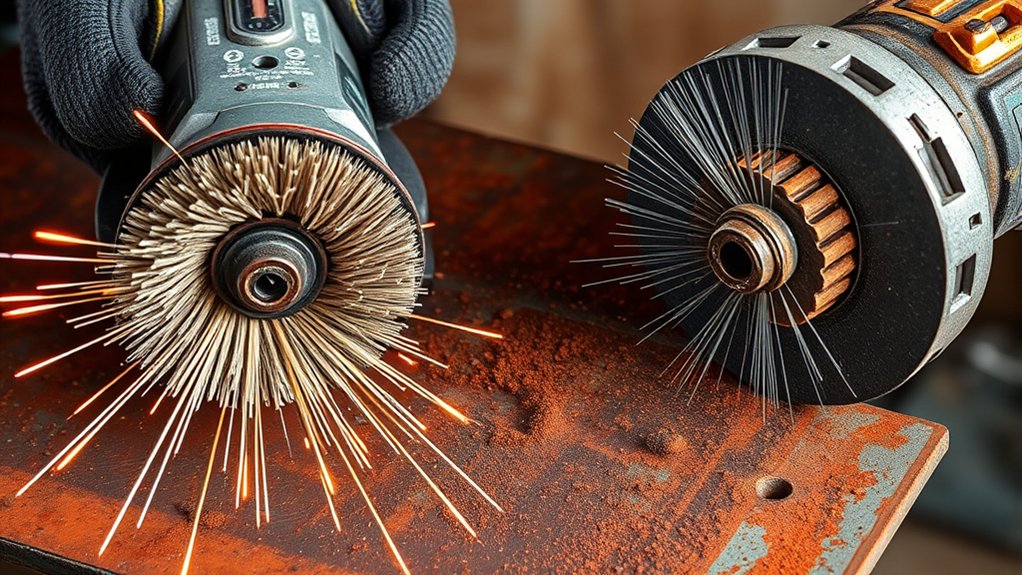
Use steady, light pressure and let the wire tips do the cleaning. Hard pressure bends the wires, reduces control, and can damage the surface.
Keep the brush moving so you don’t overheat or pit the metal. Work in overlapping passes until you remove the loose rust and reach sound material.
Hold the brush as square to the work as the tool allows. Side loading the wires can cause breakage and shorten brush life.
Pro tip: Start with the least aggressive brush that can remove the rust, then step up only if needed.
Safety Considerations When Using Wire Brushes
Wire brushes can throw sharp wire fragments, rust, paint chips, and metal dust. Treat them like high-speed cutting accessories, not simple hand brushes.
- Wear protective gear: Use safety glasses, a face shield, gloves, long sleeves, and hearing protection.
- Inspect the brush: Check for missing wires, cracks, damage, or heavy wear before each use.
- Secure the workpiece: Clamp small parts so they don’t move or catch the brush.
- Keep bystanders away: Flying debris can travel beyond your work area.
- Control dust: Avoid breathing rust, paint, or coating dust, especially on unknown old finishes.
Warning: Old paint, coatings, and rust dust can contain hazardous material, so use respiratory protection and proper cleanup methods.
Real-World Applications: When to Use Each Tool
Use a wire cup brush when you need to clean broad steel surfaces before coating, welding, or repair. It helps on trailer frames, steel posts, gates, shop fixtures, and equipment panels.
Use a wire wheel when you need to clean detailed shapes or protect nearby edges. It works well on weld seams, bolt areas, corners, brackets, and small parts.
For many projects, you may use both. Start with a cup brush for the open areas, then switch to a wheel brush for the edges and tight spaces.
Frequently Asked Questions
What Is the Difference Between a Wire Wheel and a Wire Cup Brush?
A wire cup brush has a cup-shaped face that covers more surface area, so it removes rust faster on open metal. A wire wheel has a narrow disc shape, so it gives you better control in grooves, seams, corners, and tight spaces.
Is a Wire Wheel Enough to Remove Rust?
A wire wheel can remove light to medium rust well, especially on detailed parts. For heavy rust over a large area, a wire cup brush or another more aggressive method may save time.
What Brush Is Best for Removing Rust?
The best brush depends on the job. Use a wire cup brush for large areas and thick rust, and use a wire wheel brush for detail work, seams, corners, and lighter rust.
Is a Wire Brush Good for Rust Removal From My Frame?
Yes, a wire brush can remove loose rust from a metal frame when the metal still has enough strength. If the frame has deep pitting, holes, or flaking layers, inspect it carefully before coating or putting it back into service.
Can a Wire Brush Damage Metal?
Yes, a wire brush can scratch, gouge, or contaminate metal if you choose the wrong wire or press too hard. Use light pressure, match the brush material to the metal, and test on a small area first.
Conclusion
Your best rust removal brush depends on the balance between speed and control. Pick a wire cup brush for large, open, rusty surfaces, and pick a wire wheel for edges, seams, corners, and detailed work.
Before you start, check the rust level, the metal type, and the tool’s RPM rating. Work with light pressure, steady motion, and the right safety gear. With the right brush and technique, you can remove rust faster while keeping the metal in better shape.