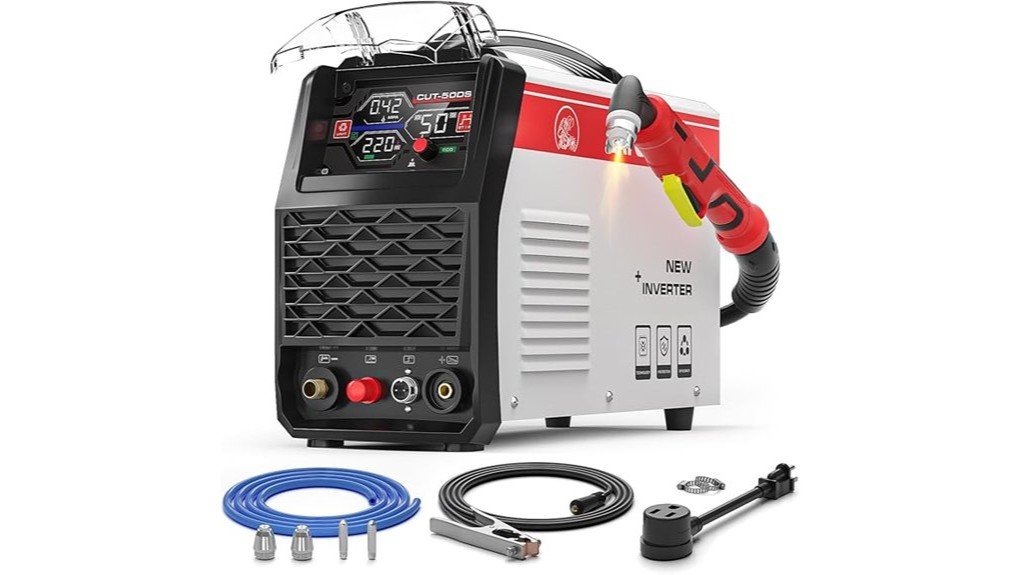
A plasma cutter for rusty metal should have a pilot arc or non-touch pilot arc, so it can start and hold an arc through rust, paint and uneven surfaces. This guide compares ten dual-voltage 50A to 60A models by torch start type, controls and included parts.
Quick Verdict
For rusty or painted metal, look for a pilot-arc or non-touch pilot-arc torch, a built-in air regulator and dual-voltage input. All ten models are listed as 50A to 60A dual-voltage cutters; they differ in torch start type, controls, duty cycle and what ships in the box. Budget models need closer attention to air supply and 110V limits.
Best Plasma Cutter for Rusty Metal and Paint
|
Category |
Product |
|---|---|
|
Best For Beginners |
|
|
Best Smart Control |
|
|
Best Value |
|
|
Best For Rust Removal |
|
|
Also Consider |
|
|
Best Budget |
|
|
Best Portable |
|
|
Best For Home Workshops |
|
|
Best Pro-Grade |
|
|
Also Consider |
How These Picks Were Chosen
Picks are based on the product listings and manufacturer-stated specs, not on hands-on testing. Cutting capacity and duty cycle are maker figures from each listing and change with input voltage and air supply.
Weights and dimensions in the comparison table come from the listings.
Before You Buy
- Use 240V for thicker metal: Many 50A and 60A cutters can run on 110V, but heavier cuts usually improve on 220V or 240V.
- Plan for dry air: A moisture trap or air dryer helps prevent unstable arcs and protects consumables.
- Check torch type: Pilot arc and non-touch pilot arc are better choices for painted, rusty, expanded, or uneven metal.
- Match the duty cycle to your work: Short DIY cuts are easier on budget units, while long plate cuts need more power, airflow, and cooling time.
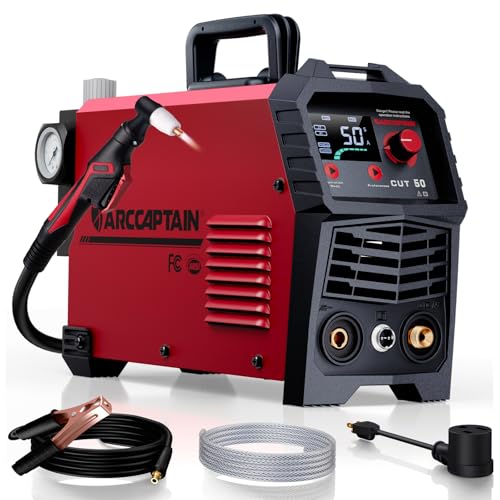
You get a compact, no-nonsense plasma cutter that’s built for garage projects and weekend restorations. It packs dual-voltage flexibility, a large LED readout, and a built-in regulator so you can dial pressure and amps without hunting for extra accessories.
In practice it’s great for trimming rusty brackets, cutting painted panels, and quick repairs on trailers or yard gear. It’s light enough to move around at 13 pounds and simple enough for a beginner, yet powerful enough when you switch to 240V to slice through thicker pieces.
If you value an approachable tool that reduces grinding and messy oxy cuts, this is an easy machine to live with.
Problem Solving
This cutter tackles painted and rusty metal by letting you adjust air pressure and amperage quickly, and the drag-style torch helps maintain a steady arc on uneven surfaces. For thicker or crusty pieces you’ll get better, cleaner cuts on 240V and by managing torch lift after striking the arc to preserve consumables.
Indoor/Outdoor
It’s versatile enough for indoor garage use and outdoor jobsite work as long as you supply dry compressed air and the right outlet. At about 13 pounds it’s easy to carry, but remember ventilation, a solid ground connection, and a suitable power circuit when you use it inside.
Key Benefits
- Dual-voltage for shop or site flexibility
- Built-in regulator and large LED for quick setup
- Portable, beginner-friendly performance on rusty/painted metal
Who should buy this: DIY users who want a simple first plasma cutter with enough flexibility for common garage jobs.
Who should avoid this: Buyers who plan to cut thick plate for long sessions on 110V power only.

You’ll appreciate how this cutter blends power with convenience. The non-touch pilot arc and multiple cutting modes let you start cuts on painted or rusty metal without dragging the tip, while the APP control and large LED make adjustments simple on the fly. It’s compact enough to move between a garage and a job site at about 19.6 pounds, yet capable of clean cuts when you plug into 240V.
Use it for weekend restorations, sheet metal work, or light farm repairs and you’ll find the mesh and gouge modes handy for specialty tasks. If you want a feature-rich hobby shop tool that scales up when needed, this one is easy to recommend.
Problem Solving
The non-touch pilot arc and adjustable modes help you cut through paint and rust without constant tip swaps, and the arc gouge option gives you a way to clean up stubborn spots. For thicker or heavily corroded pieces you’ll get cleaner results using 240V and slowing your travel speed so the arc can penetrate steadily.
Indoor/Outdoor
It’s portable enough for indoor garage projects and outdoor jobs, provided you have dry compressed air and proper ventilation. The unit’s weight and carryability make it easy to move, but plan for a 240V hookup or a capable generator for heavy cuts and keep a secure grounding point when working outdoors.
Key Benefits
- Non-touch pilot arc for painted and rusty surfaces
- APP control and large LED for fast setup and fine tuning
- Multiple modes including mesh cutting and arc gouge for versatile tasks
Who should buy this: Hobbyists, farm users, and workshop owners who want more control than a basic CUT50-style machine.
Who should avoid this: Buyers who prefer the simplest possible interface and do not need app control or specialty modes.

You get a surprisingly capable pilot-arc cutter that’s tuned for real workshop tasks. It boots up fast, the front panel controls and air sensor make setup intuitive, and the built-in regulator and dryer help keep consumables lasting longer when you’re cutting painted or rusty metal. It’s light enough to carry around the garage and robust enough to handle sheet work, floor pan repairs, and metal art projects.
If you want a unit that helps you trade grinding for clean plasma cuts and learns quickly as you use it, this one fits that role nicely.
Problem Solving
The pilot-arc design lets you start and cut over paint and rust without constant tip contact, and the integrated air sensor and dryer reduce arcing caused by moisture so you don’t burn through consumables as fast. For thicker or crusty pieces you’ll want to slow your travel and use 240V to let the arc penetrate cleanly.
Indoor/Outdoor
It works well in a garage or on the job if you provide dry compressed air and adequate ventilation. The unit’s weight and built-in regulator make it convenient to move, but plan for a capable air supply and a 240V source for heavier cutting outdoors or for continuous runs.
Key Benefits
- Pilot arc and air dryer keep tips working on painted and rusty surfaces
- Clear front controls and LED readout speed up setup
- Dual-voltage and portable for garage or light jobsite use
Who should buy this: DIY and home-shop users who want a strong value option for regular rusty, painted, and mixed-metal cutting.
Who should avoid this: Buyers who already own a heavy-duty professional machine and need industrial duty cycles more than portability.

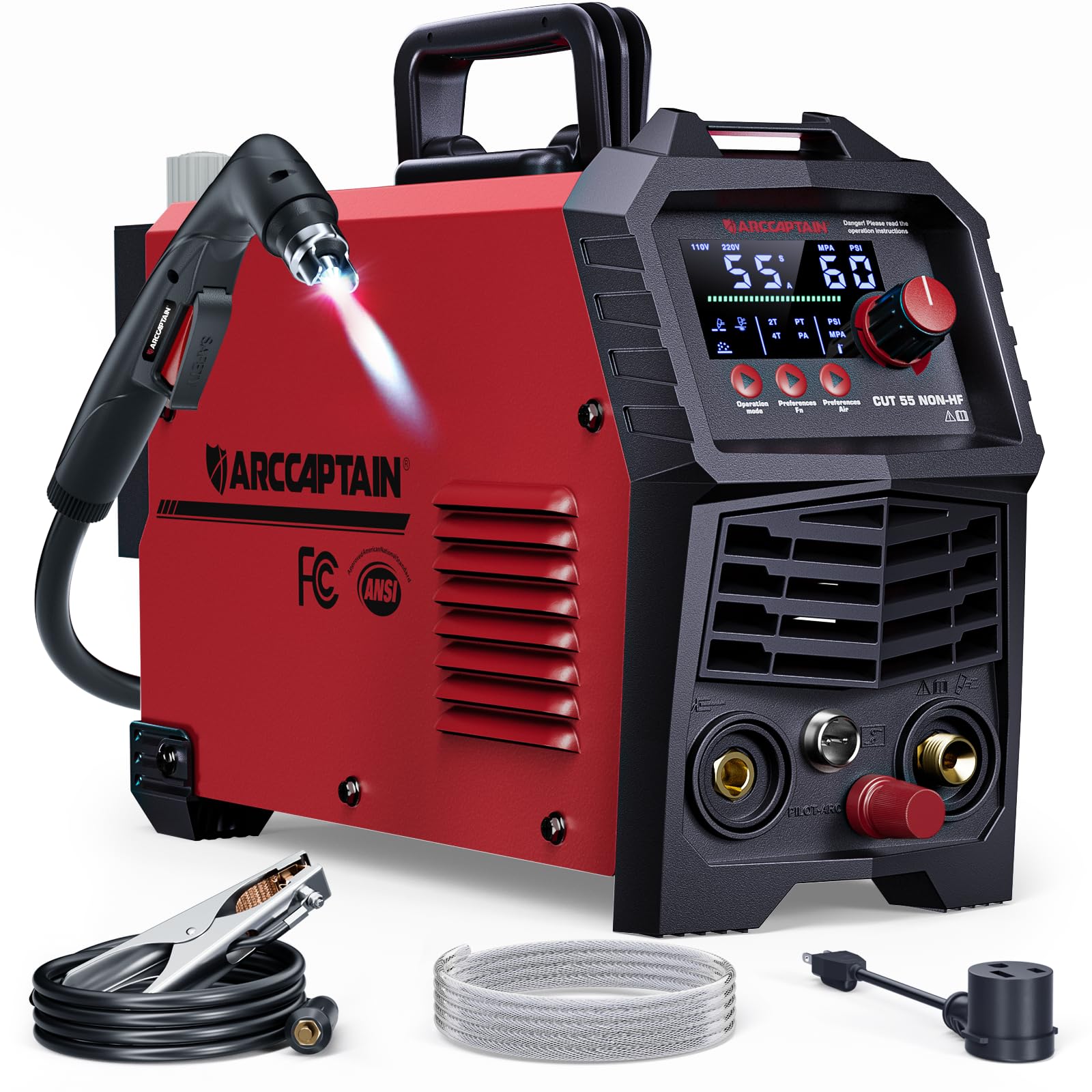
You get a robust cutter that’s built to handle painted and rusty metal without constant tip contact. The non-touch pilot arc and mesh modes make starting cuts on crusty surfaces far easier, and the big LED display helps you tweak settings quickly.
It’s portable enough to move around the shop at about 18.8 pounds, yet when you plug into 240V it delivers solid penetration for repairs, art projects, and trailer or farm work. If you want a feature-packed unit that reduces grinding and gives you cleaner edges, this one balances capability with approachable controls.
Problem Solving
The pilot-arc design helps you avoid dragging through paint or rust, and the mesh/gouge modes let you attack expanded metal or stubborn spots without swapping tools. For thicker or heavily corroded pieces you’ll see better results by slowing your travel and using a 240V supply so the arc can cut more steadily.
Indoor/Outdoor
It’s suitable for garage work and outdoor jobs as long as you supply dry compressed air and proper ventilation. The unit’s weight makes it portable for short moves, but for prolonged outdoor cutting plan for a solid 240V hookup or a generator and a long, secure ground clamp.
Key Benefits
- Non-touch pilot arc reduces tip wear on painted and rusty surfaces
- Mesh and rust-removal modes for specialty cuts and cleanup
- Large LED display and straightforward controls speed setup
Who should buy this: Buyers who want extra modes for rust, paint, expanded metal, and general repair work.
Who should avoid this: Users who only need occasional thin sheet cuts and want the lowest possible upfront cost.

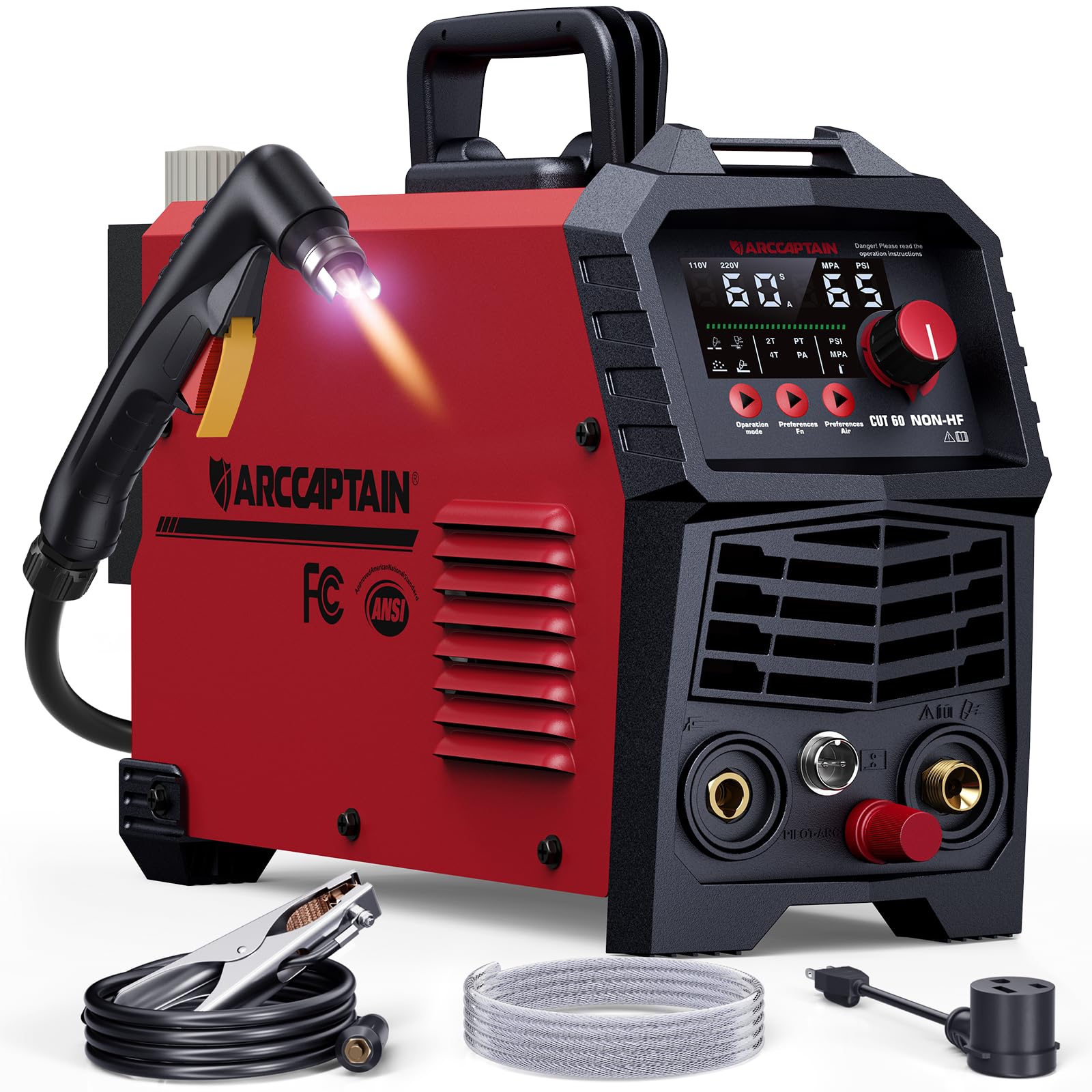
You’re looking at a step-up unit that’s aimed at heavier garage and light-shop work while staying portable. The upgraded LED and air pressure detection make setup more predictable, and the included longer torch and extra nozzles give you room to handle plate cutting, expanded metal and cleanup jobs. It performs best when you can use 240V for deeper penetration, but it still handles routine sheet and painted metal tasks around the yard. If you want a robust, feature-rich cutter that tames rusty or painted surfaces without being a workshop tank, this one strikes a practical balance.
Problem Solving
The blowback pilot arc helps you cut over paint and rust without constantly touching the tip, and the mesh/gouge options let you clear stubborn material without switching tools. For thick or heavily corroded pieces, use 240V and slow your travel speed to let the arc bite through.
Indoor/Outdoor
It’s portable enough for garage projects and mobile jobs, provided you have dry compressed air and proper ventilation; plan for a dedicated 240V hookup or a capable generator for extended outdoor cutting.
Key Benefits
- Upgraded LED and air pressure detection for consistent setup
- Mesh and gouge modes let you handle expanded metal and cleanup
- Longer torch and included consumables reduce downtime
Who should buy this: Home-shop and light professional users who want more cutting headroom than a basic 50A unit.
Who should avoid this: Buyers with only light sheet-metal tasks and limited compressor capacity.

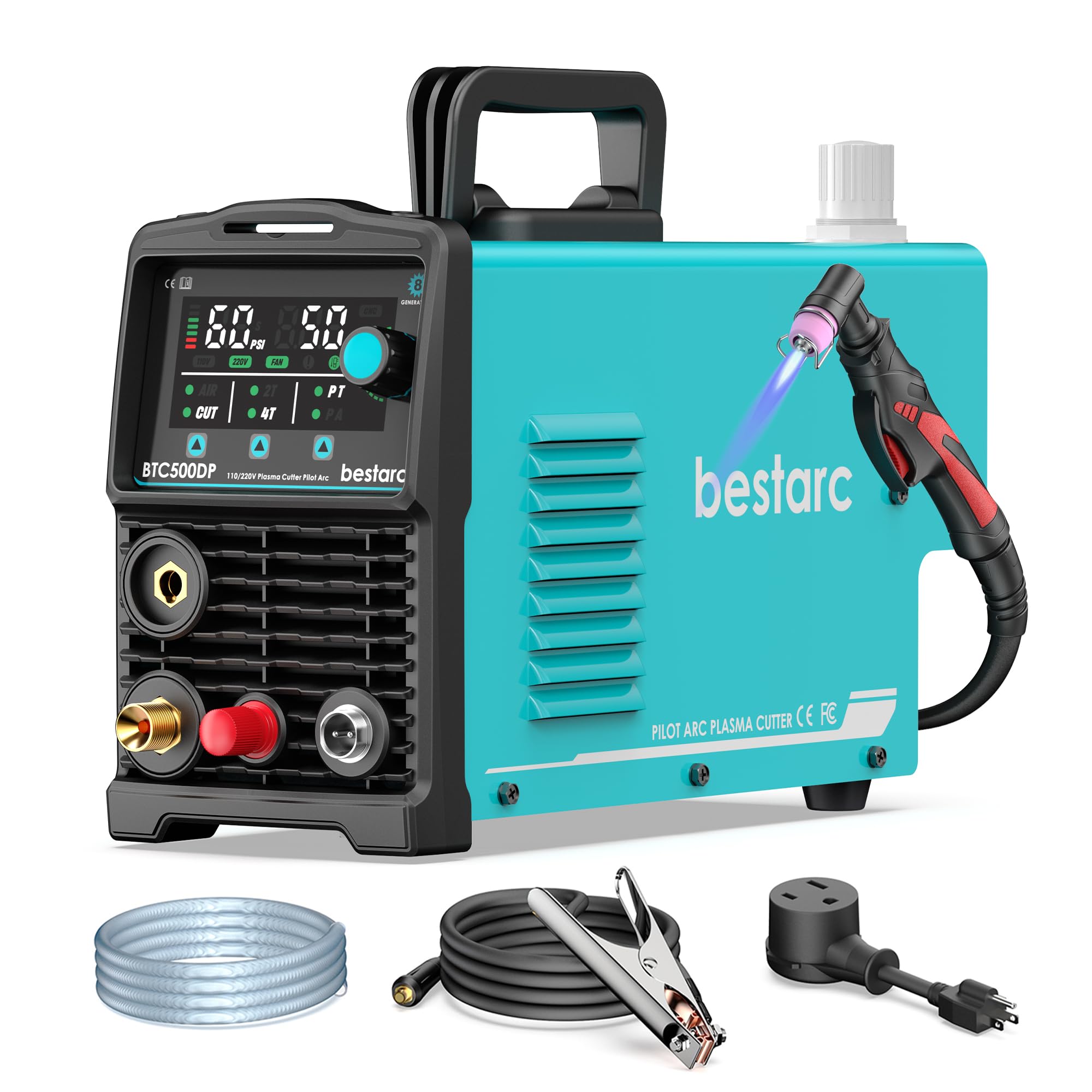
You get a compact, straightforward pilot-arc unit that’s geared toward garage repairs and scrap work. The long torch lead and built-in regulator make setup feel less fiddly, and the non-touch arc helps you start cuts on painted or rusty metal without constantly replacing tips.
It can be a bit demanding on 110V circuits, so you’ll see its best performance on 240V, but for welding table touch-ups, trailer fixes, and metal art it’s a solid practical tool you can carry between jobs.
Problem Solving
The non-touch pilot arc helps you avoid dragging through paint and rust, and the regulator reduces arc instability caused by moisture. For thicker or crusty sections, using 240V and slowing your travel speed gives cleaner penetration, and swapping to sturdier fittings or a longer ground clamp fixes common setup limitations.
Indoor/Outdoor
It’s suitable for garage projects and light outdoor jobs as long as you have dry compressed air, good ventilation, and an appropriate power source. The unit is portable but heavier than ultra-compact models, so plan for a 240V hookup or a generator for demanding cuts and bring a longer, solid ground clamp when working away from the bench.
Key Benefits
- Non-touch pilot arc for cutting over paint and rust
- Built-in air regulator simplifies setup and extends consumables
- Long torch lead and portable form factor for shop mobility
Who should buy this: DIY users who want a budget-friendly pilot-arc cutter and are willing to fine-tune air, fittings, and power setup.
Who should avoid this: Buyers who want polished accessories, heavy-duty leads, or long continuous cuts right out of the box.

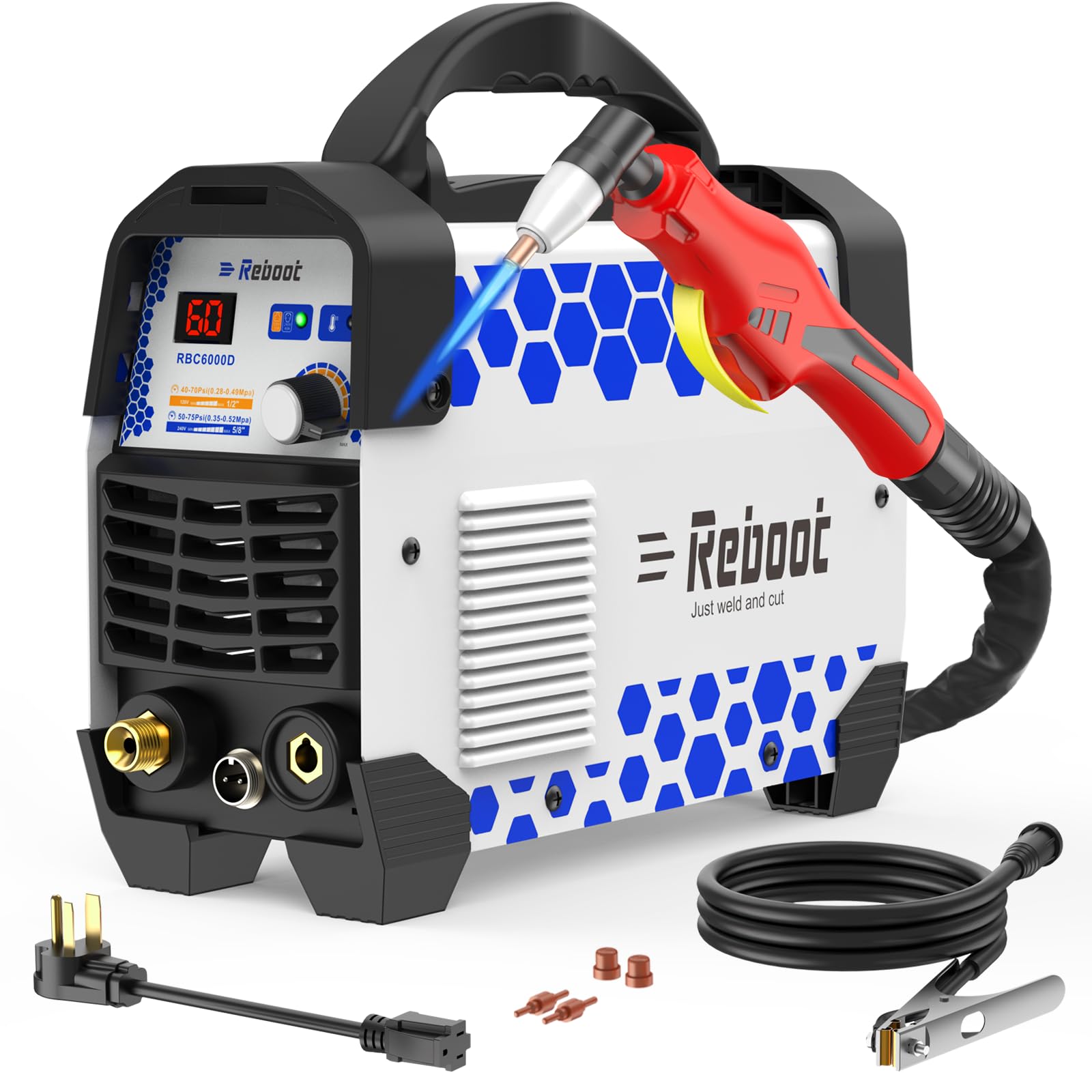
You get a compact, usable cutter that’s aimed at folks who need portability without losing cutting muscle. The pre-installed regulator and included torch mean less fiddling at setup, and the touch arc works well on painted or rusty metal when you feed it a steady air supply.
It’s handy for trimming trailer parts, cutting scrap for projects, or finishing metal art, and it’s light enough to move between the garage and the yard. If you want something straightforward that gets you from setup to cutting quickly, this one fits that role.
Problem Solving
The touch arc and built-in regulator help you start and maintain a steady arc on painted or corroded surfaces, reducing wasted tips. For thicker or stubborn material, using 240V and slowing your travel gives better penetration and cleaner edges.
Indoor/Outdoor
It works well in a garage or on short outdoor jobs as long as you provide dry air and decent ventilation. The unit’s weight and carry features make it portable, but plan for a higher-amp circuit or generator when you need to cut thicker plate away from the shop.
Key Benefits
- Pre-installed air regulator for faster setup
- Portable and user-friendly for DIY and farm tasks
- Capable touch arc for cutting over paint and rust
Who should buy this: Buyers who need a portable cutter for farm, garage, trailer, and general utility cutting.
Who should avoid this: Users who need a non-touch pilot-arc system for frequent expanded metal or heavily painted work.
You’ll find this model is a practical, no-nonsense cutter for routine workshop tasks. The LED display gives clear readouts so you can tweak amperage and post-flow, while the built-in regulator and PT31 torch get you cutting quickly without hunting for adapters.
It performs best on 240V for heavier plate, but it still handles sheet work, trailer repairs, and metal art in a typical garage setup. If you want something portable that moves from the bench to the yard and gets consistent results, this is a solid everyday choice.
Problem Solving
The built-in regulator and post-flow control help stabilize the arc on painted or slightly rusty surfaces so you don’t burn through tips as quickly. For thicker, crusty sections you’ll get cleaner results by switching to 240V and slowing your travel speed so the arc can cut steadily.
Indoor/Outdoor
It works well in a garage and on short outdoor tasks when you supply dry compressed air and proper ventilation. The unit is light enough to carry but plan for a 240V hookup or a capable generator for sustained outdoor cutting.
Key Benefits
- Clear LED display and post-flow control for easy adjustments
- Built-in air regulator simplifies setup and helps consumable life
- Portable design and PT31 torch make it handy for garage and light jobsite work
Who should buy this: Home-shop buyers who want an affordable 50A cutter for general repairs and occasional rusty or painted metal.
Who should avoid this: Users who need exact product-page details before purchase, since the link points to an Amazon search page rather than a specific product detail page.

You get a well-known, no-nonsense plasma cutter that’s easy to set up and dependable for a range of projects. The non-touch pilot arc makes it simple to start cuts on painted or rusty metal, and the machine feels sturdy enough for repeated hobby or light commercial use.
It’s compact and surprisingly light for its power, so you can move it around the shop or take it to a jobsite. Use it for trimming floor pans, cutting panels for metal art, splitting scrap for recycling, or heavier plate when you can run 240V.
Problem Solving
The non-touch pilot arc lets you start and continue cuts without dragging through paint or corrosion, reducing consumable wear. For cleaner results on thick or heavily corroded sections, lay the work flat, use 240V if available, and slow your travel speed so the arc can penetrate steadily.
Indoor/Outdoor
It works well inside a ventilated garage or on outdoor jobs when you provide dry compressed air and a suitable power source. The unit is portable enough to move between locations, but plan for a dedicated 240V circuit or a capable generator and bring a longer ground clamp for off-bench work.
Key Benefits
- Non-touch pilot arc for cutting over paint and rust
- Lightweight, portable design that still handles 1/2″ plate
Who should avoid this: Users who want newer smart controls, app-based features, or specialty mesh and gouging modes.
You’ll find this cutter easy to pick up and use right away. The clear digital display and dual-voltage support let you move between light shop work and heavier cuts when 240V is available, and the PT-style torch feels familiar in hand.
It’s a good fit for trimming rusty brackets, cutting sheetmetal for restorations, and hobby projects where portability matters. If you want a straightforward machine that gets you cutting quickly without a steep learning curve, this model is a practical choice.
Problem Solving
The digital controls and stable arc help you cut through painted or slightly corroded metal without constant tip contact, and the dual voltage option lets you step up power for thicker pieces. If you encounter stubborn or thicker material, slow your travel and use 240V to get cleaner penetration.
Indoor/Outdoor
It works well in a ventilated garage and for short outdoor jobs when you bring dry compressed air and a suitable power source. The unit’s portability makes it handy on site, but plan for a higher-amp circuit or generator for extended outdoor cutting.
Key Benefits
- Large digital display makes adjustments simple
- Dual-voltage flexibility for garage or shop use
- Portable and easy to move for on-site tasks
Who should buy this: Weekend fabricators who want a simple digital cutter for garage, restoration, and light-duty metal work.
Who should avoid this: Buyers who need a direct product detail page from the CTA link, because this link uses an Amazon search URL.
How To Choose The Right Plasma Cutter For Rusty Or Painted Metal
The best plasma cutter for rusty or painted metal is usually not just the highest-amp model. You want a machine that starts reliably, maintains a stable arc, and works with the power and air supply you actually have. A pilot arc or non-touch pilot arc is especially helpful because it lets the torch start without direct tip contact, which is useful on uneven, dirty, painted, or corroded surfaces.
For light sheet metal, brackets, trailer repairs, and garden art, a 50A dual-voltage cutter is usually enough. For thicker plate, frequent outdoor repairs, or long work sessions, a 55A or 60A model with air pressure detection, stronger cooling, and a better duty cycle gives you more room to work.
Pro Tips For Cleaner Cuts
- Clean the ground point first: Even if the cutter can handle rust, a clean ground clamp area helps arc stability.
- Use dry compressed air: Moisture can shorten consumable life and cause rough starts.
- Match travel speed to thickness: Moving too fast leaves dross and incomplete cuts; moving too slow can widen the kerf.
- Let the duty cycle recover: Give the unit breaks during long cuts so it does not overheat.
- Use 240V when possible: Thicker, rustier, or painted material usually cuts cleaner with the stronger power setup.
Related guides: how a pilot arc plasma cutter works | what air a plasma cutter needs | plasma cutters for beginners
FAQ
Will It Cut Rust And Paint?
Yes — many modern cutters on this list use a pilot arc or non-touch start that lets you begin and maintain a cut over painted or rusty metal without dragging the tip. You’ll get cleaner cuts if you keep the torch moving at a steady speed, use a bit more amperage or 240V for thicker sections, and avoid gouging by lifting the torch slightly after striking the arc so consumables last longer.
Do I Need 240V Or Will 110V Work?
110V can handle light sheet work and quick trim jobs, but you’ll hit limits on thicker or continuous cuts. If you plan to cut plate or work for extended periods, use 240V or a properly sized generator to give the machine room to breathe.
Also make sure your circuit and cords are sized for the machine and that you provide adequate breaks for the duty cycle so the unit doesn’t overheat.
What Air And Maintenance Do I Need?
Dry, clean compressed air and routine consumable care make the biggest difference. Check the manual for the required air pressure and flow, and use an inline dryer or moisture trap to prevent tip arcing.
Keep the tip and nozzle clean, replace worn consumables promptly, use a longer quality ground clamp, and inspect fittings for leaks so you spend more time cutting and less time troubleshooting.
Is A Pilot Arc Worth It?
Yes, especially if you cut rusty, painted, dirty, expanded, or uneven metal. A pilot arc can start more easily without direct tip contact, which helps protect consumables and reduces frustration when the surface is not perfectly clean.
Which Type Is Best For Beginners?
A dual-voltage 50A cutter with a clear display, built-in air regulator, simple controls, and pilot-arc support is usually the easiest starting point. It gives you enough power for common garage jobs without making setup too complicated.
Which One Should You Choose?
Start with the torch: pilot arc or non-touch pilot arc is the better fit for painted, rusty or expanded metal. Then match power and air to your shop. A 240V outlet and dry compressed air give the most headroom, and 110V is fine for thin material and short cuts. Check each listing for what the kit includes before you compare prices.
Final Recommendation
There is no single winner for every shop. Choose by your power and air supply first: on 110V stick to thin material and short cuts, and on 240V with a dry air supply the 55A and 60A models give more headroom. Then choose the torch type (pilot arc or non-touch pilot arc for rust and paint) and compare what each kit includes.
Wrapping Up
Match the machine to your power and air supply, and choose a pilot-arc or non-touch pilot-arc torch for rusty and painted work. Confirm specs and what is included on each listing before you buy.
| Product Name | Image | Cutting Thickness | Weight | Special Highlights | Best For |
|---|---|---|---|---|---|
| ARCCAPTAIN Plasma Cutter |
 |
1/2 inch clean cut, 3/4 inch max cut | 13 pounds |
|
Beginners and portable garage repairs |
| ARCCAPTAIN iControl CUT55 Pro Plasma Cutter |
 |
3/4 inch maximum cut | 19.62 pounds |
|
Smart control and mixed cutting modes |
| bestarc Plasma Cutter |
 |
1/2 inch clean cut, 3/4 inch max cut | 16.52 pounds |
|
Rusty and painted metal |
| ARCCAPTAIN 55Amp Plasma Cutter |
 |
See listing | 18.81 pounds |
|
Rust removal, mesh cutting, and repair work |
| ARCCAPTAIN 60Amp Plasma Cutter |
 |
1/2 inch clean cut | 19.66 pounds |
|
More power for garage and light-shop use |
| S7 CUT-50 Plasma Cutter |
 |
Up to 20mm | 22.2 pounds |
|
Budget DIY cutting and scrap work |
| Reboot 60A Plasma Cutter |
 |
1/2 inch clean cut | 15.18 pounds |
|
Portable farm, shop, and trailer repairs |
| 50A Plasma Cutter with LED Display |
 |
Up to 1/2 inch | 18.76 pounds |
|
Home workshops and routine shop tasks |
| LOTOS LTP5000D |
 |
1/2 inch clean cut | Lightweight portable design |
|
Hobby and light-shop cutting |
| YESWELDER CUT50DS |
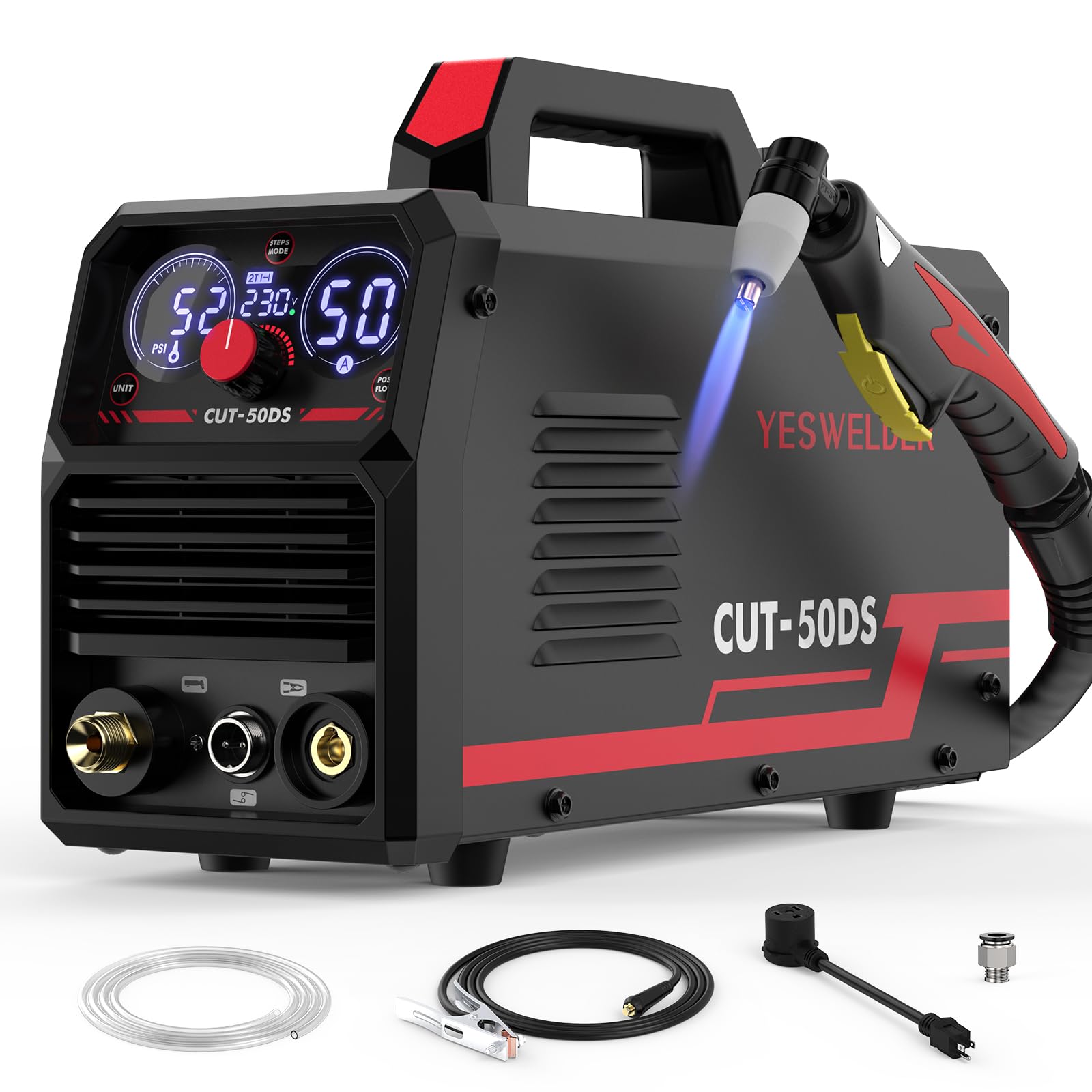 |
Light-duty metal cutting | Portable design |
|
Weekend fabrication and simple garage use |