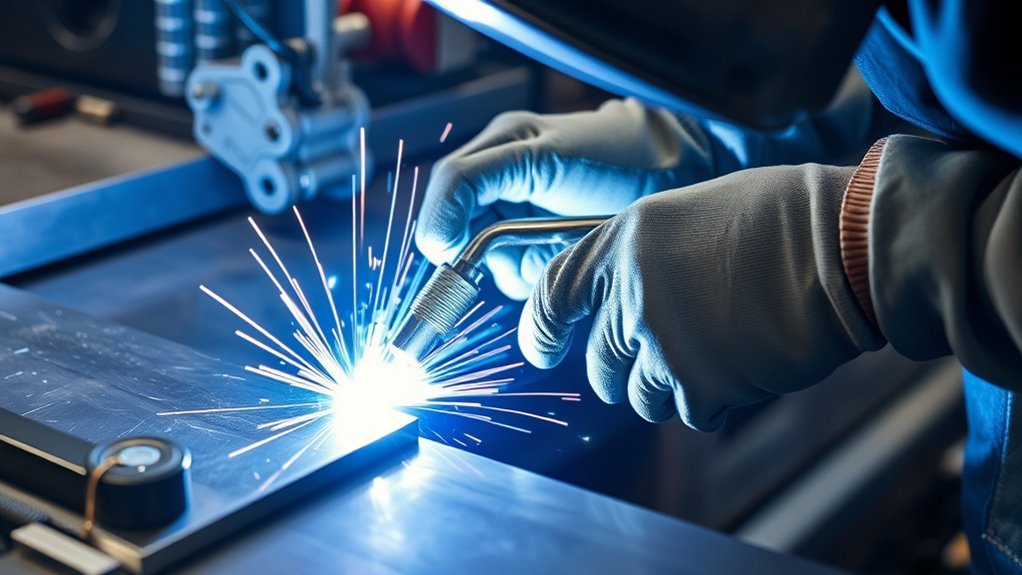
A perfect weld means nothing if the metal next to it fails. In automotive welding, the heat-affected zone (HAZ) is the hidden area where heat alters the base metal’s structure without melting it. By controlling this zone, you prevent weak joints and ensure the vehicle survives real-world impacts.
Quick Answer
The heat-affected zone (HAZ) is the unmelted area of metal right next to a weld. The heat from welding changes the physical properties of this strip, often making it harder but more brittle. Welders must control heat input to keep the HAZ small and protect the structural strength of the vehicle.
Key Takeaways
- The HAZ changes metal grain structure without melting it.
- Excessive heat input creates a wider, weaker HAZ.
- Low-heat processes like TIG and laser welding minimize HAZ damage.
- Fast cooling rates can cause brittle zones and lead to cracking.
The heat-affected zone is the strip of base metal next to a weld that does not melt. However, it still undergoes microstructural change from the welding heat. This alters its strength, hardness, and fatigue behavior.
The heat-affected zone is the unmelted base metal beside a weld, altered by heat and changing strength, hardness, and fatigue behavior.
In automotive applications, you must recognize this zone because it sits where the joint meets the parent material. Its properties shift with temperature exposure.
Different welding techniques create different HAZ sizes. GTAW usually confines heat better than SAW. ESW can drive the zone much wider.
With high-strength steels or aluminum alloys, you will see distinct HAZ responses. These responses reflect each material’s thermal sensitivity.
You manage this region by controlling heat input, travel speed, and process choice. This keeps the joint aligned with your design intent. Understanding the HAZ gives you practical leverage to weld with precision. You protect performance and build vehicles that stay resilient under real service loads. Additionally, the welding process you choose significantly influences HAZ characteristics. This affects overall weld quality.
Why the Heat-Affected Zone Matters
Treat this region as a design constraint, not an afterthought. The significance of the HAZ shows up in lost toughness, shifted hardness, and reduced ductility.
These changes lower crack resistance. They weaken load paths under stress, especially in safety-critical body and chassis joints.
If you ignore these factors, you risk premature failure and poor crash performance. You also face costly rework.
When you control the HAZ, you protect structural reliability. You keep the vehicle’s intended strength intact.
Post-weld heat treatment can help relieve residual stress and improve joint durability. You still need to verify the final properties. Understanding welding parameters is crucial for achieving optimal results.
In practice, understanding the HAZ lets you weld with precision. You preserve performance and keep control in your hands.
What Makes the HAZ Bigger or Smaller?
Process choice drives your HAZ size. According to standard welding metallurgy, SAW can leave about a 3.00 mm HAZ, while ESW can reach roughly 17.80 mm. You will also see a narrower HAZ when the material pulls heat away fast. Copper has higher thermal diffusivity than steel. It cools quicker and limits the affected width at the same heat input.
Base thickness matters as well. Thicker parts need more energy to fuse. This extra energy can enlarge the zone. If you want tighter control, monitor heat input, section thickness, and post-weld cooling. This keeps the HAZ as small as your design allows. Additionally, plasma cutting with nitrogen offers cleaner cuts. It helps minimize the HAZ by reducing oxidation.
Which Welding Processes Minimize the HAZ?
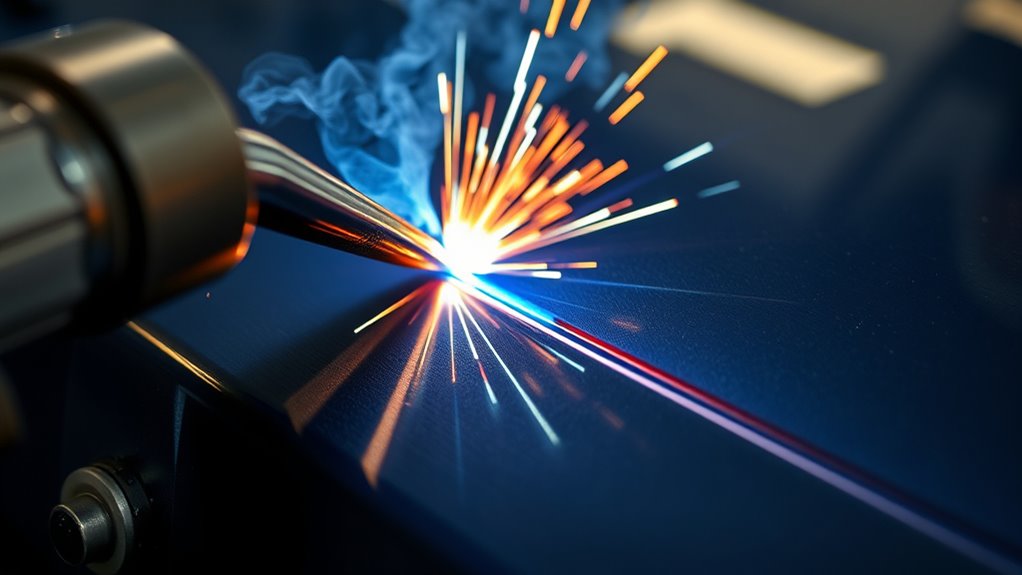
You can minimize the HAZ by choosing low-heat-input methods like GTAW. This typically creates a smaller affected zone than higher-energy processes.
Laser beam welding and electron beam welding use concentrated energy. You get precise joints with minimal HAZ, especially on thin materials.
If you use GMAW, control travel speed and heat input carefully. These settings can reduce HAZ size. SMAW usually produces a larger HAZ. Additionally, selecting the right TIG filler rods helps manage heat input.
Products Worth Considering

Comprehensive Welding Package: our package comes with 24 low temperature universal welding rods available to meet your welding requirements; Whether you are a novice or an experienced welder, this kit of welding rods ensures you have things you need for your welding projects; Material is relatively brittle, received with breakage is a normal phenomenon, does not affect the use

NO SOLDER POWDER NEEDED: These aluminum rods are flux cored welding rods, no need solder powder, no other materials are required, and it is easy to use.
Low Heat Input Methods
Several low-heat welding processes keep the HAZ as small as possible. This is crucial when base-metal properties matter.
When you choose GTAW, you typically apply about 1.4 KJ/mm. You get a narrower HAZ and preserve strength.
SMAW usually creates a moderate HAZ around 2.00 mm. This can suit repairs where balanced cooling helps.
GMAW gives you adjustable heat input. You can tune penetration and HAZ size to the specific job.
These low-heat choices deliver practical benefits. You get less distortion and a lower cracking risk. You also retain the mechanical properties of the parent metal better.
Match your process to your joint design, material thickness, and production limits.
Concentrated Energy Processes
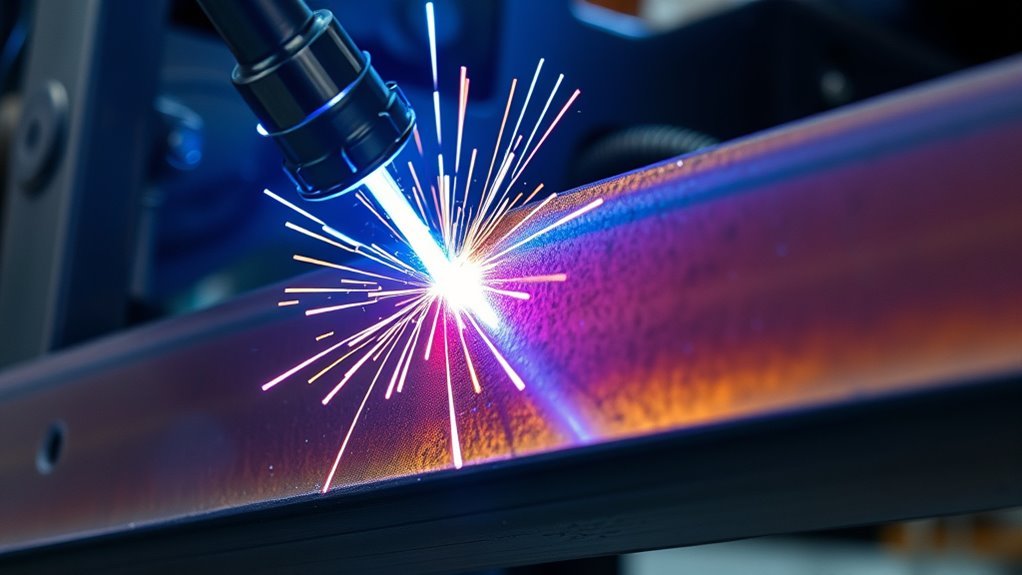
Concentrated energy processes limit thermal diffusion. Laser beam welding and electron beam welding focus heat into a very small area.
Pro tip: Use laser beam welding on thin automotive panels to prevent massive distortion and keep the HAZ paper-thin.
You gain laser precision that keeps the weld narrow. This protects adjacent metal from excess softening or distortion.
Electron beam welding lets you direct energy exactly where you need it. It cuts the HAZ and lowers the risk of unwanted material change.
Because laser welding reaches high efficiency, you waste less energy. You reduce thermal spread and keep your automotive joints strong.
HAZ Control Techniques
GTAW and laser beam welding are usually the best process choices to minimize the HAZ. Both keep heat input tightly controlled.
Use these techniques to protect nearby metal from microstructural change.
- GTAW: Choose this for low heat input and a smaller HAZ.
- Laser beam welding: Use this for precise control, rapid cooling, and minimal HAZ.
- SMAW: Expect moderate heat input and a moderate HAZ.
- SAW: Avoid this when HAZ size matters. High heat input enlarges the affected zone.
Lower your amperage and increase travel speed to shrink the HAZ further. This improves weld integrity and gives you better control.
How HAZ Changes Metal Structure
The base structure shifts near the weld. You will see grain growth and phase changes even though the metal does not melt. These changes can raise hardness but reduce ductility. This happens especially when cooling is fast or the steel contains higher carbon. Manage heat input to control this structural change. Proper fillet weld sizing helps minimize heat input.
Grain Growth in HAZ
The metal beside the weld can undergo grain growth. The welding heat changes the base metal’s microstructure without melting it.
You will see this most when heat input runs high. The grains grow larger and the HAZ widens. This shift shows up under a microscope. It tells you how the weld process shapes the part.
In steels, oversized grains can weaken toughness and ductility. You need tight control.
- Use lower heat input when possible.
- Choose GTAW for a narrower HAZ.
- Apply grain refinement techniques to limit coarsening.
- Use post-weld heat treatment to restore a finer structure.
Manage grain size to protect the joint.
Hardness and Ductility Changes
Welding heat creates a sharp hardness gradient. Metal near the weld bead often hardens. Adjacent areas may soften depending on the alloy and cooling rate.
This hardness variability comes from phase changes. It creates real ductility trade-offs.
Warning: Welding high-carbon steel without preheating can form martensite, which causes severe brittleness and a high risk of sudden cracking.
Slower cooling lets ferrite and pearlite form. You keep more toughness and stretch. Rapid cooling locks in hard, brittle structures.
You can reduce this damage with post-weld heat treatment. It refines grain structure and relieves residual stress. It helps the HAZ recover usable ductility.
How Preheating Controls the HAZ
Preheating the base metal before welding alters how the HAZ forms. By raising the starting temperature of the metal, you slow down the cooling rate after the weld is complete. This slower cooling prevents the formation of brittle martensite in high-carbon steels. It allows the metal to maintain better ductility and crack resistance across the joint.
How HAZ Leads to Cracking and Fatigue
The heat-affected zone can become the weak link in an automotive weld. Thermal cycling alters its microstructure. This increases brittleness and makes cracking more likely, especially in high-strength steels. Microstructural analysis shows that phase changes reduce ductility. The joint loses its ability to deform safely under load.
Thermal cycling can turn the heat-affected zone into the weakest point. Martensite raises brittleness and crack risk.
- Uneven cooling creates hardness gradients.
- Hard zones raise stress concentration.
- Wider HAZs promote fatigue crack growth.
- Cyclic loading exploits these weak regions.
Repeated vibration opens tiny flaws at the HAZ boundary. These flaws grow when the brittle zone cannot absorb strain. Fatigue failure follows.
Precise control of heat input matters. The width of the HAZ directly shapes crack risk. Improper amperage settings can exacerbate HAZ issues.
How to Reduce HAZ in Automotive Welding
Reducing the HAZ means limiting how much surrounding metal gets overheated. Hardness gradients and brittleness start there.
Minimize heat input while still achieving full fusion. Dial in your voltage, current, and travel speed. Do not dump extra energy into the joint.
Choose welding techniques with tighter thermal control. Use GTAW or laser welding instead of SAW.
Preheat the base material when needed. It slows cooling, shrinks the HAZ, and lowers cracking risk.
Match your filler metal to the base alloy. The weld zone shifts more smoothly and preserves material properties.
Apply post-weld heat treatment when service demands it. This reduces residual stress and stabilizes the microstructure.
Understanding the risks of metal fume fever emphasizes proper safety measures.
Products Worth Considering

【Effortless Operation for Everyone】Introducing the 2025 Laser Welding Machine, designed with a built-in intelligent application system that makes welding accessible for novices and experts alike. Experience a simple and efficient welding process that allows you to achieve professional results with ease.
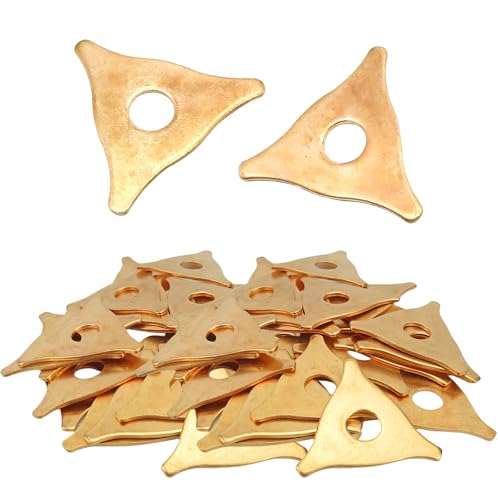
【Useful Function】: These pulling washers are designed for automotive sheet metal repair machines and are mainly used for pulling and repairing operations on dented areas of the car body. Working in conjunction with pulling equipment, they help to quickly correct body deformations and improve repair efficiency.

【Sturdy and Durable】Made of premium metal, plastic, copper, and silicone with an exquisite polishing process, making it strong, wear-resistant, and corrosion-resistant for long-term use.
How to Inspect the HAZ After Welding
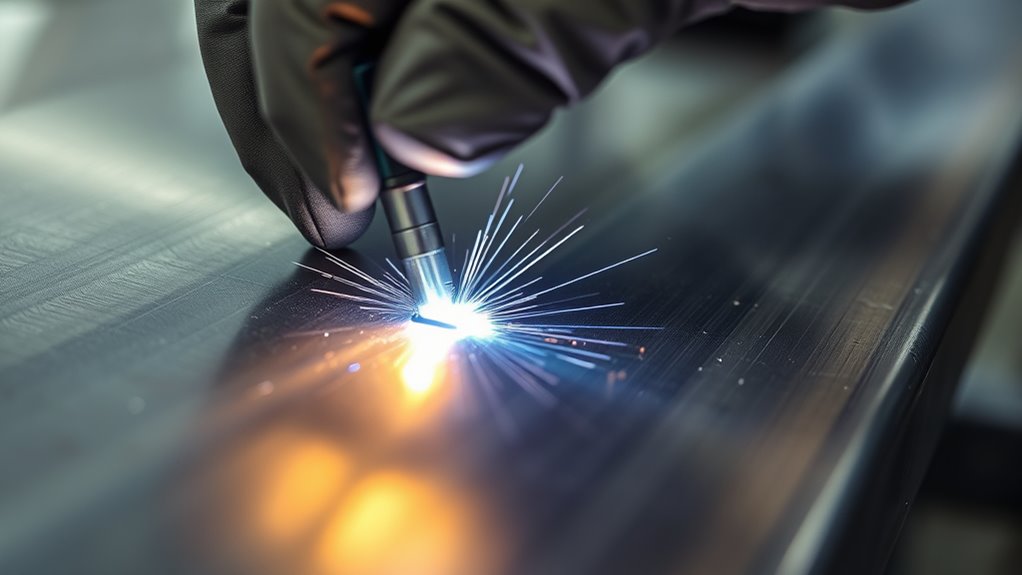
Verify that the heat-affected zone is sound after welding. Use disciplined visual inspection techniques. Confirm the structure with microscopic analysis. Start with macro-etching to expose grain growth and hidden flaws.
- Use visual inspection techniques to check for surface discoloration, distortion, and obvious cracking.
- Apply ultrasonic or magnetic particle testing to find subsurface cracks without damaging the joint.
- Run hardness traverses across the HAZ to map property changes.
- Examine samples with microscopic analysis to verify phase changes.
Ensure your inspection methods adhere to proper ventilation practices.
Record every result against AWS or ASME criteria. Document findings clearly to protect joint integrity.
HAZ Problems in Dissimilar Metal Welds
Welding dissimilar metals like carbon steel to stainless steel creates an uneven HAZ. Each base metal responds differently to heat and cooling.
One side may harden while the other stays ductile. The junction zone can lose toughness.
HAZ cracking susceptibility rises when residual stress concentrates near the fusion boundary.
Post-weld heat treatment can help carbon steel. However, you cannot usually apply it to austenitic stainless without risking damage.
Use a nickel alloy buttering layer to build a thermal buffer. Select an austenitic filler like ER309L to stabilize chemistry.
Manage heat input, interpass temperature, and filler choice. This protects joint integrity. Understanding TIG welding settings enhances results here.
Frequently Asked Questions
What is the heat-affected zone in welding?
The heat-affected zone is the unmelted base metal immediately surrounding a weld. Welding heat alters its physical structure, which changes the metal’s hardness, strength, and crack resistance.
How do you calculate the heat-affected zone?
You calculate the heat input driving the HAZ using the formula: Heat Input (Q) = (Voltage × Current × 60) / (Travel Speed × 1000). Higher heat input values generally result in a larger, wider HAZ.
How far does the heat-affected zone extend?
The zone typically extends from a few millimeters to several centimeters past the weld bead. The exact distance depends entirely on the welding process used, the material thickness, and the total heat input applied.
Safety Disclaimer: This article is for informational purposes only and does not constitute professional structural or safety engineering advice. Always consult certified welding standards and a qualified engineer before making decisions regarding automotive structural repairs.
Conclusion
You cannot ignore the heat-affected zone in automotive welding. The heat transforms the metal’s microstructure, leaving you with hidden brittleness and crack-prone joints. Control your heat input, choose the right process, and inspect the area thoroughly. Mastering the HAZ is your best defense against catastrophic failure and weak automotive repairs.
References
- Welding Handbook, Fundamentals of Welding — American Welding Society (AWS)
- Boiler and Pressure Vessel Code (BPVC) — American Society of Mechanical Engineers (ASME)
- Welding Metallurgy and Weldability — John C. Lippold, 2015