
When I first started welding, one of the biggest challenges was not striking an arc. It was deciding which process fit the job. MIG offers speed, TIG gives precise heat control, stick welding is portable, self-shielded flux-core handles outdoor work well, and submerged arc welding is built for high-volume industrial production.
Understanding the common types of welding—FCAW, GMAW, GTAW, SMAW, and SAW—is just as important as learning joint preparation, filler-metal selection, arc control, and the effect metal thickness has on penetration.
The wrong choice can waste shielding gas, create excess cleanup, damage thin material, or produce a joint that does not meet the project’s strength and quality requirements. Process selection matters whether you are making a small shop project, repairing carbon steel, welding stainless equipment, or following an approved structural procedure.
In this guide, I will explain each process in plain language, compare MIG versus TIG and the other major options, and share practical lessons that can reduce frustration in the shop.
Quick Answer
MIG is usually the easiest process for clean indoor fabrication. TIG offers the most control on thin, stainless, and nonferrous metal. Stick and self-shielded flux-core are practical outdoors. Gas-shielded flux-core is productive on heavier steel, while submerged arc welding is mainly used for long, high-volume industrial welds.

Photo by researchgate
Key Takeaways
- Choose the process according to the metal, thickness, joint, welding position, work environment, productivity target, and required code or quality level.
- Never copy voltage, amperage, wire-speed, gas-flow, or polarity settings without checking the machine chart and the exact consumable data sheet.
- MIG is fast and approachable; TIG is precise; stick is portable; flux-core is productive; and SAW is designed mainly for mechanized heavy fabrication.
- Ventilation, fire control, eye protection, dry working conditions, and material identification are part of the welding procedure—not optional extras.
- Structural, pressure, sanitary, lifting, and vehicle-safety welds may require an approved procedure, qualified welder, and code-specific inspection.
At a Glance
| Time Required | Allow about 10–30 minutes to inspect the equipment, prepare the joint, confirm settings, and run a test coupon. Safe, repeatable skill takes supervised practice. |
| Difficulty | Beginner to advanced. GMAW is often easiest to start, while GTAW and industrial SAW require more coordination, procedure control, or specialized equipment. |
| Tools Needed | A suitable welder, matching electrode or wire, correct shielding equipment when required, sound work lead, PPE, ventilation, joint-preparation tools, and matching scrap for testing. |
| Cost | Varies widely by process. Include the machine, electrical supply, PPE, ventilation, gas or flux, consumables, cylinder handling, replacement parts, and practice material. |
Warning: This guide is educational, not a welding procedure specification. Do not use a beginner article as the sole basis for structural, pressure-containing, sanitary, lifting, rollover-protection, suspension, steering, or other safety-critical welds. Those jobs may require qualified personnel, approved procedures, traceable consumables, and formal inspection.
Note: The five methods below are common arc-welding processes. Welding also includes resistance, oxy-fuel, plasma arc, laser, electron-beam, friction, and other specialized processes.
What Is FCAW and When Should You Use It?
Flux-Cored Arc Welding (FCAW) is the rugged cousin of MIG welding. It uses a continuously fed tubular electrode containing flux ingredients. The arc melts the wire and base metal while the consumable’s shielding system protects the molten weld from the surrounding atmosphere.
There are two main versions: self-shielded FCAW (FCAW-S) and gas-shielded FCAW (FCAW-G). Self-shielded wire creates its own protective gases and slag, so it does not require a separate shielding-gas cylinder. Gas-shielded wire uses both its internal flux system and an external gas specified by the wire manufacturer.
Self-shielded FCAW is useful outdoors because it is less vulnerable to ordinary air movement than a process that relies only on gas from a nozzle. That does not mean every wire is suitable for every wind speed, position, thickness, or structural application. Always check the wire classification, manufacturer data sheet, and applicable procedure.
I remember using FCAW-S on a weathered steel beam in a shipyard. The process handled the outdoor environment better than gas-shielded MIG would have, but cleaning the joint and confirming the approved wire and polarity still mattered.
FCAW can provide a high deposition rate on carbon steel and other approved materials, making it popular in structural fabrication, shipbuilding, heavy equipment, and repair work. The trade-offs can include slag, smoke, spatter, wire-feeding demands, and more cleanup than solid-wire GMAW.
How FCAW Works
A drive system feeds the tubular wire through the gun. An electric arc forms between the wire and the workpiece, melting both. Ingredients in the wire produce the shielding and slag system. With FCAW-G, the gun also supplies the shielding gas listed for that electrode.
FCAW is usually semiautomatic: the machine controls wire feeding while the operator controls gun angle, arc length or contact-tip-to-work distance, travel speed, and bead placement.
Practical Tips for FCAW
- Machine settings: Use the voltage and wire-feed range printed on the machine chart or wire data sheet. Confirm wire diameter, polarity, shielding gas, welding position, and material thickness before making a test weld.
- Polarity: Do not assume every flux-core wire uses the same polarity. Some self-shielded wires use DC electrode negative, while many gas-shielded wires use DC electrode positive. Follow the exact product instructions.
- Joint preparation: FCAW may tolerate light mill scale or surface contamination better than TIG, but clean metal produces more predictable fusion and fewer inclusions. Remove paint, oil, moisture, heavy rust, and unknown coatings.
- Technique: Maintain the contact-tip-to-work distance specified for the wire. Excessive or inconsistent extension changes current, penetration, and deposition.
- Common mistake: Excessive spatter or an unstable arc can come from incorrect voltage, wire speed, polarity, extension, gas, contaminated metal, or a poor work connection. Do not correct every problem by slowing the wire alone.
- Filler compatibility: E71T-1-family gas-shielded electrodes and E71T-11 self-shielded electrodes are common carbon-steel examples, but suffixes, shielding gas, impact requirements, hydrogen designators, and code approvals matter. Use the full classification and data sheet.
Pro Tip: Save the data sheet for every spool of flux-core wire you use. The printed classification alone may not tell you the complete polarity, gas, position, storage, impact, or parameter requirements.
When to Use FCAW
Choose FCAW when you need productive welding on approved steel thicknesses, outdoor portability with FCAW-S, or higher deposition on heavier work. Gas-shielded FCAW is common in fabrication shops and structural work where a procedure calls for it.
Many common FCAW setups are difficult to control on thin automotive-style sheet, but “under 20 gauge” is not a universal cutoff. Some E71T-11 products are designed for light-gauge or thin-plate welding. Use the minimum-thickness range supplied by the wire and machine manufacturer. FCAW is also not the usual choice for aluminum; properly configured GMAW or GTAW is more common.
GMAW/MIG Welding: Speed and Versatility
Gas Metal Arc Welding (GMAW), commonly called MIG welding in the United States, uses a continuously fed solid wire electrode and external shielding gas. It is widely used in automotive work, manufacturing, general fabrication, and production welding.
GMAW can weld mild steel, stainless steel, and aluminum when the machine, wire-delivery system, polarity, gas, filler, and procedure are set up for that material. I have used it on vehicle components and stainless exhaust work because it can move quickly and leave little slag to remove.
The disadvantages are the shielding-gas cylinder, sensitivity to drafts, wire-feed maintenance, and the need for clean gas coverage. Outdoor wind can pull shielding gas away from the puddle and cause porosity even when the voltage and wire speed appear correct.
Products Worth Considering

High-quality: ARCCAPTAIN's ER70S-6 mig welding wire .030" meets industry standards(Net Weight: 10lbs), ensuring consistent performance, superior strength. With its smooth feeding and stable welding parameters, you can achieve optimal penetration, high deposition rates, and exceptional overall welding performance.

🍨【Easy and Quick Welding】HIZONE ER70S-6 solid wire has the highest combination of manganese and silicon deoxidizers, permitting higher welding currents with 100% CO2 shielding gas. Install it then you can weld all positions welding including T-joints, butt welds, and lap welds. Great for construction work, farm implement fabrication, shaft buildup, tanks, truck bodies and general shop applications with poor fit-up or rusty, oily plates.

Do Your Best Work ... Color all your clients impressed with the precision and arc control of the ER70S-6 solid MIG welder wire. You'll love the low splatter whether you're performing single or multi-pass welds. Great for T-joints, butt welds & lap welds.
How GMAW Works
The machine feeds wire through a gun while shielding gas flows through the nozzle. The arc melts the wire and the edges of the joint, creating a weld pool protected from the surrounding air.
Common transfer modes include short-circuit, globular, spray, and pulsed spray. They do not have the same current range, gas requirement, spatter level, penetration profile, or positional capability. For example, conventional spray transfer is generally used in flat and horizontal work, while short-circuit and suitable pulsed procedures can be used in more positions.
Practical Tips for GMAW
- Machine settings: Start with the door chart or manufacturer’s procedure for the exact material, wire diameter, thickness, gas, and transfer mode. Fine-tune on matching scrap rather than guessing from one universal voltage and wire-speed number.
- Shielding gas: A 75% argon/25% carbon-dioxide blend is common for short-circuit welding on mild steel, but it is not correct for every transfer mode or metal. Aluminum commonly uses argon-based shielding, while stainless procedures may specify specialized blends.
- Gas flow: Set flow according to the gun, nozzle, gas, and manufacturer instructions. Too little flow can allow contamination, while excessive flow can create turbulence and pull air into the shielding stream.
- Joint preparation: Remove oil, moisture, loose rust, paint, and coatings. Also clean the work-clamp contact point so the welding circuit remains stable.
- Wire delivery: Use the correct drive-roll groove, liner, contact-tip size, and spool tension. Bird-nesting and erratic feeding often come from the wire path rather than the arc settings.
- Common mistake: Long wire stickout can reduce current in a constant-voltage setup and change penetration. Keep the contact-tip-to-work distance consistent with the selected transfer mode.
- Filler compatibility: ER70S-6 is common for mild steel. ER4043 and ER5356 are common aluminum fillers, but the correct choice depends on the aluminum alloy, strength, crack sensitivity, temperature, anodizing appearance, and service conditions.
When to Use GMAW
GMAW works well for thin-to-medium material, repetitive fabrication, automotive parts, and indoor shop work where shielding gas can remain stable. It is often the easiest process for a beginner to produce an acceptable practice bead, although producing a sound weld still requires fit-up, fusion, and technique—not just pulling the trigger.
Avoid ordinary gas-shielded GMAW in uncontrolled wind. Use screens or an enclosed work area when appropriate, or consider a properly selected self-shielded FCAW or SMAW procedure.
GTAW/TIG Welding: Precision and Heat Control
Gas Tungsten Arc Welding (GTAW), commonly called TIG welding, uses a nonconsumable tungsten electrode and shielding gas, usually argon or an approved argon-based mixture. Filler metal may be added by hand, fed mechanically, or omitted for an autogenous weld when the procedure permits it.
TIG demands coordination, but it gives the operator excellent control over heat input, puddle size, and filler addition. I have used it on aluminum bicycle components and stainless sanitary-style work where bead control and cleanliness were important.
The trade-off is production speed. Manual TIG is usually slower than wire-fed processes, and contamination or poor preparation can quickly affect the result. Equipment, gas, tungsten, cups, filler rods, and preparation time can also increase cost.
Products Worth Considering
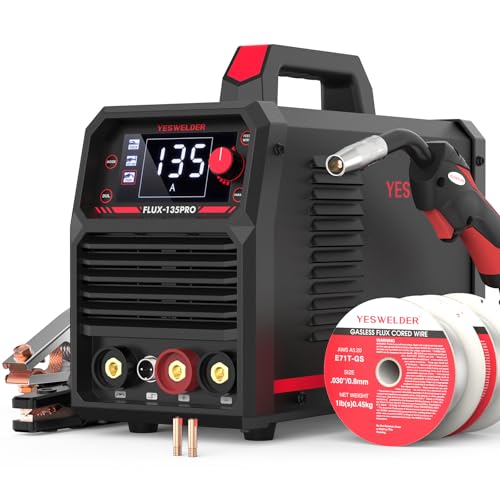
READY OUT OF THE BOX: Start welding immediately! It masterfully handles Gasless Flux Core MIG, Stick, and Lift TIG (Extra Lift TIG torch required). This budget-friendly 3-in-1 machine includes extra E71T-GS .030''&.035'' flux core wires, known for its smooth arc and high feedability. Say goodbye to heavy shielding gas cylinders—perfect for outdoor, windy, or all-position welding.

Large LED Display: Features a large LED screen for enhanced visibility and a clear display of welding parameters and settings. Its intuitive interface ensures effortless operation, enabling precise welding of diverse metals

Comes with lift TIG torch, E6013 welding rods and welding gloves, capable of either Stick welding or Lift TIG welding.
How GTAW Works
The tungsten carries the arc but is not intended to melt into the joint. The arc heats the base metal, and the operator adds filler rod when required. Shielding gas protects the tungsten and molten puddle.
DC electrode negative is commonly used for carbon steel, stainless steel, nickel alloys, and many other metals. AC is commonly used for aluminum because the alternating waveform assists with oxide-cleaning action. The machine, tungsten, cup, gas, waveform, and amperage must still match the specific procedure.
Practical Tips for GTAW
- Machine settings: Use the machine chart, procedure, or manufacturer guidance. Required amperage changes with thickness, joint design, fit-up, alloy, position, waveform, tungsten size, and travel speed.
- Joint preparation: TIG needs clean metal. Degrease with an appropriate nonchlorinated cleaner, allow it to dry fully, and remove oxide using tools reserved for that material.
- Aluminum preparation: Use a dedicated stainless-steel brush or other approved tool so carbon-steel contamination is not transferred to the aluminum.
- Common mistake: Touching the tungsten to the puddle or filler contaminates it. Stop, remove the damaged section, and regrind it using the profile recommended for the machine and current type.
- Arc length: A long arc spreads heat, reduces shielding effectiveness, and makes the puddle harder to control. Keep the arc stable without touching the work.
- Filler compatibility: ER308L is commonly paired with 304-series stainless, but it is not a universal stainless filler. ER4043 and ER5356 are common aluminum choices. Match the filler to the exact base metal, procedure, and service.
When to Use GTAW
TIG is a strong choice for thin sections, stainless steel, aluminum, titanium, root passes under approved procedures, visible fabrication, and work that needs careful heat control. It is common in aerospace, motorsports, art, sanitary fabrication, and other applications where consistency and appearance matter.
A clean-looking TIG bead is not proof of adequate penetration or code compliance. Safety-critical or sanitary work may require procedure qualification, purge control, inspection, documentation, and testing.
SMAW/Stick Welding: The Portable Workhorse
Shielded Metal Arc Welding (SMAW), or stick welding, uses a flux-coated consumable electrode. The electrode core becomes filler metal, while the coating produces shielding gases and slag that protect the weld as it cools.
Stick equipment is relatively simple and portable, and the process does not depend on shielding gas delivered from a nozzle. That makes it useful for construction, field repairs, farm equipment, and work where ordinary air movement would interfere with MIG gas coverage.
I have used stick welding on rebar and farm repairs in rough outdoor conditions. However, outdoor capability does not make welding in rain or standing water acceptable. Stop if gloves, clothing, cables, the machine, or the work area become wet.
Stick welding requires slag removal, frequent electrode changes, good arc-length control, and more practice than many beginners expect. Those are productivity and technique disadvantages, not proof that SMAW produces lower-quality welds. Qualified SMAW procedures are widely used for structural and repair work.
How SMAW Works
The power source creates an arc between the coated electrode and the workpiece. Heat melts the electrode core and base metal. The flux coating produces shielding gases and a slag layer, which must be removed before inspecting the bead or depositing another pass where required.
Practical Tips for SMAW
- Machine settings: Select current from the electrode manufacturer’s range for the exact classification and diameter. Position, polarity, joint, arc length, and machine output also affect the final setting.
- Joint preparation: Some stick electrodes tolerate mill scale or light contamination better than TIG, but heavy rust, oil, moisture, paint, and unknown coatings still increase defect and fume risks.
- Arc length: An arc that is too long can increase spatter, porosity, and undercut. An arc that is too short may stick the electrode or make puddle control difficult.
- Common mistake: Increasing amperage is not the correct fix for every sticking or penetration problem. Confirm polarity, electrode condition, arc length, work connection, joint preparation, and travel speed.
- Electrode selection: E6010 is known for forceful penetration and typically requires DC electrode positive. E7018 is a low-hydrogen electrode used in many structural procedures, but it has storage, exposure, handling, polarity, and reconditioning requirements.
- Slag control: Clean each pass thoroughly. Slag trapped between passes can create inclusions that may not be obvious from the bead surface.
When to Use SMAW
Stick welding is useful for field repairs, structural work under approved procedures, maintenance, and jobs where portability matters. It performs in more outdoor conditions than gas-shielded MIG, but the operator must still control moisture, wind-driven contaminants, fire hazards, and electrical exposure.
It is usually less convenient for very thin sheet, high-volume production, or applications that demand minimal cleanup and precise cosmetic control.
SAW: The Heavy-Duty Automated Process
Submerged Arc Welding (SAW) is an industrial process used for thick materials, long seams, pressure vessels, tanks, pipe, beams, and heavy manufacturing. The arc operates beneath a blanket of granular flux, which limits visible arc radiation, contains spatter, and supports high deposition.
I have seen SAW used on large pressure-vessel and ship components. Its productivity can be impressive, but the equipment, flux handling, joint tracking, and procedure controls make it impractical for most small shops and casual repairs.
How SAW Works
One or more continuous wires feed into the joint beneath granular flux. The hidden arc melts the wire and base metal. Part of the flux forms protective slag, while unused flux may be recovered when the approved system permits it.
SAW is commonly mechanized or automated. The head or workpiece moves along a prepared joint at a controlled travel speed. Single-wire, tandem, multiwire, AC, and DC arrangements can produce very different deposition and penetration profiles.
Practical Tips for SAW
- Machine settings: Use a qualified procedure covering current, voltage, polarity or waveform, wire diameter, extension, travel speed, flux depth, and joint design. A universal 400–600-amp recommendation is not suitable for every SAW system.
- Joint preparation: Alignment, root opening, backing, edge condition, and joint tracking are critical. Small fit-up errors can continue for the full length of an automated seam.
- Flux handling: Keep flux clean, dry, and within the manufacturer’s storage and recovery requirements. Contaminated or damp flux can affect weld quality.
- Common mistake: Do not judge flux depth by appearance alone. Too little can expose the arc, while excessive or inconsistent coverage can interfere with process stability and recovery.
- Filler compatibility: Wire and flux are selected as a system. A designation such as F7A2-EM12K describes a specific tested combination and condition; it is not a universal choice for all carbon steel.
- Inspection: Because the arc is hidden and the weld may be long, procedure monitoring and appropriate nondestructive examination are especially important.
When to Use SAW
SAW is best for high-volume, thick-material work with long or circumferential seams that can be positioned and mechanized. It is commonly associated with flat and horizontal production, although specialized equipment can handle certain circumferential and other applications.
It is not practical for most small repairs, thin sheet, short irregular joints, or unrestricted all-position manual welding.
Comparing the Five Welding Processes
Use this comparison as a starting point. The final choice must still match the joint drawing, material specification, consumable approval, equipment, and required code.
| Process | Best For | Main Advantages | Main Limits | Typical Materials |
|---|---|---|---|---|
| FCAW | Productive steel welding, structural fabrication, and outdoor work with approved self-shielded wire | High deposition, continuous wire, FCAW-S needs no external shielding-gas cylinder | Slag, fumes, spatter, wire-specific polarity, and more cleanup | Primarily carbon and low-alloy steel; some stainless applications |
| GMAW/MIG | Indoor fabrication, automotive work, thin-to-medium material, and production | Fast, clean, easy to automate, and approachable for beginners | Wind-sensitive gas coverage and wire-feed or gas-system maintenance | Carbon steel, stainless steel, aluminum, and approved alloys |
| GTAW/TIG | Thin material, precise heat control, visible work, stainless, and nonferrous metals | Excellent puddle control, no slag, and clean weld appearance | Slower, preparation-sensitive, and coordination-intensive | Carbon steel, stainless steel, aluminum, titanium, nickel alloys, and others |
| SMAW/Stick | Field repairs, construction, maintenance, and portable outdoor work | Simple equipment, broad electrode selection, and no external shielding gas | Frequent electrode changes, slag removal, lower deposition, and skill demands | Carbon steel, low-alloy steel, stainless, cast iron with approved electrodes, and others |
| SAW | Long seams, heavy plate, pipe, tanks, pressure vessels, and automated production | High deposition, deep fusion potential, low visible arc, and efficient mechanization | Bulky equipment, flux handling, joint-position limits, and poor fit for small jobs | Carbon and low-alloy steel, stainless, and other procedure-approved alloys |
How to Choose the Right Welding Process
The job dictates the process. A DIY gate repair may suit SMAW or an approved FCAW-S setup. A custom aluminum frame may suit GTAW when precise heat control matters. Repetitive indoor steel fabrication often favors GMAW or FCAW-G. Long seams on heavy plate may justify SAW automation.
Before selecting a process, work through these questions:
- What is the exact base metal? Identify the grade, coating, heat treatment, and service condition—not just “steel” or “aluminum.”
- How thick is it? Thin sheet favors a controllable low-heat procedure. Thick sections may need beveling, preheat, multiple passes, or a higher-deposition process.
- What is the joint design? A lap joint, open root, groove weld, fillet, pipe joint, and repair cavity do not use the same technique.
- What position must be welded? Flat, horizontal, vertical, and overhead work place different demands on transfer mode, slag, puddle control, and consumable approval.
- Is the job indoors or outdoors? Drafts can disturb nozzle-delivered shielding gas. Outdoor work may favor SMAW or an approved self-shielded wire.
- How portable must the equipment be? A compact stick machine is easier to move than a complete SAW system or a gas-shielded setup with cylinders.
- How much production is required? TIG may be ideal for control but too slow for a long production run. GMAW, FCAW, or SAW may offer better deposition and automation.
- What quality standard applies? Building, bridge, pressure, pipeline, sanitary, marine, aerospace, and vehicle work may be governed by different codes and qualification rules.
- What power is available? Confirm input voltage, phase, circuit capacity, output range, and duty cycle before choosing a machine.
- What can the operator perform consistently? A theoretically ideal process is not useful if the equipment, procedure, or qualified skill is unavailable.
Other Common Welding Processes
The five processes above cover much of everyday arc welding, but they are not the complete list.
- Oxy-fuel gas welding: Uses a fuel-gas and oxygen flame to heat and join metal. It remains useful for repair, heating, brazing, and certain thin-material work, although arc processes are more common for many production jobs.
- Resistance spot and seam welding: Passes current through overlapping parts while electrodes apply pressure. It is common in sheet-metal and automotive manufacturing.
- Plasma arc welding: Constricts the arc through a nozzle for a focused, stable heat source. It is used in specialized precision and automated applications.
- Laser-beam welding: Uses concentrated laser energy for fast, narrow welds and automation. It requires strict enclosure, beam-control, and laser-specific eye and skin protection; an ordinary welding helmet is not enough for the direct laser hazard.
- Electron-beam welding: Uses a focused electron beam, often in a vacuum, for deep and precise industrial welds.
- Friction and friction-stir welding: Join material through mechanical motion and pressure rather than a conventional open arc.
Note: Brazing and soldering are allied joining processes, but they do not melt the base metal in the same way as fusion welding. They melt a lower-temperature filler material that flows into the joint.
Safety First: Protecting Yourself and Your Work
Welding produces intense light, heat, sparks, molten metal, fumes, gases, noise, and electrical hazards. OSHA identifies potential exposure to metal fumes and ultraviolet radiation along with burns, eye damage, and electrical shock. Review the current OSHA welding hazards guidance and the AWS safety and health resources before welding.
Eye, Face, Skin, and Hearing Protection
Wear a welding helmet that complies with the applicable safety standard, safety glasses with side protection beneath the helmet, flame-resistant gloves and clothing, and sturdy protective footwear. Add hearing protection when noise exposure requires it.
Do not rely on one blanket shade range. The minimum filter shade changes with the process and arc current. Use the current OSHA filter-lens table and the helmet manufacturer’s instructions. Start with a shade that is too dark to see the weld zone, then move lighter without going below the required minimum.
Use welding screens or curtains to protect nearby workers from arc radiation, sparks, and spatter. A person does not need to be holding the torch to receive an arc flash.
Fumes, Ventilation, and Respiratory Protection
Keep your head out of the fume plume and use source capture or local exhaust close enough to collect fumes without disturbing the shielding gas. General room ventilation may not adequately control exposure at the welder’s breathing zone.
In one NIOSH field evaluation, local exhaust ventilation reduced measured total welding-fume concentrations compared with work performed without that control. Ventilation should be designed around the actual process and exposure—not treated as an open door or fan pointed at the arc.
NIOSH explains that welding fumes contain metals and that many contain manganese. Stainless steel, plated parts, painted parts, and metals containing chromium, nickel, zinc, lead, cadmium, or other hazardous ingredients can require additional controls. See the current NIOSH welding-fume guidance.
A respirator may be required when engineering controls and work practices do not keep exposure within applicable limits. It must be selected for the identified hazard and used under an appropriate respiratory-protection program, including medical evaluation, fit testing, training, inspection, and cartridge or supplied-air requirements. A random dust mask or unspecified “good respirator” is not a complete fume-control plan.
Coatings, Solvents, and Unknown Metals
Do not weld through unknown paint, plating, oil, sealant, or preservative coating. Identify the coating and consult its safety data before disturbing it. Zinc, lead, cadmium, beryllium, mercury, chromium, and nickel hazards may require specialized ventilation, respiratory protection, isolation, or a different work method.
Keep chlorinated solvents and their vapors away from welding arcs. Use an appropriate nonchlorinated cleaner, follow its safety data, and allow the surface to dry completely before welding.
Electrical and Wet-Condition Safety
Inspect the electrode holder or gun, work lead, input cable, insulation, connectors, and machine before use. Connect the work clamp to clean metal as close to the weld as practical without placing bearings, electronics, cables, fuel lines, or unintended parts in the welding-current path.
Never weld with wet gloves, wet clothing, damaged insulation, standing water, or equipment exposed to rain. Move the job under a dry shelter or stop until safe conditions can be restored. De-energize the machine before servicing the wire path, gun, feeder, or internal components.
Fire, Containers, and Confined Spaces
Remove combustible materials from the area, control sparks that can travel through openings, keep suitable fire protection available, and use a hot-work permit or fire watch when the workplace procedure requires one. Continue checking hidden areas after welding because sparks can smolder out of sight.
Never weld, cut, or heat a sealed container, tank, drum, pipe, or vessel simply because it appears empty. Residue or trapped vapor can explode. Cleaning, isolation, atmospheric testing, ventilation, and an approved hot-work procedure may be required.
Confined-space welding needs trained supervision, atmospheric controls, ventilation, communications, entry procedures, and a rescue plan. Do not enter a confined space based only on a portable fan and an ordinary welding helmet.
Compressed-Gas Cylinder Safety
Secure cylinders upright, protect their valves, keep them away from sparks and hot slag, and never allow a cylinder to become part of the welding circuit. Move cylinders with an approved cart and cap where required. Do not strike an arc on a cylinder or use damaged regulators, valves, hoses, or fittings.
Warning: Stop work if you cannot identify the metal or coating, control the fumes, remove the fire hazard, keep the electrical environment dry, or protect nearby people. Production pressure is never a reason to weld under uncontrolled conditions.
Step-by-Step Guide to Starting a Weld
This basic workflow can be adapted to FCAW, GMAW, GTAW, or SMAW. SAW normally requires a more formal mechanized setup and qualified procedure.
- Confirm that the job is appropriate: Identify the base-metal grade, coating, thickness, joint, service, and quality requirement. Stop if the weld is safety-critical and you do not have the required procedure or qualification.
- Choose the process: Match the method to the material, environment, welding position, available power, portability, and production target.
- Read the documentation: Check the machine manual, electrode or wire data sheet, shielding-gas requirement, polarity, duty cycle, and applicable welding procedure.
- Control the hazards: Remove combustibles, arrange ventilation, protect nearby people, secure cylinders, inspect electrical equipment, and put on the required PPE.
- Prepare the metal: Remove oil, moisture, paint, plating, heavy rust, and other contaminants using a method appropriate for the material and coating hazard.
- Fit and secure the joint: Confirm root opening, bevel, alignment, tack placement, and restraint. Poor fit-up cannot always be corrected by adding more weld metal.
- Select the filler: Use a wire, rod, or electrode approved for the exact base metal, service, position, gas, and procedure.
- Set up the machine: Install the correct consumable, drive rolls, liner, tip, tungsten, cup, or holder. Confirm polarity, gas, amperage, voltage, wire speed, and output mode.
- Connect the work lead: Attach it to clean metal in a location that creates a controlled current path and does not send welding current through bearings, electronics, or sensitive components.
- Run a test coupon: Use scrap that matches the material, thickness, joint, position, and preparation. Adjust within the approved range after observing arc stability, bead profile, fusion, and shielding.
- Weld the joint: Maintain the process-specific work angle, travel angle, arc length or extension, travel speed, and bead placement. Do not apply one 15–20-degree rule to every process and joint.
- Clean and inspect: Remove slag where present and look for cracks, porosity, undercut, overlap, incomplete fusion, poor tie-in, or arc strikes. Critical welds may need qualified visual inspection, nondestructive examination, or destructive testing.
- Follow the repair procedure: Do not automatically grind and reweld a critical defect. Determine its extent and use the approved removal, preparation, preheat, filler, and inspection method.
- Shut down safely: Turn off the machine, close and relieve gas equipment as instructed, store electrodes and filler correctly, mark hot work, and check the area for delayed fire.
Common Welding Mistakes and How to Fix Them
- Porosity: Common causes include contaminated metal, moisture, inadequate or turbulent shielding gas, drafts, leaks, excessive arc length, or the wrong consumable. Clean the joint and correct the shielding problem before adding another pass.
- Burn-through: Heat input is too high for the fit-up or thickness. Use an approved lower-energy setup, faster travel, shorter arc, smaller wire or electrode, pulse control, backing, or a different joint sequence.
- Excessive spatter: Check polarity, voltage, wire speed, transfer mode, gas, contact-tip condition, extension, work connection, and contamination. Anti-spatter products may ease cleanup but do not correct the root cause.
- Lack of fusion: The weld metal has not fused properly to the sidewall or previous bead. Causes include low heat at the joint, poor angle, excessive travel speed, bad bead placement, slag, or inadequate joint preparation.
- Incomplete penetration: The root has not fused through the intended joint depth. Correct the root opening, bevel, landing, heat input, electrode placement, backing, or procedure rather than simply making the cap larger.
- Undercut: A groove forms along the weld toe. Reduce excessive arc length or heat, correct travel speed and angle, and pause enough for the edge to fill without creating overlap.
- Slag inclusion: Slag remains trapped between passes or along a sidewall. Clean every pass and improve bead placement, angle, joint access, and travel technique.
- Worm tracks in FCAW: Gas marks can form as gases escape through the solidifying slag. Check voltage, wire extension, contamination, travel speed, and the wire manufacturer’s operating range.
- Tungsten inclusion: The tungsten touched the puddle or was overheated and entered the weld. Remove the affected weld metal as required, regrind or replace the tungsten, and correct the torch position or current.
- Erratic MIG or FCAW feeding: Inspect the drive rolls, spool tension, liner, guide tubes, contact tip, gun cable bends, and wire condition before changing arc settings.
- Weak-looking or inconsistent welds: Do not diagnose strength by appearance alone. Confirm fusion, penetration, joint design, filler, procedure, and inspection requirements.
Key Takeaways for Better Welding
You are now better equipped to choose among five common arc-welding processes. FCAW is productive and can be well suited to heavier steel or outdoor work when the correct self-shielded wire is used. GMAW is the fast all-rounder for controlled shop conditions. GTAW offers precise heat and puddle control. SMAW remains a portable field process. SAW is the industrial choice for long, mechanized welds.
Match the process to the base metal, thickness, joint, position, environment, quality requirement, and operator skill. Then follow the exact machine, consumable, procedure, and safety documentation. Strong welding comes from a controlled system—not from copying a voltage number or choosing a process by nickname alone.
Frequently Asked Questions
What is the easiest welding process for beginners?
GMAW/MIG is often the easiest process for learning basic gun control because the machine feeds the wire automatically and there is no slag to chip. Start on clean mild-steel coupons using the machine chart, correct gas, and supervised instruction. An attractive bead still needs adequate fusion and penetration.
Can I use FCAW for thin metals?
Sometimes. Many common flux-core setups are difficult to control on very thin sheet, but there is no universal 20-gauge cutoff. Some E71T-11 wires are intended for light-gauge or thin-plate work. Follow the minimum-thickness range for the exact wire and machine, and test on matching scrap.
Why does my weld have so much spatter?
Possible causes include the wrong polarity, mismatched voltage and wire speed, excessive arc length or stickout, an unsuitable transfer mode, contaminated metal, poor work-lead contact, or incorrect shielding gas. Check the complete setup instead of lowering one control at random.
Is TIG welding worth the effort for hobbyists?
Yes, when the hobby involves thin metal, stainless steel, aluminum, visible fabrication, or precise heat control. TIG takes more coordination and preparation than basic MIG, but it teaches close puddle observation and gives the operator direct control over filler addition.
What safety gear do I really need for welding?
At minimum, use an approved welding helmet with the correct process- and current-specific shade, safety glasses with side protection, flame-resistant gloves and clothing, and protective footwear. Hearing protection, local exhaust, screens, and properly selected respiratory protection may also be required after evaluating the process, metal, coating, and workplace.
Is MIG or flux-core better for outdoor welding?
Self-shielded flux-core is generally more practical outdoors because it does not depend on shielding gas flowing from a nozzle. Ordinary MIG gas coverage can be disrupted by drafts. However, wire approval, polarity, wind limits, fume control, fire safety, and dry electrical conditions still apply.
Can one welder run MIG, TIG, stick, and flux-core?
Some multiprocess machines can run several methods, but capability varies. Confirm output type, polarity switching, high-frequency or lift-start TIG features, wire-feeder compatibility, gas connections, spool-gun support, amperage range, duty cycle, and whether the machine supports the exact electrode or transfer mode you need.
Can I weld galvanized or painted steel after grinding the surface?
Do not assume grinding makes the job safe. Identify the coating, review its safety data, remove it far enough from the heated zone using an approved method, and provide the required ventilation and respiratory controls. Coating may remain on the back or inside of the part, and heat can affect a wider area than the visible puddle.
Sources
- OSHA: Welding, Cutting, and Brazing—Hazards and Solutions — welding-fume, radiation, burn, eye, and electrical hazards.
- OSHA 29 CFR 1910.133: Eye and Face Protection — minimum filter-shade guidance by welding process and arc current.
- OSHA 29 CFR 1910.252: General Welding Requirements — ventilation, coated-metal, fire, and welding-safety requirements.
- NIOSH: Welding Fumes and Manganese — welding-fume composition and worker-exposure concerns.
- American Welding Society: Free Safety Resources — ANSI Z49.1 and welding safety fact sheets covering fumes, PPE, ventilation, cylinders, and electrical hazards.
- Lincoln Electric: Choosing a Welding Power Source — process characteristics and differences among GMAW, FCAW, GTAW, and SMAW.


[…] you’re repairing farm equipment, working on stainless, or comparing how stick stacks up against MIG or TIG in the shop. Disclosure: This article uses affiliate links for some products; as an Amazon […]