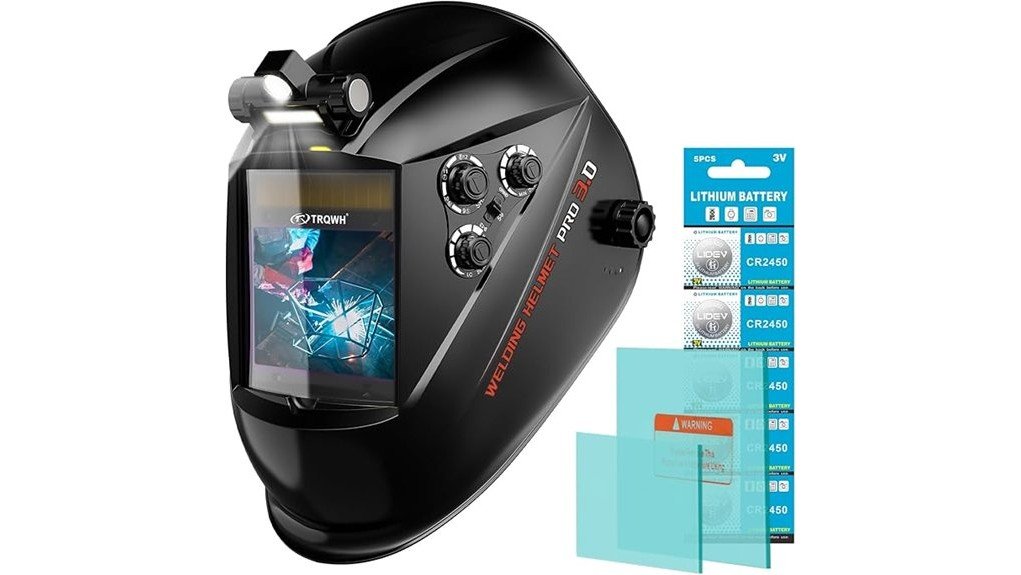
The TRQWH large view welding helmet is an auto-darkening helmet whose listing advertises a 3.94 x 3.15 inch viewing area and a 1/30000 second switching speed. It looks aimed at hobbyists and home-shop welders who want a roomy view for MIG, TIG and stick work without paying for a premium brand. It is worth a look if you want a wide lens on a budget, but check the shade range and safety markings first.
This review draws on the seller’s Amazon listing and general helmet-buying knowledge. We have not tested this helmet.
TRQWH large view welding helmet at a glance
| Item | Detail |
|---|---|
| Type | Auto-darkening welding helmet |
| Viewing area (per listing) | 3.94 x 3.15 inches |
| Switching speed (per listing) | 1/30000 second |
| Arc sensors (per listing) | Four |
| Shell material (per listing) | Polypropylene |
| Process claims (per listing) | MIG, TIG and MMA (stick) |
| Headgear | Adjustable, with sponge forehead padding |
| To confirm before buying | Shade range, grinding mode, ANSI Z87.1 or EN379 marking, battery or solar power |
Check current price on Amazon →
Key features and who it suits
The big talking point is the large viewing window. A wider lens gives you more peripheral vision, which helps when you are working in awkward positions or following a long joint. The listing also mentions a “true color” lens, which describes a clearer, less green view in the light state. It does not change the safety shade when the arc is on.
The helmet uses four arc sensors, which helps keep the filter dark when one sensor is blocked, for example during out-of-position welding. The headgear has a thick sponge forehead pad and adjustable tightness and angle.
It suits beginners and weekend welders. Production welders who weld all day should compare it with established brands whose service support and spare parts are easier to find.
How to check the helmet matches your welding
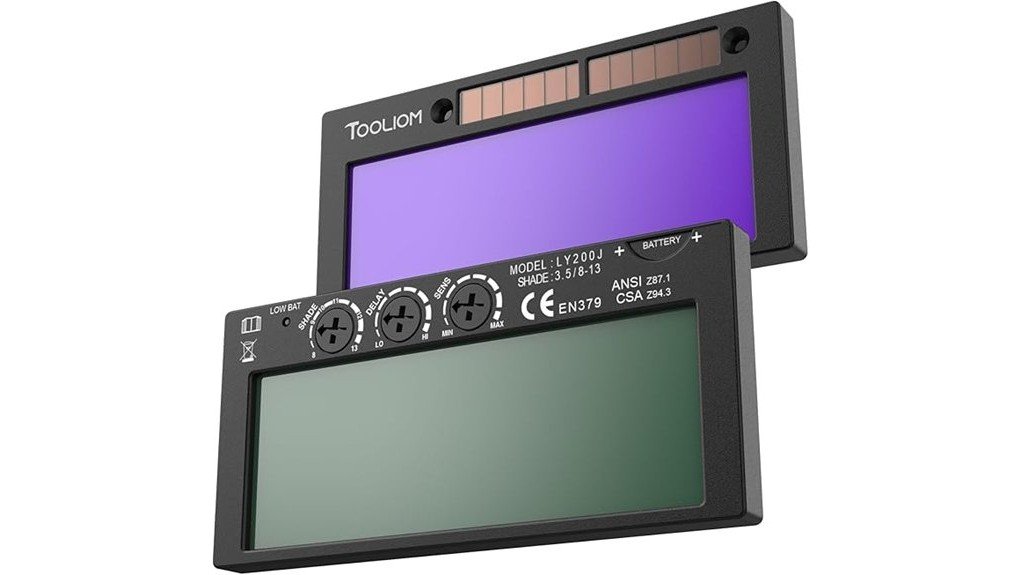
- Shade range. Look for a variable range that covers the shades you use. Arc welding is commonly done at shade 10 to 13, while low-amp TIG can often use lower shades. Use the filter manufacturer’s chart for your amperage.
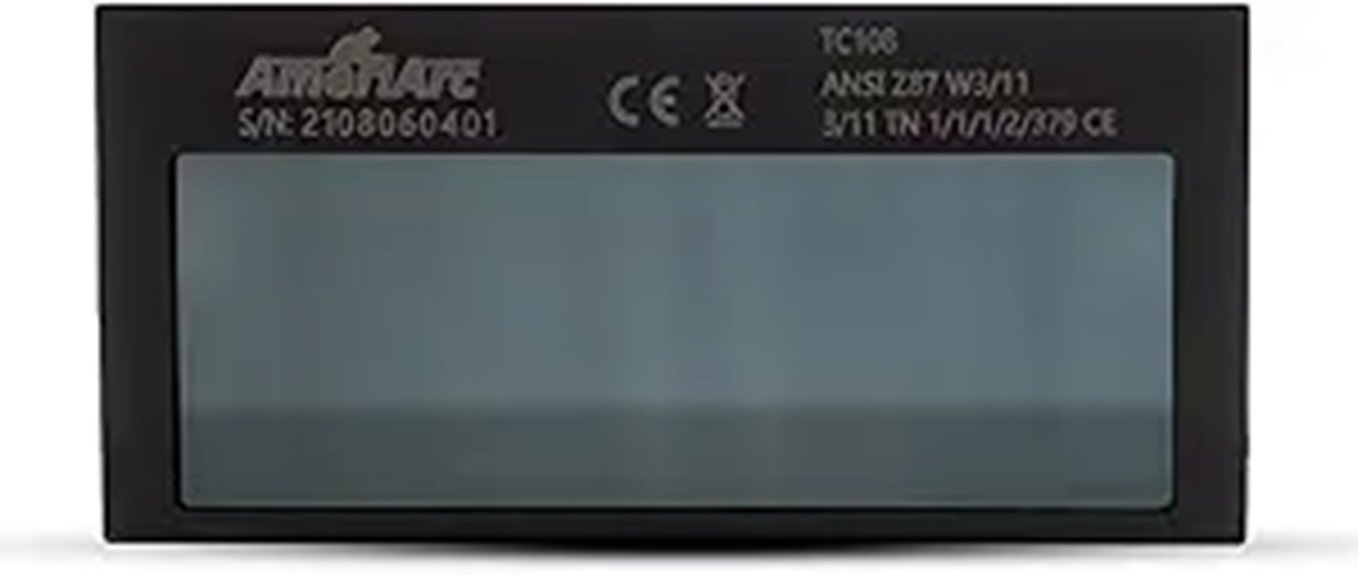
- Safety marking. Check the listing and the filter itself for ANSI Z87.1 or EN379 marking. If the listing does not show one, ask the seller.
- Grinding mode. If you grind with the helmet on, you need a grind setting or a separate face shield. A welding lens is not a grinding shield.
- Power. Find out whether the filter is solar-assisted with a replaceable or non-replaceable battery.
- Low-amp TIG. Very low-amp work, such as thin stainless, needs a filter with sensitivity adjustment that responds to a weak arc.
- Head size. Try the headgear adjustment range if you have a large head or wear a hard hat or respirator under the helmet.
Pros and limitations
Pros
- Large viewing window for the price class, per the listing.
- Four sensors and a fast switching speed claim.
- Adjustable headgear with padded forehead.
Limitations
- The shell is polypropylene. It is light and tough but can wear, warp or crack with heat, impacts or age, so inspect it regularly.
- Lesser-known brand, so warranty and spare lenses may be harder to find than with major brands. Check the seller’s return terms.
- The listing text does not clearly state shade range or certification, so confirm those before relying on it.
Using and maintaining the helmet safely
- Test the lens before each session by striking an arc on scrap or using the test button if it has one. If it does not darken, do not weld.
- Keep the outer cover lens clean and replace it when pitted. A dirty cover lens can trigger sensor problems.
- Set shade by process and amperage and err toward the darker side when in doubt, then adjust for comfort.
- Wear safety glasses under the helmet for chipping and grinding, plus a respirator or fume extraction where needed.
- Store it away from heat and sunlight. Do not leave it on a hot dashboard or near a torch.
Alternatives and related guides
- TRQWH shade 12 welding lens if you only need a replacement lens.
- PCS helmet rear sweatband for more comfort in a long session.
- Miller 231410 inside lens cover if you also own a Miller helmet.
Frequently Asked Questions
Is the TRQWH large view welding helmet auto-darkening?
Yes, per the listing it is an auto-darkening helmet with four arc sensors and a stated 1/30000 second reaction time. Confirm the shade range and certification on the listing, and test the helmet on scrap before real work.
Can I use it for TIG and stick welding?
The listing says it works with MIG, TIG and MMA (stick). For low-amp TIG, check for sensitivity control so the filter responds to a weak arc, and choose a lower shade only if the filter chart supports it.
Can I replace the lens if it is damaged?
Most helmets use replaceable cover lenses, but the exact size must match the TRQWH model. Check the listing for the lens dimensions and whether the seller sells spares before you buy.
Is a polypropylene helmet shell safe?
Polypropylene is a common helmet shell material and is light. Like any plastic, it can degrade with heat and impact, so inspect the shell for cracks or warping and replace the helmet if it is damaged.
Bottom line
The TRQWH large view welding helmet is worth considering if you want a wide viewing area in a budget auto-darkening helmet. Confirm the shade range, certification and return terms before you buy, and keep spare cover lenses on hand.
Check current price on Amazon →