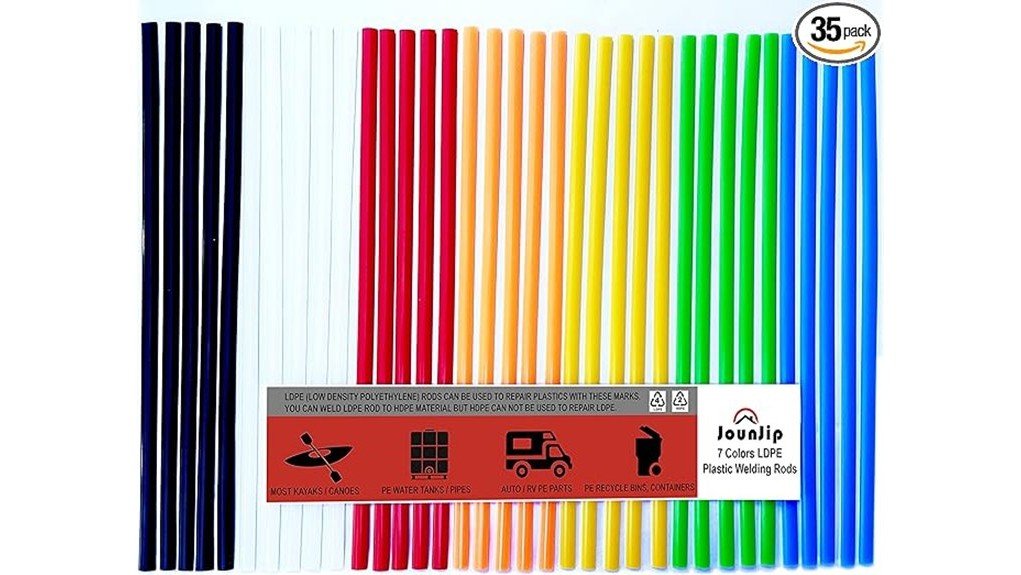
JounJip LDPE plastic welding rods are 13-inch polyethylene filler rods sold for repairing kayaks, water tanks, auto and RV parts and other PE items, in seven colours. This review is based on the Amazon listing, not hands-on testing. The rods make sense if your broken part really is polyethylene and you have a hot air welder. They are the wrong choice for ABS, PVC, polypropylene or anything unmarked.
Quick specs at a glance
| Item | Detail |
|---|---|
| Material | LDPE filler rod, listed as suitable for LDPE and HDPE |
| Length | 13 in |
| Colours | Seven: blue, red, orange, green, black, yellow, white (per listing) |
| Weight | About 0.2 kg for the pack, per listing |
| Typical uses | Kayaks and canoes, PE tanks, auto and RV parts |
| Return policy | Amazon 30-day return policy; check the listing for the warranty |
Specs are taken from the seller listing and may change; confirm them on the current listing before you buy.
Check the current price on Amazon →
What LDPE welding rods are for
Plastic welding rods are filler material. You heat the rod and the base plastic together with a hot air welder so they fuse. For good adhesion the rod should be the same plastic as the part. Polyethylene is a waxy plastic that glue does not bond to well, so hot air welding is a common way to repair it.
Common PE items include kayaks, rotomoulded tanks, garbage bins, chemical-resistant containers and some fuel-cap or fender liner parts. The listing says the rods suit both LDPE and HDPE. LDPE and HDPE are close relatives, but HDPE is stiffer and melts at a higher temperature. If you can find HDPE-labelled rod for an HDPE kayak, it is a closer match.
How to check these rods match your repair
- Identify the plastic. Look for PE, HDPE, LDPE or the recycling codes 2 and 4. If the part is PP (code 5), use PP rod, not PE rod.
- Check the finish. PE feels waxy and floats on water. If it sinks, it is probably not PE.
- Test on a hidden spot or scrap. Melt a bead onto the part and see if it fuses without peeling.
- Match colour if appearance matters. Seven colours help, but they may not match exactly.
- Check your heat source. You need a hot air welder with a suitable nozzle; a lighter or a soldering iron is not a substitute.
- Consider the application. Rods are for structural repair of non-pressure items. Do not use rod welds on pressurised pipe.
Check the current price on Amazon →
How to weld polyethylene with rods
- Clean the area and scuff it with sandpaper. PE is often dirty or slick.
- Cut a V-groove along the crack and drill a small stop hole at each end.
- Heat the base plastic and the rod together with the hot air tool at the recommended temperature for PE; LDPE itself melts at roughly 105 to 115 degrees C, so practise on scrap and keep heat moderate.
- Hold the rod at about 90 degrees and press lightly as you move along the groove.
- Let it cool fully before you load or fill the part.
- For big repairs, add a second pass or a stainless mesh on the back.
Polyethylene is slow to melt and can burn quickly. If it smokes or blackens, the heat is too high.
Safety
- Heated plastic releases fumes. Ventilate the area and consider a respirator for organic vapours.
- Wear eye protection and heat-resistant gloves.
- Do not weld fuel tanks or containers that held flammable or hazardous liquids.
- Do not assume the rod is food-safe. LDPE is common in food packaging, but a general-purpose welding rod is not certified for contact with drinking water or food. Check with the seller for any food-grade claim.
Pros and limitations
- Right material for PE kayaks, tanks and bins
- Seven colours help blend repairs
- Light, easy to store
- Needs a hot air welder, not included
- Not for other plastics
- PE repairs need clean, well-prepared surfaces and patience
- No claims of food or potable water certification
Check the current price on Amazon →
Related guides and alternatives
- BeyondLife 1600W plastic welder review a hot air welder that can run PE rods.
- iGlobalBuy 1600W hot air welder review another hot air welder option.
- Plastic welding mesh review for reinforcing a cracked PE panel from behind.
- Mixed plastic welding rods review for a pack with several rod types.
Frequently Asked Questions
Are LDPE rods good for kayaks?
Many kayaks are polyethylene, so PE rods are a good starting point. Identify your kayak material first, practise on scrap and clean the surface well. HDPE kayaks may bond better with HDPE rod.
Can I use LDPE rods on polypropylene?
No. Polypropylene needs PP rod and polyethylene needs PE rod; mixing them often gives a weak join that peels. Check the plastic code on your part and use the matching rod.
What temperature should I use?
LDPE melts at roughly 105 to 115 degrees C, but a hot air welder needs a higher air temperature because heat is lost to the air. Start low on scrap, watch for browning, and follow your welder and rod guidance.
Are these rods food-safe?
The listing does not claim food-grade or potable-water approval. Do not assume welded repairs are safe for drinking water or food contact; contact the seller or use a certified repair method.
Bottom line
The JounJip LDPE rods are a sensible match for polyethylene repairs when you identify the plastic and have a hot air welder. They do not fix other plastics. Check the current listing for the latest details.