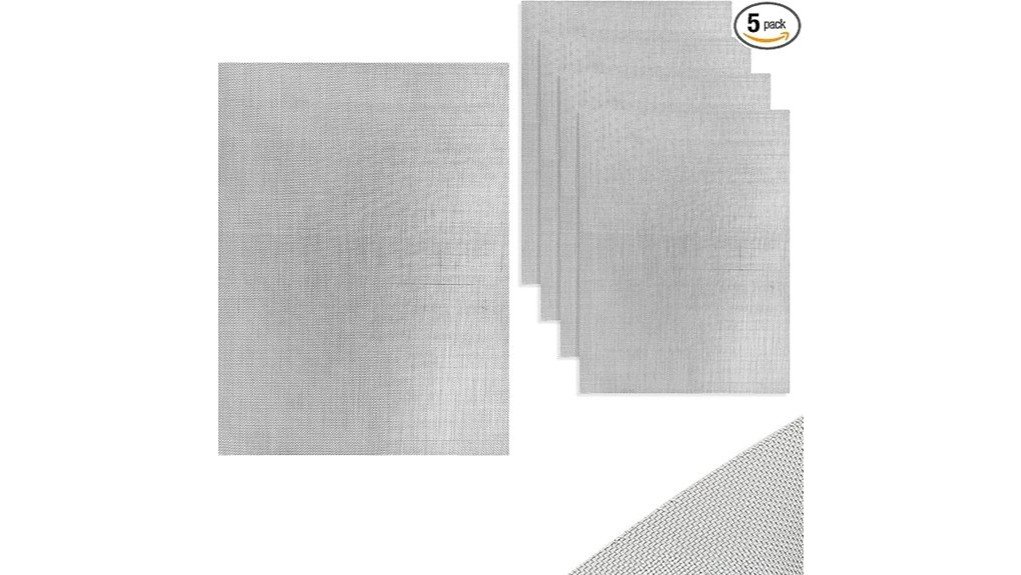
The 5PCS plastic welding mesh is a pack of five stainless steel mesh sheets, each about 20 x 15 cm, used to reinforce cracked or broken thermoplastic parts such as car bumpers. This review is based on the Amazon listing, not hands-on testing. It is useful if you already have a hot air welder, soldering iron or hot stapler and want a stronger repair than a bead of filler. It does nothing on its own, and it will not fix a part that has shattered or has missing material.
5PCS plastic welding mesh specs at a glance
| Item | Detail |
|---|---|
| Quantity | 5 sheets |
| Size per sheet | About 20 x 15 cm (per listing) |
| Weight | About 20 g per sheet, per listing |
| Material | Stainless steel mesh |
| Use | Embed in softened plastic with heat to reinforce a repair |
| Not included | A heat source such as a hot air gun, soldering iron or hot stapler |
Specs are taken from the seller listing and may change; confirm them on the current listing before you buy.
What plastic welding mesh does
Welding mesh is a thin steel screen. You press it into softened plastic, usually on the back of a crack, so the plastic flows through the openings and locks it in place. The mesh then carries load across the break, much like rebar in concrete. After that you can fill the front with plastic rod or filler and sand it smooth.
Mesh is helpful for cracked bumper covers, broken tabs, cracked housings and holes. It also adds strength when using a hot stapler.
Buyer checklist: does it suit your repair
- Size. Each sheet is about 20 x 15 cm, so one sheet can be cut into several patches for small cracks. Five sheets cover quite a few small repairs.
- Plastic type. The mesh helps mechanically on any thermoplastic you can soften, but the plastic still needs to melt properly. Identify the part (ABS, PP, PC, etc.) before starting.
- Access. You need to reach the back of the crack. If the back is inaccessible, mesh is harder to use.
- Heat source. A soldering iron with a wide tip, a hot air gun or a hot stapler can embed the mesh.
- Cutting tools. Use tin snips or heavy scissors. Wear gloves because cut edges are sharp.
- Part use. Do not use as a repair on structural or safety-related parts.
How to use plastic welding mesh
- Clean the area and dry it. Drill small stop holes at the crack ends.
- Align the crack and hold it in place with tape or clamps.
- Cut a mesh patch that extends about 1 cm beyond the crack on each side. Round the corners so they do not catch.
- Heat the mesh with the tool so it sinks into the softened plastic; press it flush with a flat metal tool.
- Let it cool before moving the part.
- On the front, V-groove the crack and weld a matching plastic rod or use filler. Sand and paint as needed.
Keep heat controlled to avoid burning through thin plastic. Work in a ventilated area, wear eye protection and gloves, and let tools cool before you store them.
Pros and limitations
- Adds mechanical strength to bumper and trim repairs
- Pack of five sheets, lightweight, easy to cut
- Stainless steel is rust resistant under normal use
- Mesh alone is not a repair; it needs heat, plastic and finishing
- Requires back-side access
- Cut edges are sharp
- Does not help on non-thermoplastics
Related guides and alternatives
- Gaolaosy 10-piece welding mesh review a 10-piece mesh pack to compare.
- 1322PCS plastic welding kit review a kit that already includes rods, staples and mesh.
- WEP 960-VII hot stapler kit review a hot stapler to pair with mesh.
- BeyondLife 1600W plastic welder review a hot air welder for rod welding over the mesh.
Frequently Asked Questions
Can I use plastic welding mesh on a car bumper?
Yes, it is a common use. Embed the mesh on the back of the crack, weld or fill the front and refinish. For damage to structural mounting points or sensors, follow the vehicle maker repair guidance or see a body shop.
What tool heats the mesh into the plastic?
A hot air welder, a hot stapler or a soldering iron with a wide tip. Use controlled heat so the plastic softens without burning, and press the mesh flush as the plastic flows through it.
Does the mesh work on every plastic?
It helps mechanically on thermoplastics that soften with heat. Identify your plastic first. Some, such as polyethylene, bond poorly, and thermoset or composite parts will not soften the same way.
How do I cut the mesh?
Use tin snips or strong scissors and wear gloves; cut edges are sharp. Leave a margin of about 1 cm around the crack and round the corners so they do not poke through the plastic.
Bottom line
The 5PCS plastic welding mesh is a cheap way to add strength to cracked thermoplastic parts, provided you can reach the back and have a heat source. Identify the plastic first and finish the front properly.