Disclosure: As an Amazon Associate, we earn from qualifying purchases. If you click a link on this page and make a purchase, we may receive a small commission at no extra cost to you.
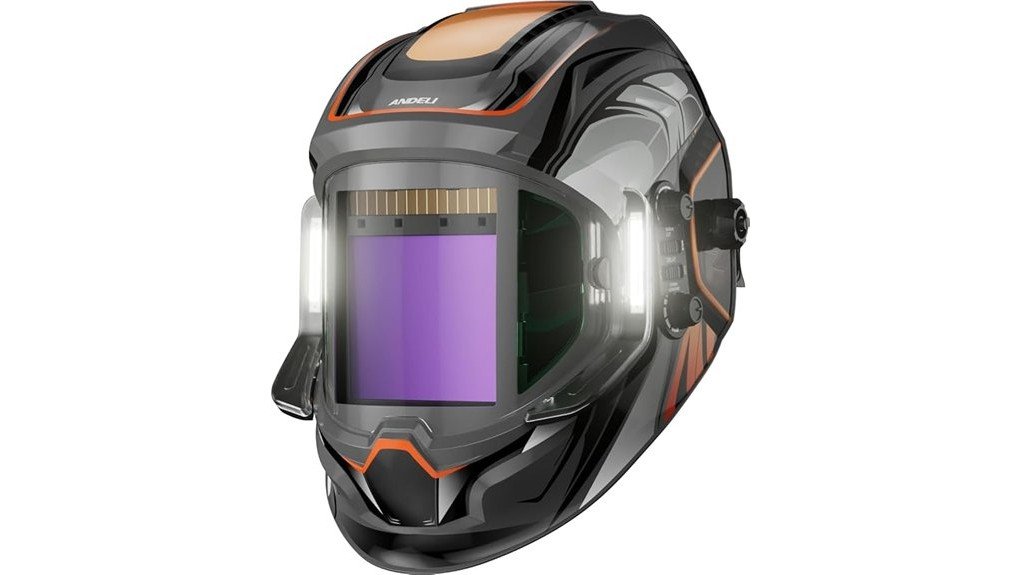
A narrow or poorly balanced welding helmet can make it harder to track the puddle, see nearby obstacles, and stay comfortable through a long project. The ANDELI MONER LED Auto-Darkening Welding Helmet addresses those problems with a 180° panoramic layout, a listed 1.7-pound weight, true-color optics, and an integrated work light. Its wide view and adjustable shade modes make it appealing for home shops and general fabrication, but the fixed-shade side windows and limited published certification details deserve attention. This review explains the useful features, practical tradeoffs, and safety checks to make before you buy.
Quick Verdict
Rating: 8/10
Best For: DIY welders, home fabricators, and intermediate users who value a wide field of view, external controls, and built-in lighting.
Bottom Line: The ANDELI MONER LED combines a panoramic front-and-side view with 1/1/1/2 optical clarity, four arc sensors, and fast 1/25000-second switching. It offers a strong feature set for general shop use, but buyers should confirm certification markings, replacement-lens availability, and the exact warranty supplied by the Amazon seller.
Key Specifications
| Specification | Detail |
|---|---|
| Brand | ANDELI |
| Model / style | MONER LED Auto-Darkening Welding Helmet, ASIN B0D95BQSBV |
| Product type | Panoramic auto-darkening welding helmet with side windows and integrated lighting |
| Listed weight | 1.7 pounds |
| Shell material | Polypropylene (PP) |
| Main viewing area | Listed as 3.94 × 3.74 inches |
| Side viewing area | 3.72 × 1.76 inches, fixed DIN 4 and non-auto-darkening |
| Optical clarity | 1/1/1/2 true-color lens |
| Arc sensors | 4 |
| Switching speed | 1/25000 second, light to dark |
| Operating modes | Grind DIN 4, cut DIN 5-9, weld DIN 9-13 |
| UV/IR protection | Listed up to DIN 16 |
| Work light | Integrated LED lighting, two brightness levels and motion-sensing control, listed up to 400 lumens |
| Power | 2 × CR2032 batteries, included in the reviewed listing |
| Best use | MIG, TIG, MMA/stick, cutting, and grinding in home or light fabrication settings |
What Is the ANDELI MONER LED Welding Helmet?
The ANDELI MONER LED is an auto-darkening welding helmet designed around a large front lens and fixed-shade side windows. The front auto-darkening filter uses four sensors and a listed 1/25000-second switching time, while the side windows expand peripheral awareness without darkening automatically.
The helmet also includes true-color optics with a 1/1/1/2 clarity rating, external adjustments for mode, shade, sensitivity, and delay, plus an integrated LED work light. Those features make it more versatile than a basic entry-level hood, especially when you move between welding, cutting, setup, and grinding tasks.
Its listed 1.7-pound weight is reasonable for a panoramic design, although compact single-window helmets can be lighter. The additional lenses also create more surfaces to clean and protect from spatter.
Who Should Buy It?
Best For
- Home-shop welders who want more peripheral visibility around a bench, vehicle, or fabrication table.
- MIG, TIG, and stick users who need adjustable shade, sensitivity, and delay controls for different tasks.
- Anyone who regularly works in dim areas and would benefit from an integrated LED light instead of a separate headlamp.
Skip If
- You need clearly documented ANSI, EN, or workplace-specific certification before purchase.
- You prefer a compact hood with fewer lenses, lower weight, and a simpler replacement-parts system.
- You need a broad local service network or a well-established supply of proprietary cover lenses and headgear parts.
Review the current Amazon product details to confirm the selected style and package contents.
Design, Weight, and Headgear
The PP shell keeps the helmet practical for everyday shop use and avoids the bulk of a heavier specialty hood. At a listed 1.7 pounds, the helmet should feel manageable for many users, but the broad front lens, side windows, lighting, and control hardware can make it feel more substantial than a basic narrow-view model.
The panoramic shape is most useful when you need to see clamps, torch leads, nearby tools, or another person moving at the edge of your workspace. It can reduce how often you turn your head around the joint, but the wider shell may be less convenient in a tight space.
Fit matters as much as listed weight. Set the crown strap first, then adjust the rear tension and lens-to-face distance so the helmet stays balanced when raised or lowered. A loose fit lets the shell pull forward, while excessive tension creates pressure points during longer sessions.
Panoramic View and True-Color Optics
The main viewing area is listed at 3.94 × 3.74 inches, with side windows measuring 3.72 × 1.76 inches. Together, they create the advertised 180° viewing layout and give you more awareness than a conventional front-window helmet.
The front filter carries a 1/1/1/2 optical clarity rating. The first three “1” ratings indicate strong performance for optical class, light diffusion, and luminous transmittance variation. The final “2” relates to angle dependence, so the shade may vary more as your viewing angle changes than it would on a 1/1/1/1 lens.
True-color optics can make the puddle, base metal, markings, and surrounding work area look more natural than a heavy green-tinted lens. The side windows, however, are fixed DIN 4 and do not auto-darken. They are designed for peripheral awareness, not for turning your head and looking directly at an active arc through the side.
Before You Buy: The available product information lists DIN shade ranges and UV/IR protection, but it does not clearly show every workplace certification marking. Confirm the exact ANSI Z87.1, EN379, CSA, or employer-required marking on the helmet and manual before using it in a regulated shop.
Auto-Darkening Controls and Shade Range
The front lens uses four arc sensors and is listed to switch from light to dark in 1/25000 second. Multiple sensors can help maintain detection when your hands, torch, or workpiece partly block one sensor, but the sensors still need a clear view of the arc.
The listed operating ranges are grind mode at DIN 4, cut mode at DIN 5-9, and weld mode at DIN 9-13. External controls let you adjust shade, sensitivity, delay, and mode without removing the helmet. This is useful when you change processes or amperage during a project.
Sensitivity determines how easily the filter reacts to arc light. Delay controls how quickly the lens returns to its light state after the arc stops. A longer delay can be more comfortable around a hot weld, while a shorter delay can speed tack work. Always match the shade to the process and current range in the manual or workplace procedure.
LED Lighting and Battery Use
The integrated LED system is listed at up to 400 lumens and includes two brightness levels plus motion-sensing control. It can help you place the torch, inspect a joint, or find controls in a dark corner before striking an arc.
The reviewed listing specifies two included CR2032 batteries. Keep spare batteries in your welding cabinet and replace both at the same time when the low-battery indicator appears or the lens response becomes inconsistent. The work light can drain batteries faster than auto-darkening use alone, so battery condition should be part of your pre-use check.
The LED is a convenience, not a replacement for proper shop lighting during fit-up, grinding, inspection, and movement around hazards.
Check the current Amazon listing for the battery and charging details shown for your selected variant.
How It Performs in Real Use
For Garage MIG and Stick Projects
The large front window makes it easier to see the joint, gun angle, and surrounding workpiece without repeatedly lifting the hood. The side windows are helpful when you need to monitor cable position or movement around the bench, although direct arc viewing should remain through the front auto-darkening filter.
For TIG and Detail Work
True-color optics and adjustable sensitivity can support precise positioning and puddle control. Low-amperage TIG can be demanding for any auto-darkening filter, so test the helmet at your intended settings and make sure all four sensors have an unobstructed view before starting a critical weld.
For Cutting and Grinding
Dedicated cut and grind modes reduce the need to switch helmets between tasks. The main risk is forgetting to return the helmet to weld mode after grinding. Check the mode indicator before every arc start and treat that check as part of your normal setup routine.
For Dim or Confined Work Areas
The LED light is useful under a vehicle, inside a frame, or near the back of a crowded workbench. The panoramic shell may need more clearance than a compact hood, so test your head movement and escape path before beginning work in a restricted position.
Setup Tips Before First Use
- Inspect the filter and cover lenses: Do not weld with a cracked filter, loose lens, deep scratch, or missing cover plate.
- Check the batteries: Confirm the low-battery indicator is off and keep two fresh CR2032 batteries nearby.
- Clean all four sensors: Dust, spatter, stickers, or a raised hand can reduce arc detection.
- Set the correct mode and shade: Use grind only for grinding, then return to the correct welding range before striking an arc.
- Adjust sensitivity and delay: Start with the manual’s recommended settings, then fine-tune them for the process and lighting conditions.
- Balance the headgear: Adjust the crown, rear band, tilt stops, and lens distance so the helmet does not drop or pull forward.
Pro Tip: Before each session, point the front sensors toward a safe test arc and confirm that the lens darkens consistently. Recheck the mode after every grinding break, since leaving the helmet in grind mode is an easy and serious mistake.
Safety, Care, and Replacement Parts
A welding helmet is one part of a complete PPE setup. Wear impact-rated safety glasses or goggles under the hood, use flame-resistant clothing and gloves, and provide suitable ventilation or fume extraction for the material and process. Helpers and bystanders also need protection from arc radiation and flying debris.
Clean the shell with a soft damp cloth. Use a clean lint-free cloth and a mild lens-safe cleaner on the cover lenses, and avoid solvents or abrasive cleaners. Replace scratched, pitted, cloudy, or heat-damaged cover lenses before they interfere with visibility or expose the auto-darkening filter to spatter.
The panoramic design uses more lens area than a standard hood, so confirm the exact replacement cover-lens dimensions and seller availability before purchase. ANDELI product information shows inner and outer protective lenses and a storage bag with some packages, but package contents can vary by seller or variant.
Pros and Cons
Pros
- 180° layout provides more peripheral awareness than a conventional front-only window.
- Large listed 3.94 × 3.74-inch front viewing area with true-color 1/1/1/2 optics.
- Four arc sensors and 1/25000-second switching support responsive auto-darkening.
- External shade, sensitivity, delay, and mode controls make process changes easier.
- Integrated LED lighting helps with fit-up and positioning in dim work areas.
Cons
- Side windows are fixed DIN 4 and do not auto-darken.
- The 1.7-pound listed weight may still feel heavy to users who prefer a compact single-window hood.
- Certification markings, long-term replacement-lens supply, and Amazon seller warranty terms should be confirmed before purchase.
Is It Worth the Price?
The ANDELI MONER LED sits in the value-focused feature-rich category. Its panoramic view, true-color front filter, four sensors, external controls, and work light give you more functionality than a basic entry-level helmet.
It is worth considering if peripheral visibility and built-in lighting matter more to you than having the lightest possible shell or the largest service network. You get the most value when you will use the cut, grind, sensitivity, delay, and lighting features instead of leaving the helmet on one setting.
The main value limitation is uncertainty around seller-specific warranty coverage and the long-term supply of exact cover lenses and headgear parts. Confirm those details before buying if the helmet will see daily professional use.
How It Compares to Alternatives
A Lincoln Electric VIKING helmet may be a better fit when documented support, replacement parts, and established workplace acceptance are your priorities. Miller Digital Infinity models are also worth comparing if you want a premium lens, broad controls, and a stronger dealer network, although they usually cost more.
The ANDELI makes the most sense when you want a panoramic field of view and built-in lighting at a value-oriented price. A compact front-window helmet may be better if low weight, tight-space access, and simple lens replacement matter more than peripheral visibility.
Frequently Asked Questions
What welding processes does the ANDELI MONER LED support?
The listed modes cover grinding at DIN 4, cutting at DIN 5-9, and welding at DIN 9-13. The product is marketed for MIG, TIG, MMA/stick, cutting, and grinding, but you should match the shade and sensitivity to your process and amperage.
Do the side windows auto-darken?
No. The side windows are listed as fixed DIN 4 and non-auto-darkening. Use them for peripheral awareness and keep direct arc viewing through the front auto-darkening filter.
Is the 1.7-pound helmet comfortable for long sessions?
Comfort depends on headgear balance, lens distance, and your neck sensitivity. The listed weight is reasonable for a panoramic helmet, but it may feel heavier than a compact single-window model with no lighting system.
Can you wear prescription glasses under it?
The adjustable headgear and broad shell may accommodate many prescription frames, but fit varies by frame size and face shape. Test for temple pressure, lens contact, and enough clearance to lower the hood without moving your glasses.
What batteries does the helmet use?
The reviewed listing specifies two CR2032 batteries and states that they are included. Keep a spare matched pair available, especially if you use the integrated LED light often.
Does it come with a warranty?
ANDELI’s current product page lists a one-year warranty for the matching panoramic helmet family. Amazon coverage can vary by seller, country, and variant, so save your receipt and confirm the warranty terms shown on the exact listing before ordering.
Are replacement cover lenses easy to find?
Some ANDELI packages show inner and outer protective lenses, but ongoing replacement availability is not as clearly documented as it is for major dealer-supported brands. Verify the exact front and side cover-lens part numbers before buying extras.
What is the most common setup mistake?
The most serious mistake is leaving the helmet in grind mode before striking an arc. Also check that the sensors are clean, the batteries are strong, the shade is correct, and the front filter darkens consistently before welding.
The Bottom Line
The ANDELI MONER LED earns an 8/10 for combining a wide panoramic view, true-color optics, four-sensor auto-darkening, and useful LED lighting in a value-focused package. It is a practical choice for home fabricators and intermediate welders, while professional buyers who need fully documented certification, guaranteed replacement parts, or broad local support should compare established dealer-backed helmets.
Ready to Buy?
Check the latest price, seller warranty, package contents, and certification details before you decide.