As an Amazon Associate, Garage Welding may earn from qualifying purchases. This does not change the price you pay.
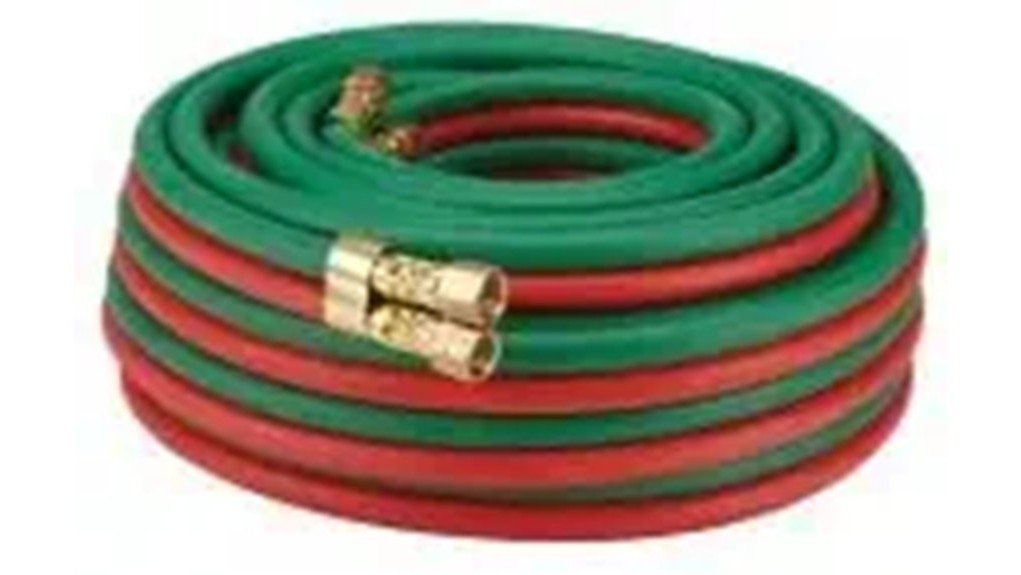
The 1/4 inch by 50 foot twin welding hose is a long, paired oxygen and acetylene hose for oxy-fuel torches. It is worth considering if you need extra reach for a cutting or welding setup, and it is not the right pick if your regulators or torch use a different hose size or fuel. This twin welding hose review is based on the Amazon listing and general hose practice, not hands-on testing.
1/4 x 50 ft twin welding hose at a glance
| Item | What the listing says |
|---|---|
| Type | Twin (paired) oxygen and acetylene hose |
| Size | 1/4 in, 50 ft length |
| Material | Synthetic rubber with brass fittings |
| Standards cited | RMA/CGA hose standards; verify grade on the listing |
| Listed temperature range | -40 to 120 degrees F |
Spec lines are taken from the seller’s listing. Confirm them on the current page, and look for the printed markings on the hose when it arrives.
Check the current price on Amazon →
What it is and who it suits
Twin hose carries oxygen and fuel gas side by side, so one assembly keeps the lines tidy and reduces tangling. Fifty feet is a lot of reach, useful for working across a shop, on a trailer or around a large fabrication.
It suits hobbyists and shop users who need a replacement or a longer run. If you only work at a cart or bench, a shorter hose is lighter and has less gas volume to purge. If you want a complete set, see the oxygen acetylene cutting torch kit review and the Hobart 770502 kit.
How to check the hose fits your equipment
- Match the fittings. Hose ends are normally B-size, with oxygen on a right-hand thread and fuel gas on a left-hand thread. Check that they match your regulator outlets and torch inlets.
- Check the bore. 1/4 inch bore is common on medium-duty hose, while light-duty torches often use smaller hose. Confirm what your torch maker recommends.
- Confirm the fuel gas. Acetylene hose and LP-gas hose are not always interchangeable. Look at the hose grade on the listing.
- Check the length. Long hose means more pressure drop and more gas to purge. Buy the shortest length that safely reaches your work.
- Pair with safety devices. Fit flashback arrestors and check valves at the regulator and, if possible, at the torch.
Pros and limitations
Pros
- Twin construction keeps oxygen and fuel lines together and neat.
- Brass fittings are the usual choice for oxy-fuel and resist corrosion.
- 50 ft gives plenty of reach for large jobs.
Limitations
- Long length is heavier and harder to coil, and hot slag can damage it.
- The temperature range quoted is for ambient use, not for contact with hot metal.
- Unlike a full kit, it does not include regulators or a torch.
- Quality depends on the supplier; inspect it for markings and defects on arrival.
Using and caring for welding hose
- Inspect the full length before each job for cuts, cracks, burn marks and swollen sections.
- Leak test every connection with soapy water after tightening, with the cylinder valves open and torch valves closed.
- Run the hose away from sparks and slag, and never lay it across sharp edges or where it can be stepped on or run over.
- Do not use tape to repair a damaged hose, because a safe repair needs a proper splice or replacement. A hose repair kit is suitable only for approved repairs.
- Keep oil and grease away from oxygen hose and fittings.
- Store coiled loosely, away from sunlight, solvents and heat.
Alternatives and related guides
- Dormont 16100BP48 gas hose if your need is a gas-appliance connector rather than a torch hose.
- Weldmark hose repair kit for hose fittings and repair parts.
- Uniweld RO100 oxygen regulator to match the hose to a regulator.
Frequently Asked Questions
Is this twin hose for oxygen and acetylene?
The listing describes it as a 1/4 inch by 50 foot twin welding hose for oxygen and acetylene. Twin hose joins one line for oxygen and one for fuel gas. Check the listing for the stated grade and fittings, and confirm that it is rated for the fuel gas you use.
Which hose color goes to oxygen and which to fuel gas?
In the US, oxygen hose is normally green and fuel-gas hose is normally red. Colors are only a convention, so also check the thread: oxygen fittings are right-hand thread, while fuel-gas fittings have a left-hand thread with a groove cut on the nut.
Can I use this hose with propane or MAPP?
Not unless the listing or manufacturer says it is rated for it. Grade and compatibility vary between acetylene-rated and LP-gas-rated hose, so verify the markings on the hose and ask the supplier if you plan to run a different fuel.
How should I inspect and store welding hose?
Before each job, run your fingers along the hose to find cracks, burns, cuts, bulges and worn ends, then leak test with soapy water. Coil it loosely without kinks, store it out of sunlight and away from oil, and replace any hose with damage near the fittings.
Conclusion
The 1/4 inch by 50 foot twin welding hose looks like a straightforward way to add reach to an oxy-acetylene setup. Check the fittings, the grade and the length you really need, then leak test and inspect it often.
Check the latest price on Amazon →