As an Amazon Associate, Garage Welding may earn from qualifying purchases. This does not change the price you pay.
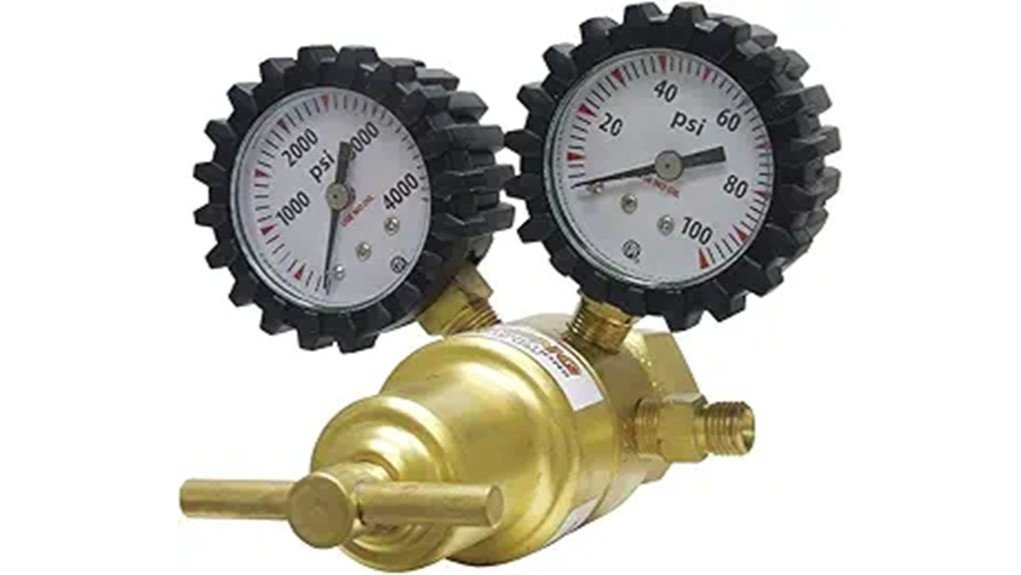
The Uniweld RO100 Centurion Series is a brass single-stage oxygen regulator with a CGA-540 inlet and a 2 to 60 psi delivery range. It is worth considering if you want a recognized-brand oxygen regulator for light to medium oxy-fuel cutting, brazing or welding, and it is not for use on acetylene or other gases. This Uniweld RO100 oxygen regulator review is based on the Amazon listing and public spec pages, not hands-on testing.
Uniweld RO100 at a glance
| Item | Listed detail |
|---|---|
| Gas | Oxygen |
| Inlet | CGA-540 |
| Outlet | “A” style oxygen hose connection (verify thread on the listing) |
| Delivery range | 2 to 60 psi |
| Body | Brass, with rubber gauge boots |
| Gauges | About 1-1/2 in |
| Safety | Reseatable safety blow-off valve |
| Weight (listed) | About 1.65 lb |
Specifications were cross-checked against retailer pages. Verify the current outlet and inlet details on Amazon.
Check the current price on Amazon →
What it is and who it suits
The RO100 is a general-purpose oxygen regulator in Uniweld’s Centurion line. A reseatable blow-off valve helps protect the diaphragm if pressure spikes, and the rubber boots protect the small gauges.
It suits hobbyists, farm shops and HVAC or plumbing users on oxy-fuel equipment. If you want a more budget option, compare the CDL LX45 oxygen regulator. For a full outfit, see the Hobart 770502 kit.
How to check it fits your setup
- Check the cylinder. Make sure your oxygen cylinder valve takes a CGA-540 connection.
- Check the hose. Confirm that your hose uses the matching oxygen fitting size and right-hand thread.
- Check pressure needs. Compare the 60 psi maximum with the tip chart for the thickest cut you plan.
- Consider the gauges. 1-1/2 in gauges are compact. If you want easier reading, look for larger dials.
- Add safety devices. Use a flashback arrestor and check valve on the oxygen line.
Pros and limitations
Pros
- Recognized brand with brass construction.
- Reseatable safety valve helps protect internals.
- Light at about 1.65 lb.
Limitations
- Oxygen only.
- 60 psi top range may limit heavy cutting tips.
- Single-stage design shows some delivery drift as the cylinder empties.
- Does not include hose or flashback arrestors.
Use and maintenance tips
- Keep the regulator clean and free of oil or grease. Do not lubricate oxygen fittings.
- Crack the cylinder valve briefly to clear dust, then connect the regulator.
- Back out the adjusting screw, then open the cylinder valve slowly while standing to the side.
- Set the delivery pressure per the torch chart and leak test connections with soapy water.
- When finished, close the cylinder, bleed the lines and back out the adjusting screw.
- Inspect the gauges and threads regularly and have faulty regulators serviced by a qualified shop.
What the 2 to 60 psi range means in practice
Oxygen delivery pressure sets how much oxygen reaches the torch. Light welding and heating with small tips use low pressure, while cutting tips call for higher pressure as the metal gets thicker. Every torch maker publishes a tip chart showing the oxygen and fuel-gas pressure for each tip size.
A regulator whose range tops out at 60 psi covers most small and medium tips used by hobbyists. Heavy industrial cutting tips for thick plate can call for more, so check your chart before choosing a regulator. If your chart asks for more oxygen than the regulator can deliver, the cut will be slow or fail.
Also remember that the hose size matters. A narrow 3/16 in hose can restrict flow on a large cutting tip even with a capable regulator, so size the whole system together: cylinder, regulator, hose, arrestors and tip.
Alternatives and related guides
- WeldingStop gas regulator as another regulator option.
- Twin welding hose to connect the regulator to your torch.
- Oxygen cylinder wrench for opening and closing valves.
See this regulator on Amazon →
Frequently Asked Questions
What cylinder does the Uniweld RO100 fit?
Public product data lists a CGA-540 inlet, which is the common connection for industrial oxygen cylinders in the US. It will not connect to acetylene or other fuel gas cylinders, and small specialty oxygen cylinders may use different connections. Check your cylinder valve before buying.
What delivery pressure range does the RO100 have?
The listing and retailer pages show a delivery range of 2 to 60 psi. That covers most light and medium oxy-fuel work, but heavy cutting may need a regulator with a higher delivery range. Always follow the tip chart for your torch.
Can I use the RO100 for acetylene?
No. It is an oxygen regulator. Fuel-gas regulators have different threads, pressure ranges and materials. Using the wrong regulator on a gas can be dangerous, so use a regulator made and marked for each gas.
How do I know when the regulator needs service?
Replace or service the regulator if the delivery gauge creeps upward with the cylinder valve open and the adjusting screw backed out, if the safety valve vents, if a gauge reads wrong or if threads or seats are damaged. Use a qualified repair shop rather than guessing.
Conclusion
The Uniweld RO100 is a solid-looking, name-brand oxygen regulator for light and medium oxy-fuel jobs. Check the cylinder fitting, delivery range and hose connection, and use correct safety devices.
Check the latest price on Amazon →