As an Amazon Associate I earn from qualifying purchases. Buying through these links costs you nothing extra.
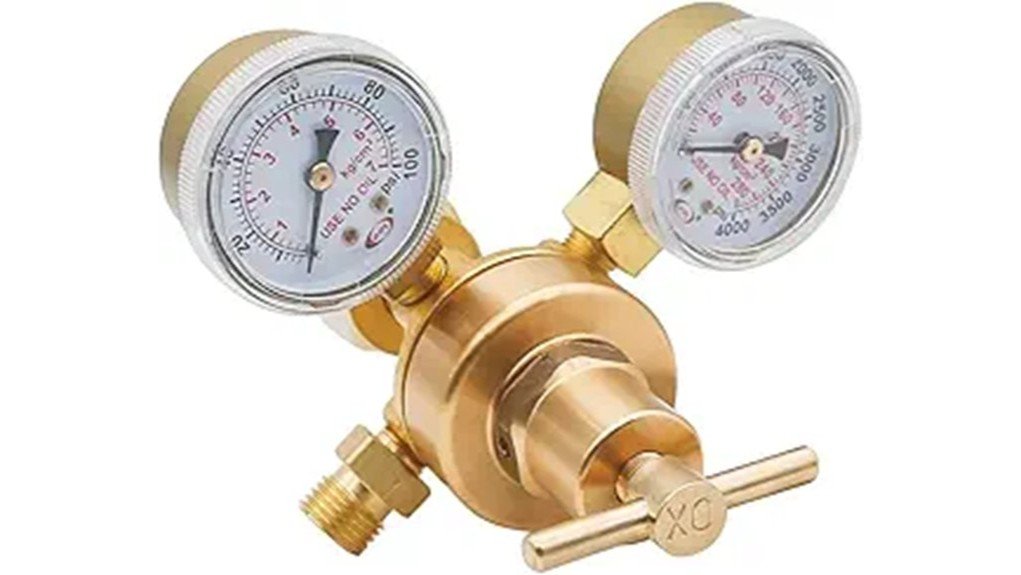
The CDL LX45 is a single-stage forged brass oxygen regulator with a CGA-540 cylinder inlet and two small pressure gauges. It is worth considering if you need a budget oxygen regulator for a standard industrial oxygen cylinder, and it is the wrong part for acetylene, propane or any other gas. This CDL LX45 oxygen regulator review is based on the Amazon listing and oxy-fuel safety practice, not hands-on testing.
CDL LX45 oxygen regulator at a glance
| Item | What the listing says |
|---|---|
| Gas | Oxygen only |
| Inlet | CGA-540 |
| Outlet thread | 9/16-18 right-hand |
| Gauges | Two 1.5 in gauges, inlet up to 4000 psi, outlet up to 100 psi |
| Body | Forged brass |
| Weight | About 1.76 lb |
| Safety | Pressure relief mentioned in the listing |
Check the current listing for the exact outlet pressure range and any warranty terms.
What it is and who it suits
A regulator reduces high cylinder pressure to a steady working pressure. The CDL LX45 is a single-stage design aimed at hobbyists and light-duty shop users who cut, heat or weld with oxy-fuel.
If you need a regulator with more brand support, compare the YESWELDER CGA540 oxygen regulator or the ARCCAPTAIN oxygen regulator.
How to check it fits your cylinder and torch
- Check the cylinder. CGA-540 is the usual connection for industrial oxygen cylinders in the US. Smaller or specialty cylinders can use other connections.
- Check the hose. A 9/16-18 right-hand outlet matches standard oxygen hose fittings, but confirm your hose nut.
- Match the use. The gauge scale should be sufficient for the torch pressure you need, including cutting oxygen.
- Do not mix gases. Oxygen regulators must be used only for oxygen.
- Add safety devices. A flashback arrestor and check valve should be installed on the oxygen line.
Pros and limitations
Pros
- Forged brass bodies are standard for gas regulators.
- Two gauges show cylinder contents and delivery pressure.
- Price is on the listing; compare it with name-brand regulators.
Limitations
- It is oxygen only.
- Single-stage regulators show some delivery drift as the cylinder empties.
- Small gauges are harder to read than larger ones, and low-cost gauges can be less accurate.
- Check the warranty details on the live listing, as return terms differ by seller.
Use and safety tips
- Keep oil, grease and dirt away from the regulator and cylinder valve. Never lubricate oxygen fittings.
- Crack the cylinder valve briefly to clear dust, standing to the side of the outlet.
- Back out the adjusting screw before opening the cylinder valve, then open the valve slowly.
- Set delivery pressure per the torch maker’s chart, and leak test all joints with soapy water.
- Close the cylinder valve and bleed the system when finished. Back out the adjusting screw.
- Replace a regulator with a creeping gauge, damaged threads or visible damage.
Single-stage regulator basics
Single-stage regulators step cylinder pressure down in one stage. As the cylinder empties, the delivery pressure tends to rise slightly, so you may need to nudge the adjusting screw during a long cut. That is normal for this regulator class and is one reason professionals sometimes prefer two-stage designs for precision work.
Oxygen cutting is less sensitive to small drift than fine welding, but you should still check the delivery gauge each time you start a cut. If the delivery pressure keeps climbing with the adjusting screw backed out (creep), stop using the regulator, shut the cylinder, and replace or service it through a qualified repairer.
Finally, treat the 100 psi gauge range as a scale limit, not a target. Most torch tips call for far less pressure for the metal thickness you are cutting, so follow the tip chart rather than the top of the gauge.
Alternatives and related guides
- CDL LX45 acetylene regulator for the fuel-gas side of a small MC-cylinder setup.
- RX WELD oxygen regulator as another oxygen option.
- Flame Tech medium-duty oxygen regulator for heavier use.
Frequently Asked Questions
Can the CDL LX45 be used on acetylene or other gases?
No. It is described as an oxygen regulator with a CGA-540 inlet. Oxygen and fuel-gas regulators are not interchangeable, and using an oxygen regulator on another gas can be dangerous. Use a regulator made and marked for each specific gas.
What do the LX45 gauges show?
The listing describes two 1.5 inch gauges. One shows cylinder (inlet) pressure up to 4000 psi, and the other shows delivery (outlet) pressure up to 100 psi. Always set outlet pressure according to your torch tip chart and never exceed the torch maker’s limit.
Can I put grease or oil on the regulator threads?
No. Oil, grease and other hydrocarbons can ignite in the presence of high-pressure oxygen. Keep the regulator, cylinder valve and fittings clean and free of oil. Use only oxygen-rated seals and tools and wash your hands before handling oxygen fittings.
Does an oxygen regulator replace a flashback arrestor?
No. A regulator controls pressure and does not stop a flame from traveling back through the hose. Fit a flashback arrestor and check valve on the regulator outlet or torch inlet, and replace them following the maker’s guidance.
Conclusion
The CDL LX45 looks like a basic oxygen regulator for budget oxy-fuel setups. Confirm the CGA-540 inlet and hose thread, keep it oil-free, and use proper flashback protection.