As an Amazon Associate, Garage Welding may earn from qualifying purchases. This does not change the price you pay.
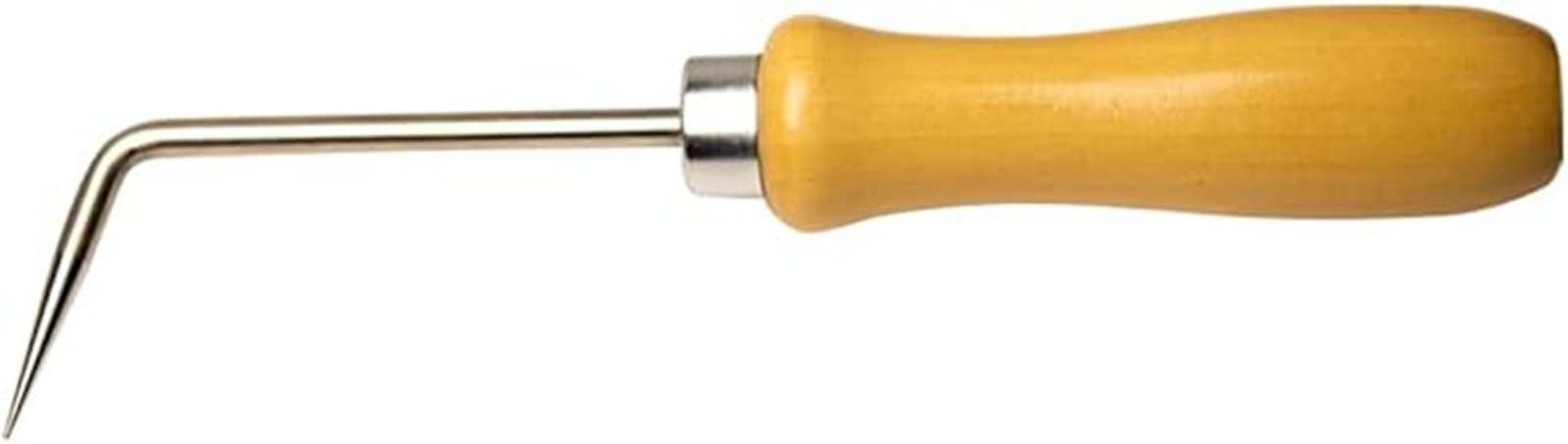
The steel seam tester seam needle is a hand probe with a steel tip and a wooden handle, sold for checking hot-air welded seams on single-ply roofing membranes such as PVC, TPO and EPDM. This seam tester seam needle review draws on the Amazon listing and general roofing practice, not hands-on testing.
It is worth considering if you weld membrane seams and want a simple, low-cost probe. Skip it if you are looking for a tool to test metal welds, because it does not test structural weld strength.
Quick specs at a glance
| Item | Details |
|---|---|
| Product type | Hand seam probe (needle-style) for membrane seams |
| Materials (per listing) | Steel needle, wooden handle |
| Size (per listing) | About 220 x 60 x 35 mm |
| Weight (per listing) | About 3.52 oz |
| Intended membranes (per listing) | PVC, TPO, EPDM roofing membranes |
Check the listing for the exact tip shape and whether replacement tips are offered.
What a seam probe does and who needs one
On a single-ply roof, sheets are overlapped and joined by hot-air welding (or by adhesive and tape, depending on the membrane). Once a seam has cooled, installers run a probe along the edge of the seam to find unwelded spots, skipped areas or channels where a leak could start.
This type of tool belongs in the kit of roofers and anyone doing membrane repairs, including pond liner, flat-roof and RV roof work. It is a visual and tactile check, not a laboratory strength test.
Metal welders do not need it. For metal, the checks are visual inspection, bend tests and non-destructive testing methods described in the applicable code.
How to check it suits your membrane
- Material: the listing names PVC, TPO and EPDM. Confirm the seam type you weld. EPDM is often glued or taped rather than hot-air welded, so a probe applies differently.
- Tip shape: a good probe tip is rounded enough not to cut a sound seam. Check the photos and description for tip form before you buy.
- Handle length and grip: a short wooden handle gives good feel, but wear gloves if the roof is hot.
- Replaceability: if the tip bends, check whether a spare is sold.
- Manufacturer guidance: some membrane makers publish seam inspection instructions. Follow those for warranty work.
Pros and limitations
Pros
- Light and compact at about 3.5 oz, so it fits a tool pouch.
- Steel tip and simple construction with few parts to fail.
- Fits the standard post-weld probing routine.
Limitations
- It checks for open or weak seam edges, not the full strength of a seam.
- Results depend on technique and pressure: too much force can damage a good seam.
- A wooden handle needs to be kept dry.
- It does not replace manufacturer-required test methods.
How to probe a seam properly
- Let the welded seam cool fully. Probing a hot seam can deform it.
- Hold the probe at a shallow angle and run the tip along the seam edge using light, steady pressure.
- Mark any spot where the tip catches or the layers separate.
- Re-weld marked spots with the hot-air tool and a roller, using the settings recommended for your membrane, then probe again after cooling.
- Keep the tip clean and smooth. Dress a rough tip lightly or replace it so it does not scratch the membrane.
Safety: roof work carries fall risk. Use appropriate fall protection and avoid wet or windy conditions. Hot-air welders reach high temperatures, so keep the nozzle away from skin and flammable materials.
Alternatives and related guides
- 1600W hot air welder review – a hot-air tool for plastic work, useful to compare if you also need the welder
- Professional-quality hot air tools review – another look at hot-air tool categories
- Plastic welding kit review – for repairs on rigid plastics rather than membrane seams
Frequently Asked Questions
Does a seam probe test the strength of a weld?
No. It helps you find open or unwelded edges by feel. Strength testing, such as peel tests, follows the membrane maker procedure. Use the probe as a quick quality check after each seam.
Can I use this on metal welds?
It is not meant for metal. Metal weld quality is judged by visual inspection, code-required tests and, where needed, non-destructive testing. A seam needle is for thin roofing membranes.
Which roofing materials does the listing mention?
The listing names PVC, TPO and EPDM membranes. Confirm that your specific membrane and seam method match, since some EPDM seams are glued or taped instead of hot-air welded.
How hard should I press the tip?
Use light, steady pressure along the seam edge. The aim is to feel for gaps, not to force the tip in. Excess force can open a good seam or cut the membrane.
Final verdict
This seam needle is a simple probe for finishing a membrane welding job. Match the membrane type, check the tip shape and use light pressure. For anything beyond that, rely on your membrane manufacturer’s inspection method.