As an Amazon Associate, Garage Welding may earn from qualifying purchases. This does not change the price you pay.
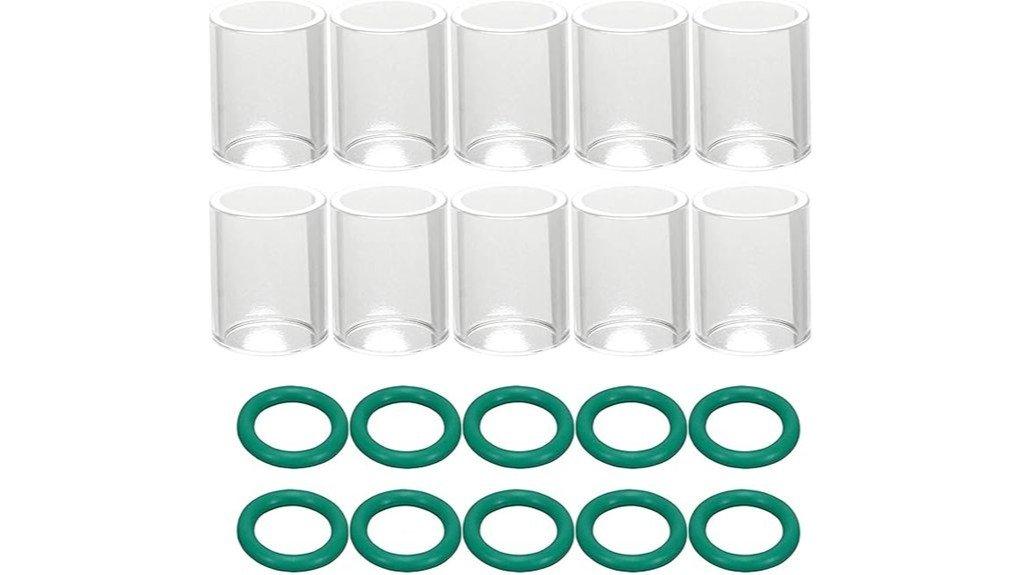
RIVERWELD TIG glass cups are clear, heat-resistant cups that replace the ceramic nozzle on a TIG torch so you can see the tungsten and the start of the puddle. They pair with a gas lens collet body, and they suit TIG welders who weld stainless, thin material or tight joints where visibility matters. The seller markets gas savings and longer stick-out; treat those as claims to test, not guarantees.
RIVERWELD TIG glass cups at a glance
| Item | Detail |
|---|---|
| Product | RIVERWELD TIG glass cups |
| Material | Clear glass, described on the listing as quartz; clear heat-resistant glass cups are generally used with gas lens bodies |
| Torch fit | Listed for WP series torches; verify your torch model and its gas lens body |
| Seller claims | Less shielding gas use, longer tungsten stick-out and longer life than some other consumables; not independently verified here |
| Works with | A gas lens collet body, matched tungsten and collet |
| Check | Cup size and thread match your gas lens body |
What a glass cup does differently
A standard ceramic cup is opaque, so you see only the tip of the electrode and the puddle through the gap. A glass cup lets you watch the tungsten tip and the arc from more angles, which helps with consistent arc length, tight corners and inside fillets.
Used with a gas lens, the smooth gas flow can allow a longer tungsten stick-out than with a standard collet body. This can help reach into joints, but too much stick-out reduces coverage, so keep it only as long as you need and watch for discolored welds.
How to check the cups fit your torch
- Identify your torch model (WP-9, WP-17, WP-18, WP-20, WP-26 and similar). The cups must match the gas lens body and thread, not just the torch name.
- Check the gas lens body you have. Standard collet bodies cannot hold glass cups designed for gas lenses, so confirm which style you need.
- Measure the cup’s inner diameter and length against the one you use now. Sizes (such as a #7, #8 or #12 equivalent) set gas coverage.
- Look at the O-ring or seating surface on the gas lens body, since a leak here wastes gas and lets in air.
- Choose a cup big enough for your amperage and joint, since small cups at high current can overheat.
Pros and limitations
Pros
- See the tungsten and puddle edge more clearly than through an opaque cup.
- Good for stainless steel, thin metal and tight corners.
- Can allow a longer stick-out when used with a gas lens.
- Reusable if kept clean and handled carefully.
Limitations
- Glass is more brittle than a ceramic cup and can crack from knocks or sudden heat.
- Cups darken from heat and fume deposit, so they need regular cleaning.
- They need a compatible gas lens body, so total upgrade cost can rise.
- Gas savings and life claims are marketing claims, not guarantees; your results will depend on your joint, flow rate and amperage.
Using glass cups safely and getting good results
- Hand-tighten only, since a glass cup can crack if over-tightened or cross-threaded.
- Let the torch cool before changing the cup. Do not quench a hot cup in water.
- Set argon flow for the joint and cup size, and leak-test fittings with soapy water.
- Do not use cracked or chipped cups. They can leak gas or break apart.
- Do not exceed your torch and cup ratings. Air-cooled torches have amperage limits.
- Wear a proper helmet and ventilate the area. Stainless steel welding can generate hexavalent chromium fume, and TIG on coated metal also needs controlled ventilation.
Clean the cup with a soft cloth and a mild cleaner. Avoid scratching the glass, because scratches weaken it and reduce visibility.
Alternatives and related guides
- StarTechWeld 995795 gas lens – a gas lens body to pair with glass cups
- Ceramic TIG welding cups – the tougher, cheaper, opaque option
- Furick cup – a branded cup for comparison
- Riverweld stubby collets – for shorter, compact torch setups
Frequently Asked Questions
Do glass TIG cups work on any TIG torch?
No. They fit specific torch series and gas lens bodies. Check that the cup size and thread match your gas lens body, and verify the torch model against the listing. A standard collet body usually will not hold a glass cup made for a gas lens.
Do glass cups really save argon?
Gas lens setups can shield well at moderate flow, and a good cup helps, but exact savings depend on cup size, flow rate and joint. Treat percentage claims as marketing and compare your own gas use and weld color.
Are glass TIG cups fragile?
They are more brittle than ceramic cups and can crack from drops, knocks or thermal shock. Hand-tighten them, let them cool before changing, and replace any cup with chips or cracks, since a broken cup can leak gas.
Which gas should I use with glass cups?
TIG welding normally uses argon, or argon mixes for specific jobs. The cup does not change the gas choice. Set the flow for your cup size and check for leaks with soapy water before welding.
Conclusion
RIVERWELD glass cups can improve your view of the arc and are worth trying if you already run a gas lens. Check torch and body compatibility first, and handle the glass carefully.