Disclosure: As an Amazon Associate, we earn from qualifying purchases. If you click a link on this page and make a purchase, we may receive a small commission at no extra cost to you.
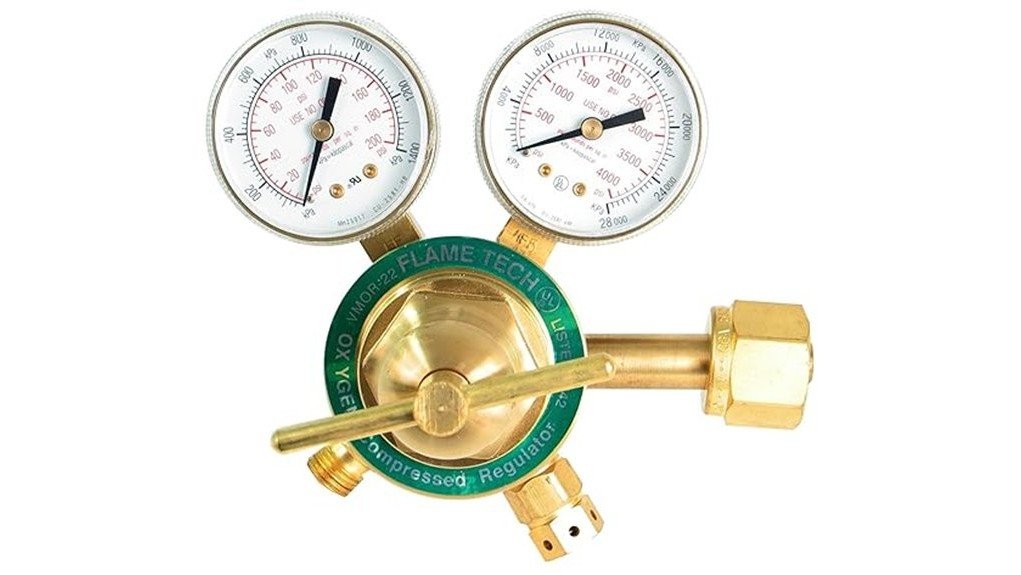
A gas regulator is not a tool you want to guess on, especially when you work around pressurized cylinders and flame equipment. The Flame Tech Medium Duty Oxygen Regulator VMOR-22 is built for users who need a durable oxygen regulator with clear pressure readings and steady output control. Its forged brass body, 2-inch dual-scale gauge, and 5 to 125 PSI delivery range make it a practical option for medium-duty shop and repair work. This review explains where it fits well, what you should verify before buying, and why gas compatibility matters.
Quick Verdict
Rating: 8/10, recommended with safety caveats
Best For: Welders, fabricators, and repair users who need a medium-duty oxygen regulator with a brass body and readable gauge.
Bottom Line: The Flame Tech VMOR-22 looks like a solid choice if you need a medium-duty oxygen regulator with durable construction and a wide 5 to 125 PSI delivery range. The main tradeoff is that you must confirm cylinder connection, equipment fit, and approved gas use before installing it.
Key Specifications
| Specification | Detail |
|---|---|
| Brand | Flame Tech |
| Model | VMOR-22 |
| Product type | Medium-duty oxygen regulator |
| Body material | Forged brass body |
| Delivery pressure range | 5 to 125 PSI |
| Gauge design | Dual-scale gauge with 2-inch diameter |
| Gauge lens | Clear acrylic lens |
| Safety feature | Integrated safety relief valve |
| Weight | 3.8 lbs |
| Compatibility note | Article-supported compatibility with Victor and various single-stage OEM products. Confirm exact fit before use. |
| Best use | Oxygen-side pressure control for compatible welding, cutting, brazing, and heating setups. |
What Is the Flame Tech Medium Duty Oxygen Regulator?
The Flame Tech Medium Duty Oxygen Regulator VMOR-22 is a pressure regulator made to control oxygen delivery from a compatible cylinder setup to downstream welding or cutting equipment. It uses a forged brass body, which gives it a sturdy feel and helps it handle regular shop use better than lighter-duty designs.
The regulator includes a dual-scale gauge with a 2-inch face and clear acrylic lens. That matters because pressure readings need to be easy to see while you adjust flow and monitor output during work.
Its 5 to 125 PSI delivery range gives you flexibility across medium-duty oxygen applications. It is not a universal gas regulator, so you should match it to the correct gas, cylinder connection, torch setup, and manufacturer instructions before use.
Key Takeaways
- The Flame Tech VMOR-22 is a medium-duty oxygen regulator with a forged brass body.
- The 5 to 125 PSI delivery range suits many medium-duty oxygen-side welding and cutting tasks.
- The dual-scale 2-inch gauge helps you monitor pressure readings more easily.
- An integrated safety relief valve adds an important layer of pressure-related protection.
- Compatibility should be checked carefully, especially if you use Victor or single-stage OEM equipment.
- You should not use it with fuel gases unless Flame Tech or the product manual clearly approves that use.
Before You Buy: This review treats the VMOR-22 as an oxygen regulator because the product name identifies it that way. Do not use it with acetylene, propane, natural gas, or any other gas unless the manufacturer documentation clearly confirms that specific use.
Who Should Buy It?
Best For
- Users who need a medium-duty oxygen regulator for compatible welding or cutting equipment.
- Buyers who want a forged brass body instead of a lighter-duty regulator housing.
- Shop users who prefer a visible 2-inch gauge for pressure monitoring.
Skip If
- You need a regulator specifically approved for acetylene, propane, natural gas, or another fuel gas.
- You cannot confirm that the inlet, outlet, and equipment connections match your setup.
- You need a heavy industrial regulator for continuous high-demand production use.
Design and Build Quality
The forged brass body is one of the strongest article-supported details for this regulator. Brass is commonly used in gas-control hardware because it resists corrosion and stands up well to frequent handling in shop conditions.
At 3.8 lbs, the VMOR-22 has enough weight to feel substantial without becoming difficult to handle during setup. That balance helps if you move equipment between work areas or remove the regulator for storage after use.
The integrated safety relief valve is another key part of the design. It does not replace proper setup, inspection, or safe cylinder handling, but it does support safer pressure management when the regulator is used correctly.
Gauge Visibility and Pressure Control
The dual-scale gauge gives you a clear way to monitor pressure while working. The 2-inch diameter helps readability, and the acrylic lens protects the gauge face from normal shop dust and handling.
The 5 to 125 PSI delivery range gives the regulator useful flexibility for medium-duty oxygen work. You should still set pressure based on your torch, tip size, hose rating, and equipment instructions rather than guessing from general ranges.
For many buyers, the main benefit is simple: you can see pressure clearly and adjust output without fighting a tiny or hard-to-read gauge. That can make setup faster and reduce the chance of using the wrong pressure for your equipment.
Compatibility and Safety
The source article notes compatibility with Victor and various single-stage OEM products. That is useful if you already own equipment in that style, but it does not remove the need to check the exact fittings and setup before installation.
Gas regulators are not one-size-fits-all. Oxygen regulators, fuel gas regulators, inert gas regulators, cylinder valves, and torch setups can use different pressure ratings and connection requirements.
For safe use, confirm the regulator is approved for your gas, cylinder, hose, torch, and application. If the documentation is unclear, ask the manufacturer, a welding supplier, or a qualified technician before connecting it.
Pro Tip: Before first use, compare the regulator connection, pressure range, hose rating, and torch instructions. A regulator can look similar to another model but still be wrong for your gas or equipment.
How It Performs in Real Use
For Shop Welding and Cutting Setup
In a shop setting, the VMOR-22 gives you a durable oxygen-side control point for compatible equipment. The clear gauge face helps when you need to make pressure adjustments before lighting a torch or starting a cut.
For Repair and Fabrication Work
For repair and fabrication jobs, the medium-duty build makes sense when you need dependable control but do not want an oversized regulator. The 5 to 125 PSI range gives room for different oxygen-side tasks, as long as your equipment supports the selected pressure.
For Mobile or Shared Work Areas
The 3.8 lb weight helps if you move the regulator between carts, cylinders, or shared work areas. You should still protect the gauge, keep the regulator clean, and avoid dropping it or leaving it loose in a tool bin.
For Long-Term Ownership
The forged brass body and acrylic-lens gauge are useful for long-term ownership, but durability also depends on how you store and inspect it. Regulators should be kept dry, clean, and away from impact when they are not installed.
Setup Tips Before First Use
- Confirm the regulator is the correct type for oxygen use and for your exact cylinder connection.
- Inspect the gauge, body, threads, and relief valve area before installation.
- Never force a connection that does not thread smoothly by hand.
- Set pressure according to your torch or equipment instructions, not by guesswork.
- Keep oil, grease, and dirty hands away from oxygen equipment.
- Store the regulator where the gauge face will not get cracked, crushed, or scratched.
Maintenance and Inspection
Regular inspection matters because regulators control pressurized gas. Before use, check for visible damage, loose parts, cracked gauge lenses, damaged threads, and any signs that the regulator has been dropped.
The original article recommends inspection every six months or after heavy use. That is a practical baseline, but you should follow the product manual, workplace rules, and local safety practices for your setup.
If you notice inconsistent pressure, damaged parts, leaking, or unusual regulator behavior, stop using it. Have the regulator checked by a qualified service provider instead of trying to repair pressurized gas equipment casually.
Pros and Cons
Pros
- Forged brass body supports durability in regular shop use.
- 5 to 125 PSI delivery range gives useful flexibility for medium-duty oxygen applications.
- 2-inch dual-scale gauge improves pressure visibility during setup.
- Integrated safety relief valve adds pressure-related protection.
- Compatible with Victor and various single-stage OEM products according to the source article.
Cons
- Gas compatibility must be confirmed before use, especially for anything other than oxygen.
- Not the best fit if you need a heavy industrial regulator for continuous production work.
- Connection fit still needs to be checked against your cylinder, hose, and torch setup.
Is It Worth the Price?
The Flame Tech VMOR-22 is worth considering if you want a medium-duty oxygen regulator with a forged brass body, clear gauge, and safety relief valve. It is better for buyers who care about sturdy construction and readable pressure control than those shopping only for the cheapest regulator available.
Its strongest value comes from the combination of brass construction, 5 to 125 PSI delivery range, and practical gauge visibility. That makes it a smart buy for everyday use when it fits your oxygen-side setup.
The main limitation is compatibility. You only get good value if it matches your cylinder, hose, torch, gas type, and pressure needs.
How It Compares to Alternatives
Compared with basic no-name regulators, the Flame Tech VMOR-22 offers a more confidence-building spec set because the article identifies a forged brass body, safety relief valve, and dual-scale gauge. That makes it easier to justify if you want a regulator for regular use instead of occasional backup duty.
If you need very fine pressure stability for specialized work, a two-stage regulator may be worth comparing. If you need fuel gas control, choose a regulator made and approved for that specific fuel gas instead of using an oxygen regulator outside its intended role.
Frequently Asked Questions
Is the Flame Tech VMOR-22 an oxygen regulator?
Yes. The product is described as a Flame Tech Medium Duty Oxygen Regulator. Treat it as an oxygen regulator unless the manufacturer documentation clearly states another approved use.
Can you use this regulator with acetylene, propane, or natural gas?
Do not assume that you can. Oxygen regulators and fuel gas regulators are not automatically interchangeable, so use it with another gas only if Flame Tech or the product manual confirms that exact use.
What delivery pressure range does it support?
The article-supported delivery pressure range is 5 to 125 PSI. You should still set pressure based on your torch, tip, hose, and equipment instructions.
What is the regulator body made from?
The VMOR-22 is described as having a forged brass body. That is a useful construction detail for buyers who want a regulator that feels sturdy in regular shop use.
Does it work with Victor equipment?
The source article states that it is compatible with Victor and various single-stage OEM products. You should still confirm your exact fitting, connection, and pressure requirements before buying.
How often should you inspect the regulator?
The original article recommends inspection every six months or after heavy use. You should also inspect it before each use for visible damage, cracked lenses, damaged threads, or pressure-control problems.
Who should skip this regulator?
Skip it if you cannot confirm compatibility with your cylinder, hose, and torch. You should also skip it if you need a regulator approved for a fuel gas or a heavy industrial setup.
The Bottom Line
The Flame Tech Medium Duty Oxygen Regulator VMOR-22 is a good fit if you want a forged brass oxygen regulator with a clear dual-scale gauge, 5 to 125 PSI delivery range, and integrated safety relief valve. It is not the right choice if you need confirmed fuel gas compatibility or cannot verify the connection fit for your equipment.
For buyers with a compatible oxygen-side setup, it earns a recommended-with-caveats verdict because its core specs are practical, but safe matching matters more than brand or price.