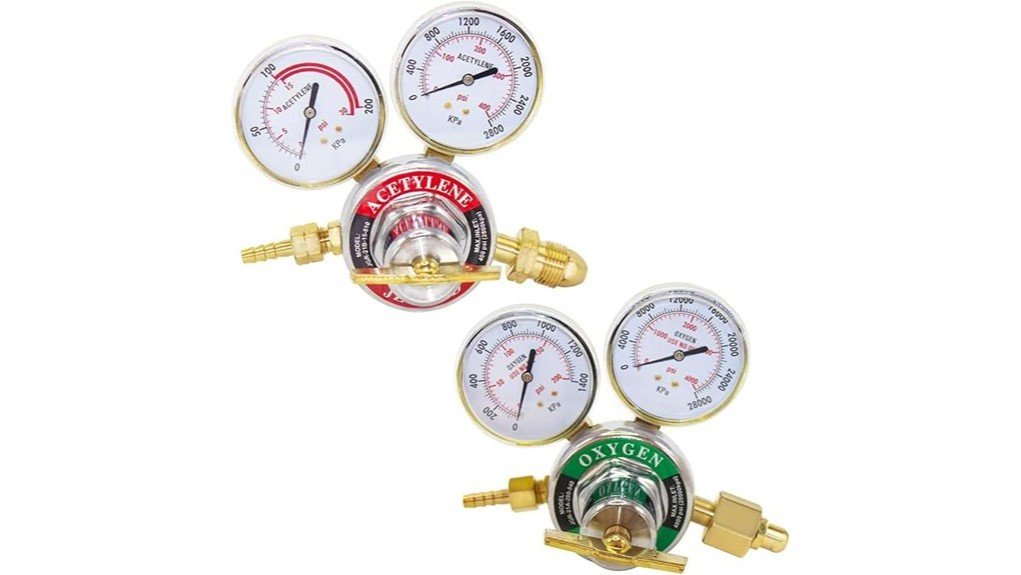
Choosing an oxygen-acetylene regulator set starts with connection compatibility, not gauge size or appearance. The JZWELD Oxygen Acetylene Regulators Set pairs a CGA-540 oxygen regulator with a CGA-510 acetylene regulator, plus dual gauges and T-handle pressure adjustment. Those features make it a practical match for many full-size U.S. cylinder setups, but the acetylene regulator will not fit small MC or B cylinders. This review explains the verified pressure ranges, fittings, safety limits, and buyer tradeoffs so you can decide whether it matches your torch system.
Quick Verdict
Rating: 7.5/10, recommended with caveats
Best For: Buyers with CGA-540 oxygen and CGA-510 acetylene cylinders who need a straightforward replacement regulator pair.
Bottom Line: The verified pressure ranges, brass bodies, dual gauges, and T-handles cover the main needs of a basic oxy-fuel setup. The main tradeoff is limited cylinder compatibility, along with no verified warranty or certification details in the current listing.
Key Specifications
| Specification | Detail |
|---|---|
| Brand | JZWELD |
| Product Type | Oxygen and acetylene regulator pair for oxy-fuel welding, brazing, heating, and cutting setups |
| ASIN | B0D945VCYY |
| Oxygen Cylinder Connection | Female CGA-540 inlet for compatible U.S. oxygen cylinders |
| Acetylene Cylinder Connection | CGA-510 inlet; not compatible with small MC or B acetylene cylinders |
| Oxygen Inlet Gauge Range | 0-4000 PSI |
| Oxygen Delivery Range | 5-200 PSI; outlet gauge listed at 0-200 PSI |
| Acetylene Inlet Gauge Range | 0-400 PSI |
| Acetylene Delivery Range | 2-15 PSI; outlet gauge listed at 0-30 PSI |
| Regulator Outlet Thread | 9/16 inch, as listed by the seller |
| Hose Connector | 1/4 inch, as listed by the seller |
| Body Material | Brass body |
| Pressure Adjustment | Manual T-handle on each regulator |
| Important Safety Limit | Never use acetylene above 15 psig; follow your cylinder, torch, tip, and regulator instructions |
What Is the JZWELD Oxygen Acetylene Regulators Set?
This is a two-regulator set designed to reduce high cylinder pressure to a controlled working pressure for an oxygen-acetylene torch system. The oxygen side uses a CGA-540 cylinder connection, while the fuel-gas side uses CGA-510 for compatible acetylene cylinders. Each regulator has two gauges, one for cylinder pressure and one for delivery pressure.
The set is intended for buyers who already own compatible cylinders, hoses, a torch handle, tips, and the other safety components required by their setup. It is not a complete torch kit, and the current listing does not confirm that hoses, flashback arrestors, check valves, or a storage case are included.
Who Should Buy It?
Best For
- Owners of CGA-540 oxygen and CGA-510 acetylene cylinders
- Home, farm, repair, or light shop users replacing a basic regulator pair
- Buyers who prefer large dual gauges and hand-adjusted T-handles
Skip If
- Your acetylene cylinder uses a CGA-200 connection, including many small MC and B tanks
- You need documented industrial certifications, a confirmed warranty, or local service support
- You need a complete torch kit rather than regulators only
Before You Buy: Verify the valve markings on both cylinders. The oxygen regulator is CGA-540 and the acetylene regulator is CGA-510. Do not force a connection, use an improvised adapter, or assume that all acetylene cylinders share the same valve type.
Feature-by-Feature Review
Fit and Compatibility
Compatibility is the deciding factor for this set. The CGA-540 oxygen inlet fits compatible U.S. oxygen cylinder valves. The CGA-510 acetylene inlet is intended for larger acetylene cylinder valves and will not fit the CGA-200 valves commonly found on small MC and B cylinders.
The listing also identifies a 9/16-inch regulator outlet and a 1/4-inch hose connector. Confirm the exact thread direction and hose fitting standard on your existing system before ordering. Oxygen and fuel-gas fittings are intentionally different, and adapters should not be used to make mismatched equipment fit.
Oxygen Pressure Control
The oxygen regulator is listed with a 0-4000 PSI inlet gauge range and a 5-200 PSI delivery range. That gives you a broad gauge scale for checking cylinder pressure and setting the delivery pressure required by the torch tip and task. You should still use the pressure table supplied by the torch or tip manufacturer rather than choosing a setting from the regulator scale alone.
A 0-200 PSI delivery gauge provides more range than many light welding and brazing tasks require. The benefit is versatility, but the wider scale may make very small pressure changes harder to judge than a lower-range specialty regulator.
Acetylene Pressure Control
The acetylene regulator has a 0-400 PSI inlet gauge, a 0-30 PSI outlet gauge, and a listed delivery range of 2-15 PSI. The distinction matters: the gauge face extends to 30 PSI, but acetylene must not be used above 15 psig. Always match working pressure to the torch tip chart and remain within the equipment manufacturer’s limits.
The T-handle gives you a larger grip for controlled adjustment. It is simple to operate, but the handle does not replace careful setup, leak testing, or training in oxy-fuel equipment.
Dual Gauges and Pressure Monitoring
Each regulator uses two gauges so you can see cylinder pressure and delivery pressure at the same time. This layout helps during cylinder changes, initial setup, leak checks, and troubleshooting. A falling cylinder gauge can show that the supply is being depleted, while the delivery gauge shows the pressure being sent toward the hose and torch.
Gauge readings should be stable and easy to read. If a needle sticks, fails to return to zero after depressurization, or moves erratically, remove the regulator from service and have it inspected by a qualified repair provider.
Brass Body and T-Handle Design
The listing describes brass regulator bodies. Brass is widely used for gas-control components because it is durable and suitable for many oxygen and fuel-gas applications when properly manufactured and maintained. The listing does not identify the diaphragm material, internal valve materials, or third-party certification, so buyers who need documented industrial specifications should request those details before purchase.
The T-handles are easier to grip than small knobs, especially when you are making gradual changes. They should turn smoothly without forcing. A damaged, bent, or unusually stiff adjustment mechanism is a reason to stop using the regulator.
Pro Tip: Photograph the stamped valve connection and hose fitting on your current setup before ordering. Comparing those markings with CGA-540, CGA-510, and the listed outlet size is more reliable than judging fit from product photos.
Setup, Compatibility, and Safety
Oxy-fuel equipment handles high-pressure oxygen and a flammable fuel gas, so setup should follow the regulator, torch, cylinder, and tip instructions. Secure cylinders upright, keep them away from heat and impact, and stand to the side of the regulator gauges when opening a cylinder valve. Open valves slowly and stop immediately if a fitting leaks or a gauge behaves abnormally.
Keep oxygen cylinders, valves, regulators, hoses, and fittings completely free of oil and grease. Never handle oxygen equipment with oily gloves. Use an approved leak-detection solution instead of a flame, and use reverse-flow check valves or flashback arrestors in the locations recommended by the equipment manufacturer.
OSHA limits acetylene use to 15 psig and requires regulators and gauges to remain in proper working order. Review the OSHA oxygen-fuel gas welding standard and the Miller oxy-fuel setup guide before using an unfamiliar torch system.
How It Performs in Real Use
For Brazing and Heating
The dual-gauge layout lets you set and monitor both gases before lighting the torch. For brazing or heating, the regulator pair can support different tip requirements within the listed delivery ranges. The actual settings must come from the torch and tip manufacturer, not from a general rule.
For Cutting Tasks
Cutting tips can require more oxygen flow than small welding tips, so the oxygen regulator’s broad delivery range may be useful. Before treating it as suitable for a specific cutting tip, confirm that the regulator, hose, flashback protection, and cylinder withdrawal rate can supply the required flow.
For Repair and Farm-Shop Work
For occasional repair work, large gauges and T-handles provide a familiar, uncomplicated layout. The brass bodies may suit routine shop handling, but portable use still requires secure cylinder transport, valve protection, and careful storage. Regulators should be removed and protective caps installed before cylinders are moved unless they are secured on equipment designed for transport.
For Cylinder Changes and Troubleshooting
Separate supply and delivery gauges help you distinguish a low cylinder from a delivery-pressure problem. They can also help you notice pressure creep or a needle that does not return to zero. Any suspected regulator fault should be handled by a qualified service provider, not corrected with improvised parts or sealants.
Maintenance and Storage
Keep both regulators dry, clean, and protected from grinding dust, slag, impact, and moisture. Inspect the inlet connection, outlet fitting, gauge lenses, adjustment handles, hoses, and seals before each use. Do not apply oil, grease, thread tape, or an unapproved sealant to oxygen-service connections.
Follow the equipment manual when shutting down and relieving pressure. Once disconnected, protect the regulator in a clean case or cabinet where the gauges cannot be struck. Replace damaged hoses and fittings, and send a leaking or unstable regulator to a trained repair provider.
Pros and Cons
Pros
- CGA-540 oxygen and CGA-510 acetylene connections are clearly identified
- Dual gauges show cylinder and delivery pressure at the same time
- T-handles provide a large grip for gradual pressure adjustment
- Brass bodies are listed for both regulators
- Verified pressure ranges cover common oxy-fuel welding, brazing, heating, and cutting needs when matched to the correct tip
Cons
- The CGA-510 acetylene regulator does not fit small MC or B cylinders with CGA-200 valves
- The listing does not verify a warranty, certifications, internal materials, or service support
- Hoses, flashback arrestors, check valves, and other kit components are not confirmed as included
Is It Worth the Price?
This JZWELD set is best viewed as a budget-oriented replacement pair for compatible cylinders, not as a documented industrial regulator package. It offers strong practical value when you need CGA-540 and CGA-510 connections, broad gauge ranges, and simple T-handle controls without paying for a premium brand.
The value drops quickly if you need CGA-200 acetylene compatibility, verified certifications, a confirmed warranty, or established local repair support. Check the current listing for package contents and seller terms, then compare those details with the cost of adding any missing hoses or safety devices.
How It Compares to Alternatives
Victor and Harris regulator sets are worth comparing when you prioritize established professional product lines, documented specifications, and service support. They may cost more, but that added documentation can matter in commercial or high-use settings.
RX WELD also sells oxygen-acetylene regulator pairs in CGA-540/CGA-510 and CGA-540/CGA-200 configurations. The JZWELD set makes the most sense when its exact CGA-510 connection matches your cylinder and you want a basic regulator pair rather than a premium system.
Frequently Asked Questions
Will this set fit my oxygen and acetylene cylinders?
It fits an oxygen cylinder with a CGA-540 valve and an acetylene cylinder with a CGA-510 valve. Check the stamped valve markings on both cylinders because tank size or color alone does not confirm the connection.
Can I use the acetylene regulator on an MC or B tank?
No, not when the small tank uses a CGA-200 valve. The verified listing states that this CGA-510 acetylene regulator will not fit small MC or B acetylene cylinders.
What is the maximum safe acetylene working pressure?
Acetylene must not be used above 15 psig. The regulator’s outlet gauge may display up to 30 PSI, but that does not make pressures above 15 psig safe for acetylene use.
Will it connect to my existing hoses?
The seller lists a 9/16-inch regulator outlet and a 1/4-inch hose connector. Verify the full fitting standard, thread direction, and hose condition before connecting it to an existing torch system.
Are flashback arrestors or check valves included?
The current product details do not confirm that they are included. Review the package contents and follow the torch or regulator manufacturer’s guidance for approved check valves or flashback arrestors.
Is this regulator set suitable for a beginner?
The controls are straightforward, but oxy-fuel equipment is not safe to learn by trial and error. Beginners should receive hands-on instruction and understand cylinder handling, leak testing, flashback prevention, ventilation, lighting, and shutdown procedures.
How should I maintain the regulators?
Keep them clean, dry, oil-free, and protected from impact. Inspect gauges, fittings, threads, hoses, and adjustment handles before use, and remove any leaking, damaged, or unstable regulator from service.
Does JZWELD provide a warranty?
The verified product details do not state a specific warranty term. Check the current Amazon listing and seller information before purchase because return and warranty terms can change.
The Bottom Line
The JZWELD Oxygen Acetylene Regulators Set is a reasonable budget choice for buyers whose cylinders use CGA-540 oxygen and CGA-510 acetylene valves. Its main strengths are clear dual gauges, brass bodies, useful listed pressure ranges, and T-handle adjustment, while its main limits are CGA-510-only acetylene compatibility and incomplete warranty and certification details. Skip it if you use a small CGA-200 acetylene cylinder or need a documented professional-grade regulator system.
Ready to Buy?
Confirm your cylinder valves and package contents, then check the latest product details before you decide.