Disclosure: As an Amazon Associate, we earn from qualifying purchases. If you click a link on this page and make a purchase, we may receive a small commission at no extra cost to you.
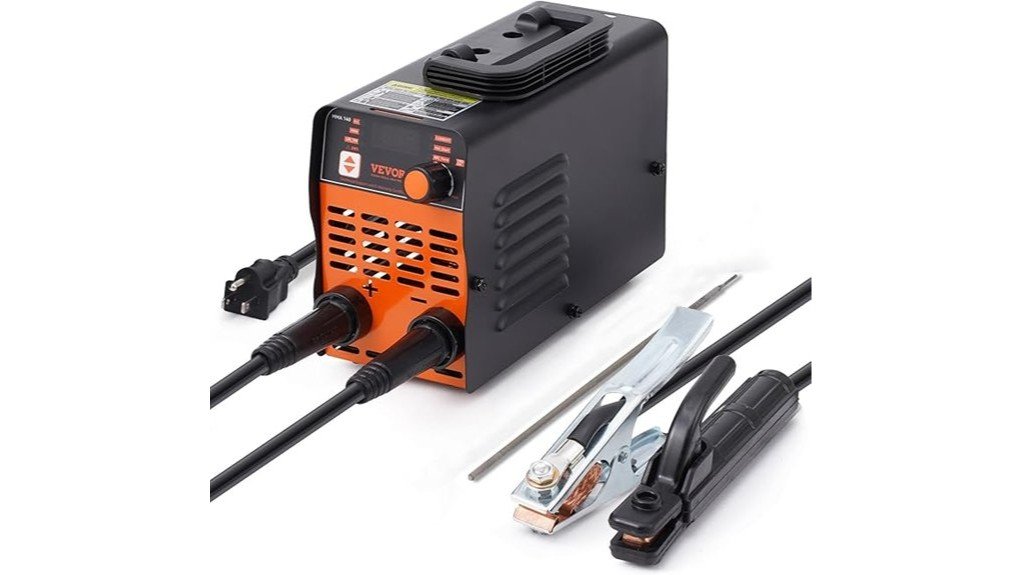
A compact stick welder should be easy to carry without giving up the controls you need for clean, repeatable work. The VEVOR 140A Stick Welder combines an 8-pound body, a digital display, Hot Start, Arc Force, Anti-Stick control, and ARC/Lift TIG capability. This review explains where those features help, what accessories and electrical details you should confirm, and which jobs fit the machine best. It is a practical option for home repairs and portable work, but it is not a production welder or a simple answer for aluminum projects.
Quick Verdict
Rating: 8/10, Recommended with caveats
Best For: DIY repairs, beginner practice, portable maintenance, and light fabrication with compatible steel electrodes.
Bottom Line: The VEVOR 140A Stick Welder gives you useful arc-start controls and a digital display in a compact 8-pound package. Confirm the exact input-voltage label, included accessories, and Lift TIG setup before buying because listing details can vary by seller or version.
| Specification | Detail |
|---|---|
| Brand | VEVOR |
| Listed Model | 140Amp Stick Welder ARC |
| Product Type | Portable IGBT inverter stick welder |
| Welding Functions | Stick/ARC welding and Lift TIG capability |
| Maximum Listed Output | 140 amps |
| Input Power | AC input; confirm the voltage shown on the exact listing and machine nameplate |
| Weight | 8 pounds |
| Dimensions | 12.2 x 7.87 x 8.3 inches |
| Controls | Digital display, Hot Start, and Arc Force |
| Listed Electrodes | E6010, E6011, E6013, E7014, and E7018 are referenced in the listing; follow the manual for your unit |
| Protection Features | Anti-Stick, VRD design, overheating, overcurrent, and overload protection |
| Package Note | Confirm the exact leads, clamps, TIG accessories, and any repair-kit parts included with the selected seller or variant |
| Best Use | Home repair, maintenance, practice, and light steel fabrication |
What Is the VEVOR 140A Stick Welder?
The VEVOR 140A Stick Welder is a small inverter machine made for stick welding and listed Lift TIG use. Its 12.2 x 7.87 x 8.3-inch case and 8-pound weight make it much easier to move than a large transformer welder. You can carry it between a garage, shed, trailer, or outdoor repair area without dedicating much storage space.
The machine is aimed at DIY users, new welders, and anyone who wants a portable backup unit. Its main selling point is not raw industrial output. It is the combination of a 140-amp listed maximum, a digital display, Hot Start, Arc Force, Anti-Stick control, and support for several common stick electrodes.
Before You Buy: Check the exact voltage, package contents, and mode labels for the unit sold through the affiliate page. Do not assume a TIG torch, shielding-gas equipment, or every accessory shown in a related VEVOR listing is included. This machine is also a poor match for buyers whose main goal is aluminum welding.
Design and Portability
Portability is the clearest reason to choose this model. At 8 pounds, it is light enough to carry with one hand, and the top handle gives you a firm place to grip the case. The compact footprint also makes the welder easier to store on a shelf or workbench between jobs.
The small case still needs open space around its vents. Do not place it against a wall, cover it with tools, or run it on a surface that blocks airflow. A portable welder can still overheat when dust, poor ventilation, or long weld cycles trap heat around the machine.
Pro Tip: Before carrying the welder to the work area, confirm the outlet, extension-cord rating, electrode type, polarity, and ground-clamp location. A few minutes of setup prevents many weak-arc and nuisance-trip problems.
Arc-Start Controls and Digital Display
Hot Start briefly supports arc ignition, which can make the first strike less frustrating on a clean joint. Arc Force helps maintain the arc when the electrode gets close to the puddle. These controls are useful for beginners, but they do not replace correct amperage, rod angle, travel speed, or surface preparation.
The digital display gives you a clearer reference than an unmarked dial. You can note a setting that worked on a test coupon and return to it during the same job. Treat the display as a setup aid, not a guarantee of exact welding current under every input-power condition.
Anti-Stick control can reduce the current when a rod freezes to the workpiece. That makes it easier to release the electrode and lowers frustration during practice. You still need to stop, inspect the rod coating, and reset your angle if sticking happens often.
Electrode Compatibility and Metal Limits
The listing references E6010, E6011, E6013, E7014, and E7018 electrodes. That range covers common repair and fabrication choices, but each rod has different polarity, penetration, storage, and power requirements. Follow the welder manual and the electrode maker’s directions instead of assuming every diameter and rod type will run well at every setting.
E6013 is often easier for practice on clean mild steel, while E6011 can help on less-than-perfect repair surfaces. Low-hydrogen E7018 rods need proper storage and technique. E6010 can be demanding on some small inverter welders, so confirm compatibility for the exact machine and test the chosen rod before starting a critical repair.
The article and listing focus on stainless steel, low-carbon steel, angle iron, pipe, and similar ferrous work. Aluminum stick welding requires specialized electrodes and technique, and this compact machine is not the best tool for buyers who mainly work with aluminum or other non-ferrous metals.
What the Lift TIG Capability Means
Lift TIG capability gives the machine more flexibility than a stick-only unit, but the mode should not be confused with a complete TIG package. Lift TIG normally requires a compatible torch, tungsten, shielding gas, regulator, hose, and suitable work leads. Confirm which parts come with your selected package before you count on TIG use.
This feature is most useful for a buyer who already understands a basic scratch-free Lift TIG setup or is willing to buy the missing accessories. If you want a ready-to-run TIG kit with high-frequency start, gas control, and more precise adjustment, compare a dedicated TIG machine instead.
Safety and Protection Features
The VEVOR listing describes Anti-Stick control, VRD electric-shock protection, overheating protection, overcurrent protection, and overload protection. These systems can protect the machine or reduce risk in certain fault conditions, but they do not make unsafe welding practices acceptable.
- Wear proper PPE: Use a suitable welding helmet, leather gloves, flame-resistant clothing, and closed footwear.
- Control fumes: Work with effective ventilation and avoid welding coated, painted, or unknown metal until you know how to handle the fumes safely.
- Prevent fire: Remove flammable material, keep a suitable extinguisher nearby, and inspect the area after welding.
- Stay dry: Do not weld in rain, on wet ground, or while wearing wet gloves or clothing.
- Disconnect power: Unplug the machine before maintenance, inspection, or lead changes that require access to electrical parts.
Protection circuits can trip when airflow is poor, the input supply is weak, or the work cycle is too demanding. Let the machine cool and correct the cause rather than repeatedly resetting it.
How It Performs in Real Use
For Home Repairs
The compact case works well for small steel repairs around a garage or workshop. Jobs such as brackets, gates, angle iron, steel frames, and suitable pipe are easier when you can carry the machine close to the work instead of dragging long welding leads from a fixed unit.
For Beginner Practice
The display, Hot Start, Arc Force, and Anti-Stick features reduce some common setup problems. A beginner should still practice on clean scrap of the same thickness as the planned project. Start with short beads, inspect fusion and slag removal, then adjust one setting at a time.
For Portable Maintenance
The 8-pound weight is useful for fence, shed, trailer, and property-maintenance tasks. Portability does not mean weatherproofing, so keep the welder dry, protect cables from traffic, and use an input supply that meets the manual’s requirements.
For Light Fabrication
The 140-amp listed maximum gives you room for many hobby and light-fabrication jobs when the joint, rod, and material thickness fit the machine. For continuous production, thick structural steel, code work, or jobs that require a documented duty cycle and procedure, choose equipment rated for that workload.
Setup Tips Before First Use
- Read the exact manual: Match the manual to the model label on the machine, not only the retailer title.
- Confirm input power: Check voltage, circuit capacity, plug type, and extension-cord requirements before connecting the welder.
- Inspect the package: Verify the electrode holder, work clamp, cables, adapter, and any TIG or repair accessories listed for your order.
- Prepare the joint: Remove paint, oil, heavy rust, and loose scale from the weld and clamp areas.
- Select the rod: Match electrode type and diameter to the material, polarity, and available amperage.
- Run a test bead: Use similar scrap to check arc stability, penetration, slag release, and breaker load before welding the final part.
Common Mistakes to Avoid
Do not choose amperage from metal thickness alone. Electrode diameter, joint design, position, polarity, fit-up, and input voltage all affect the result. Use the manual’s starting range and adjust after a test bead.
Do not count on the listed maximum output for every outlet or long weld. A weak circuit, undersized extension cord, poor connections, or thermal protection can reduce usable performance. Keep the input run short and properly sized.
Do not treat Lift TIG as a complete kit without checking the box contents. Also avoid critical structural, pressure, vehicle-safety, or code-regulated repairs unless you have the required training, procedure, inspection, and equipment.
Warranty and Return Policy
The current Amazon product page lists a 30-day refund or replacement window for eligible returns in original condition. Used, damaged, or materially different returns may receive a reduced refund or no refund, so inspect the machine and package soon after delivery.
| Policy Item | What to Check |
|---|---|
| Amazon Return Window | Currently listed as 30 days for eligible refund or replacement |
| Condition | Keep packaging and return the item in the condition required by the seller’s policy |
| Product Warranty | Review the current warranty link and save your order details before use |
| Seller Variation | Confirm terms on the exact offer you select because seller and regional policies can differ |
Who Should Buy It?
Best For
- DIY users who need a compact stick welder for steel repairs and small fabrication.
- Beginners who value a digital display, Hot Start, Arc Force, and Anti-Stick support.
- Experienced owners who want an 8-pound portable or backup machine.
Skip If
- You mainly weld aluminum or need a ready-to-run AC TIG setup.
- You need continuous industrial output, a documented high duty cycle, or thick structural capacity.
- You want a complete TIG package without checking or buying extra accessories.
Pros and Cons
Pros
- 8-pound body and compact dimensions make transport and storage easy.
- 140-amp listed maximum fits many home repair and hobby welding tasks.
- Hot Start, Arc Force, and Anti-Stick controls help with arc ignition and recovery.
- Digital display gives you a repeatable setting reference.
- Stick and Lift TIG capability offer more flexibility than a basic stick-only welder.
Cons
- Voltage and package details should be confirmed for the exact seller or variant.
- Lift TIG accessories may require a separate purchase.
- Not the right machine for aluminum-focused work or continuous industrial production.
Is It Worth the Price?
The VEVOR 140A Stick Welder offers strong value for the price when portability and basic arc-control features matter more than industrial capacity. The 8-pound case, digital display, and arc-assist controls make it a smart buy for occasional repairs, practice, and light shop work.
You get the most value when you already know the outlet and accessories your job requires. The value drops if you must add several TIG parts, upgrade the electrical supply, or move to a higher-output machine soon after purchase.
It is worth considering as a first welder or portable backup, but it is not the best fit for continuous production, aluminum-focused projects, or buyers who need a complete multi-process package.
How It Compares to Alternatives
A HONE 205A mini stick welder may appeal to buyers who want a higher advertised output in a similar 110V format. A TOOLIOM 195A dual-voltage stick/Lift TIG model is worth comparing when 110/220V flexibility and larger-rod capacity matter more than minimum weight.
A YESWELDER 135A 3-in-1 machine is a better comparison when you want gasless flux-core MIG in addition to stick and Lift TIG. The VEVOR makes the most sense when you prefer a simple, compact stick-focused machine and are willing to verify the exact voltage and accessory bundle.
Frequently Asked Questions
Which electrodes work with the VEVOR 140A Stick Welder?
The listing references E6010, E6011, E6013, E7014, and E7018. Confirm the electrode type, diameter, polarity, and current range in the manual for your exact unit before welding.
Is this welder suitable for beginners?
Yes, the digital display, Hot Start, Arc Force, and Anti-Stick controls can reduce common setup frustrations. A new user still needs proper PPE, ventilation, fire control, and practice on scrap before attempting a finished repair.
Does the VEVOR 140A model run on 110V or 220V?
Current online descriptions are not fully consistent across VEVOR and Amazon pages. Check the exact offer, plug, machine nameplate, and manual before connecting power or assuming the maximum output available from your circuit.
Does Lift TIG work out of the box?
Do not assume it does. Lift TIG normally needs a compatible torch, tungsten, shielding gas, regulator, hose, and the correct leads, so compare the package list with the setup you plan to use.
Can it weld aluminum?
This model is marketed mainly for stick welding stainless steel, low-carbon steel, and similar ferrous materials. Buyers who mainly weld aluminum should compare a machine and process designed for aluminum work.
How thick can the VEVOR 140A welder handle?
A thickness number alone cannot guarantee a sound weld because joint design, rod size, position, input power, passes, and operator skill all matter. Use the manufacturer’s guidance, test on matching scrap, and choose a larger machine for demanding structural or production work.
What safety features are listed?
The listing describes Anti-Stick control, VRD design, overheating protection, overcurrent protection, and overload protection. These features support safer operation, but you still need dry conditions, proper grounding, ventilation, fire prevention, and welding PPE.
Who should skip this welder?
Skip it if you need continuous industrial output, a complete TIG package, aluminum-focused capability, or equipment for regulated structural work. It is better suited to DIY repairs, learning, maintenance, and portable light fabrication.
The Bottom Line
The VEVOR 140A Stick Welder earns an 8/10 recommendation for DIY users, beginners, and experienced welders who want a compact backup machine. Its strongest points are the 8-pound design, digital display, and arc-assist controls, while its main limitation is the need to confirm voltage, included accessories, and the practical limits of a small inverter welder. Skip it for aluminum-focused work or continuous industrial production.
Ready to Buy?
Check the exact voltage, package contents, current price, and seller terms before you decide.