As an Amazon Associate I earn from qualifying purchases. Buying through these links costs you nothing extra.
Choosing welding rods for low-amp welders starts with one rule: match the process, electrode classification, rod diameter, base metal, and amperage range. A 3/32-inch E6013 can be easier for a compact stick welder than a 1/8-inch E7018, while an ER308L TIG filler belongs to a different process and base-metal family.
This guide compares carbon-steel stick electrodes and one clearly labeled TIG filler option for 304/304L stainless. Aluminum brazing rods are outside this comparison because torch-brazing consumables do not match the stick-and-TIG buyer intent.
Quick Verdict
For a compact stick welder, start with a 3/32-inch rod. The Saker E6013 is the easiest beginner and light-work choice, while the YESWELDER E7018 3/32-inch 5-pound pack is the best all-around E7018 option. Choose a 1/8-inch E7018 only when your welder can supply the required current at a practical duty cycle. For TIG welding compatible 304/304L stainless, consider the Convivium ER308L filler after confirming the filler classification fits the job.
Before You Buy
- Check supported electrode type, polarity, output range, open-circuit voltage, and duty cycle.
- Choose 3/32 inch when the machine or material cannot comfortably handle 1/8 inch.
- Do not treat a plastic storage box as a heated low-hydrogen rod oven.
- Match the filler to the base metal and process.
- Practice on matching scrap before welding the finished part.
Specs here come from the Amazon listings and can change, so confirm rod size, weight and pack count on the listing before you buy.
Top Picks
|
Category |
Product |
Process |
Size / Pack |
|---|---|---|---|
|
Best Overall Low-Amp Stick Pick |
Stick (SMAW) |
3/32 in, 5 lb |
|
|
Best for Higher-Output Compact Welders |
Stick (SMAW) |
1/8 in, 5 lb |
|
|
Best Bulk Pack |
Stick (SMAW) |
3/32 in, 10 lb |
|
|
Best Alternative E7018 |
Stick (SMAW) |
3/32 in, 5 lb |
|
|
Best for Beginners and Light Work |
Stick (SMAW) |
3/32 in, 1 lb |
|
|
Most Versatile Pack |
Stick (SMAW) |
3/32 in (2.5 lb) + 1/8 in (2.5 lb) |
|
|
Best for Stainless TIG |
TIG (GTAW) filler |
1/16 in × 16 in, 20 pieces |
|
|
Best Alternative 1/8-Inch E7018 |
Stick (SMAW) |
1/8 in × 14 in, 5 lb |
How These Welding Rods Were Chosen
The remaining products are ranked by process fit, rod diameter, base-metal compatibility, pack usefulness, and machine-output demands. The list does not claim hands-on testing and does not use temporary prices, star ratings, or review counts as ranking factors.
For lower-amperage stick work, 3/32-inch options receive priority. E6013 favors easy starts and lighter general work, while E7018 is a low-hydrogen electrode that needs more careful storage and should be used only where its classification fits the job.
Safety Note
Wear appropriate protection, provide ventilation, remove fire hazards, and follow the welder and consumable manufacturers’ instructions. Do not use a roundup as a welding procedure for load-bearing, pressure, vehicle-safety, or code-regulated work.
Quick verdict: Choose this first for mild-steel repair and fabrication when your welder can maintain a stable arc in the required range and the work calls for an E7018-class electrode.
The 3/32-inch diameter is easier to match to compact stick welders than a 1/8-inch E7018. It gives you more control on moderate-thickness steel, but it is still not a sheet-metal rod and it should not be forced below the current range recommended for your machine and electrode.
The low-hydrogen classification can help reduce hydrogen-related cracking only when the rods stay properly dry and the joint, procedure, and base metal are suitable. The supplied container is useful for organization, but it is not a substitute for code-compliant heated storage when the job requires controlled low-hydrogen practice.
Best for: General repairs with a machine that can run roughly the normal 3/32-inch E7018 range.
Skip it when: Avoid it for very thin sheet, dirty or heavily coated steel, or a welder that cannot sustain the required amperage and open-circuit voltage. Do not use it for critical structural repairs unless the procedure and your qualifications are appropriate.
Key Points
- More suitable for lower-output machines than 1/8-inch E7018
- Steady E7018-style arc when settings and polarity are correct
- Useful 5-pound quantity for regular repair work
Quick verdict: Pick this only after checking that your welder can run 1/8-inch E7018 at a usable duty cycle. The larger diameter favors heavier sections and longer deposits, not thin sheet.
The larger core wire carries more current and deposits more metal than a 3/32-inch rod. That can improve productivity on heavier parts, but it also raises the minimum practical output your machine must supply.
It is a reasonable option for shop repairs and fabrication where E7018 is appropriate. Keep expectations realistic: a small 110-volt inverter that barely reaches the bottom of the range may struggle to start, restrike, or maintain a smooth arc.
Best for: Heavier steel and welders that can comfortably supply the normal 1/8-inch E7018 current range.
Skip it when: Avoid it when your machine tops out near the lower edge of the rod’s normal range, when duty cycle is limited, or when the steel is too thin for the heat input.
Key Points
- Higher deposition than 3/32-inch E7018
- Better fit for heavier mild-steel parts
- Works with compatible AC or DCEP equipment as specified by the listing
Quick verdict: Buy the larger pack for repeat work, not just because the quantity looks economical. Low-hydrogen rods lose their main advantage when storage is careless.
This pack keeps a familiar 3/32-inch size on hand for multiple mild-steel jobs. It offers the same diameter advantage as the 5-pound version for lower-output stick welders, subject to the machine’s actual E7018 capability.
The tradeoff is moisture management. A larger quantity may stay open longer, so it makes sense only when you have a dry storage plan and enough work to use the rods within a reasonable period.
Best for: Frequent users who already know 3/32-inch E7018 matches their welder and projects.
Skip it when: Avoid the bulk pack if you weld only a few times per year, lack proper dry storage, or are still unsure whether your machine runs E7018 reliably.
Key Points
- Larger supply for repeat jobs
- 3/32-inch diameter is easier on compact welders than 1/8 inch
- Consistent process choice across multiple projects
Quick verdict: This is a sensible comparison option when you want a 3/32-inch E7018 and prefer the ARCCAPTAIN listing or packaging.
The product listing identifies AC or reverse-polarity DC use and positions the rod for carbon-steel and structural applications. Your actual results still depend on machine output, polarity, joint preparation, rod condition, and technique.
For beginners, the 3/32-inch size is more manageable than 1/8-inch E7018, but E7018 is not automatically the easiest training rod. A 3/32-inch E6013 may start more easily on a small AC machine and is often more forgiving for basic practice on clean mild steel.
Best for: Buyers comparing another 3/32-inch E7018 option for general carbon-steel work.
Skip it when: Avoid it for thin sheet, contaminated steel, or safety-critical work that requires a qualified welding procedure and certified consumables.
Key Points
- Verified 3/32-inch, 14-inch, 5-pound format
- Alternative brand in the core E7018 category
- Suitable for compatible AC or DCEP stick welders
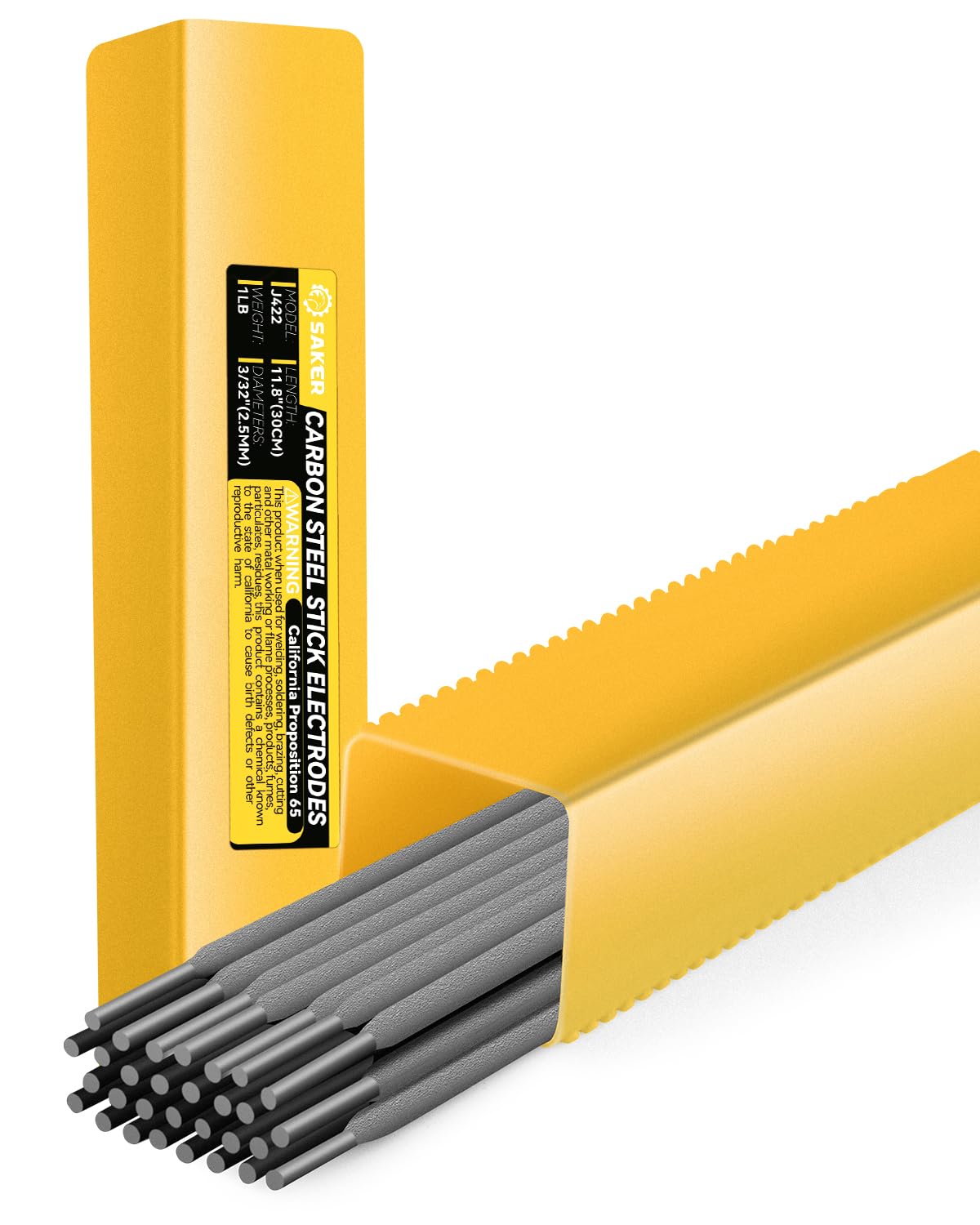
Quick verdict: Choose this for clean mild steel, practice beads, light brackets, and general repairs when easy arc starting matters more than the low-hydrogen properties of E7018.
E6013 can run on AC or DC and is commonly paired with lower-voltage machines. Its softer arc and shallow-to-moderate penetration help on lighter work, although “thin metal” still requires careful heat control and may be better handled with MIG or TIG depending on thickness.
The one-pound quantity reduces waste for occasional users and makes storage simpler. It is not a substitute for E7018 when a drawing, welding procedure, or engineer specifies a low-hydrogen electrode.
Best for: Practice, light fabrication, and small machines that run E6013 more easily than E7018.
Skip it when: Avoid it for joints that specifically require E7018 strength, toughness, or low-hydrogen classification, and avoid using it as a shortcut on critical structural work.
Key Points
- Easy-starting 3/32-inch E6013 format
- Works with compatible AC and DC stick welders
- One-pound pack suits occasional projects
Quick verdict: This is the flexible choice for a dual-voltage or higher-output machine. Owners of a small low-amp welder may use only the 3/32-inch half effectively.
The 3/32-inch rods suit lower current and more controlled work, while the 1/8-inch rods need more output and favor heavier sections. That range is useful only when your machine, work thickness, and duty cycle support both sizes.
Separating the two diameters also makes setup decisions clearer. Check the label before loading a rod, and record the settings that work for each diameter and position.
Best for: Users who need two common E7018 diameters and have a welder capable of running both.
Skip it when: Avoid it if your welder cannot run 1/8-inch E7018 or if you already know you use only one diameter. In those cases, a single-size pack is more practical.
Key Points
- Two common E7018 diameters in one pack
- Lets you match rod size to steel thickness and machine output
- Avoids buying two full-size packages for occasional mixed work
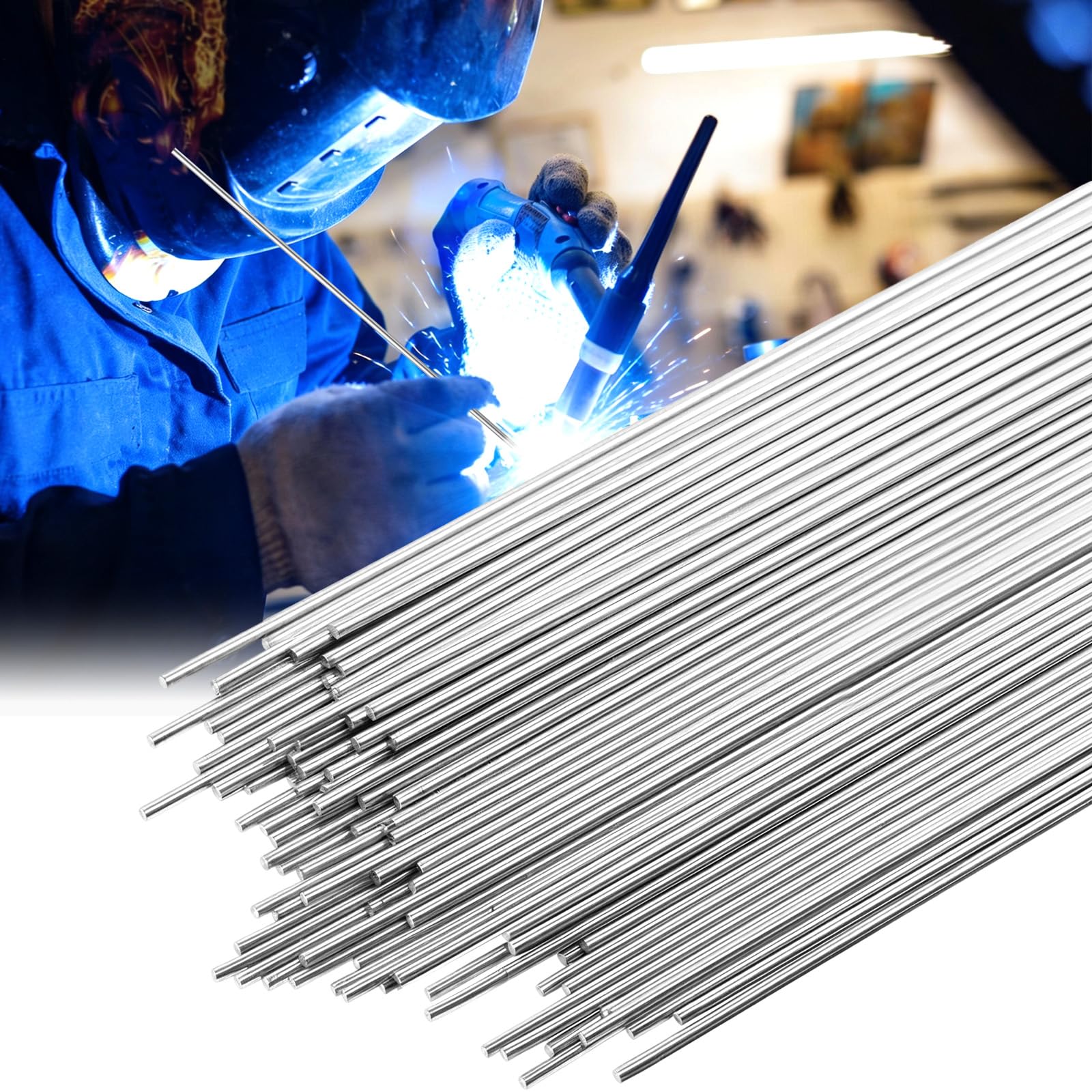
Quick verdict: Choose it for TIG welding compatible 304/304L stainless when your welding procedure calls for ER308L and you want a small pack for light work.
The 1/16-inch diameter is easy to meter into a small TIG puddle on light-gauge stainless. The filler rod does not create the arc, so claims about “arc stability” belong to the TIG machine, tungsten, shielding gas, and technique rather than the rod itself.
Use clean dedicated tools, suitable shielding gas, and a filler classification that matches the base metal and service conditions. ER308L is common for 304 and 304L, but it is not a universal stainless filler for every alloy.
Best for: Thin stainless sheet, tubing, and small TIG repairs where ER308L is the correct filler classification.
Skip it when: Avoid it for carbon steel, aluminum, stick welding, or stainless grades that require a different filler. Do not rely on the listing alone for food-service, pressure, exhaust, or code work.
Key Points
- Correct product category for stainless TIG work
- 1/16-inch size suits controlled filler addition
- Small 20-piece pack reduces excess inventory
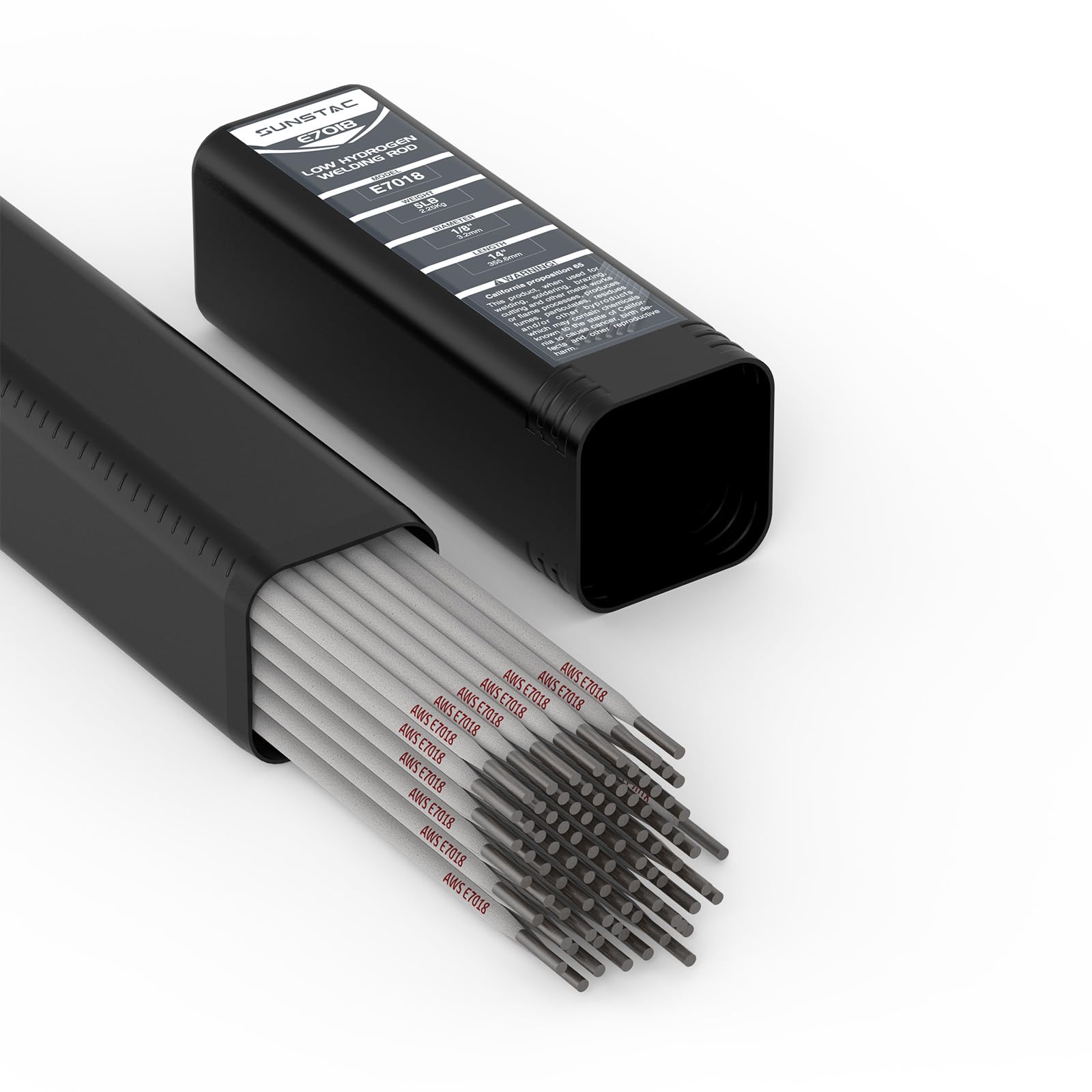
Quick verdict: Consider it when your welder has enough current and duty cycle for 1/8-inch E7018 and you want an alternative to the YESWELDER pack.
The 1/8-inch size is intended for more current and heavier material than the 3/32-inch picks. It can offer a useful deposition rate, but poor starts or sticking may indicate inadequate output, incorrect polarity, damp rods, or technique issues.
The product format is straightforward, yet a product listing should not promise low spatter or professional results without controlled testing. Treat the listing claims as a starting point and tune settings on scrap that matches the job.
Best for: Buyers comparing a second 1/8-inch E7018 option for heavier work.
Skip it when: Avoid it for small 110-volt welders that cannot sustain the required output, thin sheet, or critical work without an approved procedure.
Key Points
- Verified 1/8-inch by 14-inch, 5-pound format
- Alternative option for heavier E7018 work
- Higher deposition than 3/32-inch rods
How to Choose Welding Rods for Low-Amp Welders
Start With the Welding Process
Stick electrodes such as E6013 and E7018 carry current and melt into the joint. TIG filler rods such as ER308L are added separately to a TIG arc. They are not interchangeable.
Match Diameter to Machine Output
A 3/32-inch E7018 usually starts at a lower current than a 1/8-inch E7018. A larger rod may strike near a welder’s maximum yet still perform poorly if the machine lacks voltage, arc force, or duty cycle.
Choose E6013 or E7018 for the Right Reason
E6013 is a general-purpose carbon-steel electrode with a soft arc and relatively shallow penetration. E7018 is a low-hydrogen electrode used where its strength and toughness class fits, but it requires stricter storage and technique.
Check Polarity and Storage
Confirm the exact rod and machine combination supports AC, DCEP, or the required polarity. Keep every electrode dry. For critical low-hydrogen work, follow the manufacturer’s exposure, heated-storage, and reconditioning instructions. Do not rebake rods in a household oven.
More rod guides: welding rod value packs and welding rods for newbies.
FAQ
Which Welding Rod Is Easiest to Run at Lower Amps?
A 3/32-inch E6013 is usually the easiest starting point for a small stick welder. A 3/32-inch E7018 may also work, but it needs better moisture control and can be less forgiving on a low-voltage AC machine.
Can a 110-Volt Welder Run 1/8-Inch E7018?
Some can, but many operate near their limit. Check the electrode chart, output, duty cycle, polarity, and open-circuit voltage. A 3/32-inch E7018 is often more realistic.
What Is the Difference Between 3/32-Inch and 1/8-Inch Rods?
The 3/32-inch rod generally needs less current and offers more control on lighter material. The 1/8-inch rod usually needs more current and deposits more metal.
How Should E7018 Rods Be Stored?
Keep unopened packages sealed and follow the maker’s instructions after opening. Where low-hydrogen control matters, heated storage and limited atmospheric exposure may be required.
Can ER308L TIG Filler Be Used on Any Stainless Steel?
No. ER308L is commonly used for 304 and 304L, but other grades and service conditions may require another filler.
Are Aluminum Brazing Rods Welding Electrodes?
No. Low-melt aluminum brazing rods are heated with a torch and do not serve as stick electrodes or standard TIG filler. They belong in a separate brazing guide.
How These Options Compare
Focus on whether the machine can run the diameter, whether the classification matches the job, and whether you can store the rods correctly. A general comparison should not replace the welder manual or the electrode data sheet.
Final Recommendation
Best overall E7018: YESWELDER E7018 3/32-Inch 5LB.
Best for beginners: Saker E6013 3/32-Inch 1LB.
Best bulk option: YESWELDER E7018 3/32-Inch 10LB, provided you can store it correctly.
Best stainless TIG option: Convivium ER308L 1/16-Inch rods for compatible 304/304L work.
Start with the base metal and process, then confirm polarity, current range, diameter, duty cycle, and storage requirements. That prevents more failed starts and poor welds than choosing by brand or package size alone.
Full Comparison Table
| Product Name | Image | Process | Diameter / Pack | Base Metal | Best For |
|---|---|---|---|---|---|
| YESWELDER E7018 3/32-Inch 5LB |
 |
Stick (SMAW) | 3/32 in, 5 lb | Carbon steel | General repairs with a machine that can run roughly the normal 3/32-inch E7018 range |
| YESWELDER E7018 1/8-Inch 5LB |
 |
Stick (SMAW) | 1/8 in, 5 lb | Carbon steel | Heavier steel and welders that can comfortably supply the normal 1/8-inch E7018 current range |
| YESWELDER E7018 3/32-Inch 10LB |
 |
Stick (SMAW) | 3/32 in, 10 lb | Carbon steel | Frequent users who already know 3/32-inch E7018 matches their welder and projects |
| ARCCAPTAIN E7018 3/32-Inch 5LB |
 |
Stick (SMAW) | 3/32 in, 5 lb | Carbon steel | Buyers comparing another 3/32-inch E7018 option for general carbon-steel work |
| Saker E6013 3/32-Inch 1LB |
 |
Stick (SMAW) | 3/32 in, 1 lb | Low-carbon steel | Practice, light fabrication, and small machines that run E6013 more easily than E7018 |
| YESWELDER Dual-Size E7018 5LB |
 |
Stick (SMAW) | 3/32 in (2.5 lb) + 1/8 in (2.5 lb) | Carbon steel | Users who need two common E7018 diameters and have a welder capable of running both |
| Convivium ER308L 1/16-Inch TIG Filler Rods |
 |
TIG (GTAW) filler | 1/16 in × 16 in, 20 pieces | 304/304L stainless steel applications | Thin stainless sheet, tubing, and small TIG repairs where ER308L is the correct filler classification |
| Sunstac E7018 1/8-Inch 5LB |
 |
Stick (SMAW) | 1/8 in × 14 in, 5 lb | Carbon steel | Buyers comparing a second 1/8-inch E7018 option for heavier work |