Disclosure: As an Amazon Associate, we earn from qualifying purchases. If you click a link on this page and make a purchase, we may receive a small commission at no extra cost to you.
Gas regulators are one of the parts you do not want to guess on when setting up an oxy-acetylene torch. The JZWELD Oxygen and Acetylene Regulator Set is made for users who need basic pressure control for light welding, brazing, and cutting with compatible small-cylinder setups. This review helps you decide whether its CGA540 oxygen connection, CGA200 acetylene connection, brass construction, and simple gauge layout fit your torch system. It offers strong value for hobby and garage use, but it is not the right choice for every cylinder or heavy industrial workflow.
Quick Verdict
Rating: 8/10, Recommended with caveats
Best For: Hobby welders, small shops, and portable oxy-acetylene torch setups using CGA540 oxygen and CGA200 acetylene tanks
Bottom Line: The JZWELD regulator set gives you a practical brass-body setup with clear gauges and common small-tank compatibility. Skip it if your torch system uses different cylinder fittings or you need certified heavy-duty regulators for daily industrial use.
Key Specifications Overview
| Specification | Detail |
|---|---|
| Brand | JZWELD |
| Product Type | Oxygen and Acetylene Regulator Set |
| Compatible Torch Style | V-style welding and cutting gas torch systems |
| Oxygen Inlet Connection | CGA540 |
| Acetylene Inlet Connection | CGA200, for compatible small acetylene cylinders |
| Material | Brass body construction |
| Oxygen Outlet Gauge Range | 0–100 PSI outlet range |
| Acetylene Outlet Gauge Range | 0–30 PSI gauge range, not a recommended operating setting |
| Max Oxygen Inlet | Up to 4000 PSI, based on article-supported listing details |
| Gauge Layout | Dual pressure gauges for each regulator |
| Best Use | Light welding, brazing, heating, maintenance, and occasional cutting tasks |
| Safety Note | Match cylinder fittings before use and follow torch, regulator, and gas supplier instructions. |
What Is the JZWELD Oxygen and Acetylene Regulator Set?
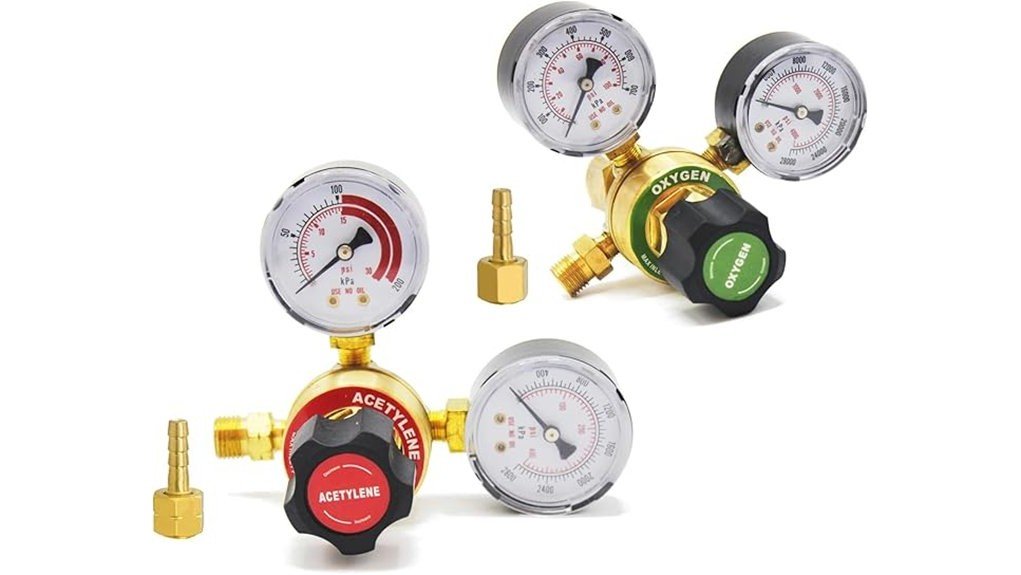
The JZWELD Oxygen and Acetylene Regulator Set controls gas pressure between your oxygen and acetylene cylinders and a compatible oxy-fuel torch system. It uses a CGA540 oxygen inlet and a CGA200 acetylene inlet, which makes it most useful for small-cylinder V-style welding and cutting setups.
The set is built for pressure control, not for replacing every part of a torch kit. You still need compatible cylinders, hoses, torch handles, tips, flashback protection where required, and proper setup knowledge. The brass body construction and visible gauges make it easier to adjust pressure than cheaper regulator sets with vague markings or flimsy controls.
Its main selling point is simple compatibility for users who already know they need CGA540 oxygen and CGA200 acetylene connections. That same narrow compatibility is also its biggest limitation, since it will not fit every acetylene tank or industrial torch system.
Who Should Buy It?
Best For
- DIY users setting up a portable oxygen-acetylene torch with CGA540 and CGA200 cylinders
- Hobby welders who need basic gas control for light welding, brazing, and small cutting jobs
- Garage and maintenance users who want a brass-body regulator set without paying premium-brand prices
Skip If
- Your acetylene cylinder uses CGA510, CGA300, or another connection type
- You need regulators for continuous industrial cutting, daily shop production, or certified jobsite compliance
- You want a full torch kit with hoses, torch handle, cutting attachment, tips, and accessories included
Fit and Compatibility
Compatibility matters more than brand preference with oxy-acetylene regulators. This set uses a CGA540 oxygen connection and a CGA200 acetylene connection. That pairing usually points toward small acetylene cylinder setups rather than larger acetylene tanks with different valve standards.
Before ordering, check the stamped connection type on your cylinder valve or confirm it with your gas supplier. A regulator that almost fits is not safe to force, modify, or adapt without proper guidance. Thread direction, valve style, and gas type all matter when you connect pressurized fuel gas equipment.
Before You Buy: This regulator set is not universal. It is made for CGA540 oxygen and CGA200 acetylene connections, so verify both tank fittings before purchasing.
Materials and Build Quality
The brass body construction is a clear strength for this price tier. Brass is commonly used for gas regulators because it resists corrosion and handles normal shop wear better than light-duty mixed-metal parts. That helps the regulator feel more dependable during occasional use.
The dual-gauge layout gives you separate readings for cylinder pressure and delivery pressure. Clear gauge faces help when you need to adjust the torch flame without guessing. The knobs also give you more control than very cheap regulator sets with stiff or inconsistent adjustment feel.
This is still a light-duty or hobby-focused set. Premium regulators from brands such as Victor, Harris, or Smith may offer tighter control, better service support, and longer life under heavy use. JZWELD makes more sense when you want practical function for occasional welding and cutting rather than daily production performance.
Setup and Ease of Use
The setup process is straightforward if your tanks and torch system match the connections. Attach the oxygen regulator to the CGA540 oxygen cylinder, attach the acetylene regulator to the CGA200 acetylene cylinder, and connect the correct hoses to your torch system. Do not use oil, grease, tape, or thread sealant on oxygen connections unless the equipment maker specifically allows it.
Back out the adjustment screws before opening the cylinder valves. Open valves slowly, check your gauges, then set delivery pressure according to your torch tip chart and the manufacturer’s instructions. After that, check all connections with an approved leak-check solution before lighting the torch.
Pro Tip: Confirm your torch tip size first, then set gas pressure from the torch maker’s chart instead of copying a random setting online.
Compatibility and Safety Notes
Oxygen and acetylene equipment requires careful setup because you are working with high-pressure oxygen and a fuel gas. The oxygen side may handle high cylinder pressure, while the acetylene side needs much more caution. The acetylene gauge range does not mean every number on the dial is a safe working setting.
Use acetylene only within safe pressure limits stated by your equipment instructions, gas supplier, and applicable safety guidance. Do not use this regulator with other gases, damaged cylinders, leaking hoses, mismatched fittings, or torch systems that require a different regulator class.
For added protection, many oxy-fuel setups use flashback arrestors and check valves. If you are unsure what your torch system requires, ask your gas supplier, welding instructor, or a qualified technician before use. This is not a product where trial and error is a safe setup method.
How It Performs in Real Use
For Light Welding and Brazing
For small welding and brazing jobs, this regulator set gives you enough control to dial in a stable flame when the rest of your torch system is in good condition. The clear gauges help you make small adjustments without constantly second-guessing your pressure settings.
For Cutting Tasks
During occasional cutting work, the oxygen regulator’s 0–100 PSI outlet range gives you room for common light cutting setups. Performance still depends on tip size, hose condition, gas purity, and proper torch adjustment. A regulator cannot fix a clogged tip, a leaking hose, or mismatched equipment.
For Garage and Maintenance Work
In a home garage, farm shop, or maintenance corner, the set works best for intermittent use. It is useful for users who need a compact regulator pair ready for small repair jobs. You should still store the regulators carefully and protect the gauges from impacts.
For Long-Term Use
Long-term value depends on how often you use it and how carefully you handle the gauges and threads. Brass construction helps, but this is not the best choice for users who cut metal every day or need rebuildable, premium-grade regulators with broad parts support.
Pros and Cons
Pros
- Brass body construction gives the set a sturdier feel than many basic regulator kits
- CGA540 oxygen and CGA200 acetylene connections suit compatible small-cylinder torch setups
- Dual gauges make it easier to monitor cylinder and outlet pressure while setting up
- Good fit for hobby welding, brazing, maintenance, and occasional cutting work
- Simple design keeps operation approachable for users who already understand oxy-fuel safety basics
Cons
- Limited to specific CGA540 and CGA200 cylinder connections
- Not designed for heavy industrial duty cycles or daily production cutting
- Does not replace proper hoses, flashback protection, torch tips, or setup training
Want to Check the Current Listing?
Confirm the connection type and product details before you buy.
Common Mistakes to Avoid
The biggest mistake is buying this set without checking your cylinder valves. CGA200 acetylene compatibility is useful for the right small tank, but it does not fit every acetylene cylinder. Larger tanks may use a different connection, and adapters are not a substitute for choosing the right regulator.
Another mistake is reading the maximum gauge range as a suggested working pressure. Always use the pressure settings recommended for your torch tip and task. You should also inspect hoses, seals, and connections before each use because a good regulator cannot make a leaking system safe.
Store the regulators where the gauges will not get hit, bent, or exposed to grime. When you finish working, shut off the cylinder valves, release pressure from the lines according to your torch instructions, and back out the adjustment screws.
Is It Worth the Price?
This JZWELD set sits in the budget to mid-range category for oxy-acetylene regulators. It offers strong value for the price if you need a basic brass regulator pair for compatible small-cylinder welding and cutting setups.
You get the most value from it if you work occasionally rather than every day. Hobby welders, light repair users, and small-shop owners can benefit from the simple gauge layout and direct CGA540/CGA200 fit.
It is not the best fit if you want premium regulator precision, rebuildable industrial hardware, or long service life under constant production use. In that case, compare higher-end regulator sets from established welding brands before buying.
How It Compares to Alternatives
Compared with premium Victor, Harris, and Smith regulator sets, the JZWELD regulator set focuses more on affordability and simple small-cylinder compatibility. Those premium brands may be better if you need finer adjustment, stronger service support, or regulators built for heavy shop schedules.
Compared with other entry-level CGA540/CGA200 regulator sets, JZWELD stands out mainly because it gives you a brass-body setup with a clear, familiar dual-gauge layout. It makes the most sense when your cylinders match and you want a practical regulator pair without moving into professional-grade pricing.
Frequently Asked Questions
Is this regulator compatible with all oxygen tanks?
No. This set is made for oxygen cylinders that use a CGA540 connection. Check the valve marking on your cylinder before buying.
What acetylene tank does the CGA200 connection fit?
CGA200 is commonly used on compatible small acetylene cylinders. It will not fit every acetylene tank, so confirm your valve type before connecting the regulator.
Can I use this regulator set for industrial welding?
It is better for hobby, maintenance, and light workshop use. Industrial shops usually need heavier-duty regulators, documented compliance, and stronger service support.
Does the 0–30 PSI acetylene gauge mean I should use 30 PSI?
No. Gauge range is not the same as a safe working pressure. Follow your torch tip chart, regulator instructions, gas supplier guidance, and applicable acetylene safety rules.
Does this set include hoses and torch tips?
This review covers the regulator set only. You should confirm the current Amazon listing to see the exact package contents before buying.
How should I check for leaks after setup?
Use an approved leak-check solution on connections after opening the cylinder valves slowly. Do not use a flame to check for leaks.
Who should skip this JZWELD regulator set?
Skip it if your cylinders use different fittings, you need a full torch kit, or you work in a high-volume industrial environment. It is best for compatible small-cylinder setups and occasional use.
The Bottom Line
The JZWELD Oxygen and Acetylene Regulator Set is a smart buy for hobby welders and light workshop users who need CGA540 oxygen and CGA200 acetylene compatibility. Its brass construction and clear gauges are the main strengths, while limited cylinder compatibility and light-duty positioning are the main tradeoffs. Choose it for compatible small-cylinder setups, but skip it for industrial production work or mismatched tank valves.