Disclosure: As an Amazon Associate, we earn from qualifying purchases. This helps us provide honest, detailed reviews at no extra cost to you.
Reviewed by the GarageWelding Editorial Team | Last Updated: June 2026
Finding the right heat gun for automotive plastic repair is not as simple as it looks. You need precise temperature control, reliable airflow options, and enough accessories to handle real jobs without buying extras separately. The Steinel HL 2020 E Automotive Kit positions itself as a professional-grade solution built for body shop technicians and experienced hobbyists. This review breaks down exactly what you get, how it performs in real automotive tasks, and where it falls short before you commit.
Steinel HL 2020 E: At a Glance
| Our Rating | 4.4 / 5 |
| Best For | Automotive plastic welding, window tinting, tarpaulin repair |
| Power | 1,600 watts / 13.3 amps |
| Temp Range | 120°F to 1,150°F in 10°F increments |
| Warranty | 3 years |
| Bottom Line | Precise control and a solid automotive accessory kit make this a strong choice for professionals. The premium price reflects its build quality and positioning. |
Key Specifications
| Specification | Detail |
|---|---|
| Brand | Steinel |
| Model | HL 2020 E Automotive Kit |
| Product Type | Professional hot air gun kit |
| Power | 1,600 watts / 13.3 amps |
| Temperature Range | 120°F to 1,150°F |
| Temperature Control | Adjustable in 10°F increments |
| Airflow Settings | 3 settings: 4 cfm, 4–8 cfm, 6–13 cfm |
| Weight | Approx. 2.6 lbs |
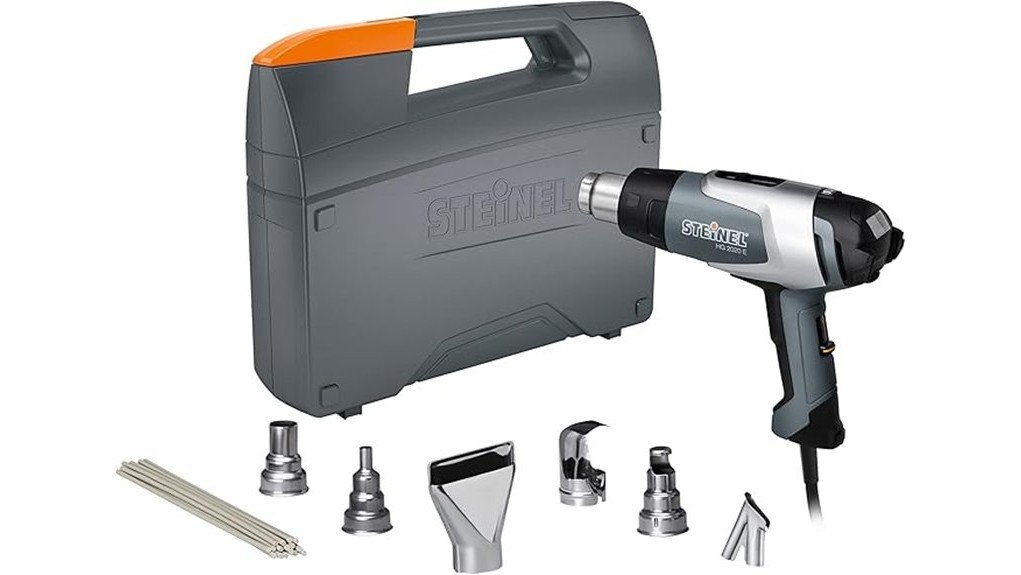
| Included Nozzles | 14 mm, 39 mm, 75 mm |
| Included Accessories | PP plastic welding rods, auto body welding DVD |
| Safety Features | Overload protection, residual heat indicator |
| Design | Ergonomic, compact grip |
| Best Use | Automotive plastic welding, window tinting, tarpaulin repair |
| Warranty | 3 years |
What Is the Steinel HL 2020 E Automotive Kit?
The Steinel HL 2020 E is a professional hot air gun made by Steinel, a German brand with decades of experience building heat tools for industrial and trade applications. This automotive kit packages the HL 2020 E heat gun with a set of nozzles and accessories chosen specifically for plastic welding and body work tasks, making it a more targeted purchase than a generic variable-temp heat gun.
The gun draws 1,600 watts and 13.3 amps, placing it firmly in the professional class. It reaches temperatures between 120°F and 1,150°F, adjustable in 10°F increments. That precision matters most when you’re working with different plastic types, each of which requires a specific heat range to fuse correctly without warping or burning through the panel. At roughly 2.6 pounds, it stays manageable even during extended repair sessions, and the compact body keeps it workable in tighter spots around bumpers and pillars.
This is not a general-purpose home heat gun. It’s built for people who do automotive plastic repair, window film installation, or similar work where consistent, controlled heat is the difference between a clean result and a ruined panel.
Who Should Buy It (And Who Should Skip It)
Best For
- Automotive technicians and body shop professionals who need fine temperature control for bumper and trim plastic welding
- Window tinting installers who need consistent, adjustable airflow across large glass surfaces
- Experienced hobbyists who regularly repair tarpaulins, bumper covers, or plastic trim pieces
Skip If
- You only need occasional light-duty heat gun tasks and don’t need the automotive accessory kit
- You need a cordless option for mobile or outdoor use where power outlets are not available
- Your budget is limited and a less specialized mid-range tool would cover your actual needs
Temperature Control and Precision
The HL 2020 E’s temperature range spans from 120°F to 1,150°F, which covers everything needed for automotive work. More importantly, you can dial in the heat in 10°F increments rather than jumping between preset modes. That matters most when welding polypropylene, which requires a tighter temperature window than many other plastics. Too little heat and the weld won’t bond. Too much and you’ll warp the panel.
This level of control also benefits tasks like heat shrink tubing, vinyl wrap installation, and softening adhesive during trim removal, all common in automotive repair. The precise adjustment means you can repeat the same setting across multiple sessions, which helps when you’re matching repairs across several sections of a bumper cover.
Airflow Settings and Heat Distribution
Three distinct airflow settings give you real flexibility depending on the task. The lowest setting at 4 cfm delivers concentrated, steady heat to a small area, ideal for detail welding or tight seams. The mid-range 4–8 cfm setting suits most general plastic welding applications. The top setting at 6–13 cfm covers larger surface areas faster, which helps with window film installation or tarpaulin repairs where you need to spread heat evenly across a wider zone.
Having an adjustable range within the mid and high settings rather than fixed steps gives you more control over heat spread. You can match the airflow to the specific task rather than picking the closest preset and compensating with your technique.
Nozzles and Accessories
The kit includes three nozzle sizes: 14 mm, 39 mm, and 75 mm. The 14 mm nozzle focuses heat for precise welding work on small cracks or tight seams. The 39 mm is a practical all-purpose size for most bumper and panel repairs. The 75 mm wide nozzle spreads heat across larger surfaces and is the right choice for window film work or fabric repairs where broad, even heat is the priority.
The PP (polypropylene) plastic welding rods are a practical inclusion for automotive repair since polypropylene is one of the most common plastics used in bumpers and trim. The auto body welding DVD is a useful starting resource, particularly if you’re newer to plastic welding technique. It sets proper expectations for preparation, rod placement, and finishing steps before you work on an actual vehicle panel.
Pro Tip: When switching between nozzle sizes, allow the tool to reach your target temperature before beginning a weld pass. Starting a pass while the nozzle is still stabilizing can result in uneven fusion along the seam and weak spots in the repair.
Build Quality and Safety Features
The HL 2020 E is built to Steinel’s professional standards, meaning the housing is designed for daily shop use rather than occasional weekend work. At 2.6 pounds with an ergonomic grip, the tool stays controlled even during extended repair sessions. The compact body helps in tighter areas around vehicle panels, pillars, and wheel arches.
Two safety features are worth highlighting for shop use. The built-in overload protection shuts the tool down before heat damage can occur if you’re pushing it near its upper capacity for extended periods. The residual heat indicator stays lit after you switch the gun off, alerting you that the nozzle is still hot enough to cause burns or damage surfaces it contacts. Both features matter in a busy shop environment where the gun gets set down quickly between tasks.
The three-year warranty adds meaningful reassurance that Steinel stands behind the tool’s durability under professional use. For a heat gun used regularly in a body shop setting, a multi-year warranty is worth factoring into the cost comparison against cheaper alternatives.
Before You Buy: The HL 2020 E is corded. You will need an accessible power outlet in your workspace. For open bays or outdoor areas without easy outlet access, plan for an extension cord rated for at least 15 amps to avoid voltage drop that can affect temperature stability at higher settings.
How It Performs in Real Automotive Work
Automotive Plastic Welding
Plastic welding is where this kit earns its place. The precise temperature adjustment and included PP welding rods let you fuse cracked bumper covers or split trim pieces without a separate supply run. Dialing to the correct temperature for polypropylene and using the 14 mm or 39 mm nozzle produces a consistent bead that holds under normal vehicle stress. The stable airflow prevents the hot spots that cause warping in thinner panels.
Window Tinting
Window film work benefits from the 75 mm nozzle and the higher airflow settings. Spreading heat evenly helps the film conform to curved glass without bubbling or lifting at the edges. The ability to adjust airflow during the job lets you slow down around tight curves where too much airflow can push the film out of position before it sets.
Tarpaulin and Canvas Repair
The kit’s airflow range handles tarpaulin welding well. PVC tarps require lower temperatures than automotive plastics, and the ability to dial down to that range while maintaining controlled airflow delivers clean fusion results comparable to a dedicated tarp welder.
Vehicle Trim and Adhesive Work
At lower temperature settings, the HL 2020 E works well for softening adhesive on trim clips, releasing emblems, and repositioning weatherstripping without damaging painted surfaces or surrounding panels. The 10°F increment control helps you stay in the safe range for heat-sensitive materials near body paint.
If you’re doing this kind of trim and body work, it’s also worth checking these general car maintenance and buying guides for broader upkeep advice on your specific vehicle.
Tips for Better Results
- Match temperature to material: Polypropylene typically welds well between 480°F and 570°F. Start at the lower end and increase in small steps until the rod fuses cleanly without discoloring the base material.
- Allow full warm-up before starting: Wait 60 to 90 seconds after powering on before beginning a weld pass. This ensures airflow reaches a stable temperature throughout the nozzle assembly.
- Keep moving during the pass: Dwelling on one spot, even at moderate temperatures, can cause warping in thin panels. Maintain a steady, consistent pace along the weld line.
- Use the built-in stand: After finishing, rest the gun on its stand and wait for the residual heat indicator to clear before storing. The nozzle stays hot for several minutes after shutdown.
- Choose nozzle size by task: Use the 14 mm for fine seam work and small cracks, the 39 mm for most bumper panel repairs, and the 75 mm when you need broad, even heat for film or tarpaulin work.
Safety and Handling Notes
The HL 2020 E reaches temperatures high enough to cause serious burns and ignite flammable materials. Keep the work area clear of solvents, aerosols, and fuel sources before starting. Never direct the airflow at people or animals. The built-in stand keeps the nozzle pointed away from surfaces when you set the tool down between tasks, so use it rather than resting the gun on its side mid-job.
The overload protection cuts power automatically if the motor is stressed beyond safe limits. If the gun shuts off unexpectedly during normal use, let it cool fully before restarting and check that the work area has adequate ventilation. Repeated shutdowns may indicate the duty cycle is being exceeded for the task at hand.
Always follow the manufacturer’s instructions in the included user manual. For tasks near brake components, fuel lines, or other safety-critical vehicle systems, consult a qualified technician before applying heat in those areas.
Pros and Cons
Pros
- Fine 10°F temperature increments give precise control across different plastic types
- Three airflow settings cover everything from detail welding to wide-area film installation
- Includes three nozzle sizes and PP welding rods, reducing extra purchases for plastic repair
- Overload protection and residual heat indicator add practical safety for daily shop use
- Three-year warranty is strong for this category and use intensity
Cons
- Corded design limits reach in large open work bays without nearby power outlets
- Premium price point puts it out of range for buyers who only need occasional heat gun use
- No carrying case included, which matters for technicians who transport tools between job sites
Pricing and Value
The Steinel HL 2020 E Automotive Kit sits in the premium tier for heat guns. The price reflects the brand’s professional-grade build quality, the fine temperature control system, and the automotive-specific accessory kit included in the box. For a professional technician who uses a heat gun regularly in body shop work, the durability and warranty help justify that investment over a cheaper tool that may need replacing sooner under the same workload.
For occasional DIY users, the calculation is different. If you’re doing one or two plastic repairs per year, a mid-range heat gun with fewer accessories will likely meet your needs at a noticeably lower cost. The HL 2020 E delivers the most value for buyers who will actively use the precision controls and the included nozzle set across regular automotive work rather than picking it up every few months for a single repair.
How It Compares
The Steinel HL 2020 E sits above basic variable-temperature heat guns from brands like Wagner or Porter-Cable in terms of precision and build quality, though it costs more to match. If you only need a heat gun for paint stripping or softening vinyl, those options offer adequate control at a lower price. The DEWALT D26960K is another professional-grade alternative worth comparing if you’re already in the DeWalt ecosystem and want comparable build quality with a different brand warranty.
The HL 2020 E makes the most sense when the automotive plastic welding accessories and fine-increment temperature control are features you’ll use on a regular basis. If your main need is broad heat application for general tasks, a less specialized professional heat gun may deliver similar results for a lower investment.
Frequently Asked Questions
Final Verdict
The Steinel HL 2020 E Automotive Kit is a strong choice for professional automotive technicians and experienced hobbyists who need precise, repeatable temperature control for plastic welding, window tinting, or tarpaulin repair. The 10°F increment adjustment, three airflow settings, and complete nozzle and welding rod set make it a well-rounded kit for regular shop use backed by a solid three-year warranty. If you only need occasional heat gun work and don’t need the automotive accessory set, a more affordable option will likely serve your needs at a lower cost.
Ready to buy the Steinel HL 2020 E Automotive Kit?
Check the current price and availability on Amazon.