Disclosure: As an Amazon Associate, we earn from qualifying purchases. If you click a link on this page and make a purchase, we may receive a small commission at no extra cost to you.
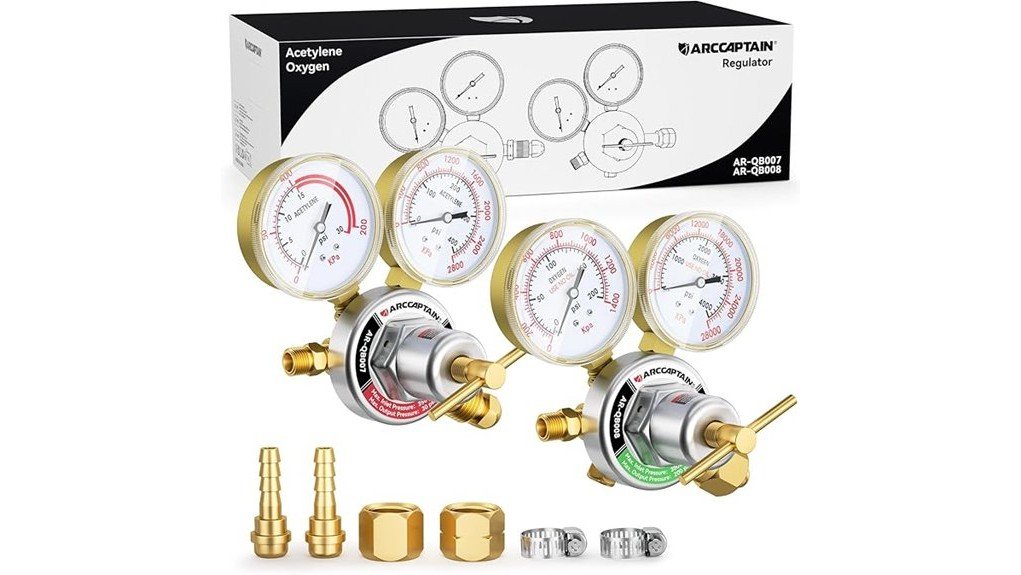
Gas control is one of the most important parts of an oxygen-acetylene setup. A regulator that feels rough, leaks at the fittings, or drifts under load can make cutting and welding harder than it needs to be. The ARCCAPTAIN Oxygen and Acetylene Regulators are built for welders who want brass construction, smooth manual pressure adjustment, and basic safety support in a workshop setup.
This review helps you decide whether this ARCCAPTAIN regulator set fits your torch system and work style. It focuses on build quality, fittings, pressure control, safety features, setup concerns, and the tradeoffs you should consider before buying.
Quick Verdict
Rating: 8.5/10
Best For: DIY welders, garage fabricators, and small workshop users who need oxygen-acetylene regulators with standard-style fittings and manual pressure control
Bottom Line: The ARCCAPTAIN Oxygen and Acetylene Regulators are a strong choice if you want brass construction, T-handle adjustment, and built-in check valve support for common cutting and welding jobs. The main tradeoff is that this set is better for general workshop use than certified industrial calibration work.
| Specification | Detail |
|---|---|
| Brand | ARCCAPTAIN |
| Product Type | Oxygen and acetylene gas regulator set |
| Body Material | Solid brass construction |
| Pressure Adjustment | Manual T-handle adjustable pressure control |
| Safety Features | Check valve and pressure relief device |
| Fittings | 9/16-18 RH and LH standard fittings, based on the provided article |
| Primary Use | Oxygen-acetylene cutting, welding, and brazing applications |
| Best Setup | Home shops, garages, repair benches, and light fabrication work |
| Important Limitation | Not positioned as a certified industrial calibration-grade regulator set |
| Safety Note | Confirm gas type, thread direction, hose condition, and leak-free connections before use |
What Is the ARCCAPTAIN Oxygen and Acetylene Regulator Set?
The ARCCAPTAIN regulator set is a dual-gas pressure control setup for oxygen and acetylene welding systems. It is made to connect between your gas cylinders and torch hoses so you can reduce cylinder pressure to a usable working pressure for cutting, brazing, and welding tasks.
The main appeal is its mix of solid brass construction, manual T-handle adjustment, and built-in safety features. You still need a compatible torch, hoses, cylinders, and safe setup practices, but the regulator set gives you the pressure-control point for a standard oxygen-acetylene rig.
This product makes the most sense for users who want dependable manual control without moving into higher-cost industrial regulator systems. It is not a digital regulator, and it should not be treated as a substitute for proper training, leak checks, or shop safety procedures.
Build Quality and Materials
The regulators use solid brass construction, which is a practical material choice for welding gas equipment. Brass resists corrosion better than many lower-grade metals and gives the regulator body a stronger, more durable feel for repeated shop use.
The article-supported design centers on a T-handle adjustment system. This style gives you a familiar hand-control layout, so you can make gradual pressure changes instead of fighting a stiff or vague control knob.
The set is best viewed as a workshop-focused regulator option. It should be durable enough for routine garage, repair, and light fabrication work, but it is not described as a heavy industrial system with certified calibration documentation.
Pressure Control and Flame Stability
Good pressure control helps you keep a steadier flame when you move between cutting, brazing, and heating tasks. The T-handle adjustment on this ARCCAPTAIN set is designed to let you make small pressure changes without sudden jumps.
That matters when you are working with thinner metal, small repairs, or detailed cuts. A smoother adjustment feel can reduce the need to keep correcting the flame once you find the working pressure for your torch tip.
The biggest limitation is that pressure control still depends on your full setup. Hose condition, torch valves, tip size, cylinder pressure, and user technique all affect final flame behavior.
Compatibility and Fittings
The article states that this regulator set uses 9/16-18 RH and LH standard fittings. That right-hand and left-hand fitting layout is common on many oxygen-acetylene setups, but you should not assume it fits every torch system or cylinder arrangement.
Before ordering, compare the fitting size and thread direction with your existing hoses, torch kit, and gas setup. Oxygen and fuel gas connections are not interchangeable, and forcing the wrong connection can create a serious leak risk.
Before You Buy: Confirm your torch hoses and cylinder setup match the listed 9/16-18 RH and LH fittings before installation. Do not use thread adapters, sealants, or improvised parts unless the manufacturer or a qualified welding supplier confirms they are safe for your gas setup.
Safety Features and Use Precautions
This ARCCAPTAIN set includes check valve support and a pressure relief device, based on the provided article. The check valve helps reduce reverse-flow risk, while the pressure relief device adds protection against unsafe pressure buildup.
These features are useful, but they do not remove the need for proper oxygen-acetylene safety habits. You should inspect hoses, open valves correctly, check for leaks with an approved leak-detection method, and follow the torch and regulator instructions before lighting a flame.
Also remember that a check valve is not the same as a complete flashback arrestor system. Use the safety devices recommended for your torch setup, workplace rules, and local requirements, especially if you cut or weld often.
Pro Tip: Before your first use, connect the regulators with the torch valves closed, bring pressure up slowly, then check every connection for leaks before lighting the torch. If the pressure needle creeps or drops without use, stop and inspect the setup.
Who Should Buy It?
Best For
- Home welders replacing worn or inconsistent oxygen-acetylene regulators
- DIY users who want brass construction and manual T-handle pressure adjustment
- Small workshop users doing cutting, brazing, heating, or light fabrication tasks
Skip If
- You need certified industrial calibration-grade regulators for regulated production work
- You want digital gauges, automated pressure control, or advanced monitoring features
- Your hose and torch fittings do not match the listed 9/16-18 RH and LH connection style
Key Features Breakdown
Solid Brass Construction
The brass body is the strongest buyer-facing feature in this review. It gives the regulators a more durable feel than light-duty materials and helps resist corrosion in a shop where gas equipment may sit near moisture, metal dust, and heat.
Precision T-Handle Control
The T-handle control gives you a clear grip point for setting pressure. This is useful when you need to move from a low, controlled flame to a hotter cutting setup without overshooting your target pressure.
Check Valve and Pressure Relief Support
The built-in check valve and pressure relief device give the set practical safety value. They support safer gas control, but you should still use the correct flashback protection, approved hoses, and proper startup and shutdown procedures for your torch system.
Standard Workshop Fit
The 9/16-18 RH and LH fittings make the set relevant for many common oxygen-acetylene hose systems. The key is confirming your current equipment first, because gas fittings must match by size, direction, and intended gas type.
Setup Tips Before First Use
Start by checking that each regulator is matched to the correct gas side. Oxygen and acetylene regulators, hoses, and fittings should stay on their intended sides so you do not create a mixed-gas hazard.
Install the regulators with the adjustment handles backed out before opening cylinder valves. Bring pressure up slowly, watch the gauges, and confirm the torch valves are closed before you begin adjusting working pressure.
After installation, inspect all threaded connections and hose ends. If you notice a leak, damaged hose, cross-threading, unstable gauge movement, or unusual odor, shut the system down and correct the issue before use.
How It Performs in Real Use
For Garage Repair Work
For repair jobs such as heating stuck hardware, cutting brackets, or brazing small parts, the ARCCAPTAIN set gives you the manual control needed for typical shop tasks. Once adjusted, the regulators should help maintain a usable flame as long as your hoses and torch valves are in good condition.
For Precision Cutting
The T-handle design helps when you need gradual pressure adjustment before cutting thinner material. You can make small changes while setting up the flame, which is better than a control that jumps too quickly.
For Brazing and Heating
Brazing and heating work often need steady gas flow rather than maximum output. The regulator set fits that kind of use because it focuses on stable manual control instead of complex digital features.
For Longer Workshop Sessions
The brass construction helps the regulator set feel better suited to repeated use than a very light-duty option. For long sessions, you should still monitor gauge behavior, hose condition, and connection points throughout the job.
Pros and Cons
Pros
- Solid brass construction supports durability and corrosion resistance
- T-handle adjustment gives you smoother manual pressure control
- Check valve and pressure relief features add useful safety support
- Works for common oxygen-acetylene cutting, welding, brazing, and heating tasks
- Good fit for DIY, garage, and small workshop users who do not need digital controls
Cons
- Not positioned for certified industrial calibration-grade work
- Requires exact fitting compatibility for safe installation
- No digital pressure readout, data logging, or automated gas control
Is It Worth the Price?
The ARCCAPTAIN Oxygen and Acetylene Regulators fit the practical mid-range value lane. They make sense if you care more about brass construction, standard manual adjustment, and basic safety support than premium brand calibration paperwork or digital features.
You get the most value if you are replacing old regulators on a home or small-shop oxygen-acetylene setup. The set is worth considering for everyday cutting, brazing, and repair work where dependable control matters.
It is not the best fit if your workplace requires certified regulator calibration, documented industrial service ratings, or a specific regulator brand approved by your safety manager.
How It Compares to Alternatives
Compared with premium Harris or Victor-style regulator options, the ARCCAPTAIN set is aimed more at budget-conscious workshop users. Higher-end alternatives may be better if you need longer industrial service life, tighter calibration confidence, or brand-specific replacement support.
The ARCCAPTAIN set makes the most sense if you want a straightforward regulator pair for general shop use. If your work is commercial, high-volume, or safety-audited, compare the product documentation carefully before choosing it over a more established industrial regulator line.
Frequently Asked Questions
Are these regulators made for both oxygen and acetylene?
Yes, the article describes this as an oxygen and acetylene regulator set. Use each regulator only on the correct gas side and follow the setup instructions for your torch system.
What fittings does this ARCCAPTAIN set use?
The provided article lists 9/16-18 RH and LH standard fittings. Check your current hoses and torch kit before buying, because the wrong thread size or direction can cause unsafe connection problems.
Can I use this regulator set for professional welding work?
It is a better match for light professional use, repair work, and small workshop jobs than strict industrial calibration environments. If your jobsite requires certified equipment records, confirm the product documentation before using it.
Do check valves replace flashback arrestors?
No. A check valve helps reduce reverse flow, but a complete flashback protection setup may require dedicated flashback arrestors depending on your torch system and safety requirements.
Is the brass body worth paying attention to?
Yes. Brass is useful on gas equipment because it resists corrosion and gives the regulator body a sturdy feel for regular shop handling.
What should I check before installing these regulators?
Check gas type, fitting size, thread direction, hose condition, gauge condition, and torch compatibility. Do not light the torch until all connections are secure and leak-free.
Who should skip this ARCCAPTAIN regulator set?
Skip it if your shop requires digital monitoring, automated pressure control, or certified industrial calibration records. Also skip it if your current torch and hose fittings do not match the listed connection style.
The Bottom Line
The ARCCAPTAIN Oxygen and Acetylene Regulators are a good fit for DIY welders, garage fabricators, and small workshop users who want brass construction, manual T-handle control, and basic safety support. They are less suitable for buyers who need certified industrial calibration, digital monitoring, or guaranteed compatibility with a nonstandard torch setup.
The main strength is steady, practical gas control for everyday cutting, brazing, and welding tasks. The main limitation is that you must confirm fitting compatibility and use the right safety accessories before putting the set into service.