Disclosure: As an Amazon Associate, we earn from qualifying purchases. If you click a link on this page and make a purchase, we may receive a small commission at no extra cost to you.
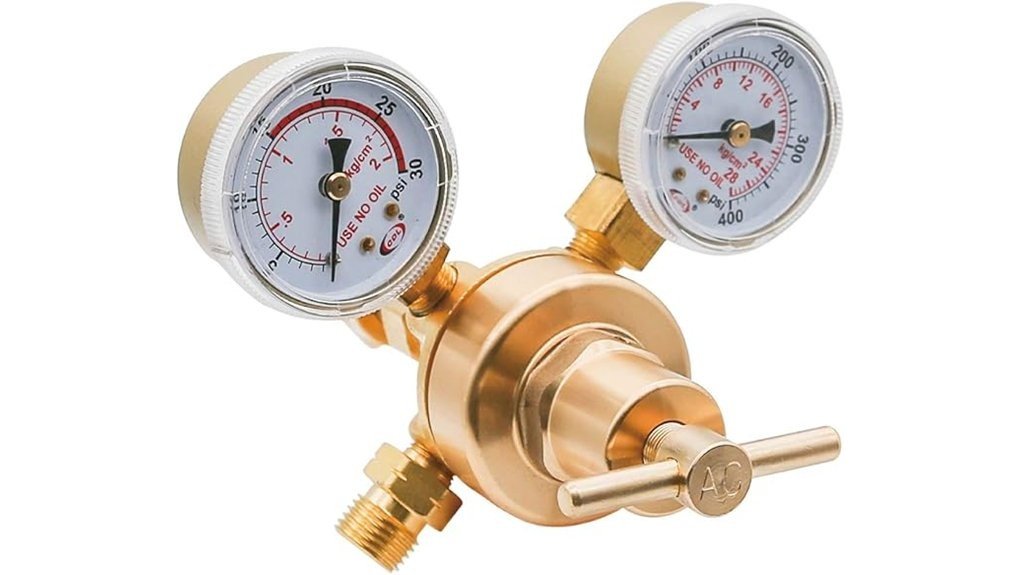
Choosing an acetylene regulator starts with one question: does it actually match your cylinder and torch setup? The CDL LX45 Acetylene Regulator is a light-duty model built for small MC acetylene cylinders that use a CGA-200 connection. Its forged-brass construction, dual gauges, and 9/16″-18 left-hand outlet make it practical for compatible brazing, welding, and oxy-acetylene equipment. Its biggest limitation is equally important: it is designed around the small MC-cylinder format, so you should not assume it will fit larger acetylene cylinders or every torch system.
Quick Verdict
Rating: 8/10
Best For: Owners of small MC acetylene cylinders who need a compact light-duty regulator with two gauges.
Bottom Line: The CDL LX45 offers useful pressure monitoring, forged-brass construction, and direct CGA-200 compatibility for small MC tanks. The tradeoff is limited cylinder compatibility, and you still need to confirm that its outlet and pressure requirements match the rest of your torch system.
| Specification | Detail |
|---|---|
| Brand | CDL |
| Model | LX45 |
| Product Type | Light-duty acetylene pressure regulator |
| Body Construction | Forged brass regulator body and bonnet |
| Cylinder Connection | CGA-200 |
| Tank Compatibility | Small MC acetylene cylinders with the correct CGA-200 valve |
| Outlet Connection | 9/16″-18 LH |
| Gauges | Two 1.5-inch gauges |
| Inlet Gauge Range | 0–400 PSI |
| Outlet Gauge Range | 0–30 PSI |
| Published Flow Specification | 0–7.5 m³/h under 0–1 bar pressure |
| Flow Test Conditions | Published under normal temperature conditions of 15–25°C |
| Best Use | Compatible light-duty acetylene welding, brazing, heating, and correctly configured cutting equipment |
Key Takeaways
- The CDL LX45 is designed around CGA-200 small MC acetylene cylinders, so tank connection compatibility should be your first check.
- Two 1.5-inch gauges show cylinder-side pressure and regulated delivery pressure, giving you a clearer view of the gas supply.
- The regulator uses a forged-brass body and bonnet and includes a pressure-relief mechanism.
- The outlet connection is 9/16″-18 left-hand, so your hose or torch system must use the matching connection.
- The outlet gauge reads as high as 30 PSI, but acetylene must not be used above its applicable safe pressure limit. Follow your equipment instructions and applicable safety requirements.
What Is the CDL LX45 Acetylene Regulator?
The CDL LX45 is a pressure-reducing regulator for acetylene supplied from a small MC cylinder. Its job is to reduce cylinder pressure to the controlled delivery pressure required by compatible downstream equipment.
This version uses a CGA-200 rear cylinder connection, which is the key specification for MC-tank owners. It also has two gauges, one covering a 0–400 PSI inlet range and another covering a 0–30 PSI outlet range.
The design is intended for light-duty work rather than large industrial gas-demand applications. That makes it most relevant for portable or compact setups where an MC acetylene cylinder is already the correct fuel source.
Product Specifications and Compatibility
The most important feature of this regulator is not the gauge size or brass finish. It is the CGA-200 cylinder fitting. This connection is intended for small MC acetylene cylinders and should not be confused with fittings used on larger acetylene cylinders.
The regulator’s outlet is specified as 9/16″-18 LH. The LH designation means left-hand thread, a common identifier on fuel-gas connections. Before buying, compare both the cylinder connection and outlet connection with the equipment you already own.
Before You Buy: Confirm that your acetylene cylinder has a CGA-200 valve and that your hose or downstream equipment accepts the regulator’s 9/16″-18 LH outlet. A regulator that looks similar can still use a different cylinder or hose connection.
Who Should Buy It?
Best For
- You already use a small MC acetylene cylinder with a CGA-200 valve.
- You need a compact light-duty regulator with separate inlet and delivery gauges.
- Your compatible brazing, welding, heating, or cutting setup uses the correct 9/16″-18 LH outlet connection.
Skip If
- Your cylinder uses a different fitting, such as the connection found on many larger acetylene cylinders.
- You need a heavy-duty regulator for sustained high-flow industrial work.
- You require a clearly documented manufacturer warranty or service program before purchase.
Dual Gauges and Pressure Monitoring
The CDL LX45 uses two 1.5-inch gauges. The inlet gauge covers 0–400 PSI, while the outlet gauge covers 0–30 PSI. This layout lets you monitor the supply side separately from the regulated delivery side.
That distinction matters because the gauge ranges describe what the gauges can display. They do not tell you what pressure should be used for a specific torch tip or process. Your correct working pressure depends on the downstream equipment and its manufacturer’s instructions.
The T-handle adjustment gives you control over regulated delivery pressure, while the separate gauges make changes easier to monitor. For a small-tank setup, this is more informative than a single-gauge design.
Pro Tip: Do not choose a regulator by gauge range alone. Match the cylinder fitting, outlet thread, gas type, and required delivery range to your complete torch system before connecting equipment.
Forged-Brass Construction
The LX45 is specified with a forged-brass regulator body and bonnet. For this type of equipment, a substantial metal regulator body provides a more appropriate construction than lightweight general-purpose gas-control hardware.
The design also includes a pressure-relief mechanism intended to address overpressure conditions within the regulator. That feature is useful, but it does not replace correct setup, pressure selection, leak inspection, or safe handling practices.
You should treat any regulator showing physical damage, unreliable gauge behavior, leakage, or unstable pressure as equipment that needs proper inspection. Regulator repair is not a good place for improvised fixes.
Flow Specification and Intended Applications
The published light-duty specification lists a flow capacity of 0–7.5 m³/h under 0–1 bar pressure, with 15–25°C identified as normal temperature conditions for that specification.
This wording is more useful than treating 15–25°C as a strict operating-temperature range. Your actual working environment, cylinder condition, torch, tip, gas demand, and equipment instructions can all affect how a complete system behaves.
The LX45 makes the most sense for light-duty applications where an MC cylinder is appropriate. It is not presented as a substitute for a larger regulator and cylinder combination when the job demands sustained industrial gas flow.
How It Performs in Real Use
Portable Brazing Work
Small MC acetylene cylinders are useful when portability matters. In a compatible brazing setup, the LX45 gives you separate supply and delivery gauges without requiring a regulator intended for a much larger cylinder connection.
Light Welding and Heating
For light-duty torch work, the dual gauges make it easier to see what is happening on both sides of the regulator. You still need to set pressure according to the torch and tip manufacturer’s instructions rather than choosing a setting based only on the gauge scale.
Oxy-Acetylene Cutting Setups
The regulator can be used only when the rest of the cutting system is designed for the same acetylene connection, outlet, pressure range, and gas flow requirements. Cutting also requires a correctly matched oxygen supply, torch, hoses, tip, and other safety equipment.
Occasional Workshop Use
For a workshop that uses a small MC cylinder occasionally, the LX45’s straightforward design can be more practical than buying a heavier regulator intended for larger cylinders. Its limited cylinder compatibility becomes a disadvantage if you later move to a different tank format.
Compatibility and Safety
Acetylene equipment deserves careful handling because fuel gas can create serious fire and explosion hazards. The regulator should be used only with the gas, connections, pressures, and equipment for which it is intended.
A particularly important point is the 0–30 PSI outlet gauge. That is the gauge’s display range, not a recommendation to operate acetylene at 30 psig. Acetylene must not be utilized above 15 psig, and your actual torch setting may be considerably lower depending on the equipment and tip.
Inspect regulator connections and equipment condition before use. Follow the regulator instructions, cylinder supplier guidance, torch manual, tip pressure chart, and applicable workplace safety rules. If the regulator, gauges, threads, seals, or pressure behavior appear damaged or abnormal, have the equipment evaluated by a qualified person.
Setup and Use Tips
- Confirm the gas: Use the regulator only for the gas service for which it is designed.
- Check the cylinder connection: The LX45 version reviewed here is for CGA-200 small MC acetylene cylinders.
- Check the outlet: Verify that your hose connection matches the 9/16″-18 LH outlet.
- Use the correct pressure: Follow the pressure specified for your torch and tip. Do not select pressure based solely on the regulator gauge’s maximum number.
- Inspect before use: Do not continue using damaged, leaking, unstable, or malfunctioning gas equipment.
- Avoid improvised repair: Regulator servicing should be handled by someone properly trained for fuel-gas equipment.
Pros and Cons
Pros
- CGA-200 connection specifically suits small MC acetylene cylinders.
- Two 1.5-inch gauges provide separate inlet and delivery pressure readings.
- Forged-brass body and bonnet provide substantial regulator construction.
- 9/16″-18 LH outlet matches compatible fuel-gas hose connections.
- Compact light-duty format suits portable and occasional-use setups.
Cons
- Limited to the correct CGA-200 MC-cylinder connection.
- Not the best choice for sustained heavy-duty industrial gas demand.
- A specific manufacturer warranty term could not be confirmed during this review.
Is It Worth the Price?
The CDL LX45 is best viewed as a budget-oriented light-duty option for buyers who already know they need a CGA-200 MC-cylinder regulator. Its value comes from getting the core specifications right: dual gauges, forged-brass construction, an MC-cylinder inlet, and a defined fuel-gas outlet connection.
It is worth considering if your priority is a straightforward regulator for an existing small-tank setup. It becomes less attractive if you expect to change cylinder sizes, need heavy-duty continuous service, or prefer a regulator from a manufacturer with more clearly published service and warranty documentation.
How It Compares to Alternatives
The Victor G150 MC acetylene regulator is a more established-brand alternative available in CGA-200 configurations for small MC cylinders. It may appeal more to buyers who prioritize documented manufacturer support and a long-standing professional gas-equipment brand.
Another route is a complete TurboTorch MC-tank air-acetylene kit, which can bundle an MC-compatible regulator with the hose, torch, and other matched components. The CDL LX45 makes more sense when you already own compatible downstream equipment and primarily need the regulator itself.
Frequently Asked Questions
What tank does the CDL LX45 regulator fit?
This version uses a CGA-200 cylinder connection and is intended for small MC acetylene cylinders with the matching valve. Check the valve designation on your cylinder rather than relying only on its appearance.
Can I use the CDL LX45 on a B acetylene tank?
Not as a direct CGA-200 connection. Larger acetylene cylinders can use different valve connections, so you should select equipment specifically matched to your cylinder instead of assuming that an MC regulator will fit.
What do the two gauges measure?
One gauge covers the cylinder or inlet side with a 0–400 PSI range. The second gauge covers regulated delivery pressure with a 0–30 PSI range, letting you monitor the two sides separately.
Can acetylene be used at 30 PSI because the gauge goes to 30 PSI?
No. The gauge scale does not define the safe operating limit for acetylene. Acetylene must not be utilized above 15 psig, and your torch or tip may require a substantially lower working pressure.
Can the CDL LX45 be used for cutting?
It can be part of a compatible light-duty oxy-acetylene system when the cylinder, hose, torch, cutting tip, oxygen supply, and required pressures all match. Do not assume that regulator compatibility alone makes an entire cutting setup compatible.
What outlet connection does the regulator use?
The published specification lists a 9/16″-18 left-hand outlet. Compare that connection with your hose or torch equipment before ordering.
Does the regulator only work between 15°C and 25°C?
The available product specification describes 15–25°C as normal temperature conditions associated with its published flow figure. That should not automatically be interpreted as a complete approved operating-temperature range, so follow the product documentation for environmental limits.
What warranty does the CDL LX45 include?
A specific manufacturer warranty period could not be reliably verified for this model during this review. Check the current Amazon listing and seller terms before buying if warranty coverage is important to you.
The Bottom Line
The CDL LX45 Acetylene Regulator is a sensible choice when you already have a small MC acetylene cylinder with a CGA-200 valve and compatible 9/16″-18 LH equipment. Its strongest features are the forged-brass construction and dual pressure gauges, while its main limitation is narrow cylinder compatibility and less clearly documented support than some established professional alternatives.
If those connections match your setup and your work is light-duty, it earns an 8/10 recommendation. Skip it if you need a regulator for a different cylinder connection, heavy industrial flow, or a product with more clearly documented manufacturer support.
Ready to Buy?
Check the latest price, connection details, and current seller information before you decide.