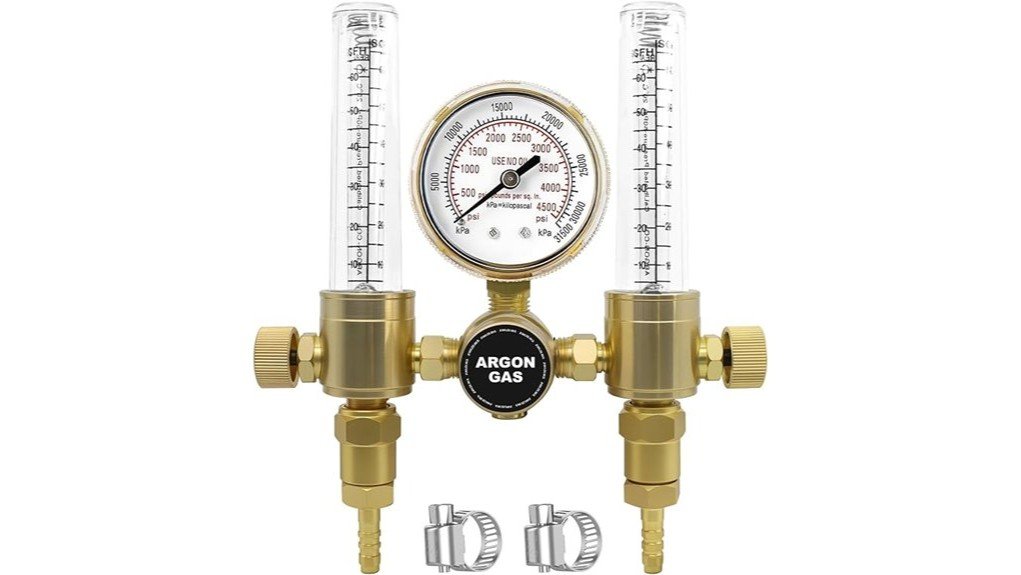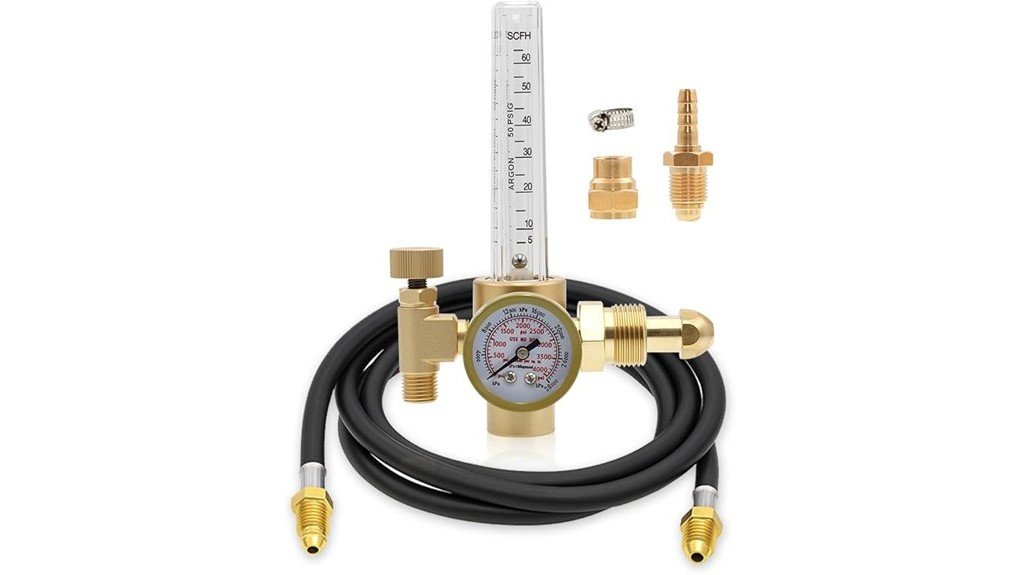
The WeldingStop gas regulator is an argon/CO2 MIG and TIG regulator with an integrated flow meter, a 1.5 inch cylinder gauge and a 6.5 ft hose, using a CGA 580 inlet. It is a solid candidate for a home MIG setup running argon/CO2 mix or for argon TIG, as long as your cylinder uses the same fitting. Skip it if you run pure CO2 or an oxygen/fuel setup, which need different regulators. The WeldingStop argon/CO2 gas regulator controls shielding gas for MIG and TIG.
WeldingStop Argon/CO2 Regulator at a Glance
| Item | Per the listing |
|---|---|
| Gases | Argon and argon/CO2 mixes |
| Cylinder inlet | CGA 580 |
| Cylinder gauge | 1.5 in, up to 4000 PSI |
| Flow meter | 0 to 60 CFH |
| Hose | 6.5 ft with clamp |
| Weight | About 2.1 lb |
| Verify | Outlet thread and pure-CO2 compatibility |
Check Current Price on Amazon →
What It Is and Who It Suits
A shielding-gas regulator does two jobs: it drops cylinder pressure to a safe working level and meters the flow your torch gets. The WeldingStop unit combines a pressure gauge and a flow meter on one body, which keeps the setup compact and avoids separate parts.
It suits hobby and light-fabrication MIG users with C25 argon/CO2 and TIG users on argon. A 0 to 60 CFH scale covers typical MIG use, but TIG often runs lower, where a finer scale is easier to read.
How to Check It Fits Your Setup
- Cylinder valve: Check for CGA 580 on your argon or argon/CO2 cylinder. Pure CO2 normally uses CGA 320.
- Hose connection: Verify your welder’s gas inlet thread, or whether the supplied hose needs an adapter or a barb connection.
- Flow range: MIG often sits mid-scale on 0 to 60 CFH, while TIG may sit low on the scale.
- Gauge reading: A cylinder gauge up to 4000 PSI covers full argon and mix bottles. Check the gauge is readable and the glass is intact on arrival.
- Gas type: Not for propane, oxygen or acetylene; those need different regulators.
Pros and Limitations
Pros
- Pressure gauge and flow meter in one unit.
- Hose and clamp included, ready for a typical welder hookup.
- CGA 580 inlet matches common argon and mix cylinders.
Limitations
- Not designed for pure CO2 without the right inlet.
- Brand has limited published service history.
- A broad flow scale can make low TIG flow harder to dial in.
Setup, Leak Testing and Care
- Chain the cylinder upright, remove the cap and crack the valve briefly to clear dust.
- Back the regulator adjustment out, fit it to the cylinder and tighten the inlet nut with a proper wrench.
- Open the cylinder valve slowly; stand beside the gauge.
- Check the connections with soapy water and fix any bubbles before welding.
- Set flow with the torch trigger pulled or the gas test function, then check for drafts that blow shielding gas away.
- Close the cylinder valve when finished and bleed the line.
Shielding gas flow that is too low causes porosity, while very high flow wastes gas and can create turbulence. Start with your welder’s recommended flow and adjust from there.
View WeldingStop Regulator on Amazon →
Alternatives and Related Guides
- Another argon unit is covered in the Meanlin argon regulator review.
- See the HTP argon/CO2 MIG TIG flow meter review for a similar combo unit.
- For dual-outlet use, read the dual output argon regulator review.
- If you are wiring up a MIG rig, check the Forney 140 FC-i MIG kit review.
Frequently Asked Questions
Does the WeldingStop regulator work with 75/25 argon/CO2 mix?
Yes in principle: argon and argon/CO2 mix cylinders use the CGA 580 connection listed for this regulator, and the listing names argon and CO2 use. Confirm the exact gas rating in the listing and check that your cylinder valve is CGA 580.
Will it fit a pure CO2 cylinder?
Pure CO2 cylinders in the US generally use a CGA 320 connection, which is different from CGA 580. Do not force it. If you run pure CO2, buy a regulator designed for CO2 or confirm that the seller supplies a proper CO2 inlet.
What do the gauges tell me?
The 1.5 in pressure gauge shows cylinder contents, listed up to 4000 PSI, and the flow meter shows delivery in cubic feet per hour, listed as 0 to 60 CFH. MIG commonly runs in the 20 to 35 CFH range, but follow your welder manual.
How often should I replace the gas hose?
Inspect it before each job and replace it when you see cracks, hardening, leaks or damaged crimps or clamps. Gas hoses degrade with age, heat and spatter, and a leaking hose wastes shielding gas and can cause porosity in welds.
Verdict
This is a simple, complete argon/CO2 regulator for MIG and TIG users with CGA 580 cylinders. Check the current listing for the gas rating and warranty before ordering.
Check Current Price on Amazon →