Quick Answer
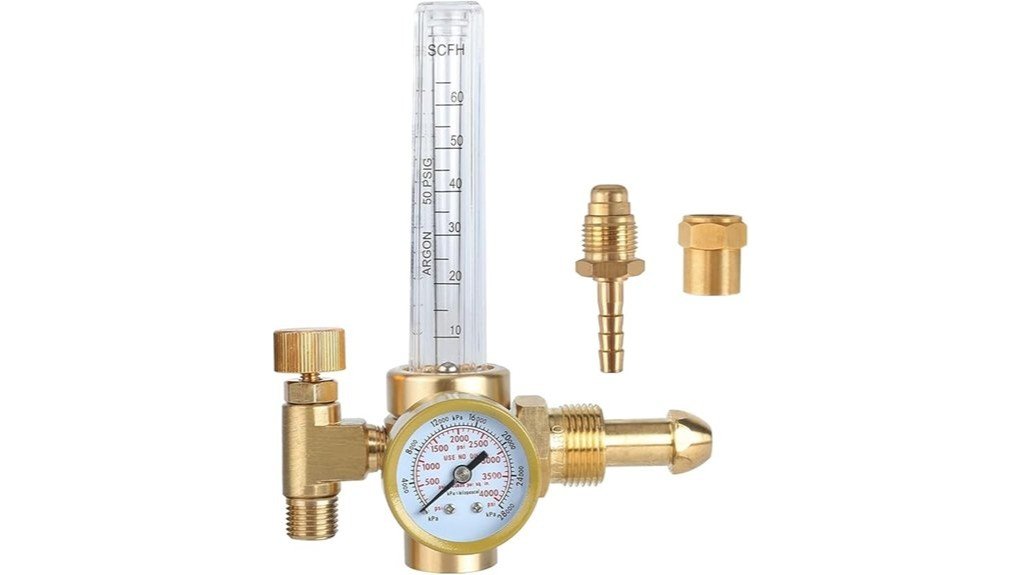
Choosing a shielding-gas regulator comes down to three checks: the cylinder connection, the gas in the cylinder, and the outlet that connects to your welder. The BETOOLL HW9003 Argon/CO2 Flow Meter Regulator covers the basics with a CGA580 inlet, a 10 to 60 CFH flow tube, and a 0 to 4000 psi cylinder-pressure gauge. It is a practical choice for compatible MIG and TIG setups, but it is not a universal regulator and does not fit straight CO2 cylinders. This review helps you confirm fit, understand the controls, and avoid common setup mistakes before you order.
Quick Verdict
Rating: 8/10, recommended with compatibility caveats
Best For: Hobbyists and small-shop welders using CGA580 argon or argon/CO2-mix cylinders
Bottom Line: The visible flow tube and dual outlet options make basic gas setup easy to understand. The main tradeoff is limited cylinder compatibility, especially for buyers using straight CO2 bottles.
Key Takeaways
- CGA580 fit is the first buying check. The regulator is listed for argon, nitrogen, and argon/CO2 mixed-gas cylinders with this inlet.
- It does not fit straight CO2 cylinders. A dedicated regulator with the correct CO2-cylinder connection is required for that setup.
- The flow tube adjusts from 10 to 60 CFH. Set flow while gas is moving through the welder, then follow your machine and consumable guidance.
- The pressure gauge reads 0 to 4000 psi. It monitors cylinder pressure, while the ball-style tube is used to set gas flow.
- The package is listed as one regulator/flow meter. A gas hose is not shown as included, so confirm your hose and outlet threads before buying.
At a Glance: Key Specifications
| Specification | Detail |
|---|---|
| Brand | BETOOLL |
| Part number | BET-16-HW9003 |
| Listed model number | CHO9600/H09593 |
| Product type | Shielding-gas regulator and ball-style flow meter |
| Inlet connection | CGA580 |
| Listed gas compatibility | Argon, nitrogen, and argon/CO2 mixed-gas cylinders with CGA580 valves |
| Not compatible with | Straight CO2 cylinders and any cylinder without a CGA580 valve |
| Flow range | 10 to 60 CFH, shown by a moving ball in the flow tube |
| Pressure-gauge range | 0 to 4000 psi |
| Outlet options | Listed for a female 9/16-18 nut or male 5/8-18 connection, plus a standard 1/4-inch barbed fitting |
| Listed item weight | 1.63 pounds |
| Package quantity | 1 regulator/flow meter; hose is not listed as included |
| Material note | Metal body; the Amazon page uses inconsistent brass and copper descriptions |
| Best use | Compatible MIG and TIG welding setups that require controlled inert or mixed shielding-gas flow |
What Is the BETOOLL HW9003?
The BETOOLL HW9003 is a welding-gas regulator paired with a vertical flow tube. It attaches to a compatible CGA580 cylinder and reduces cylinder pressure so shielding gas can travel through the hose to a MIG or TIG welder. You set the delivery rate by turning the control knob and watching the ball move against the CFH scale.
A separate 0 to 4000 psi gauge shows cylinder pressure. This gauge is useful for spotting a tank that is running low, but it does not set the welding flow. The flow tube is the control you use for shielding-gas delivery.
This review is based on the current product listing, published specifications, compatibility details, and practical safety guidance. It is not a substitute for your welder manual, cylinder-supplier instructions, or a certified regulator inspection.
Who Should Buy It?
Best For
- Home and small-shop welders using a CGA580 argon or argon/CO2-mix cylinder
- MIG or TIG users who prefer a visible ball-style flow reading instead of a second dial
- Owners of compatible Miller, Lincoln, or Hobart gas hoses using the listed 5/8-18 connection
Skip If
- Your cylinder contains straight CO2 or uses a valve other than CGA580
- You need a hose-included kit or a dual-output regulator for back purging
- You want a documented long-term warranty or a fully serviceable professional regulator
Before You Buy: Do not rely on the words “Argon/CO2” alone. This model is listed for CGA580 argon and argon/CO2 mixed-gas cylinders, but the listing specifically says it does not fit straight CO2 cylinders. Confirm the stamped cylinder valve connection and your hose threads before ordering.
Compatibility and Outlet Connections
CGA580 Cylinder Inlet
The CGA580 inlet is the most important fit detail. It is commonly used on U.S. argon, nitrogen, and some mixed shielding-gas cylinders. A regulator should thread on smoothly by hand before final tightening. If the threads do not match, do not force the connection or use an unapproved adapter.
Dual Outlet Options
The listing says the outlet can accept a female 9/16-18 nut or a male 5/8-18 fitting. It also includes a standard 1/4-inch barbed fitting. That gives you more connection flexibility than a regulator with only one fixed outlet, but you still need to compare the hose end on your welder with the fittings shown on the current listing.
The product description says many Miller, Lincoln, and Hobart gas hoses should connect through the 5/8-18 outlet. Treat that as a fit reference, not a guarantee for every model year or machine. Check your welder manual or measure the existing hose fitting before purchase.
Flow Control and Pressure Gauge
10 to 60 CFH Ball-Style Flow Tube
The flow tube covers 10 to 60 cubic feet per hour. This range includes common starting points for many MIG and TIG jobs, but the correct setting depends on the process, gas, cup or nozzle size, indoor airflow, and the recommendations for your machine and consumables.
Set the flow while gas is actually moving through the system. On a MIG welder, that usually means pressing the gun trigger with the wire feed disabled or following the machine’s gas-test procedure. On a TIG welder, use the machine’s purge or gas-test function when available. Reading the tube with no gas flowing can give you the wrong setting.
0 to 4000 PSI Cylinder Gauge
The round gauge monitors pressure on the cylinder side. It helps you see whether the cylinder is charged and whether pressure is dropping over time. It does not replace the flow tube, and it should not be used to guess a CFH setting.
Pro Tip: Start with the flow range recommended by your welder or consumable manufacturer, then use the lowest effective setting that maintains clean shielding. Excess flow can waste gas and create turbulence, while low flow can leave the weld pool exposed.
Build, Size, and Package Details
The Amazon page lists a metal regulator body and shows brass in its product-comparison table, while the description calls the material copper. Because those fields conflict, this review does not treat a specific alloy as confirmed. The listed item weight is 1.63 pounds.
The technical details show dimensions of 6.9 by 5.1 by 5.1 inches, while the description provides a second size of 12 by 7.5 by 16 centimeters. Those measurements may refer to different parts of the package, so verify clearance if your cylinder cart or enclosure is tight.
The package description lists one argon/CO2 flow meter. A hose is not listed as included. Plan to reuse a compatible hose or buy the correct hose separately after confirming its thread and pressure rating.
How It Performs in Real Use
For Hobby MIG Welding
For indoor short-circuit MIG work, the 10 to 60 CFH scale gives you enough adjustment for common mixed-gas settings. The ball is easy to check at a glance once the cylinder is upright and the tube is vertical. Gas use can rise quickly if you turn the flow up to compensate for a leak, loose connection, blocked diffuser, or strong draft, so inspect the system before increasing flow.
For TIG Welding
TIG welding often uses lower flow than many MIG setups, which places typical starting settings in the lower half of this tube. The visible scale makes small changes easy to track. Cup size, gas lens choice, torch angle, and room airflow still affect the setting, so follow the welder and torch guidance instead of using one number for every job.
As a Replacement Regulator
This model makes the most sense as a basic replacement when your cylinder is CGA580 and your existing hose matches one of the listed outlets. It is less convenient when you need a bundled hose, two independent outlets, or documented rebuild parts. Confirm all three connection points, cylinder, regulator outlet, and welder inlet, before removing your old setup.
In Drafty or Outdoor Work Areas
A higher dialed flow does not always solve wind-related shielding problems. Drafts can pull gas away from the weld, and excessive flow can create turbulence. Use a safe wind screen where appropriate, keep the nozzle close enough for the process, and move the work indoors when reliable shielding cannot be maintained.
Setup, Leak Checks, and Safety
Compressed-gas equipment deserves careful handling. Secure the cylinder upright, keep the valve protected from impact, and use a regulator designed for the gas and service pressure. Review the OSHA compressed-gas cylinder guidance and your cylinder supplier’s instructions before setup.
- Confirm the gas and valve. Read the cylinder label and verify a CGA580 outlet. Do not identify a gas only by cylinder color.
- Inspect the regulator and hose. Do not use damaged gauges, cracked tubes, contaminated seats, or worn threads.
- Keep oil and grease away. Use clean, dry fittings and tools intended for gas service.
- Attach the regulator with the valve closed. Keep your face and body out of line with the gauge and regulator outlet.
- Open the cylinder valve slowly. Watch the high-pressure gauge and stop if you hear or detect a leak.
- Test connections with an approved leak-detection solution. Never use a flame to check for leaks.
- Set flow while gas is moving. Follow the welder’s test procedure and the manufacturer’s recommended range.
- Close the cylinder after use. Release downstream pressure according to your equipment instructions before removing or storing the regulator.
Argon and other shielding gases can displace oxygen. Weld only with suitable ventilation, especially in confined or low areas. Miller’s shielding-gas setup guidance also explains why both low and excessive flow can contribute to weld porosity.
Pros and Cons
Pros
- CGA580 inlet matches many argon and argon/CO2 mixed-gas welding cylinders
- 10 to 60 CFH tube provides a direct visual flow reading
- 0 to 4000 psi gauge helps you monitor cylinder-side pressure
- Multiple outlet options improve the chance of matching an existing gas hose
- Simple one-regulator package suits basic home and small-shop setups
Cons
- Does not fit straight CO2 cylinders
- Gas hose is not listed as included
- Material and size fields on the listing are inconsistent, and warranty terms are not clearly stated
Is It Worth the Price?
The BETOOLL HW9003 is positioned in the entry-level feature tier rather than a premium two-stage or fully serviceable shop regulator. It offers strong value when you already have a compatible CGA580 cylinder and hose, because the core controls are easy to read and cover common shielding-gas flow needs.
Its value drops if you must buy adapters, replace the hose, or move to a straight CO2 cylinder. It is also not the best fit for production shops that need documented calibration, rebuild support, dual outputs, or a clearly stated long-term warranty.
How It Compares to Alternatives
A SPARC 0 to 70 CFH CGA580 flow meter is worth comparing if you want a slightly wider published flow range and a clearly advertised manufacturer warranty. A YESWELDER multi-interface model may suit you better when outlet flexibility is the main concern. Professional regulators from Victor or similar welding-gas brands may make more sense for buyers who prioritize serviceability and shop support.
The BETOOLL model is the simpler choice when you need one CGA580 regulator, already have the right hose, and want a visible 10 to 60 CFH scale without paying for extra outputs or accessories.
Frequently Asked Questions
Does the BETOOLL HW9003 fit a straight CO2 cylinder?
No. The listing states that the CGA580 inlet fits argon, nitrogen, and argon/CO2 mixed-gas tanks, but it does not fit straight CO2 cylinders. Use a regulator made for your CO2 cylinder’s valve connection.
Can I use it for both MIG and TIG welding?
Yes, when the welder, hose, cylinder connection, and shielding gas are compatible. MIG and TIG often require different flow settings, so follow the machine, torch, and consumable recommendations for each process.
Is a gas hose included?
The current package description lists one regulator/flow meter and does not list a hose. Check the seller’s package contents before ordering, then confirm the thread on any hose you plan to reuse or purchase.
Which outlet fittings does it support?
The listing describes support for a female 9/16-18 nut and a male 5/8-18 fitting, plus a standard 1/4-inch barbed fitting. Compare those details with your hose because brand name alone does not guarantee fit.
How do I set the correct CFH?
Set flow while gas is moving through the welder, not while the system is closed. Start with the range in your welder or consumable manual, then adjust only enough to maintain stable shielding in the actual work area.
What does the 0 to 4000 psi gauge show?
It shows pressure on the cylinder side and helps you monitor whether the tank is charged or trending low. It does not show welding flow, which is read from the vertical ball-style tube.
How should I check for leaks?
Secure the cylinder, open its valve slowly, and test each connection with an approved gas leak-detection solution. Close the cylinder and stop using the equipment if bubbles form or a leak cannot be corrected safely. Never use a flame.
What warranty does BETOOLL provide?
The current listing does not state a clear manufacturer warranty period in the visible product details. Review the seller’s warranty information and Amazon return terms before buying if coverage is a priority.
The Bottom Line
The BETOOLL HW9003 Argon/CO2 Flow Meter Regulator is a good fit for hobbyists and small shops that use a CGA580 argon or argon/CO2 mixed-gas cylinder and already have a compatible hose. Its main strength is straightforward 10 to 60 CFH visual control, while its main limitation is narrow cylinder compatibility and unclear material and warranty details. Skip it for straight CO2 bottles, dual-output work, or production use that demands documented service support.
Ready to Buy?
Check the latest price, seller, package contents, and fitting details before you decide.