Disclosure: As an Amazon Associate, we earn from qualifying purchases. If you click a link on this page and make a purchase, we may receive a small commission at no extra cost to you.
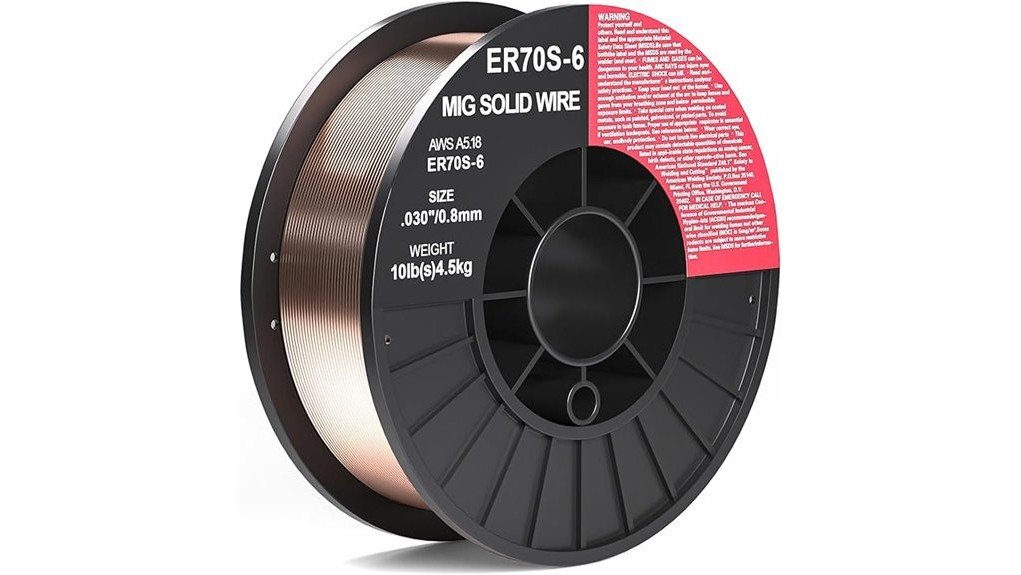
Choosing welding wire is not just about grabbing the right diameter. You also need a wire that matches your shielding gas, base metal condition, welder setup, and the kind of bead control you want. This ER70S-6 .030-inch welding wire is a solid carbon steel wire with added manganese and silicon, which helps it run cleanly on mild steel that is not perfectly clean. It is a strong fit for shop fabrication, repair work, and construction projects, but you still need the right gas coverage and storage habits to get the best results.
Quick Verdict
Rating: 8.3/10, Recommended with caveats
Best For: Welders who need .030-inch ER70S-6 carbon steel wire for mild steel fabrication, repair, and general shop use.
Bottom Line: This wire makes sense if you want a versatile ER70S-6 spool that can handle less-than-perfect steel better than cleaner-only wire types. The main tradeoff is that it still depends on correct shielding gas, clean storage, and welder settings, so it is not a fix for poor setup.
| Specification | Detail |
|---|---|
| Product type | ER70S-6 solid carbon steel welding wire |
| Wire diameter | 0.030 inch (0.8 mm) |
| Spool weight | 10 pounds |
| Material | Carbon steel with enhanced manganese and silicon content |
| Shielding gas compatibility | 100% CO2 or CO2/Argon gas mixtures |
| Product dimensions | 8.15 in L x 7.99 in W x 2.32 in H |
| Best use | Construction, mild steel repair, and metal fabrication |
| Surface tolerance | Designed to perform well on rusty or oily steel compared with cleaner-only wire choices |
| Storage note | Store in a cool, dry place, ideally sealed when not in use |
What Is the ER70S-6 .030-Inch Welding Wire?
The ER70S-6 .030-inch welding wire is a solid carbon steel filler wire made for gas-shielded welding applications that use 100% CO2 or a CO2/Argon mix. The .030-inch diameter is a common size for light to medium fabrication work because it can balance bead control, wire feed stability, and penetration when your welder is set correctly.
The key detail is the ER70S-6 chemistry. Its higher manganese and silicon content helps improve deoxidizing action when you are welding steel with light rust, mill scale, or small traces of oil. You should still prep the metal, but the wire gives you more forgiveness than cleaner-only choices.
Before You Buy: Confirm that your welder accepts 0.030-inch wire and can run a 10-pound spool. Also check your machine chart for the correct drive roll, polarity, voltage, wire speed, and shielding gas before you load the spool.
Key Takeaways
- Best fit: Mild steel fabrication, repair work, and construction tasks where .030-inch ER70S-6 wire is the right match for your welder.
- Core strength: Added manganese and silicon help the wire perform on steel with light rust, oil, or mill scale after prep.
- Gas options: The source article lists compatibility with 100% CO2 and CO2/Argon mixtures.
- Spool size: The 10-pound spool is useful for regular shop use, but it may not fit smaller hobby welders.
- Main limitation: You still need good gas coverage, dry storage, and correct welder settings to avoid porosity, spatter, and feeding problems.
Who Should Buy It?
Best For
- Welders who already use 0.030-inch solid wire for mild steel.
- Fabrication shops that want a 10-pound spool for repeated projects.
- Repair work where the steel may have light rust, oil, or mill scale after cleaning.
Skip If
- Your welder only accepts small spools or a different wire diameter.
- You need flux-core wire for welding without shielding gas.
- You are welding stainless steel, aluminum, or another metal that requires a different filler wire.
Performance Characteristics of ER70S-6 Welding Wire
The biggest reason to choose ER70S-6 is its balance of arc stability, wet-out, and tolerance for imperfect steel. The added manganese and silicon support smoother bead formation when the machine setup is right.
On mild steel, this wire can suit brackets, frames, gates, shop fixtures, small repairs, and general fabrication. You should still remove heavy rust, paint, grease, and moisture before welding, because filler wire chemistry cannot make contaminated steel safe or clean.
Shielding Gas and Compatibility
The article-supported gas options are 100% CO2 and CO2/Argon mixtures. CO2 is often chosen for strong penetration and lower gas cost, while a CO2/Argon blend can help produce a smoother arc and a cleaner bead appearance when your welder supports it.
Before buying, check your machine manual for wire diameter, spool size, and gas settings. A .030-inch wire usually needs the correct drive roll groove and a clean liner to feed smoothly.
Pro Tip: Keep a short setup note on your welder for this wire, including gas type, voltage range, wire speed, polarity, and material thickness. It saves time when you return to the same spool later.
Materials and Build Quality
This is a carbon steel wire with manganese and silicon added to improve weld behavior. That chemistry helps the puddle handle light surface contamination better than a lower-deoxidizer wire, which can matter for farm repairs, brackets, structural pieces, or shop steel that has been sitting for a while.
The 10-pound spool gives you more working time than small sample spools, but storage matters. If the spool sits open in a damp shop, surface contamination can affect feeding and weld quality.
How It Performs in Real Use
For Shop Fabrication
For benches, brackets, fixtures, and mild steel projects, this wire gives you a practical balance of control and output. The .030-inch diameter is small enough for controlled beads on thinner pieces, yet useful for many medium-duty jobs when paired with the correct settings.
For Repair Work
Repair jobs often involve steel that is not perfect. ER70S-6 is useful here because its manganese and silicon content helps it handle light rust or oil after you prep the joint. You should still grind, wipe, and dry the weld area before striking an arc.
For Outdoor or Jobsite Use
The wire can be used for outdoor welding applications, but the shielding gas still needs protection from wind. If the gas coverage gets blown away, you can see porosity even when the wire itself is suitable. Use screens, position your work carefully, and follow safe ventilation practices.
For Long-Term Shop Storage
A 10-pound spool is convenient if you weld often, but it is less ideal if you only weld once in a while. Store it dry and sealed between jobs. If you notice surface rust, feeding issues, or inconsistent arc behavior, inspect the wire and consumables before blaming the machine.
Usage Tips for Better Results
- Match the wire to the job: Use this wire for compatible carbon steel work, not stainless steel, aluminum, or gasless flux-core setups.
- Prep the metal anyway: ER70S-6 is more forgiving, but clean steel still gives you better welds.
- Check the contact tip: Use a tip made for .030-inch wire and replace it when feeding becomes rough.
- Protect the gas stream: Drafts and wind can cause porosity with gas-shielded wire.
- Store the spool dry: Keep it sealed when not in use to reduce moisture and contamination.
Compatibility and Safety Notes
This wire should be used only with welding equipment that supports the diameter, spool size, shielding gas, and polarity needed for solid carbon steel wire. Follow your welder manual, gas supplier guidance, and the product label before setup.
Use proper welding PPE, including a rated helmet, gloves, protective clothing, and eye protection. Weld in a safe, ventilated area, and keep flammable materials away from the work zone. If you are welding load-bearing parts, vehicle frames, pressure vessels, or critical structures, get qualified guidance before relying on the repair.
Pros and Cons
Pros
- 0.030-inch diameter works for many light and medium mild steel jobs.
- ER70S-6 chemistry helps on steel with light rust, oil, or mill scale after prep.
- Compatible with 100% CO2 or CO2/Argon gas mixtures.
- 10-pound spool is practical for repeated shop or fabrication use.
- Useful for both newer welders and experienced users who want a forgiving solid wire.
Cons
- Not suitable for welders that cannot run 10-pound spools or .030-inch wire.
- Requires shielding gas, so it is not the right choice for gasless welding.
- Still needs correct cleaning, gas flow, and machine settings to prevent defects.
Customer Feedback and Ratings Analysis
Buyer feedback described in the source article centers on weld consistency, gas compatibility, and performance across common mild steel projects. The useful pattern is not just that users like the wire, but why they like it: it can help produce smooth beads with fewer issues when the setup is dialed in.
That matters for newer welders who are still learning how voltage, wire speed, travel speed, and gas coverage affect the bead. Experienced welders may value it for repair work where the base metal is not in perfect condition.
Is It Worth the Price?
This ER70S-6 wire is worth considering if you need a 10-pound spool for regular mild steel work. It offers strong value for the price when you can use the full spool and your welder is already set up for .030-inch solid wire.
The value is lower if you weld only occasionally or use a compact machine that takes smaller spools. In that case, buying a smaller spool may reduce waste and storage concerns. It is also not the best fit if you need gasless operation, stainless wire, or aluminum wire.
How It Compares to Alternatives
Compared with ER70S-3 wire, ER70S-6 is usually the better choice when your steel may have light surface contamination because it has stronger deoxidizer content. Compared with E71T-11 flux-core wire, this solid wire needs shielding gas, but it can give cleaner bead appearance in a protected shop setup.
If you are welding stainless steel or aluminum, this is not the right filler wire. The ER70S-6 .030-inch spool makes the most sense when your main work is mild steel and you want a forgiving, gas-shielded wire for everyday fabrication or repairs.
Frequently Asked Questions
What is ER70S-6 welding wire best used for?
It is best used for mild steel fabrication, repair work, and construction tasks where a solid carbon steel wire is appropriate. Its manganese and silicon content helps when the steel has light rust, oil, or mill scale after normal prep.
What shielding gas works with this wire?
The article lists compatibility with 100% CO2 and CO2/Argon gas mixtures. Check your welder chart because gas choice can change voltage, wire speed, bead profile, and spatter.
Will a 10-pound spool fit every welder?
No. Some smaller machines accept only smaller spools or need an adapter. Check your welder manual before buying so you do not end up with a spool that will not mount correctly.
Can you use this wire outdoors?
You can use it outdoors when the setup is safe, but you must protect the shielding gas from wind. Poor gas coverage can cause porosity even if the wire is compatible with the job.
Is ER70S-6 good for rusty or oily steel?
It is more tolerant of light rust or oil than some cleaner-only wire choices because of its deoxidizer content. You should still clean the joint first because heavy rust, paint, grease, or moisture can weaken weld quality.
How should you store the welding wire?
Store it in a cool, dry place, ideally in a sealed container or bag when not in use. Keeping the spool dry helps reduce contamination that can affect feeding and weld quality.
The Bottom Line
The ER70S-6 .030-inch welding wire is a smart buy for everyday mild steel welding if your machine supports the wire size, spool size, and shielding gas setup. Its main strength is forgiving performance on less-than-perfect steel, while its main limitation is that it still needs clean storage, correct settings, and steady gas coverage.