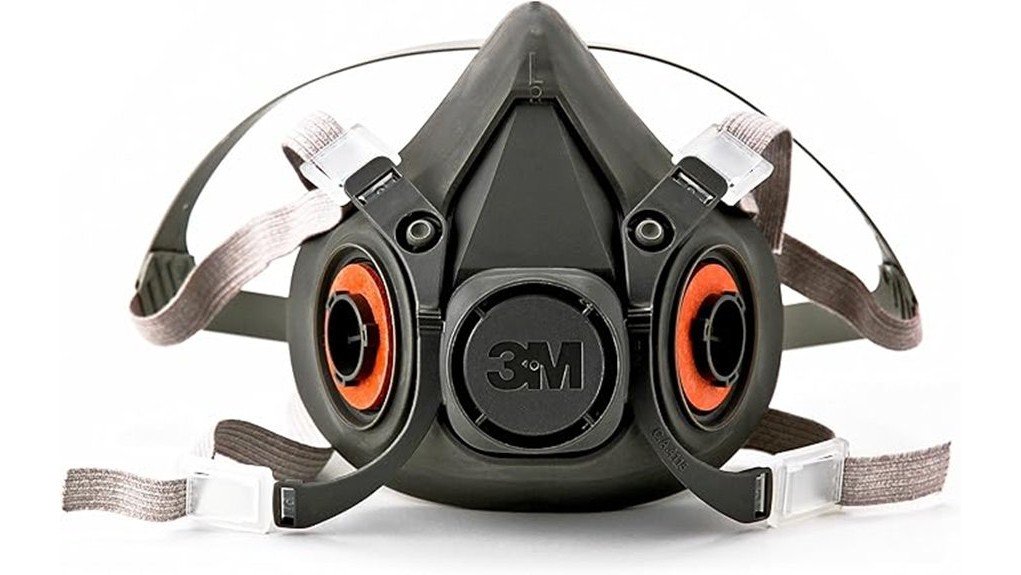
The 3M 6300 respirator is the large-size half facepiece in 3M’s 6000 series: a reusable, NIOSH-approved rubber-style mask that accepts bayonet filters and cartridges. This 3M 6300 respirator review is based on the Amazon listing and 3M’s published product information. It is worth considering for grinding, sanding, painting and shop clean-up with the right filters, but the mask alone does nothing without them. The 3M half facepiece respirator 6300 is a reusable mask that takes 3M filters.
3M 6300 Respirator Review at a Glance
| Item | Detail |
|---|---|
| Type | Reusable half facepiece, covers nose and mouth |
| Size | Large (6300). 6100 is small, 6200 is medium |
| Connection | Bayonet-style filters and cartridges |
| Filters | Usually sold separately; check what the listing includes |
| Intended use | Occupational and industrial use per 3M |
What It Is and Who It Suits
A half facepiece respirator is a mask that seals over your nose and mouth, with replaceable filters or cartridges attached. The facepiece is the reusable part, and the filters are the consumable part. That is the main reason welders and fabricators buy this type instead of disposable masks.
It suits people with larger faces, shop users who work around dust, paint or fumes regularly, and anyone who wants to choose a filter for the specific hazard. If you have a smaller face, the 6100 or 6200 will fit better, and the large size may leak.
How to Check It Fits Your Setup
- Confirm the size. The 6300 is large. A loose mask does not protect you, no matter how good the filter is.
- Choose filters for the hazard. Welding fume needs a particulate filter (commonly P100). Solvent or paint vapors need organic vapor cartridges. Dust is not the same as vapor.
- Check the helmet clearance. Put the mask on and see if your welding helmet closes over it without pressing on it.
- Test the seal. Do a positive and negative pressure check each time you put it on, following 3M’s instructions.
- Beards break the seal. Facial hair under the sealing edge lets contaminated air in.
Welding Fume and Respirator Safety
Welding fume can contain manganese, and hexavalent chromium when welding stainless steel. Zinc fume from galvanized steel causes metal fume fever. A respirator helps, but it does not replace ventilation or fume extraction.
- Do not weld galvanized, plated or unknown coated metals without proper ventilation and respiratory protection.
- A respirator is only effective with the correct filter and a good seal.
- Follow OSHA or your local rules if you use one at work, which can include medical evaluation and fit testing.
Pros and Limitations
Pros
- Reusable facepiece with replaceable filters keeps ongoing cost to the filters.
- Bayonet connection works with a wide range of 3M filters and cartridges.
- Adjustable head straps help with fit.
Limitations
- Filters usually cost extra.
- Large-only size; not for everyone.
- Not a substitute for ventilation, eye protection or a welding helmet.
- Marked for occupational use and needs a proper fit to work.
Care Tips
- Wash the facepiece with mild soap and warm water, rinse and air dry.
- Inspect valves, straps and sealing surfaces before each use.
- Store in a sealed bag, away from dust, sunlight and chemicals.
- Replace filters when breathing gets harder or the filter is damaged.
Alternatives and Related Guides
- 3M gas mask filters for the cartridge side of the setup.
- Universal thread respirator hose if you are considering a hose setup.
- Hanuu gas masks for a full-face style option.
Frequently Asked Questions
Is the 3M 6300 respirator the large size?
Yes. In 3M’s 6000 series, the 6300 is the large facepiece, while the 6100 is small and 6200 is medium. If you are unsure, check the size guidance on the listing or 3M’s fit information, since a poor fit lets unfiltered air leak around the edges.
Are filters included with the 6300?
Typically the 6300 is the facepiece only, and filters or cartridges are bought separately. Check the listing to see exactly what ships. The facepiece uses 3M bayonet-style filters and cartridges, so match them to the hazard you are protecting against.
Can the 3M 6300 be used for welding fumes?
The facepiece can be paired with particulate filters suitable for welding fume, such as a P100 filter, but you must pick filters that match the metals and coatings involved. Ventilation is still needed, and you should check that the respirator fits under your welding helmet.
How often should I replace the filters?
There is no universal schedule. Replace particulate filters when breathing gets harder, when they are damaged or dirty, or per your workplace program. Replace chemical cartridges when you smell or taste contaminants or at the interval your cartridge instructions give.
Conclusion
The 3M 6300 is a well-known large facepiece that works as the base for a customizable respirator setup. Get the size right, buy filters that match your work, and keep ventilating.