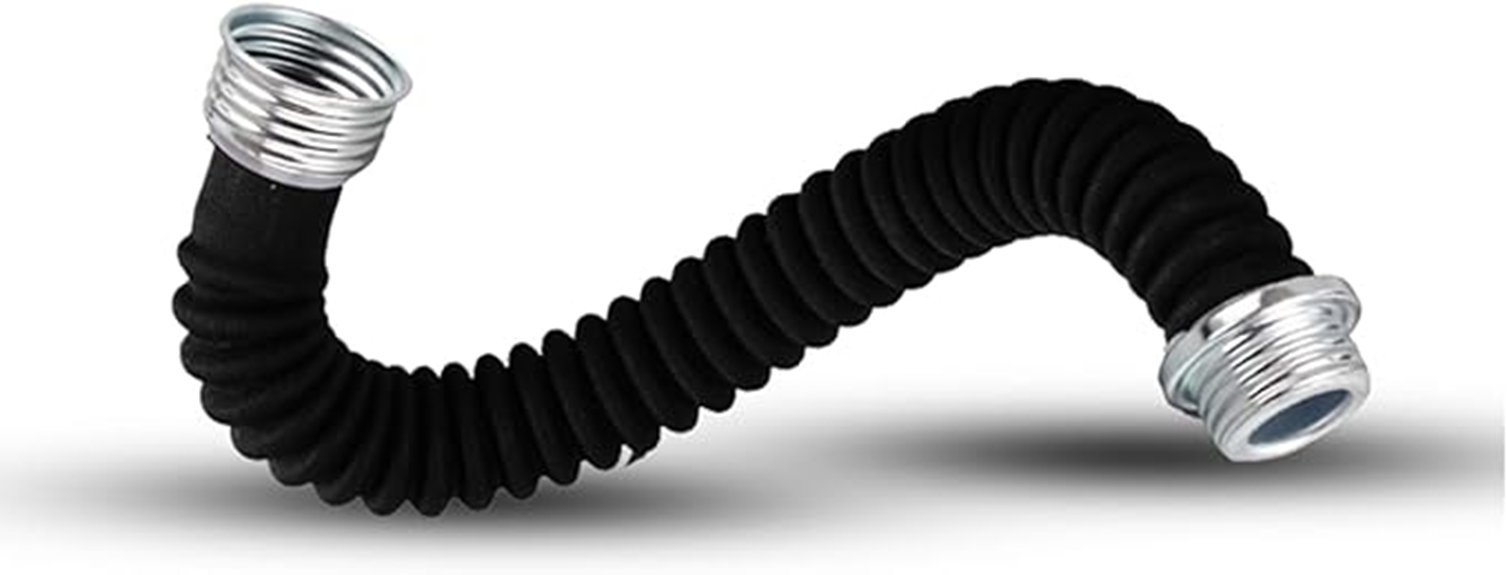
This 40mm universal thread respirator hose is a 20-inch flexible rubber tube with threaded ends, meant to connect a mask to a filter or other device that uses the common 40 mm thread. This 40mm respirator hose review is based on the Amazon listing. It can be useful for moving a filter off the mask for comfort or clearance, but it is only a connector, and you must confirm that both ends match your equipment.
40mm Respirator Hose at a Glance
| Item | Per the listing |
|---|---|
| Thread | 40 mm, described as universal |
| Length | 20 inches (about 50 cm) |
| Material | Rubber with mesh fabric outer layer |
| Hardware | Metal connector ends |
| Flexibility | Bends in all directions |
| Approvals | None stated; check the listing |
What It Is and Who It Suits
Many full-face masks and filters use a 40 mm screw thread. A short hose lets you mount the filter on your belt or chest rather than hanging from the mask, which can reduce weight and help the mask fit under a welding helmet or hood.
It suits hobby and shop users who already own a compatible mask and filter and want more flexible placement. It is not a complete respiratory system, and it does not provide clean air by itself.
How to Check It Fits Your Setup
- Check both thread types. Make sure your mask and your filter each use the 40 mm thread.
- Check approval. A respirator is approved as a complete assembly. Adding a third-party hose may not be covered by the maker’s approval, particularly for certified work or PAPR use.
- Check for male and female ends. The hose needs to connect your mask to your filter in the right direction.
- Consider filter weight. A heavy filter on a hose can pull on the mask. Mount it securely.
- Seal check. Perform your usual seal check after connecting the hose.
Pros and Limitations
Pros
- Moves heavy filters off the mask.
- Flexible rubber with a fabric cover for abrasion resistance.
- Standard-thread format that works with many masks.
Limitations
- No stated safety approval in the listing.
- Does not filter air or supply clean air on its own.
- Must be inspected for cracks and leaks.
Welding and Respirator Safety
Welding fume can contain manganese, and hexavalent chromium when welding stainless steel, and zinc fume from galvanized steel. A mask and filter help, but ventilation or fume extraction still matters.
- Use filters suited to the work, such as P100 particulate filters for welding fume.
- Don’t use a gas mask filter for fumes unless it is rated for them.
- Keep the hose away from hot work and spatter, which can burn or melt rubber.
- Check that your helmet closes without pressing on the mask or hose.
Alternatives and Related Guides
- Gas mask filters for the filter side.
- 3M 6300 half facepiece respirator for a mask with bayonet filters.
- Hanuu gas masks for a complete mask.
Frequently Asked Questions
What does a 40mm thread on a respirator hose mean?
It refers to the 40 mm screw thread commonly found on full-face gas masks and some filters, often described as the EN 148-1 standard thread. A hose with this thread lets you move the filter away from the mask. Always check that your mask and filter use the same thread.
Can I use this hose with a PAPR?
The listing says it is compatible with various respirators and PAPR systems, but PAPR makers use specific hoses, couplings and approvals. Using a third-party hose may change airflow and void the maker’s approval. Check your PAPR manual before using any hose that is not specified for it.
Does the hose filter the air?
No. It is only a connecting tube. Protection comes from the mask seal and the filter or cartridge you attach, which must be rated for the hazard, such as P100 for welding fume particulates or an organic vapor cartridge for solvents.
How do I know if the hose needs replacing?
Replace it if the rubber cracks, hardens, kinks permanently or if the threaded ends no longer seal. Inspect before each use and perform a seal check with the mask. A leaking hose lets unfiltered air in, so don’t use a damaged one.
Conclusion
This hose is a simple connector for people with compatible 40 mm masks and filters. Confirm threads and approval needs, inspect it often, and never treat it as protection by itself.