Angle grinder jigs can make metal cuts easier to repeat, but they are useful only when they support the workpiece or a manufacturer-approved cutting attachment. A homemade guide must never replace the wheel guard, side handle, correct cut-off wheel, or two-handed control.
The five shop fixtures below address common problems: straight cuts, repeatable miters, rolling pipe, controlled cutting depth, and safer wheel changes. Each design stays separate from the grinder’s switch and spindle system, and each setup should be tested on scrap before you cut a finished part.
Quick Answer
Useful angle grinder jigs include a clamped straightedge, an adjustable workpiece stop, a pipe V-block, a manufacturer-approved depth-control footplate, and a wheel-change station. They can improve repeatability, but only when the work is clamped, the correct cutting guard and wheel are fitted, and the grinder remains under two-handed control.
Key Takeaways
- Use a jig to locate and clamp the workpiece; do not build a fixture that defeats the guard, side handle, or switch.
- Match the wheel diameter, type, arbor, and rated speed to the exact grinder and cutting guard.
- Support both sides of a cut so the kerf cannot close and pinch the wheel.
- Stop the grinder and wait for the wheel to stop before moving pipe, changing an angle, or adjusting a jig.
- Use a manufacturer-approved footplate or depth-control guard instead of attaching a homemade shoe to the grinder guard.
At a Glance
| Time Required | About 20–90 minutes per jig or fixture, plus a scrap test cut |
| Difficulty | Beginner to intermediate; welding is optional for most designs |
| Tools Needed | Angle grinder with model-specific cutting guard and side handle, clamps, square, scribe, drill, and optional welder |
| Cost | Low to moderate; it depends on available steel, clamps, hardware, and any approved guard or footplate |
What’s in This Article
- Angle Grinder Jig Safety Checklist
- Planning, Materials, and Cut Offset
- Simple Straight-Edge Guide Jig
- Adjustable Angle Stop for Repeatable Miters
- Pipe/Tube Cutting Saddle Jig
- Cut-Off Wheel Depth Limiter Jig
- Quick-Change Flange and Wheel Holder Station
- Common Jig Problems and Fixes
- Final Tips for Safer, Faster, and More Accurate Cuts
- Frequently Asked Questions
- Quick Recap
- Sources
Angle Grinder Jig Safety Checklist
A jig can improve alignment, but it cannot control a damaged wheel, the wrong guard, a loose workpiece, or a closing kerf. Before every cut, follow the grinder manual and confirm that the setup leaves room for the guard and both hands.
Warning: Never remove the wheel guard, lock the trigger on, mount a toothed saw blade, or attach a homemade shoe directly to the guard. Stop and disconnect power before changing a wheel, moving a stop, or adjusting any fixture.
- Read the manual for the exact grinder model and use the specified cutting guard, side handle, flanges, and wheel type.
- Make sure the wheel’s rated speed is at least equal to the grinder’s maximum marked speed, and confirm the diameter, thickness, and arbor fit the tool.
- Inspect the wheel for chips, cracks, warping, moisture damage, or other defects before mounting it.
- Wear safety glasses or goggles and a face shield, hearing protection, snug work gloves when appropriate, and close-fitting natural-fiber or flame-resistant work clothing. Use respiratory protection only when the material, coating, ventilation, and hazard assessment require it.
- Clear sparks from fuel, solvents, sawdust, rags, batteries, and other combustible material. Follow workplace hot-work rules when they apply.
- Clamp the jig and workpiece separately. Support both sides of sheet, plate, tube, or pipe near the cut so the kerf cannot close on the wheel.
- Use the auxiliary handle and maintain a two-handed grip. Keep your body out of the wheel’s plane and stand where a kickback would be less likely to drive the tool into you.
- Let the wheel reach operating speed before it touches the metal. Do not restart the grinder with the wheel trapped in the cut.
A safe jig stabilizes the work or an approved cutting footplate; it never replaces the grinder’s guard, side handle, switch, or operator control.
Planning, Materials, and Cut Offset
Mild-steel flat bar, angle iron, plate, bolts, and clamps work well for shop fixtures because they resist flex and tolerate sparks. Deburr every edge, keep fasteners outside the wheel path, and avoid placing painted, oily, or flammable material in the spark stream.
Measure the offset before the final cut
- Install the correct wheel and cutting guard while the tool is disconnected.
- Place the approved footplate or the intended visual reference beside a scrap cut line.
- Measure from the reference edge to the wheel’s cutting plane.
- Clamp the fence at that offset and make a short scrap cut.
- Measure the result, correct the offset, and mark the final setting on the jig.
Note: Do not press the bare grinder housing or a standard wheel guard against a steel fence. A fence may guide a manufacturer-approved footplate; otherwise, use it as a visible alignment reference and workpiece stop.
🔧 1. Simple Straight-Edge Guide Jig
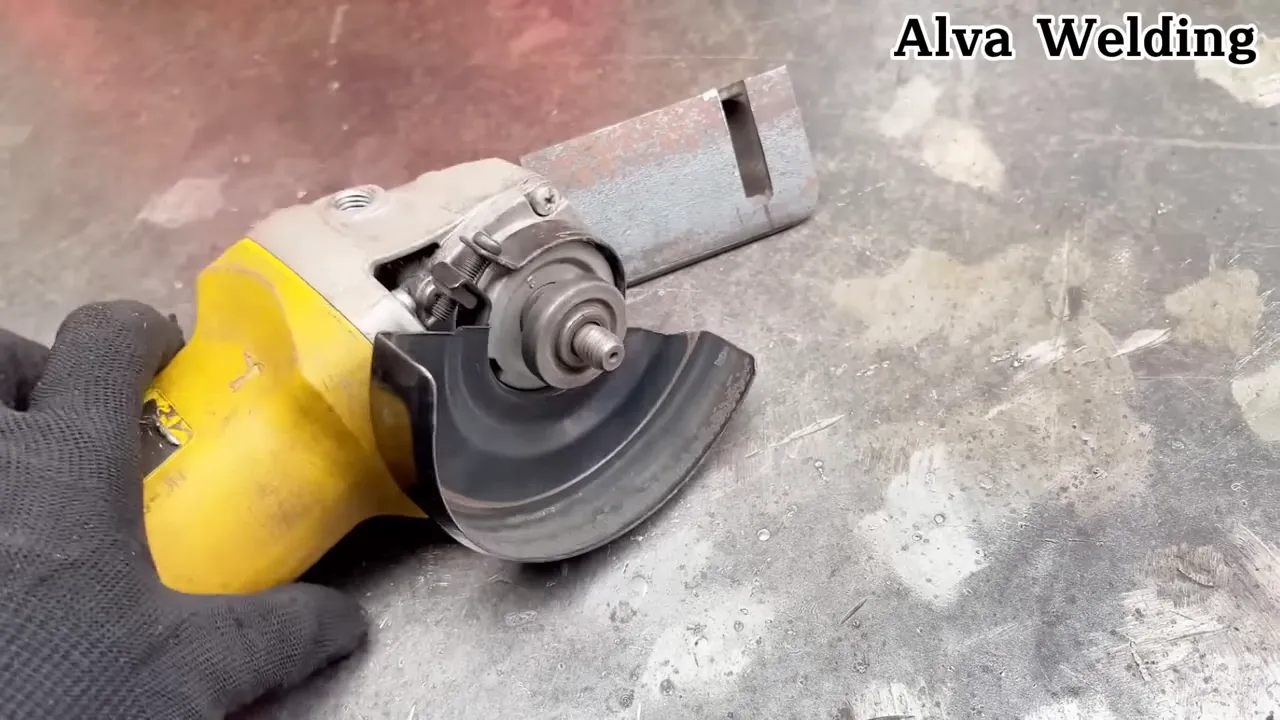
This basic jig provides the largest day-to-day benefit for sheet and plate. Clamp a rigid flat bar or angle iron parallel to the cut line so it supports an approved cutting footplate or gives you a clear visual reference.
The guide helps you maintain a consistent offset and reduces wandering on long cuts. It does not make the grinder behave like a track saw, so you still need two-handed control and a straight, untwisted feed.
Products Worth Considering

PACKAGE INCLUDES: A set of angle grinder and cutting machine bracket, 3 types of saw blades. Note: The colors of the wood cutting discs, metal cutting discs and stone cutting discs that come with them are randomly distributed. Please purchase with caution if you have any concerns

Premium metal construction for durability: Our angle grinder stand holder is made of high-quality metal material, ensuring strong hardness and long-lasting durability

Precisely grind rectangle and square shaped glass to your desired dimensions with confidence & accuracy!
Materials
- Rigid mild-steel flat bar or angle iron, about 1/4 inch thick for a long guide
- Two or more quick clamps sized for the workpiece
- Marker, scribe, square, and tape measure
- A model-approved cutting guard or footplate when the grinder manufacturer offers one
How to set it up and use it
- Mark the cut line and the waste side clearly.
- Measure the tested offset from the wheel to the guide edge.
- Clamp the guide at both ends. Add a center clamp if the bar can flex.
- Support the metal on both sides of the cut without placing a support directly under the wheel path.
- Start the grinder clear of the work, let it reach speed, and enter the cut gently.
- Use light, even pressure. Keep the wheel straight in the kerf and do not twist it toward the guide.
- If the wheel binds or the guide moves, release the switch and hold the grinder still until the wheel stops before withdrawing it.
Why it helps
- It improves straightness compared with an unmarked freehand cut.
- It creates a repeatable offset for several parallel cuts.
- It reduces accidental gouges caused by chasing a faint layout line.
Pro Tip: Make one short test cut on scrap, measure the true offset, and stamp or scribe that number on the guide for the wheel and footplate combination you used.
🪚 2. Adjustable Angle Stop for Repeatable Miters
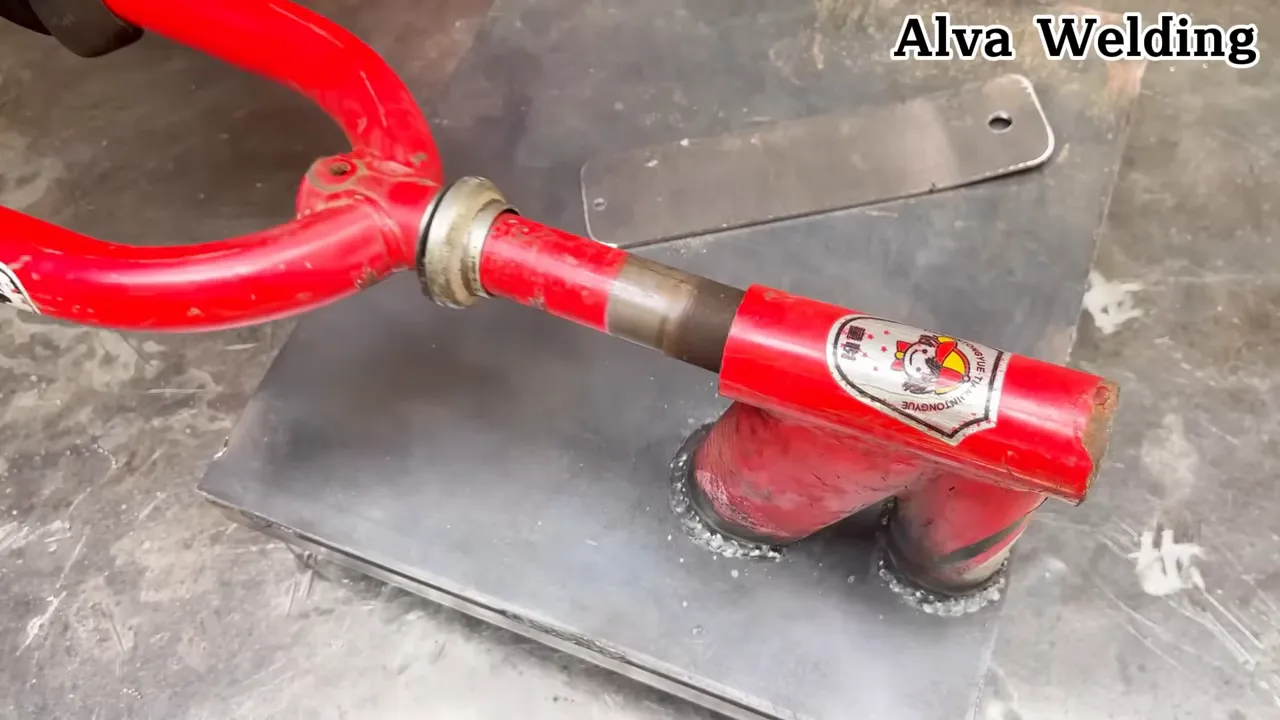
When you need the same miter more than once, an adjustable workpiece stop saves layout time. The stop mounts to a rigid base and holds each piece at the same angle while the grinder remains handheld.
This jig works well for frames, trim, brackets, flat bar, and square tube projects. Set the angle once, verify it on scrap, and clamp every workpiece firmly against the fence.
Products Worth Considering

Precise Angle Adjustment: The VEVOR knife grinding jig features a wear-resistant dial (85°-115°) for exact knife sharpening angle guide adjustments. Functioning as a professional knife bevel jig, it perfectly handles kitchen knives, outdoor blades, and craft knives, meeting precise bevel grinding needs for knife making

High Quality: The Angle Grinder Stand is made of premium plastic material, durable to use. And the spring tough spring returns quickly and does not deform after being stretched. Its non-slip silicone fixed shaft can provide more accurate positioning.

Fixed 45° chamfer design delivers precise, smooth and burr-free tile bevel edges. It avoids uneven cutting and rough margins, helping you achieve neat professional tiling finishing easily without extra polishing work.
Materials
- Rigid steel base plate or angle-iron base
- Pivot bolt or small hinge for the movable fence
- Slotted adjustment plate, scale, or protractor plate
- Locking bolt, washer, and nut
- Clamps for the base and workpiece
Tips for setup
- Set the fence to the desired angle with a square, bevel gauge, or protractor.
- Tighten the pivot and locking bolt, then add a second clamp if the stop can shift under vibration.
- Clamp the workpiece against the stop; do not rely on hand pressure.
- Support the offcut so it cannot drop, twist, or close the kerf.
- Check that the cutting guard, side handle, and both hands have clearance through the full cut.
- Test the setup on scrap and measure the finished angle before cutting matching parts.
When to use it
- Use it for trim, frames, brackets, or tube miters where several parts must match.
- Use it when repeated layout marks are causing cumulative error.
- Do not turn it into a homemade hinged grinder stand or lock the grinder switch on.
🔩 3. Pipe/Tube Cutting Saddle Jig
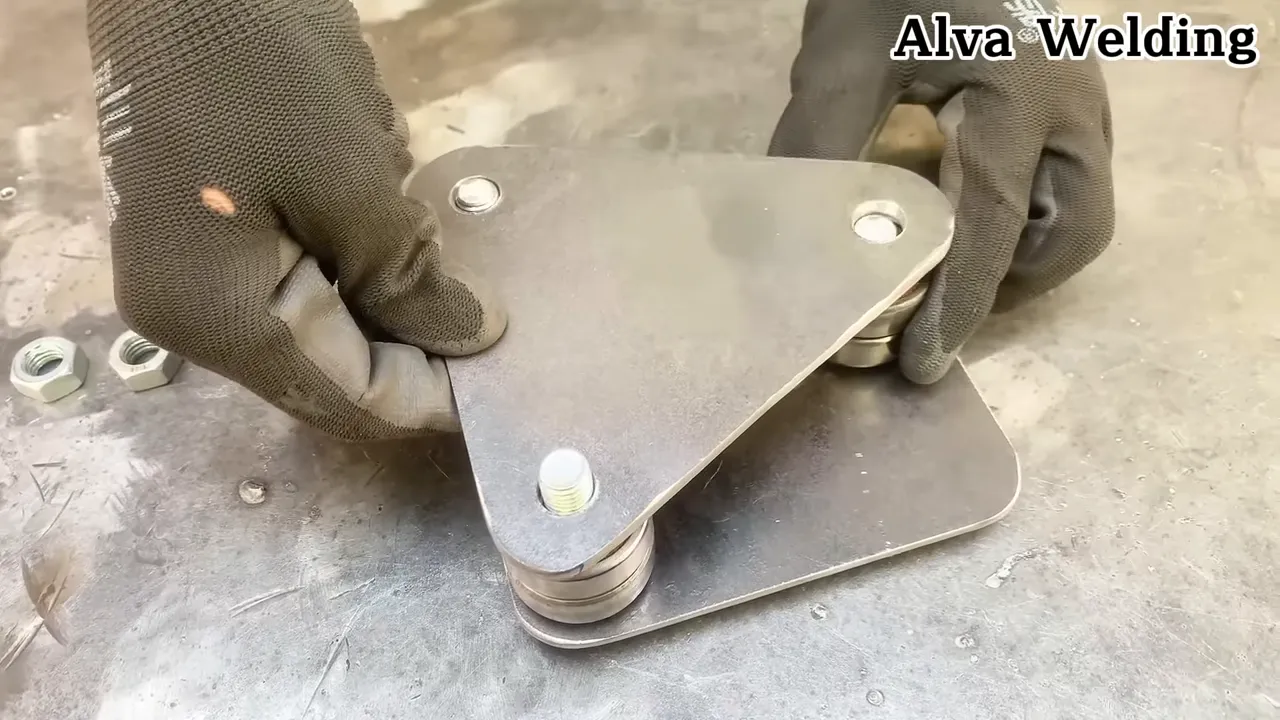
Round stock can roll, twist, or pinch a cut-off wheel during a freehand cut. A saddle jig uses a V-shaped cradle and clamps to hold the pipe steady while you follow a full-circumference layout line.
The V shape can support several pipe sizes. Removable stops help locate repeated lengths, while a strap clamp, chain clamp, or suitable hold-down prevents the pipe from rotating unexpectedly.
How to make it
- Weld or bolt two steel angles to a rigid base to form a 90-degree V-block cradle.
- Add slots or several holes for removable length stops.
- Add a strap, chain, toggle clamp, or other hold-down that cannot enter the wheel path.
- Clamp or bolt the entire saddle to the bench.
- Deburr all edges and confirm that the offcut has separate support.
How to cut pipe more squarely
- Wrap a straight strip of paper or a pipe wrap around the pipe and mark the full circumference.
- Clamp the pipe in the saddle and support the offcut.
- Make a shallow starter pass on the visible section of the line.
- Release the switch and wait for the wheel to stop completely.
- Loosen the hold-down, rotate the pipe to expose the next section, reclamp it, and continue the shallow pass.
- Repeat until the cut meets evenly around the pipe. Do not force the last section if the kerf begins to close.
Warning: Never hold round pipe by hand or rotate it while the wheel is moving. Stop the grinder, wait for a complete stop, reposition the pipe, and clamp it again before continuing.
🧰 4. Cut-Off Wheel Depth Limiter Jig
Over-cutting can damage a fixture, workbench, or part below the cut line. Depth control is useful for thin sheet, shallow slots, and work near another surface, but a homemade attachment on the grinder guard is not the safe default.
Use only a manufacturer-approved cutting guard or footplate that lists your exact grinder model, wheel type, wheel size, and application. Some approved attachments include a stable shoe and an adjustable depth stop; others are designed only for specific masonry or dust-control tasks, so read the attachment manual before using one on metal.
Setup notes
- Disconnect the plug or remove the battery.
- Install the compatible cutting guard or footplate exactly as the manufacturer directs.
- Fit the specified cut-off wheel and verify its diameter, arbor, thickness, and rated speed.
- Set the depth only slightly beyond the material thickness when the attachment instructions allow that setting.
- Test the depth on scrap and confirm that the shoe sits flat without contacting the wheel.
- Keep the footplate flat during the cut and avoid twisting or plunging the wheel.
Why use one
- It can limit accidental contact with a surface below the work.
- A broad footplate can improve stability and help keep a shallow cut consistent.
- It provides a controlled reference without drilling, welding, or clamping a homemade part to the wheel guard.
Note: Manufacturer attachments are model- and application-specific. For examples of purpose-built depth-adjustable footplates, see the Bosch GA50DC attachment and Makita cutting guard, then verify that the listed tool, wheel, and material match your job.
⚙️ 5. Quick-Change Flange and Wheel Holder Station
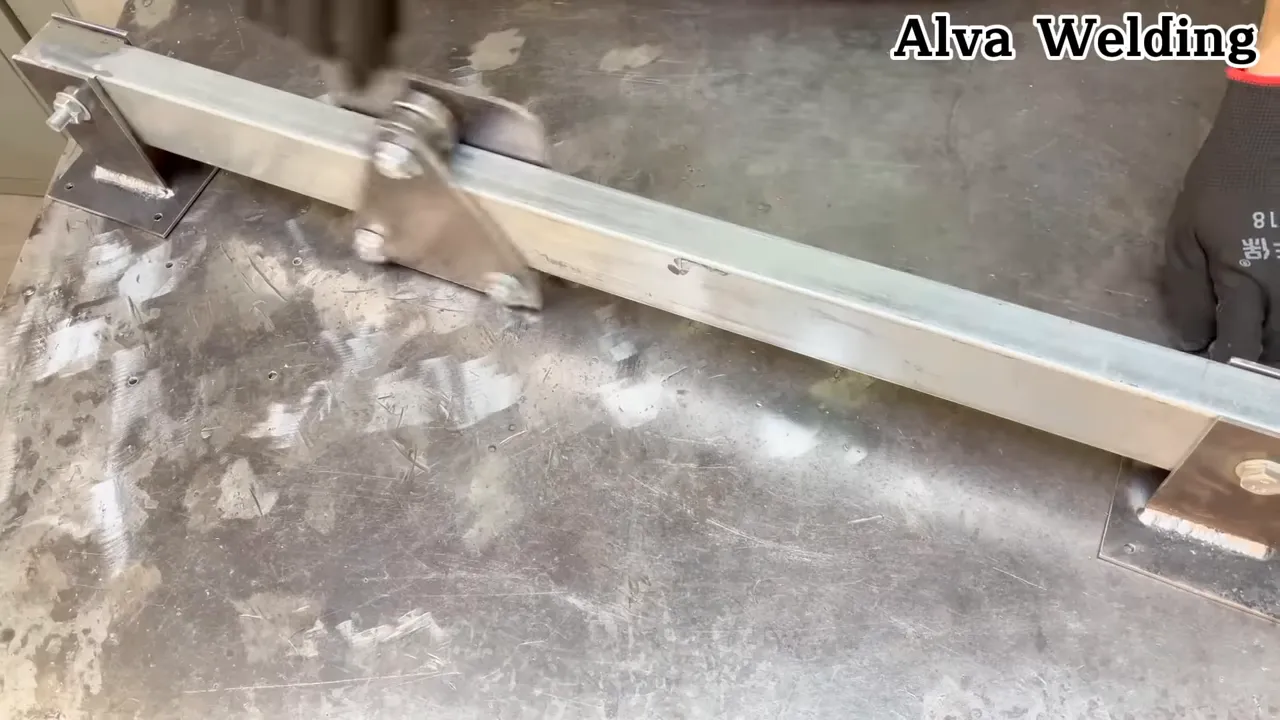
This fifth item is a setup fixture rather than a cutting guide. A small bench station can cradle the disconnected grinder and keep compatible wheels, guards, flanges, and the wrench organized for inspection and accessory changes.
The station reduces rushed wheel changes and makes it easier to keep matched parts together. Place it outside the spark path and away from moisture, impact, and metal debris.
What to keep on it
- Cut-off wheels and grinding wheels stored separately in clean, dry, protected holders or original packaging
- Model-compatible cutting and grinding guards
- Matched inner flanges, lock nuts, and the correct wrench
- A padded or shaped cradle that keeps the disconnected grinder from rolling
- Safety glasses or goggles, face shield, hearing protection, and other task-specific PPE
Safer wheel-change workflow
- Disconnect power and wait for the tool to cool.
- Clean the spindle, flange contact surfaces, and guard area without using compressed air toward your face.
- Inspect the wheel, flanges, nut, guard, cord, battery, side handle, and switch.
- Install only the wheel and guard combination listed in the grinder manual.
- Tighten the lock nut as directed; do not overtighten or improvise a spacer.
- After installation, position yourself and bystanders out of the wheel plane and run the tool at no load as the manual directs before cutting.
Workflow improvement
- You spend less time searching for parts between cuts.
- You reduce the chance of mixing incompatible guards, flanges, and wheel types.
- You keep abrasive wheels protected from impact and shop clutter.
Common Angle Grinder Jig Problems and Fixes
The cut drifts away from the line
Check for a flexible guide, a loose clamp, an incorrect offset, or side pressure on the wheel. Add support or another clamp, remeasure the offset, and make a new scrap test.
The wheel binds in the cut
Stop immediately and hold the grinder still until the wheel stops. Check whether the workpiece sagged, the offcut twisted, or the kerf closed. Reposition the supports near both sides of the cut and never restart with the wheel trapped in the kerf.
The grinder vibrates more than normal
Disconnect power and inspect the wheel, flanges, arbor fit, guard, and side handle. Replace a damaged or mismatched wheel and clean dirty flange surfaces. Do not continue cutting to “see if it clears up.”
Repeated miters do not match
Check the stop after the first piece and every few cuts. Vibration can loosen a pivot or locking bolt. Add a second clamp, use a larger washer, and verify the angle against a square or bevel gauge.
A pipe cut does not meet evenly
Remark the full circumference, make shallower passes, and reclamp after each stopped repositioning step. Check that the pipe is seated evenly in the V-block and that the offcut is not pulling the cut out of square.
✅ Final Tips for Safer, Faster, and More Accurate Cuts
These jigs can improve control, repeatability, and shop organization. A few minutes of setup can prevent wasted metal and reduce the temptation to hold awkward work by hand.
Use these rules every time you cut metal with an angle grinder:
- Follow the exact grinder and wheel manuals, including the required cutting guard and side handle.
- Wear eye protection and a face shield, hearing protection, close-fitting clothing, and task-appropriate hand and respiratory protection.
- Choose a wheel made for the material and cutting operation; never use a thin cut-off wheel for side grinding.
- Verify that the wheel’s rated speed is at least equal to the grinder’s maximum speed.
- Inspect the wheel and mounting parts before use, and remove damaged parts from service.
- Clamp the workpiece and jig securely, and support both sides of the cut.
- Keep the guard between you and the wheel, maintain a two-handed grip, and stay out of the wheel plane.
- Let the wheel reach speed before contact, use light pressure, and keep the wheel straight in the kerf.
- Stop and correct the setup if the wheel binds, the jig shifts, or vibration changes.
- Wait for a complete stop before setting the grinder down, moving pipe, or adjusting a stop.
- Keep sparks away from flammable material and do not use liquid coolant unless the manufacturer explicitly designs the system for it.
- Test every new setup on scrap before cutting the final piece.
🔍 Frequently Asked Questions
What materials work best for making simple angle grinder jigs?
Mild-steel flat bar, angle iron, and plate are practical because they resist flex and tolerate sparks. Use enough thickness and bracing for the jig’s span, deburr the edges, and keep bolts, clamps, paint, oil, and combustible material outside the wheel and spark paths.
Can these jigs be used with any angle grinder size?
The workpiece-support ideas can be scaled, but grinder attachments are not universal. The cutting guard, wheel diameter, arbor, flanges, rated speed, and any footplate must be approved for the exact grinder model. Check the tool and attachment manuals before building the jig around a specific setup.
Are custom angle grinder jigs safe?
They can reduce workpiece movement when they are rigid, separately clamped, and kept out of the wheel path. They become unsafe when they modify the guard, hold the switch on, block the side handle, force one-handed use, or mount the grinder in a homemade pivot that the manufacturer has not approved.
How do you keep repeat cuts accurate with grinder jigs?
Use a fixed reference edge, mark the waste side, clamp every part in the same position, and test the first cut on scrap. Check the fence offset or miter angle after the first piece and again during a long batch because vibration can loosen stops and fasteners.
Should you remove the grinder guard when using a jig?
No. Keep the correct guard installed and positioned between you and the wheel. Cutting may require a different guard from grinding, so use the type specified for the wheel and operation. A jig guides or supports the work; it does not replace the grinder’s protective parts.
Can I mount an angle grinder in a homemade cut-off stand?
Avoid a homemade stand that clamps the grinder body, locks the switch, removes the side handle, or changes the guard position. Use only a stand or mounting system that the grinder manufacturer lists as compatible, and follow its instructions. Otherwise, keep the grinder handheld and build the jig around the workpiece.
What should I do if a cut-off wheel starts binding?
Release the switch and hold the grinder motionless until the wheel stops. Do not twist the tool or pull out a moving wheel. Disconnect power, inspect the wheel and setup, then correct sagging material, a closing kerf, poor offcut support, or a misaligned feed before installing an undamaged wheel and restarting outside the cut.
🧾 Quick Recap
The best angle grinder jig is the one that solves your most common setup problem without modifying the tool. Start with a straightedge and solid work supports for long cuts, then add an angle stop or pipe saddle when your projects require repeatable shapes.
Keep every jig rigid, easy to clamp, and clear of the wheel, guard, and both hands. Use an approved depth-control attachment when needed, inspect every wheel change, and test the setup on scrap. Better support and careful setup make metal cutting more controlled; they do not remove the need for proper grinder technique.
Sources
- OSHA 29 CFR 1910.243: Guarding of Portable Powered Tools — portable abrasive-wheel guarding, inspection, and speed requirements
- OSHA 29 CFR 1926.303: Abrasive Wheels and Tools — construction rules for guards, wheel inspection, mounting, and eye protection
- OSHA: Safe Use of Portable and Hand-Held Power Tools — manufacturer instructions, PPE, accessory selection, guard use, and wheel speed
- Makita XAG04 Angle Grinder Instruction Manual — wheel compatibility, PPE, kickback prevention, support, and cutting technique
- Bosch GA50DC Grinder Attachment — example of a model-specific footplate with depth adjustment
- Makita 193794-5 Cutting Guard — example of a manufacturer-built adjustable cutting attachment