Disclosure: As an Amazon Associate, we earn from qualifying purchases. If you click a link on this page and make a purchase, we may receive a small commission at no extra cost to you.
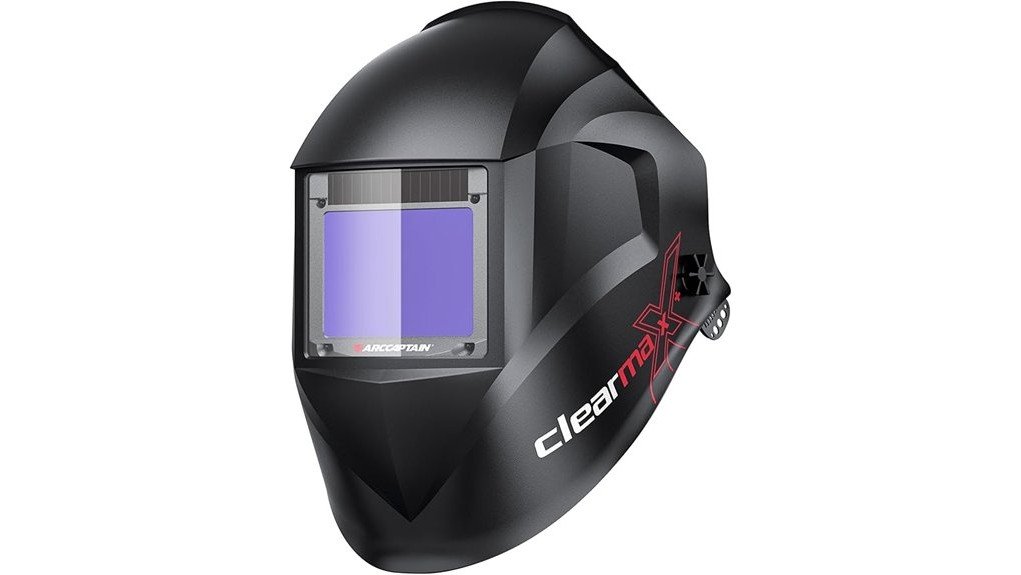
A welding helmet needs to protect your eyes, react fast, and stay comfortable long enough for real work. The ARCCAPTAIN Welding Helmet is built around auto-darkening performance, true-color viewing, and adjustable headgear, so it makes sense for welders who want a practical helmet without moving into a premium price tier. This review breaks down the article-supported specs, comfort features, battery setup, safety notes, and buying cautions. The main strength is its fast 1/25,000-second lens response, while the main caution is that you should verify exact viewing-area dimensions, warranty terms, and current listing details before buying.
Quick Verdict
Rating: 8.2/10
Best For: Welders who want fast auto-darkening, true-color clarity, adjustable headgear, and simple battery maintenance.
Bottom Line: The ARCCAPTAIN Welding Helmet is worth considering if you want a responsive auto-darkening helmet with four arc sensors and a broad shade range. It is not the best fit if you need verified premium-brand certifications, exact viewing-window dimensions, or a confirmed warranty before purchase.
| Specification | Detail |
|---|---|
| Brand | ARCCAPTAIN |
| Product type | Auto-darkening welding helmet |
| Auto-darkening response | Shifts from light to dark in 1/25,000 second |
| Arc sensors | Four high-performance arc sensors |
| Shade range | 3/4-8/9-13 |
| Optical clarity | 1/1/1/1 lens clarity with true-color viewing |
| Shell material | High-strength PA material |
| Heat resistance | Listed as resistant up to 100°C |
| Strength claims | Flexural modulus of 7,000 MPa and tensile strength of 120 MPa |
| Power and maintenance | Tool-free CR2450 battery replacement, low-battery warning, and built-in test button |
| Comfort features | Adjustable headgear, high-density foam padding, tilt angle adjustment, and lightweight design |
| Best use | General welding tasks where fast lens response, shade control, and comfort matter |
Before You Buy: The source details support the core features, but the viewing-area size, warranty period, and current listing claims should be checked on Amazon before purchase. Do not rely on a welding helmet for safety if the lens, sensors, headgear, or shell arrive damaged.
What Is the ARCCAPTAIN Welding Helmet?
The ARCCAPTAIN Welding Helmet is an auto-darkening welding helmet designed to protect your face and eyes while giving you a clearer view of the weld area. Its main feature is an auto-darkening lens that reacts in 1/25,000 second, which helps reduce the delay between arc strike and eye protection.
The helmet uses four arc sensors, a 3/4-8/9-13 shade range, and 1/1/1/1 optical clarity with true-color viewing. That combination is useful when you want a more natural view of the workpiece, weld pool, and surrounding joint area instead of the heavily tinted look found on some older or lower-grade lenses.
It is also built for longer sessions. The adjustable headgear, high-density foam padding, tilt adjustment, and lightweight design are meant to reduce neck strain and pressure points when you are welding, grinding nearby, or moving between setup and arc time.
Who Should Buy It?
Best For
- Welders who want a fast 1/25,000-second auto-darkening response.
- Buyers who prefer true-color viewing and 1/1/1/1 optical clarity for better detail.
- Users who need adjustable headgear, foam padding, and a tool-free CR2450 battery setup.
Skip If
- You need a helmet with verified certifications listed clearly before purchase.
- You want a confirmed exact viewing-area measurement without checking the live listing.
- You prefer a premium helmet from a legacy welding brand with a published full manual and support documentation.
Auto-Darkening Performance
The strongest performance claim is the 1/25,000-second switch from light to dark. For you, that means less time spent exposed to the arc flash during starts, restarts, and tack welds. It also makes the helmet more practical for work that requires frequent repositioning.
The four arc sensors matter because a helmet with more sensor coverage can respond more reliably when your head angle, torch position, or workpiece partially blocks the arc. It does not remove the need to test the helmet before welding, but it gives the lens more input points than a basic sensor setup.
The 3/4-8/9-13 shade range gives you flexibility for different welding brightness levels. You should still match the shade to your process, amperage, and comfort level, and you should follow the product instructions for sensitivity and delay settings.
Optical Clarity and True-Color Viewing
The helmet uses 1/1/1/1 optical clarity lenses, which is the best listed clarity class in the source article. This matters because distortion, inconsistent shading, and blurry lens edges can make it harder to track the weld pool and maintain a steady travel angle.
True-color viewing helps you see the workpiece with a more natural color balance. That can make the joint line, puddle, and surrounding surface easier to read, especially during longer welding sessions where eye fatigue becomes more noticeable.
The source article describes the helmet as having a large viewing area, but it provides conflicting dimensions in different places. For the cleanest buying decision, treat the viewing window as a feature to verify on the current Amazon listing before you order.
Materials, Build Quality, and Protection
The shell is described as high-strength PA material, with heat resistance up to 100°C. That gives the helmet a stronger durability profile than a basic lightweight shell, especially for shop use where heat, sparks, handling, and storage conditions can be rough.
The article also lists a flexural modulus of 7,000 MPa and tensile strength of 120 MPa. Those numbers support the claim that the shell is built for stiffness and impact resistance, but they should not be treated as a substitute for checking any current safety-standard or certification details on the listing.
For daily protection, the most important habits are simple: inspect the shell, lens, sensors, and headgear before use, replace damaged lens covers, and do not weld if the auto-darkening function fails the test button check.
Comfort, Fit, and Adjustability
A helmet can have strong lens specs and still feel frustrating if the fit is poor. This ARCCAPTAIN model includes adjustable headgear, high-density foam padding, and tilt angle adjustment, which helps you set the helmet closer to your preferred working posture.
The high-density foam is useful because it spreads pressure across the headgear contact points. That can reduce hot spots during longer sessions, especially when you are switching between clamping, tacking, checking fit-up, and welding.
The lightweight design is another practical benefit. Less helmet weight can reduce neck fatigue, but fit still matters. Take time to adjust the headband, tilt, and tightness before you start welding instead of adjusting it after the helmet becomes uncomfortable.
Pro Tip: Before your first weld, press the test button, adjust the headgear with gloves nearby, and confirm the helmet stays in place when you nod down. A comfortable fit before arc strike is safer than trying to fix the helmet mid-job.
Battery, Controls, and Convenience Features
The tool-free CR2450 battery replacement is one of the most practical convenience features. You do not want a helmet that takes extra tools or bench time just to replace a small battery during a work session.
The built-in test button helps you confirm that the auto-darkening function is active before you strike an arc. The low-battery warning is also useful because a weak battery can turn into an interruption at the worst time.
These features make the helmet easier to live with, especially for buyers who weld in a garage, small shop, or mobile setup where quick checks and simple maintenance save time.
How It Performs in Real Use
For Tack Welding and Stop-Start Work
The fast 1/25,000-second response is especially useful when you are making several tack welds, checking alignment, and restarting often. The lens response helps reduce the eye strain that can happen when your helmet lags behind repeated arc starts.
For Longer Shop Sessions
The adjustable headgear, foam padding, and lightweight design help during longer jobs. You still need to set the fit correctly, but the comfort features give you more control over pressure, tilt, and balance.
For Outdoor or Bright Work Areas
The true-color lens can help in bright work areas, but outdoor welding adds glare, reflections, and changing light angles. Test the auto-darkening response before welding outside, and adjust sensitivity according to the product instructions.
For Maintenance and Quick Checks
The CR2450 battery access, test button, and low-battery warning make routine checks easier. This is helpful if the helmet sits between projects and needs a quick readiness check before the next welding job.
Setup and Use Tips Before First Welding
- Test the lens first: Use the built-in test button before welding, especially after storage or battery replacement.
- Set the shade for the job: Use the 3/4-8/9-13 range according to your process, arc brightness, and the manual.
- Adjust sensitivity and delay: Fine-tune these settings when moving between low-amp work, brighter arcs, and outdoor light.
- Check the sensors: Keep the sensor area clean and unobstructed so the helmet can detect the arc properly.
- Inspect the shell and lens: Do not weld with a cracked shell, damaged lens, loose headgear, or failing auto-darkening filter.
Safety and Materials Notes
The high-strength PA shell, heat resistance claim, and impact-resistance language make the helmet sound durable, but welding protection should always be verified against the current listing, manual, and any safety standard you require for your worksite.
Auto-darkening helmets also depend on clean sensors, a working lens filter, proper shade settings, and a secure fit. If the lens does not darken during the test check, if the low-battery warning appears, or if the helmet was dropped hard enough to damage the shell, stop and inspect it before use.
For workplace welding, follow your employer’s PPE rules. For home or garage welding, use the helmet with other required protective gear, including gloves, flame-resistant clothing, and proper ventilation.
Pros and Cons
Pros
- Fast 1/25,000-second auto-darkening response for arc starts and tack welding.
- Four arc sensors improve detection coverage during different welding positions.
- 1/1/1/1 optical clarity and true-color viewing help reduce visual fatigue.
- Adjustable headgear, foam padding, and tilt adjustment improve comfort.
- Tool-free CR2450 battery replacement, test button, and low-battery warning simplify maintenance.
Cons
- Exact viewing-area dimension needs live-listing verification because the source copy was inconsistent.
- Warranty terms and certifications are not confirmed in the supplied article details.
- Not ideal for buyers who want a premium brand with a full published manual before ordering.
Is It Worth the Price?
The ARCCAPTAIN Welding Helmet looks like a strong value for the price if you care about fast lens response, true-color clarity, and simple comfort adjustments. Its feature set is better for buyers who want more than a bare-bones helmet but do not need to pay for a top-tier professional model.
You get the most value if you weld often enough to appreciate the 1/25,000-second switching speed, four sensors, and adjustable headgear. These features can make a real difference during repeated tack welds, longer practice sessions, and general garage or shop work.
The main limitation is verification. Since the supplied article does not confirm current warranty terms, certifications, or a single exact viewing-area size, careful buyers should check the current Amazon listing before deciding.
How It Compares to Alternatives
Compared with basic fixed-shade helmets, the ARCCAPTAIN model gives you auto-darkening convenience, variable shade control, true-color viewing, and comfort adjustments. That makes it easier to use for stop-start work and general welding practice.
Compared with higher-end helmets from brands such as Lincoln Electric, Miller, or ESAB, this ARCCAPTAIN helmet makes the most sense if you want a practical feature set at a more accessible value tier. Buyers who need a fully documented professional helmet for daily industrial use may still want to compare premium options before buying.
Frequently Asked Questions
Is the ARCCAPTAIN Welding Helmet good for beginners?
Yes, it can work well for beginners because the auto-darkening lens, test button, adjustable headgear, and shade range make setup easier. New welders should still learn proper shade selection, fit adjustment, and PPE safety before welding.
What shade range does it offer?
The article-supported shade range is 3/4-8/9-13. That gives you room to adjust the lens for different arc brightness levels, but you should match the shade to your welding process and the product instructions.
How fast does the lens darken?
The helmet is listed with a 1/25,000-second switch from light to dark. This is useful for repeated starts, tack welds, and jobs where you move in and out of the arc often.
Does it use a replaceable battery?
Yes, the article states that it uses tool-free CR2450 battery replacement. It also includes a low-battery warning, which helps you catch battery issues before they interrupt your work.
Can you use it outdoors?
You can use an auto-darkening helmet outdoors, but bright sunlight and reflections can affect how sensors behave. Test the helmet first, keep the sensors clear, and adjust sensitivity according to the manual.
How should you clean and maintain it?
Use a soft cloth for the lens and shell, and avoid harsh cleaners that could damage the viewing area or sensors. Check the sensors, headgear, battery warning, and lens covers before welding.
Who should skip this helmet?
Skip it if you need verified documentation for certifications, exact viewing-area dimensions, or warranty terms before purchase. It may also be less suitable for industrial buyers who must match a strict jobsite PPE list.
The Bottom Line
The ARCCAPTAIN Welding Helmet is recommended with caveats for welders who want fast auto-darkening, four arc sensors, true-color clarity, and adjustable comfort at a strong value tier. Its main strength is the fast 1/25,000-second lens response, while its main limitation is that some listing details, including exact viewing area, warranty, and certification notes, should be verified before purchase.