AWithZ UF20B Spot Welder Review
Building or repairing a battery pack calls for controlled welds, steady probe placement, and enough adjustment to match thin strip materials. The AWithZ UF20B is a capacitor spot welder with three trigger modes and 99 output settings, giving you more control than a basic fixed-output unit. Its Amazon title markets it as a 10.5 kW model, while the listing text states a maximum pulse welding power of 10 kW, so the advertised power should be treated as a seller claim rather than a lab-tested result. This review uses verified listing details and does not claim hands-on testing.
Quick Verdict
Rating: 8/10, recommended with caveats
Best For: Battery pack builders who want Auto, Manual, and Foot Pedal control for thin nickel-plated strip and similar materials.
Bottom Line: The UF20B offers useful control through 99 settings, three operating modes, a wide-voltage AC input, and an included foot pedal. Its main tradeoffs are the lack of independently verified output testing and the need to dial in settings carefully for each strip, cell, and joint.
Before You Buy: The Amazon title says 10.5 kW, but a product bullet describes 10 kW maximum pulse welding power. Also, the claimed 0.4 mm capacity depends on the metal, joint type, probe contact, and settings. Do not assume every 0.4 mm material will weld equally well.
Key Specifications
| Specification | Detail |
|---|---|
| Brand | AWithZ |
| Model | UF20B |
| ASIN | B0DP98RLCQ |
| Product type | Capacitor battery spot welder |
| Advertised power | 10.5 kW in the listing title; 10 kW maximum pulse power in a listing bullet |
| Output adjustment | 99 adjustable settings |
| Operating modes | Automatic, Manual, and Foot Pedal |
| Power source | AC power, 100-240V input listed |
| Warm-up time | About 5 minutes until the display shows ready, according to the listing |
| Listed battery formats | 18650, 14500, 21700, LiFePO4, and industrial battery applications |
| Listed materials | Nickel-plated sheet, stainless steel sheet, iron sheet, pure nickel, and copper, with limits and technique requirements varying by material |
| Claimed thickness | Up to 0.4 mm for listed thin metals; the listing also describes joining two 0.2 mm nickel-plated pieces |
| Body | Rounded aluminum-alloy shell |
| Listed weight | 1.84 kg, about 4.1 lb |
| Parcel dimensions | 20.8 × 20.09 × 10.49 cm, about 8.2 × 7.9 × 4.1 in |
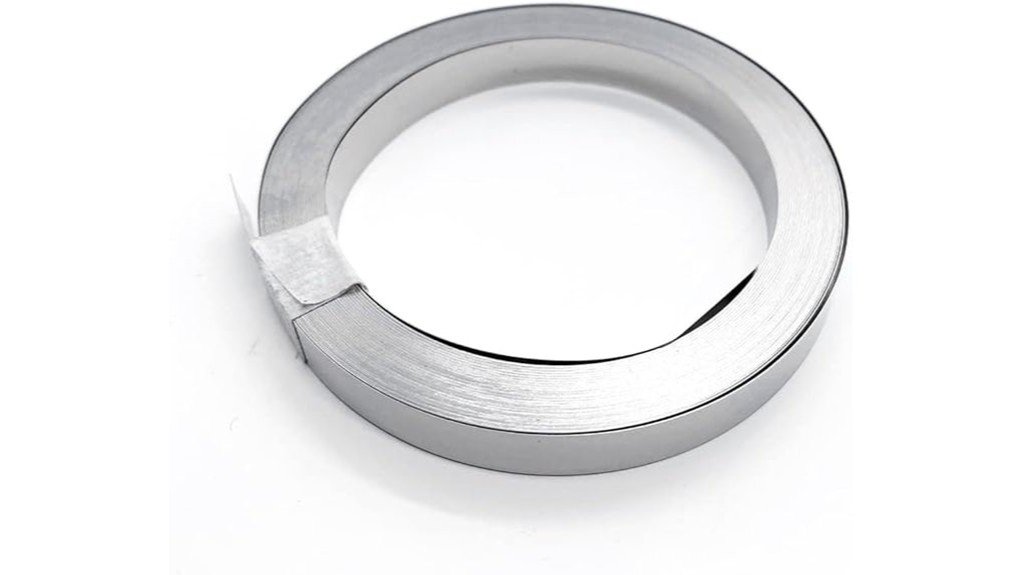
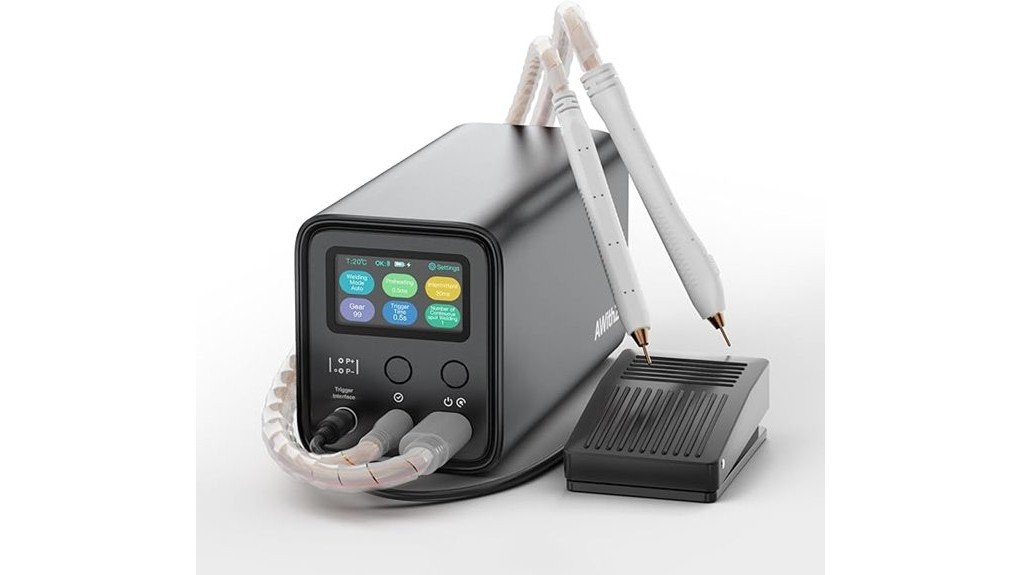
| Included components listed | UF20B unit, pair of welding pens, charger cable, foot pedal, and 2-meter nickel-plated sheet |
What Is the AWithZ UF20B Spot Welder?
The AWithZ UF20B is a bench-style capacitor spot welder designed mainly for battery-pack assembly and repair. Instead of using an arc like a MIG or stick welder, it sends a short pulse through two probes to join thin conductive material at small contact points. This makes it suited to battery tabs and thin sheet joints, not frames, brackets, or structural steel.
The product combines a powered base unit, two welding pens, a display, and three trigger methods. You can let probe contact trigger the weld in Automatic mode, press the pen button in Manual mode, or use the included foot pedal. The broad adjustment range is the main reason to choose this model over a simple handheld unit, but that range also means you must spend time finding a sound setting for your material.
Who Should Buy It?
Best For
- DIY and workshop users building 18650, 21700, or LiFePO4 packs.
- Users who need repeatable weld triggering through Auto, Manual, or Foot Pedal modes.
- Buyers who want 99 adjustment levels for testing different thin strips and joint setups.
Skip If
- You need a structural welder for thick steel, fabrication, or vehicle repairs.
- You want a cordless pocket welder that works without an AC connection.
- You need independently certified output data or a confirmed material chart for your exact strip alloy.
Feature-by-Feature Review
Capacitor Power and Five-Minute Start-Up
The UF20B stores energy in capacitors and releases it in short welding pulses. Amazon markets the model as 10.5 kW, although the feature text says the maximum pulse welding power can reach 10 kW. Either figure describes a brief pulse claim, not continuous welding output, so it should not be compared directly with the rated output of a conventional arc welder.
The listing states that the machine accepts 100-240V AC input and reaches its ready state in about five minutes. That short preparation period is practical for a bench setup, but the unit is not a cordless tool. Plan to use it near a suitable outlet and keep the cord and pedal lead away from the workpiece.
99 Adjustable Settings
The 99-step range gives you room to tune the pulse for different strip thicknesses, metals, probe pressure, and joint layouts. This is useful when moving from thin nickel-plated strip to a thicker connection, because one setting can produce a weak joint while the next material needs more energy.
More adjustment does not guarantee a better weld by itself. You still need clean contact surfaces, even probe pressure, sound tip condition, and test welds. Begin below the expected range, inspect the weld, and increase gradually rather than starting at a high setting.
Auto, Manual, and Foot Pedal Control
Automatic mode is the fastest choice for repeated work because contact can trigger the pulse after you position the probes. Manual mode uses the button on the welding pen, which gives you direct control without moving your foot. Foot Pedal mode keeps both hands focused on probe alignment and is often the easiest option for careful battery-tab placement.
The best mode depends on your workflow. Auto mode can improve speed, but an unintended contact may trigger a weld if you are not deliberate. Manual and pedal control may feel slower, yet they make the trigger moment easier to predict.
Material Range and Thickness Limits
The listing names nickel-plated sheet, stainless steel, iron, pure nickel, and copper. It also describes support for material up to 0.4 mm and specifically mentions two 0.2 mm nickel-plated pieces joined together. These are seller-stated limits, not a promise that every metal or 0.4 mm joint will produce the same result.
Electrical resistance changes with alloy, coating, width, surface condition, and joint stack. Pure nickel and copper can be harder to weld than nickel-plated steel. Treat the stated thickness as a starting point, then verify your exact material with scrap coupons and a destructive pull test before working on valuable cells.
Build, Controls, and Included Accessories
The rounded aluminum-alloy shell gives the base unit a sturdier exterior than a thin plastic enclosure. Amazon technical details list the product at 1.84 kg, or about 4.1 lb, with parcel dimensions of roughly 8.2 × 7.9 × 4.1 inches. It is compact enough for a small bench, but the welding pens, pedal, power cable, and work area require additional space.
The listed package includes the UF20B, a pair of welding pens, a charger cable, a foot pedal, and a 2-meter nickel-plated sheet. Package contents can change by seller or region, so compare the current “included components” section with the photos before ordering.
How It Performs in Real Use
For 18650 and 21700 Battery Packs
The combination of two probes, fine output adjustment, and pedal control is well suited to placing thin connection strips on cylindrical cells. The pedal lets you hold the probes square to the tab before firing. Consistent probe spacing and pressure matter as much as the selected gear, especially across a large pack with many repeated joints.
For LiFePO4 Pack Assembly
The listing also names LiFePO4 battery work. The UF20B may be useful when the cell terminals and chosen connectors are compatible with spot welding, but LiFePO4 cells come in many formats. Confirm the cell maker’s connection method before welding, because some terminals are intended for bolts, bus bars, or another assembly process.
For Small Workshop Repairs
Manual mode suits occasional repair work where each joint has a different position. You can align the probes, press the pen trigger, and inspect the result before continuing. The machine is less suitable for broad seams or large sheet-metal repairs because each pulse creates a localized spot rather than a continuous bead.
For Repetitive Bench Work
Auto mode can reduce trigger steps when you repeat the same joint on the same material. Before a production run, confirm several sample welds and check that the tips remain clean and evenly shaped. A setting that worked at the start may become less consistent if the tips wear, heat builds, or the contact surfaces become contaminated.
Pro Tip: Keep a small test strip from each material batch. Record the mode and setting that produced a strong pull-test result, then repeat the test whenever you change strip thickness, alloy, probe tips, or cell type.
Setup, Use, and Maintenance Tips
- Check the package first. Confirm that the base unit, welding pens, foot pedal, power cable, and sample strip match the current listing.
- Read the supplied instructions. Connect the pens and pedal only as directed, then place the unit on a stable, dry, nonflammable surface.
- Wait for the ready indicator. The listing describes about a five-minute start-up and an “OK” display before welding.
- Start with scrap material. Use the same alloy, thickness, and overlap that you plan to use on the finished pack.
- Keep probe pressure even. Uneven pressure or changing probe spacing can produce inconsistent weld nuggets.
- Inspect and clean the tips. Disconnect power before maintenance, and follow the manual for cleaning or replacing worn tips.
- Test joint strength. Pull-test sample welds away from live cells. A tab should fail in a predictable way rather than lifting off with almost no resistance.
Battery and Workshop Safety
Battery-pack work can create short circuits, high current, hot metal, and cell damage. Wear suitable eye protection, remove conductive jewelry, isolate exposed terminals, and keep loose tools away from cells. Do not weld a swollen, leaking, punctured, overheated, or otherwise damaged cell.
Use only the connection method approved for your cell design. Work in a clear area with an appropriate emergency plan, and stop if a cell becomes hot, vents, smells unusual, or shows damage. The UF20B is not a substitute for battery-design knowledge, insulation, fusing, cell matching, or a suitable battery-management system.
For nonbattery sheet work, stay within the machine’s stated thin-material purpose. The UF20B is not designed for load-bearing fabrication, automotive structures, pressure vessels, or repairs where weld certification is required.
Pros and Cons
Pros
- 99 settings provide a broad range for material testing and adjustment.
- Auto, Manual, and Foot Pedal modes support different work styles.
- Foot pedal helps you keep both hands focused on probe placement.
- 100-240V input and about five-minute readiness suit a fixed bench setup.
- Package listing includes welding pens, pedal, power cable, and sample nickel-plated strip.
Cons
- The title’s 10.5 kW claim and bullet’s 10 kW claim are not fully consistent.
- The 0.4 mm capacity is material- and technique-dependent, so trial and error is required.
- It needs AC power and is not intended for structural or thick-metal welding.
Is It Worth the Price?
The UF20B is worth considering as a mid-range bench spot welder if you will use the three trigger modes and 99-step adjustment. Those controls can save time compared with a basic unit when you work with several strip types or repeat many joints. The included pedal and welding pens also reduce the number of separate accessories you need to source before testing the machine.
It offers less value if you only need a few light DIY welds, want a pocket-size cordless tool, or expect verified industrial performance data. Since Amazon pricing and package contents can change, judge the current offer against the exact accessories, return terms, and support details shown at checkout.
How It Compares to Alternatives
The AWithZ UK1 is a simpler option to compare if you prefer a lower advertised 9,000W model with foot-pedal operation and 100 adjustment levels. The AWithZ P20B is marketed at a higher 14.6 kW output, but its listing describes only Automatic and Foot Pedal modes, so it may offer less trigger flexibility than the UF20B.
The AWithZ UKF10 is another close comparison if your priority is a listing that gives specific pure-nickel and nickel-plated-steel thickness claims. The UF20B makes the most sense when you value three operating modes, a broad 99-setting range, and an accessory bundle centered on battery-pack work.
Frequently Asked Questions
Is the AWithZ UF20B suitable for 18650 battery packs?
Yes. The Amazon listing names 18650 battery-pack work as a primary use. You still need compatible cells and strip, correct insulation, a suitable pack design, and test welds before assembling the final pack.
Can it weld 21700 and LiFePO4 batteries?
The listing names 21700 cylindrical cells and LiFePO4 applications. Confirm that your specific terminals are meant for spot welding, because some LiFePO4 cells use threaded studs or bus bars instead.
Does the UF20B really output 10.5 kW?
Amazon’s title calls it a 10.5 kW spot welder, while a product bullet states that maximum pulse welding power can reach 10 kW. Treat both as manufacturer or seller claims unless you have independent test data for the exact unit.
What is the maximum material thickness?
The listing claims up to 0.4 mm for several thin metals and describes joining two 0.2 mm nickel-plated pieces. Actual performance depends on alloy, coating, strip width, overlap, probe condition, pressure, and selected setting.
What comes with the AWithZ UF20B?
Amazon technical details list the UF20B unit, a pair of welding pens, charger cable, foot pedal, and 2-meter nickel-plated sheet. Check the current listing before purchase because regional bundles and seller packages may change.
Is the foot pedal necessary?
No. You can also use Automatic or Manual mode. The pedal is helpful when you want both hands to hold the probes steady before triggering a weld.
Can the UF20B replace a MIG, TIG, or stick welder?
No. It creates localized spot welds on thin conductive material. It is not designed for continuous beads, thick steel, structural fabrication, or certified repairs.
What is the most common setup mistake?
Starting too high without testing is a common mistake. Use scrap from the same material batch, begin conservatively, keep probe pressure consistent, and pull-test sample welds before touching a finished battery pack.
The Bottom Line
The AWithZ UF20B is a solid specification-based choice for battery-pack builders who want three trigger modes, 99 adjustment levels, and a compact AC-powered bench unit. Buy it for controlled thin-strip work and repeatable probe placement, but skip it for structural welding or when you need independently certified power and thickness data. Its strongest feature is control flexibility, while its main limitation is that real weld capacity still depends on careful testing and technique.
Ready to Buy?
Check the latest price, included components, and seller details before you decide.