Disclosure: As an Amazon Associate, we earn from qualifying purchases. If you click a link on this page and make a purchase, we may receive a small commission at no extra cost to you.
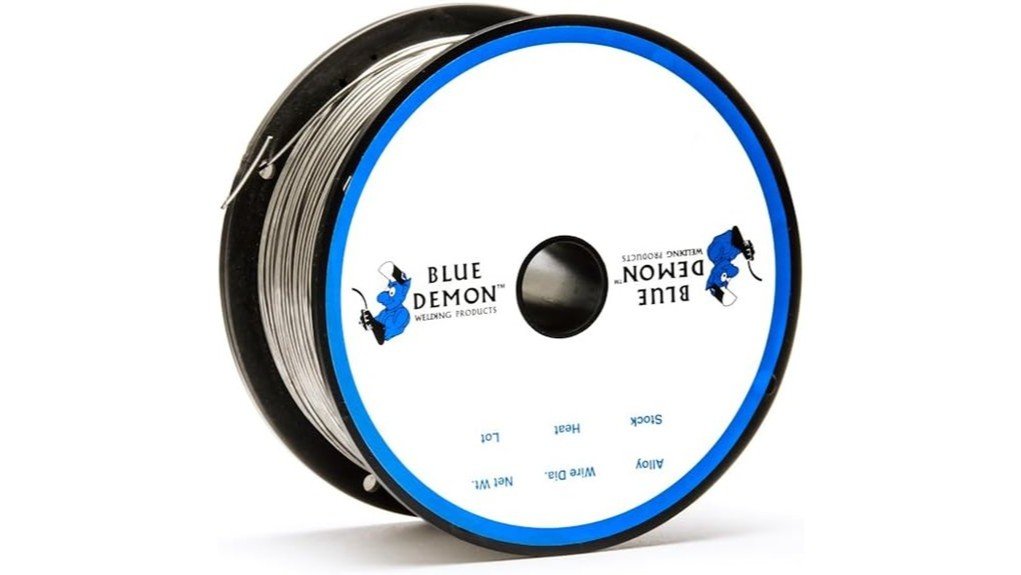
Joining stainless steel to mild steel without a shielding-gas cylinder can be difficult, especially when portability matters. The Blue Demon 309LFC-O .035-inch, 1-pound spool is a self-shielded stainless flux-cored wire made for that type of work. It offers a compact gasless setup, but it also has clear limits: it requires DCEP polarity and is intended for flat and horizontal welding positions. This review explains the fit, setup, performance, safety concerns, and buyer tradeoffs so you can decide whether it suits your welder and project.
Quick Verdict
Rating: 8.4/10, recommended with caveats
Best For: Repair and fabrication work that joins 309L stainless steel to itself or to mild steel without external shielding gas
Bottom Line: This wire gives you a portable, gasless way to make compatible stainless and dissimilar-metal joints. Its main tradeoffs are flat-and-horizontal-only positioning, DCEP setup requirements, and a more active globular-transfer arc than many solid-wire users expect.
| Specification | Detail |
|---|---|
| Brand | Blue Demon |
| Model | 309LFCO-035-01 |
| Product type | Self-shielded stainless steel flux-cored welding wire |
| AWS classification | E309LFC-O under AWS A5.22 |
| Wire diameter | 0.035 inch |
| Spool size | 1 pound |
| Listed dimensions | 4 x 4 x 2 inches |
| Shielding gas | Not required |
| Polarity | DCEP, direct current electrode positive |
| Welding positions | Flat and horizontal |
| Intended joint use | 309L stainless steel to itself or to compatible mild steel |
| Included components | Wire and spool |
| Storage | Keep clean, dry, and protected from moisture |
Key Takeaways
- The Blue Demon 309LFC-O is a self-shielded E309LFC-O stainless flux-cored wire, so you do not need an external gas cylinder.
- The reviewed variant is 0.035 inch in diameter on a 1-pound spool, model 309LFCO-035-01.
- It is intended for joining 309L stainless steel to itself or to compatible mild steel.
- Your welder must support 0.035-inch wire and DCEP polarity. Do not assume the DCEN setting used by some common gasless carbon-steel wires is correct.
- Blue Demon lists flat and horizontal welding positions, not vertical or overhead use.
- The small spool is practical for repair work and occasional use, but high-volume users may prefer a larger package.
What Is the Blue Demon 309LFC-O?
The Blue Demon 309LFC-O is a tubular stainless filler wire with flux inside the wire. That flux creates the shielding action during welding, which removes the need for a separate shielding-gas bottle. The reviewed product is the 0.035-inch, 1-pound version with model number 309LFCO-035-01.
Its E309LFC-O classification is the main reason to consider it. The product is intended for joining 309L stainless steel to itself or to compatible mild steel, making it useful for certain dissimilar-metal repairs and fabrication jobs. It is not a universal stainless wire, and it should not replace a project-specific welding procedure, engineering requirement, or code-approved consumable.
Who Should Buy It?
Best For
- Welders who need a gasless option for compatible 309L stainless-to-mild-steel joints
- Repair and field setups where carrying a shielding-gas cylinder is inconvenient
- Occasional users who prefer a compact 1-pound spool over a large production spool
Skip If
- You need vertical or overhead welding positions
- Your machine cannot run 0.035-inch wire on DCEP polarity
- Your job requires aluminum filler, a different stainless grade, or a qualified welding procedure that names another consumable
Before You Buy: Confirm your base metals, required welding position, spool fit, wire diameter, and polarity before ordering. This is a DCEP wire limited to flat and horizontal positions, so it is not a direct substitute for every gasless flux-core wire.
Compatibility and Joint Selection
The product description supports two core uses: welding 309L stainless steel to itself and joining 309L stainless steel to compatible mild steel. This makes the wire most relevant when you need the chemistry and crack resistance associated with a 309L-type filler for a suitable dissimilar-metal joint.
Do not treat “stainless steel” as one interchangeable material group. Different stainless grades, service temperatures, corrosion environments, and code requirements can call for different fillers. For structural, pressure-containing, food-contact, high-temperature, or safety-critical work, confirm the filler classification through the applicable drawing, welding procedure specification, engineer, or qualified welding professional.
Wire Size, Spool Format, and Machine Fit
The 0.035-inch diameter is common enough to fit many wire-feed machines, but your welder still needs the correct contact tip, drive setup, and output range. Check that the machine accepts a 4-inch-class, 1-pound spool and can be configured for DCEP. Also verify that the gun liner and feed path are clean and suitable for the wire size.
The 1-pound spool is easy to store and carry. It makes sense for repairs, prototypes, and occasional stainless work because you do not have to buy a large quantity. The tradeoff is cost per pound and more frequent spool changes if you weld regularly.
Pro Tip: Before striking an arc, make a short test weld on matching scrap. Confirm polarity, feed tension, travel angle, and bead appearance, then adjust the machine according to the wire label and welder manual rather than copying settings from carbon-steel flux-core wire.
Welding Positions and Arc Behavior
Blue Demon lists this wire for flat and horizontal positions. That limitation matters because gravity, slag control, and the wire’s transfer behavior make vertical and overhead work a different challenge. Plan the joint or reposition the workpiece so the weld remains within the approved positions.
The product listing describes a globular transfer method. The end of the wire can appear to ball up as metal transfers across the arc, which may look unusual if you are used to short-circuit solid-wire MIG. A stable result depends on correct DCEP polarity, suitable voltage and wire-feed settings, clean base metal, and steady travel.
Expect flux residue and cleanup after the weld. Remove slag between passes and before inspection or finishing. If the arc is erratic, stop and check polarity, contact-tip condition, feed tension, stickout, work-lead connection, and surface contamination before adding more heat to the joint.
Gasless Portability and Setup
The strongest practical benefit is the self-shielded design. You can leave the gas cylinder, regulator, and hose behind, which reduces the amount of equipment you need to transport and set up. That is useful for mobile repairs, farm or shop work, and jobs where cylinder handling is inconvenient.
Gasless does not mean weatherproof or maintenance-free. Strong wind can still disturb the arc and move fumes into your breathing zone. Moisture, rust, oil, coatings, and poor electrical connections can also reduce weld quality. Keep the spool dry, prepare the joint properly, and use wind protection only when it does not trap hazardous fumes.
How It Performs in Real Use
For Dissimilar-Metal Repair
This wire is most convincing when the job matches its stated purpose: joining 309L stainless steel to itself or to compatible mild steel. The gasless setup can simplify a one-off bracket, repair, or small fabrication task where bringing a cylinder would add time and bulk. Joint design and filler selection still need to match the service conditions.
For Mobile or Outdoor Work
The 1-pound spool and no-gas process make the setup easier to move than a conventional gas-shielded MIG package. You still need a suitable power source, dry wire, proper grounding, and control of wind, sparks, and fumes. Open-air work does not automatically provide enough ventilation, especially when walls, trailers, tanks, or other surfaces restrict airflow.
For Small Shop Projects
For occasional stainless repairs, the compact spool reduces storage needs and limits the amount of specialty wire sitting unused. The flat and horizontal position rating is manageable when you can rotate a small workpiece on a bench. It becomes less convenient when a fixed assembly forces vertical or overhead welding.
For Production or Code-Critical Work
The product may be useful only when it is specifically permitted by the approved procedure. Production welding often favors larger spools, documented parameters, controlled ventilation, repeatable joint preparation, and formal inspection. Buyers working under AWS, ASME, structural, pressure, or customer-specific requirements should not select filler wire from marketing copy alone.
Setup Tips and Common Mistakes to Avoid
- Set DCEP polarity: Connect the electrode side positive and the work side negative when your machine uses conventional polarity terminals. Follow the welder manual because terminal layouts vary.
- Match the feed system: Use a 0.035-inch contact tip and a drive setup that feeds the wire without slipping or crushing it.
- Clean the joint: Remove oil, paint, coatings, heavy oxide, and moisture from the weld area. Avoid chlorinated cleaners near welding heat.
- Use a test coupon: Tune the arc on scrap of the same material and thickness before welding the finished part.
- Stay within position limits: Rotate the work into flat or horizontal orientation instead of assuming the wire is approved for all positions.
- Clean between passes: Remove slag and inspect the bead before adding another pass.
- Store the spool dry: Return unused wire to a sealed, dry container after the machine cools and the spool is removed.
Welding Safety and Fume Control
Stainless steel welding can generate hazardous fumes that contain chromium and nickel. During welding, chromium can be converted to hexavalent chromium, which is a serious respiratory and health hazard. Use suitable local exhaust ventilation, keep your head out of the fume plume, and wear the eye, face, hand, body, and respiratory protection required for the task and workplace.
Do not assume that welding outdoors or in an open doorway guarantees safe ventilation. Confined or enclosed spaces require additional controls, testing, and procedures. Remove combustible materials, protect nearby people from arc radiation and sparks, and follow the wire label, welder manual, safety data sheet, and applicable workplace rules. For more detail, review OSHA guidance on controlling welding fumes and gases.
Pros and Cons
Pros
- Self-shielded process eliminates the external gas cylinder
- E309LFC-O classification suits the stated 309L stainless and compatible mild-steel joint use
- Compact 0.035-inch, 1-pound format works well for occasional repairs and portable kits
- DCEP requirement is clearly documented on the product listing
- Flat and horizontal ratings give clear guidance for joint positioning
Cons
- Not rated for vertical or overhead welding positions
- Requires DCEP, which differs from the DCEN setup used by some common self-shielded carbon-steel wires
- The 1-pound spool is less economical for frequent or production use and still requires slag cleanup and fume controls
Is It Worth the Price?
The Blue Demon 309LFC-O is best viewed as a specialty consumable rather than a general-purpose shop wire. It can offer strong value when you need its exact gasless 309L application and only want a small spool for repair or occasional fabrication. The saved cylinder setup and compact package may matter more than the lowest cost per pound.
It is less attractive for frequent welding, vertical or overhead work, or projects that can use standard carbon-steel wire. Larger spools usually make more sense for repeat production, while gas-shielded solid wire may be preferable when you prioritize a different arc character and less flux cleanup. Check the current seller, spool variant, and product details before ordering because price and offer status can change.
How It Compares to Alternatives
Blue Demon ER309L solid MIG wire is worth comparing when you already own a suitable shielding-gas setup and prefer a solid-wire process. Blue Demon 308LFC-O may better match certain 308-series stainless applications, but it is not an automatic substitute for the 309L dissimilar-metal use described here. E309L-16 stainless stick electrodes are another option for welders who use SMAW instead of a wire-feed machine.
The 309LFC-O makes the most sense when your priorities are a self-shielded wire-feed process, a small spool, and the stated 309L-to-mild-steel compatibility. Choose the alternative that matches the base metal, approved procedure, welding position, machine, and service conditions.
Frequently Asked Questions
Does Blue Demon 309LFC-O require shielding gas?
No. It is a self-shielded flux-cored wire, so the flux inside the wire provides the shielding action. You still need proper ventilation and fume control because gasless welding produces hazardous fumes and visible smoke.
What polarity should I use with this wire?
Use DCEP, direct current electrode positive. Do not copy the DCEN setup used by some self-shielded carbon-steel flux-core wires, and follow your machine manual when changing polarity connections.
Can I weld vertical or overhead with Blue Demon 309LFC-O?
The product listing specifies flat and horizontal positions. Reposition the work when possible, or choose a consumable and approved procedure intended for the required vertical or overhead position.
Can this wire weld aluminum?
No. This is a stainless steel flux-cored wire, not an aluminum filler. Aluminum requires a compatible aluminum filler, suitable equipment, and settings matched to the alloy and joint.
Will it work on every stainless steel grade?
No. The stated use centers on 309L stainless steel to itself or to compatible mild steel. Confirm the exact base metals and service requirements before using it on another stainless grade.
Why does the wire seem to ball up at the arc?
The listing describes a globular transfer process, so larger droplets can form at the wire tip before crossing the arc. Check DCEP polarity and tune the machine on matching scrap if the transfer is erratic or produces an unacceptable bead.
How should I store the 1-pound spool?
Keep it clean and dry in a sealed container away from moisture, grinding dust, and corrosive chemicals. Inspect exposed wire for contamination before reinstalling the spool.
Who should skip this product?
Skip it if you need vertical or overhead capability, aluminum filler, a large production spool, or a wire approved under a different welding procedure. It is also a poor fit for machines that cannot accept 0.035-inch wire or run DCEP.
The Bottom Line
The Blue Demon 309LFC-O .035-inch, 1-pound spool is a practical choice for welders who need a self-shielded wire for compatible 309L stainless and mild-steel joints in flat or horizontal positions. Its main strength is gasless portability, while its main limitations are DCEP-only setup, position restrictions, flux cleanup, and the small spool size. Skip it when your base metal, welding position, machine, or approved procedure calls for a different consumable.
Ready to Buy?
Check the latest price, seller, spool size, and product details before you decide.