Disclosure: As an Amazon Associate, we earn from qualifying purchases. If you click a link on this page and make a purchase, we may receive a small commission at no extra cost to you.
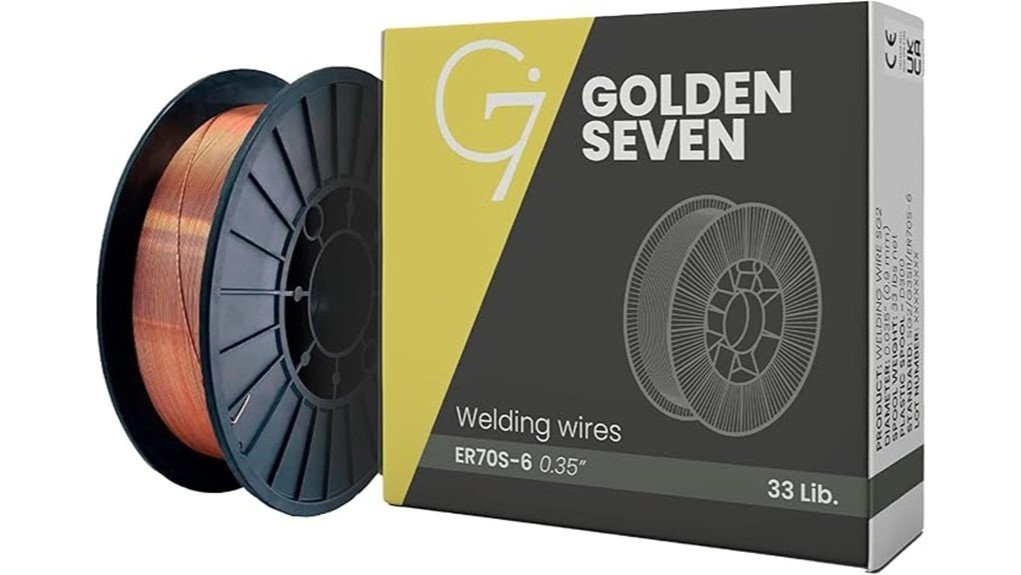
Choosing MIG wire sounds simple until your welds start spattering, feeding poorly, or leaving a rough bead on mild steel. The G7 GOLDEN SEVEN ER70S-6 MIG welding wire aims to solve that problem with a 0.035-inch solid wire format, a large 33-pound spool, and an ER70S-6 classification made for gas-shielded mild-steel welding. It makes the most sense if you already use a MIG machine that accepts 0.035-inch wire and a larger spool size. This review will help you decide where it fits, where it falls short, and what you should check before buying.
Quick Verdict
Rating: Recommended with caveats, 8.2/10
Best For: Welders who run gas-shielded MIG on mild steel and want a larger 33-pound spool for shop or repeat use.
Bottom Line: The G7 GOLDEN SEVEN ER70S-6 is a practical pick if you want 0.035-inch solid MIG wire with low-spatter performance and steady feed potential. Skip it if your welder cannot handle a 33-pound spool, you need gasless flux-core wire, or you weld aluminum or stainless steel.
| Specification | Detail |
|---|---|
| Brand | G7 GOLDEN SEVEN |
| Model / Classification | ER70S-6 |
| Product type | Solid MIG welding wire |
| Wire diameter | 0.035 inch |
| Spool size | 33 pounds |
| Base metal use | Mild steel and carbon steel applications |
| Wire design | Gas-shielded solid wire, not gasless flux-core wire |
| Key alloying benefit | ER70S-6 wire typically uses higher manganese and silicon deoxidizers for cleaner weld behavior on mild steel |
| Common shielding gas | Argon/CO2 mixes or 100% CO2, based on your welder settings and wire label |
| Best use | Shop welding, fabrication, repair work, farm equipment, and automotive mild-steel projects |
| Safety note | Use proper PPE, ventilation, shielding gas, and machine settings. Follow your welder manual and the product label. |
What Is the G7 GOLDEN SEVEN ER70S-6 MIG Welding Wire?
The G7 GOLDEN SEVEN ER70S-6 is a solid MIG welding wire for gas-shielded welding on mild steel. It uses a 0.035-inch diameter, which is a common size for general fabrication, repair work, and shop welding when your machine has enough output for the material thickness.
The 33-pound spool is the main buying difference compared with smaller 2-pound or 10-pound spools. You get more wire for longer projects, but you also need a welder or spool adapter setup that can accept the larger roll. This is not the right choice for every compact hobby welder.
ER70S-6 wire is known for its higher deoxidizer content compared with some basic mild-steel wires. In practical terms, that can help produce smoother beads and reduce some problems caused by light mill scale or minor surface contamination, though you should still clean the metal whenever possible.
Key Takeaways
- The G7 GOLDEN SEVEN ER70S-6 uses a 0.035-inch diameter and comes on a 33-pound spool.
- It is made for gas-shielded MIG welding on mild steel, not gasless flux-core welding.
- The ER70S-6 classification is useful when you want better puddle behavior and cleaner beads on mild steel.
- The large spool is efficient for repeat welding, but it may not fit smaller machines without the correct setup.
- You still need proper shielding gas, drive-roll tension, contact-tip size, PPE, and ventilation for the best results.
Before You Buy: Confirm that your MIG welder accepts 0.035-inch solid wire and can run a 33-pound spool. Many compact machines are designed for smaller rolls, so you may need an adapter, spool hub, or a different spool size.
Who Should Buy It?
Best For
- Welders using gas-shielded MIG on mild steel or carbon steel.
- Shop users who want a larger spool for repeat fabrication or repair jobs.
- Buyers who want 0.035-inch wire for stronger general-purpose welding than thinner light-duty wire may allow.
Skip If
- Your machine only accepts small spools or cannot feed 0.035-inch wire properly.
- You need gasless flux-core wire for windy outdoor work.
- You are welding aluminum, stainless steel, or another metal that needs a different filler wire.
Features of G7 GOLDEN SEVEN ER70S-6
The strongest feature is the combination of 0.035-inch wire, ER70S-6 mild-steel compatibility, and a 33-pound spool. This setup suits welders who do not want to stop often to change small rolls during fabrication, repair, or production-style work.
The ER70S-6 classification is a practical choice for many mild-steel jobs because the wire is designed with deoxidizers that help the weld puddle handle light oxidation and surface scale better than lower-deoxidizer wire. That does not mean you can ignore prep work. Clean steel still gives you better weld consistency, less contamination, and stronger-looking beads.
The article-supported low-spatter performance is useful because it can reduce cleanup time after the weld. Less spatter also helps you see the puddle more clearly, which matters when you are learning travel speed, stickout, and bead placement.
Wire Size and Spool Capacity
A 0.035-inch diameter gives you a useful balance of feed strength and deposition rate. It is commonly used for mild-steel projects where thin wire may feel too light, but heavier wire would need more machine output than your setup can provide.
The 33-pound spool is better for frequent use than a small hobby spool. It can save time if you weld regularly, but it also adds a compatibility concern. Check the physical spool capacity of your machine, the hub setup, the drive-roll groove, and the contact tip before you order.
Pro Tip: Match the drive-roll groove, contact tip, liner condition, and feed tension to 0.035-inch wire before judging the wire. Many feed problems come from setup, not the spool itself.
Weld Quality, Deoxidizers, and Spatter Control
ER70S-6 wire is often chosen because its higher manganese and silicon content helps the weld puddle flow and wet into mild steel. That can give you a smoother bead profile, especially on steel with light mill scale or minor surface oxidation.
The low-spatter claim matters most when you want less grinding, brushing, and cleanup after the weld. Spatter can still happen if your voltage, wire speed, stickout, travel angle, or gas coverage is off. Treat the wire as one part of the setup, not a cure for poor machine settings.
For cleaner results, remove oil, paint, heavy rust, and moisture from the workpiece before welding. ER70S-6 can tolerate less-than-perfect steel better than some wires, but dirty metal can still cause porosity, inconsistent beads, and weak welds.
Feedability and Handling
Good feed performance matters because inconsistent wire movement can cause burnback, stubbing, bird-nesting, and uneven beads. The original article notes that proper feed-roller tension is important, and that advice is worth following closely.
Set the tension high enough to feed smoothly, but not so tight that it crushes or deforms the wire. Also make sure the liner is clean, the contact tip matches 0.035-inch wire, and the spool brake does not drag too hard. These small setup details can change the whole welding experience.
The 33-pound spool also needs stable mounting. If the spool wobbles, binds, or over-spins, you may see inconsistent feed even if the wire itself is fine.
Gas, Polarity, and Machine Compatibility
This is solid MIG wire, so it requires shielding gas. Common choices for ER70S-6 mild-steel MIG include argon/CO2 blends and 100% CO2, but you should follow the wire label and your welder manual for the correct setup.
Solid MIG wire for mild steel commonly runs with DCEP reverse polarity. If your machine is currently set for flux-core welding, confirm the polarity before you start. Using the wrong polarity can make the weld harsh, unstable, and messy.
This wire is not a replacement for aluminum spool-gun wire, stainless MIG wire, or gasless flux-core wire. It is best treated as a mild-steel shop wire for gas-shielded MIG welding.
How It Performs in Real Use
For Shop Fabrication
In a garage or fabrication shop with stable gas coverage, this wire should make sense for brackets, frames, repairs, and general mild-steel projects. The large spool helps when you weld often and do not want frequent wire changes.
For Automotive Mild-Steel Repairs
The 0.035-inch size can work well for many automotive steel tasks, but it may be too much for very thin sheet metal on lower-powered machines. If you work on thin panels, compare your machine settings and material thickness before choosing this diameter.
For Farm and Equipment Repairs
ER70S-6 wire is useful for mild-steel repair work where light mill scale or imperfect surfaces are common. You should still grind away heavy rust, paint, grease, and moisture before welding because the wire cannot fix badly prepared metal.
For Outdoor Welding
This is where you need caution. Solid MIG wire depends on shielding gas, and wind can blow that gas away from the weld zone. If you weld outside, use wind protection and stable gas coverage, or consider gasless flux-core wire for windy field repairs.
Setup Tips Before First Use
- Check spool fit first: Make sure your machine accepts a 33-pound spool and has the correct hub support.
- Use the right contact tip: Install a 0.035-inch contact tip to avoid burnback, poor arc starts, and feed issues.
- Match the drive roll: Use the groove made for 0.035-inch solid wire, not a knurled flux-core-only setup unless your machine manual allows it.
- Dial in gas flow: Follow your welder manual and work conditions. Too little gas can cause porosity, while too much can create turbulence.
- Clean the metal: Remove oil, paint, heavy rust, and moisture before welding for a more stable arc and cleaner bead.
- Store it dry: Keep the spool away from moisture to reduce rust and feeding problems.
Compatibility and Safety Notes
Use this wire only with a MIG setup that supports solid mild-steel wire, shielding gas, and the correct polarity. If you are switching from flux-core wire, check the polarity, gas connection, liner condition, and drive-roll setup before welding.
Welding produces heat, sparks, UV exposure, fumes, and hot metal. Wear a proper welding helmet, gloves, jacket or sleeves, eye protection, and closed-toe footwear. Work in a ventilated area and follow safe welding practices for your material, coating, and workspace.
Do not weld on unknown coated, galvanized, painted, or contaminated metals without proper preparation and ventilation guidance. When in doubt, check your welder manual, the wire label, and a qualified welding professional.
Pros and Cons
Pros
- 0.035-inch diameter suits many mild-steel MIG welding jobs.
- 33-pound spool is useful for frequent welding and longer shop projects.
- ER70S-6 classification supports smooth puddle behavior on mild steel.
- Low-spatter performance can reduce cleanup when your settings are correct.
- Works for all-position gas welding when your machine, gas, and technique are dialed in.
Cons
- 33-pound spool may not fit smaller hobby MIG welders.
- Requires shielding gas, so it is not ideal for windy outdoor welding.
- Not suitable for aluminum, stainless steel, or gasless flux-core applications.
Is It Worth the Price?
The G7 GOLDEN SEVEN ER70S-6 is worth considering if you weld mild steel often enough to benefit from a 33-pound spool. Smaller spools can be easier for occasional repairs, but they run out faster and create more downtime during repeat projects.
Its best value comes from regular shop use, fabrication, maintenance work, or repair projects where 0.035-inch solid wire is already part of your setup. You get less value if your welder cannot hold the spool or if you mostly weld outside where gas coverage is hard to control.
Because prices and seller details can change, compare the current listing against known ER70S-6 alternatives before you buy. Focus on spool size, wire diameter, seller reliability, return policy, and whether the product matches your machine.
How It Compares to Alternatives
Compared with ER70S-3 wire, ER70S-6 is often the better pick when you want stronger deoxidizer support for mild steel with light mill scale or minor surface oxidation. Compared with gasless E71T-GS flux-core wire, this G7 GOLDEN SEVEN wire can give cleaner gas-shielded results indoors, but it is less convenient in windy outdoor conditions.
Popular mild-steel MIG wire alternatives include Lincoln Electric SuperArc L-56 ER70S-6 and Forney ER70S-6 wire. Those may be worth comparing if you want a familiar welding brand, smaller spool sizes, or easier local availability. The G7 GOLDEN SEVEN option makes the most sense if the current Amazon listing offers the exact 0.035-inch, 33-pound setup you need.
Frequently Asked Questions
Is the G7 GOLDEN SEVEN ER70S-6 wire gasless?
No. This is solid MIG welding wire, so it needs shielding gas. If you want to weld without gas, look for flux-core wire instead.
What metal is this wire best for?
It is best for mild steel and carbon steel applications. Do not use it as a substitute for aluminum, stainless steel, or specialty alloy filler wire.
Will a 33-pound spool fit every MIG welder?
No. Many compact welders use smaller spools and may not accept a 33-pound roll. Check your welder manual, spool hub, cabinet space, and adapter options before buying.
What shielding gas should you use with ER70S-6 wire?
Common choices include argon/CO2 blends and 100% CO2 for mild-steel MIG welding. Follow the product label and your welder manual because gas choice affects arc feel, penetration, and spatter.
Can you use this welding wire outdoors?
You can use it outdoors only if you protect the weld from wind and maintain proper shielding gas coverage. For windy field repairs, gasless flux-core wire is often easier to manage.
Why does feed-roller tension matter with this wire?
Too little tension can cause slipping, while too much can deform the wire and create feeding problems. Set the tension just high enough for steady feeding through the gun.
Does ER70S-6 wire let you weld dirty or rusty steel?
ER70S-6 handles light mill scale and minor oxidation better than some mild-steel wires, but it does not replace proper prep. Clean off heavy rust, paint, oil, and moisture before welding.
Who should skip this wire?
Skip it if your welder cannot run 0.035-inch wire, cannot hold a 33-pound spool, or you need gasless wire. You should also skip it for aluminum or stainless projects.
The Bottom Line
The G7 GOLDEN SEVEN ER70S-6 MIG welding wire is a smart buy for welders who need 0.035-inch solid wire for gas-shielded mild-steel work and can use a 33-pound spool. Its main strengths are low-spatter potential, ER70S-6 deoxidizer benefits, and long-spool convenience, while its main limitations are machine fit and the need for shielding gas.
Buy it if your MIG setup already supports this wire size and spool format. Skip it if you need gasless outdoor convenience, a smaller spool, or filler wire for a different metal.