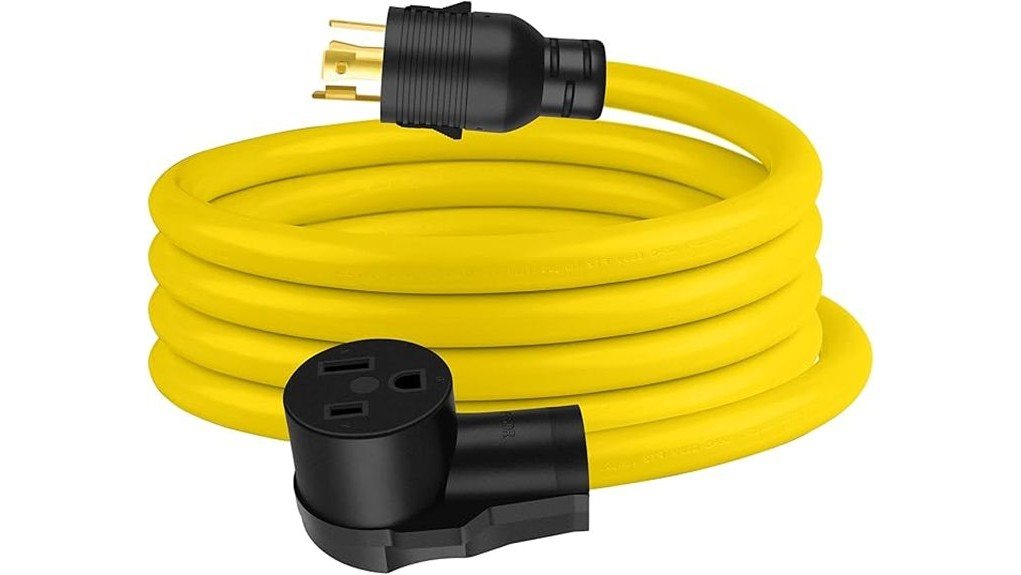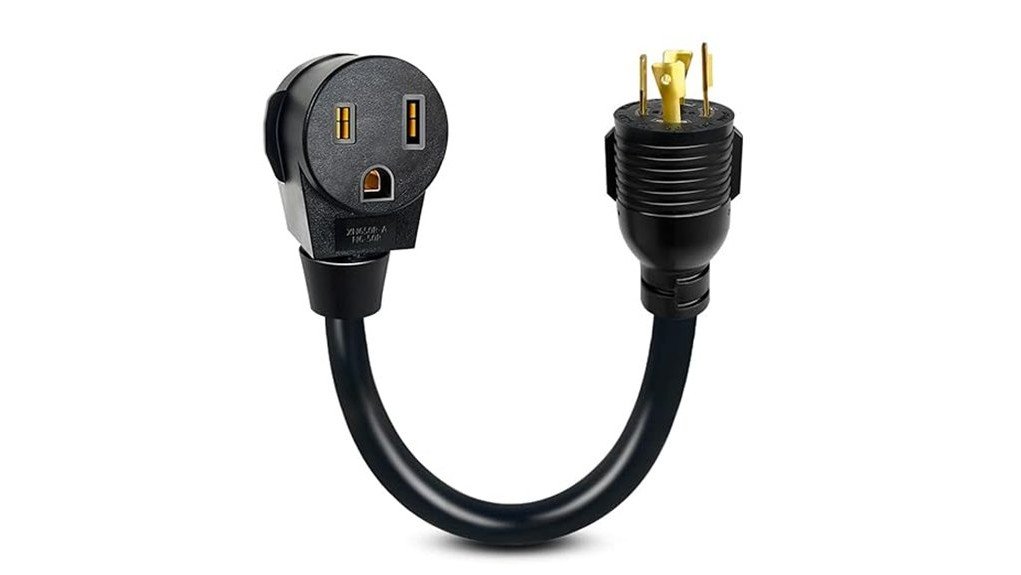
This generator to welding adapter cord connects a generator that has a NEMA L14-20 locking outlet to a welder that uses a NEMA 6-50 plug. The listing gives a 20 A, 125/250 V L14-20P plug, a 6-50R receptacle for 50 A welder cords, and 10 AWG, 3-conductor stranded copper cable. The key limit is the 20 A plug side: your welder must be able to run within what the generator outlet and this cord can supply.
This guide covers what to check on both ends, how to set up safely, and when a different adapter or a generator with a bigger outlet is the better choice.
Generator to welding adapter cord specs
| Item | Detail |
|---|---|
| Generator-side plug | NEMA L14-20P, 20 A, 125/250 V locking plug, per the listing |
| Welder-side receptacle | NEMA 6-50R, for welders that use a 6-50P plug |
| Cable | 10 AWG, 3-conductor stranded copper, per the listing |
| Terminals | Molded, electroplated copper terminals, per the listing |
| Length | Not confirmed here; check the listing before you order |
| Certification and warranty | Not confirmed here; check the listing |
Check that your welder can run from a 20 A generator outlet
A 6-50R receptacle is the standard 50 A welder outlet, but this cord starts at a 20 A generator plug. The limit is the generator outlet and the plug, not the 6-50 end. Many 240 V welders can only run at reduced output from a 20 A supply, and some will not start reliably.
- Find the rated input current on the welder data plate and in the manual, including any reduced-output setting for 20 A circuits.
- Compare it with the generator outlet rating and the generator running watts, not just the starting watts.
- Do not run other loads from the generator while welding.
- Use the shortest cord that reaches, and do not daisy-chain adapters or extension cords.
How to connect it safely
Shut the welder off and the generator off before connecting.
- Check the cord for cracks, loose terminals and bent pins.
- Plug the L14-20P end into the generator outlet and twist to lock it.
- Plug the welder 6-50P plug into the 6-50R end.
- Start the generator, let it settle, then turn on the welder.
- After a few minutes of welding, feel the plug and cord. Stop if they are hot, and recheck the amperage and generator rating.
Pros and limitations
Pros
- Lets a generator with an L14-20 outlet run a 6-50 welder plug
- Stranded 10 AWG copper cable is flexible for field use
- Locking plug stays connected on a vibrating generator
Limitations
- Limited to the 20 A plug and generator outlet rating
- Not a way to get 50 A out of a small generator
- Length, jacket type and certifications are not confirmed
- Do not use it with a welder that needs a neutral or a different plug
Alternatives
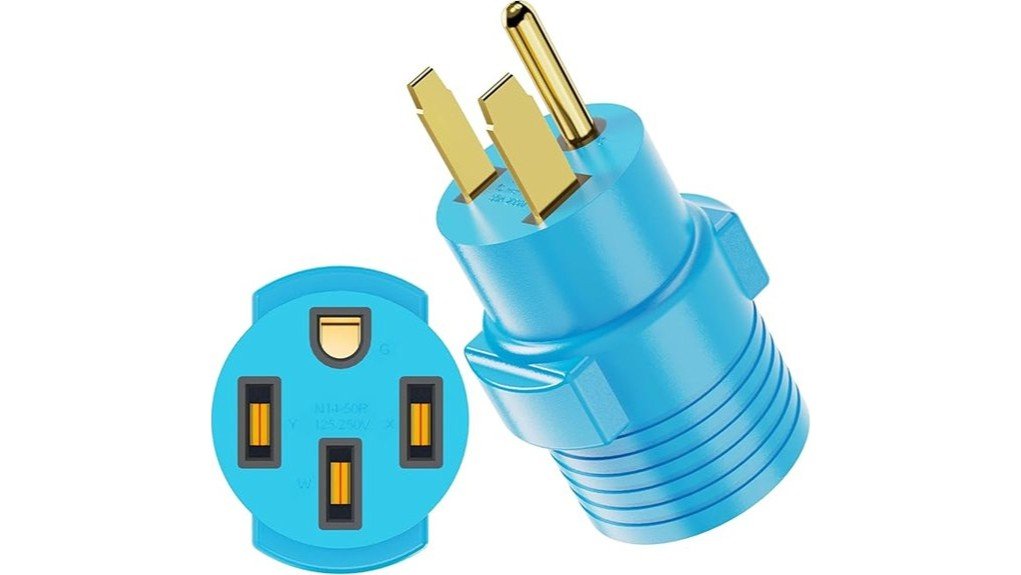
If your generator has a 50 A outlet, such as NEMA 14-50, you will want an adapter matched to that plug instead. See our NEMA 10-50P to 6-50R adapter review and welder adapter cord review for other plug combinations.
Related guides: How to use a generator for welding a car outdoors | NEMA 10-50P to 6-50R adapter review | Welder adapter cord review
Frequently Asked Questions
Can I run a 50 A welder from a 20 A generator plug?
You can plug it in, but the supply is limited to the 20 A plug and generator outlet. Check the welder manual for reduced-output operation and keep the weld current low enough that the input stays within the supply rating.
What does L14-20P to 6-50R mean?
L14-20P is a 20 A, 125/250 V locking plug that goes into a generator outlet. 6-50R is the 250 V receptacle that accepts the 6-50P plug on many welders.
Is this cord safe for outdoor use?
Check the listing for the jacket rating and keep connections out of water and off wet ground. Only use outdoors if the cord is rated for it.
How do you store the cord?
Keep it dry and coil it loosely without sharp bends. Inspect plugs and terminals before each use.