Disclosure: As an Amazon Associate, we earn from qualifying purchases. If you click a link on this page and make a purchase, we may receive a small commission at no extra cost to you.
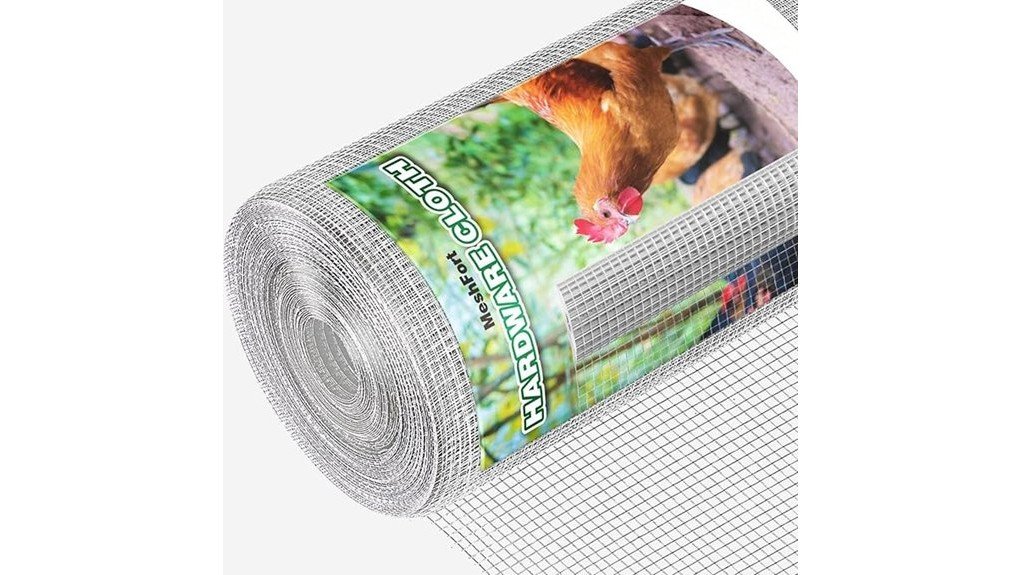
Keeping small animals away from a garden or creating a secure enclosure often comes down to choosing mesh with the right opening size and enough material for the job. This 1/2-inch hardware cloth comes in a large 48-inch-wide by 100-foot-long roll, giving you plenty of coverage for fencing, cages, garden barriers, and similar projects. Its galvanized finish is intended to improve rust resistance outdoors, while the mesh can be cut and shaped for different installations. The main limitation is that the supplied product details do not state the wire gauge, weld strength, brand, or exact base material, so you should confirm those details before using it for demanding containment or security work.
Quick Verdict
Rating: Recommended with caveats
Best For: Garden barriers, rabbit or chicken enclosure projects, and buyers who need a large roll of 1/2-inch mesh.
Bottom Line: The 48-inch by 100-foot size and galvanized finish make this hardware cloth a practical choice for large outdoor projects. However, the available product information does not specify wire gauge or weld strength, so confirm those details if your project requires heavy-duty containment.
| Specification | Detail |
|---|---|
| Product type | Hardware cloth / wire mesh |
| Mesh size | 1/2 inch |
| Roll width | 48 inches |
| Roll length | 100 feet |
| Finish | Heavy-duty hot-dipped galvanized finish |
| Weather-related benefit | Designed for improved rust and corrosion resistance |
| Typical uses | Garden barriers, rabbit enclosures, chicken coops, and other mesh projects |
| Installation | Can be secured with staples, screws, or suitable fencing posts depending on the project |
| Cutting | Can be cut with wire cutters or suitable heavy-duty cutting tools |
| Safety note | Cut edges can be sharp, so gloves and eye protection are sensible during cutting and installation |
What Is the 1/2-Inch Hardware Cloth?
This hardware cloth is a fine wire-mesh barrier with 1/2-inch openings. The roll measures 48 inches across and extends 100 feet, which makes it more practical for larger fencing and garden jobs than short sheets or small rolls.
The supplied product information highlights outdoor durability as a main selling point. Its heavy-duty hot-dipped galvanized finish is designed to resist rust and corrosion, and the original product description states that the material was subjected to salt-spray testing. Because independent verification was not available for this review, it is better to treat that testing information as a product claim rather than a guarantee of a specific service life.
The mesh is also intended to be easy to cut, bend, and shape. That flexibility makes it useful when you need to wrap a frame, cover an opening, build an enclosure, or create a barrier around plants.
Who Should Buy It?
Best For
- Gardeners who want a fine-mesh barrier around vegetables or plants.
- DIY users building rabbit, chicken, or similar small-animal enclosures.
- Buyers who need a large 48-inch by 100-foot roll for several projects or one long installation.
Skip If
- You need a confirmed wire gauge or weld-strength specification before buying.
- Your project requires a mesh opening smaller than 1/2 inch.
- You need a product with verified brand-specific warranty or certification information.
Before You Buy: The supplied details do not state the wire gauge or weld strength. If the mesh will be used where strong animals, heavy pressure, or demanding security is involved, check the current product listing to make sure its construction is suitable for that job.
Mesh Size and Coverage
The 1/2-inch mesh opening is the main feature that separates this product from more open fencing. The smaller openings are intended to make it harder for small animals to pass through the barrier, which is useful around garden beds and certain animal enclosures.
The roll size also matters. At 48 inches wide and 100 feet long, you get enough material for long garden runs, several enclosure panels, or multiple smaller DIY jobs. Before ordering, measure the total length and height of the area you plan to cover, then allow extra material for overlaps, corners, fastening points, and mistakes during cutting.
Galvanized Finish and Rust Resistance
Outdoor mesh is regularly exposed to moisture, soil, changing temperatures, and weather. This product uses a heavy-duty hot-dipped galvanized finish intended to improve resistance to rust and corrosion.
The original article also states that the hardware cloth was pre-tested through salt-spray testing. That is useful context, but it does not mean the mesh is completely rust-proof or that it will last for a guaranteed number of years in every climate. Coastal air, damaged coating, constant moisture, and cut edges can all create harsher conditions.
Regular inspection is therefore still worthwhile. Look for damaged areas, loose fasteners, bent sections, or developing corrosion, especially where the mesh contacts soil or is frequently wet.
Cutting, Shaping, and Installation
The hardware cloth is described as easy to cut and mold, which is useful when you need to fit it around frames, corners, posts, or irregular openings. Wire cutters are the most practical tool mentioned in the source article, although suitable heavy-duty cutting tools may also work.
For installation, the original guidance suggests staples or fencing posts for stability. Screws or other project-appropriate fasteners may also be used when you need to secure edges firmly to a frame. The best fastening method depends on the surface you are attaching the mesh to.
For better stability, keep the mesh evenly tensioned and secure the edges firmly instead of relying on only a few widely spaced attachment points.
Pro Tip: Measure and mark your cut line before trimming the roll. Leave enough extra mesh at edges and corners to make secure fastening easier, then check the finished installation for exposed sharp wire ends.
Practical Applications and Versatility
Garden Protection
The fine mesh can be used as a physical barrier around vegetable beds and other planted areas. The 1/2-inch openings are intended to help keep smaller animals from moving directly through the fence while still providing an open mesh structure.
For garden installations, pay extra attention to the lower edge. A barrier is only as useful as its weakest opening, so gaps between the mesh and the ground can reduce the benefit of using fine hardware cloth.
Rabbit and Chicken Enclosures
The original article identifies rabbit and chicken coops as typical uses. The 48-inch width can work well for many enclosure panels, while the 100-foot roll gives you flexibility when covering several sides or building more than one section.
However, enclosure requirements vary. Because the supplied information does not state wire gauge or weld strength, you should confirm those details before depending on the mesh for high-stress containment or protection from stronger animals.
Indoor DIY Projects
Hardware cloth is not limited to outdoor work. The original article also supports indoor uses such as decorative panels and small enclosure projects. Its ability to be cut and shaped makes it useful anywhere a rigid-looking mesh panel or barrier is needed.
Indoor installations still require careful finishing. Cut wire ends should not be left where people or pets can brush against them.
Long-Term Outdoor Use
The galvanized finish is the feature most relevant to long-term outdoor use. It is intended to reduce corrosion compared with untreated mesh, but maintenance still matters. Inspect high-moisture areas and repair loose or damaged sections before a small problem becomes a larger opening.
How It Performs in Real Use
For a Vegetable Garden
The combination of 1/2-inch mesh and a 48-inch width makes this roll useful when you need a relatively fine barrier around a garden. The long 100-foot roll can reduce the need to join several short sections on a larger perimeter.
For a Backyard Animal Enclosure
The mesh can be cut to fit enclosure frames and secured using staples, fencing posts, or other suitable fasteners. Its fine opening size is useful where larger fencing openings would be undesirable. The unknown wire gauge remains the main point to check before using it for demanding containment.
For Repairs and Small Projects
A large roll can also be useful when you regularly need smaller pieces for patching, covering openings, or making custom barriers. Instead of buying separate small panels, you can cut sections from the roll as needed.
For Seasonal Storage
If part of the roll remains unused, store it in a dry, cool area. Protective wrapping and storage on a shelf or in a suitable bin can help keep the unused mesh clean, dry, and less likely to become bent or damaged.
Installation and Usage Tips
- Measure first: Calculate both height and total run length before cutting.
- Allow extra material: Corners, overlaps, folds, and fastening points can require more mesh than the simple measured distance.
- Use suitable cutters: Wire cutters are recommended in the original guidance.
- Keep tension even: Avoid large loose sections that can bow or leave openings.
- Secure the edges: Staples, posts, screws, or other appropriate fasteners should hold the perimeter firmly.
- Inspect cut ends: Trim or position sharp edges so they are less likely to cause injury.
- Check it regularly: Outdoor barriers benefit from periodic inspection for damage, loose fasteners, and corrosion.
Handling and Safety
Cut hardware cloth can leave sharp wire ends. The original article recommends wearing gloves and goggles while cutting, which is sensible whenever you work with wire mesh.
Pet safety also depends on the finished installation, not just the mesh opening. Make sure cut edges, corners, and attachment points do not create exposed sharp areas. If you are building an animal enclosure, choose the installation method and mesh strength based on the animal, the environment, and the amount of force the barrier may need to handle.
The product details supplied for this review do not include certifications, wire gauge, or a formal load rating. Do not assume performance beyond the stated garden and enclosure applications without checking the current manufacturer or seller information.
Pros and Cons
Pros
- 1/2-inch mesh is designed to block smaller animals better than more open fencing.
- Large 48-inch by 100-foot roll provides substantial project coverage.
- Hot-dipped galvanized finish is intended to improve rust and corrosion resistance.
- Can be cut and shaped for gardens, enclosures, panels, and custom projects.
- Suitable for both outdoor and certain indoor DIY applications.
Cons
- Wire gauge and weld strength are not stated in the supplied product information.
- Cut edges can be sharp and require careful handling and finishing.
- Correct measuring, cutting, tensioning, and fastening are needed for a secure installation.
Is It Worth the Price?
Without relying on a temporary selling price, the best way to judge value is by the amount of usable material and whether the 1/2-inch mesh suits your project. A 48-inch by 100-foot roll is most valuable for buyers covering a large area or completing several projects rather than someone who needs only a small patch.
The galvanized finish also adds practical value for outdoor use because corrosion resistance matters on garden barriers and enclosures. The main limitation is the missing wire-gauge information. Buyers who need a specific level of strength should verify that specification before deciding based on roll size alone.
How It Compares to Alternatives
A finer hardware cloth with openings smaller than 1/2 inch may make more sense when your main goal is blocking very small pests. By contrast, more open welded-wire fencing can be useful when fine mesh is unnecessary and you mainly need a larger general-purpose barrier.
Poultry-style netting is another common enclosure material, but it has a different structure and should not automatically be treated as equivalent to hardware cloth. This 1/2-inch hardware cloth makes the most sense when you specifically want a relatively fine mesh combined with a large 48-inch by 100-foot roll.
Frequently Asked Questions
What size is this hardware cloth?
The mesh openings are 1/2 inch, and the roll measures 48 inches wide by 100 feet long. That size gives you substantial coverage for gardens, enclosures, and multiple smaller projects.
Can I use it for rabbit or chicken enclosures?
Yes, rabbit and chicken enclosures are uses specifically mentioned in the original product article. However, wire gauge and weld strength are not provided, so verify those details when the enclosure must withstand significant force.
How do I install the hardware cloth securely?
Measure and cut the mesh carefully, keep it evenly tensioned, and fasten the edges firmly. The original guidance specifically mentions staples and fencing posts, while the exact fastening method should match the surface and project.
What should I use to cut hardware cloth?
Wire cutters are the main cutting tool recommended in the supplied article. Wear gloves and eye protection, and be careful with the sharp wire ends created after cutting.
Is the galvanized hardware cloth rust-proof?
It is described as having a hot-dipped galvanized finish designed for strong rust and corrosion resistance. That should not be interpreted as a guarantee that rust can never occur, especially where the coating is damaged or the mesh stays wet for long periods.
Can hardware cloth be used indoors?
Yes. The original article mentions indoor projects such as decorative panels and animal enclosures. Make sure exposed edges are finished or positioned safely where people and pets cannot contact sharp cut wire.
How should I store unused hardware cloth?
Keep unused mesh in a dry, cool area and protect it from unnecessary moisture or physical damage. Wrapping the remaining roll and storing it securely on a shelf or in an appropriate storage area can help keep it ready for the next project.
The Bottom Line
The 1/2-inch hardware cloth is worth considering when you need a large 48-inch by 100-foot mesh roll for garden protection, animal-enclosure projects, or general DIY barriers. Its galvanized finish, fine mesh, and cut-to-fit design are its strongest features, while the missing wire-gauge and weld-strength details are the main reasons to check the current listing before using it for demanding containment work.
For ordinary garden and enclosure projects that match the stated uses, the product earns a Recommended with caveats verdict. Skip it if your project requires a confirmed structural specification that is not listed in the available product information.