Disclosure: As an Amazon Associate, we earn from qualifying purchases. If you click a link on this page and make a purchase, we may receive a small commission at no extra cost to you.
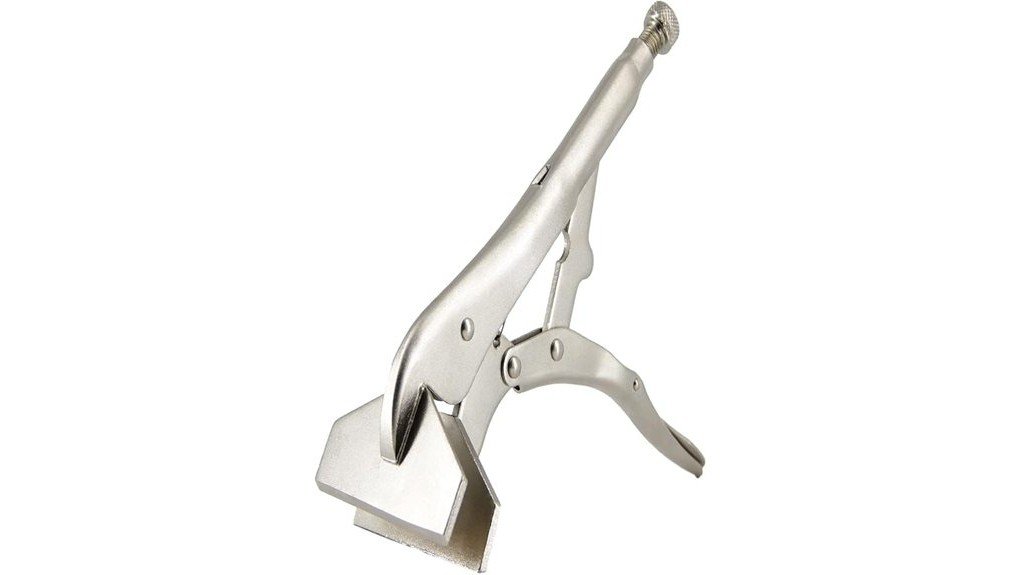
Holding thin sheet metal steady can be harder than it looks, especially when you are bending, shaping, crimping, or lining up panels for a cleaner fit. The 10-inch locking sheet metal clamp is designed to give you a broad, firm grip with flat parallel tips instead of a narrow pinch point. Its high carbon steel body, adjustable tension screw, trigger release, and nickel-plated finish make it a practical option for metalworking, welding prep, auto body work, and shop projects. This review will help you decide if its size, grip style, and build are the right fit for your work, or if you need a larger, more specialized clamp.
Quick Verdict
Rating: 8.4/10
Best For: DIY metalworkers, welders, auto body users, and hobbyists who need a locking clamp with flat sheet-metal jaws.
Bottom Line: This clamp is a strong pick if you need a compact 10-inch tool that can hold sheet metal flat without the sharp pressure point of standard locking pliers. The main tradeoff is that the source article does not confirm the brand or exact jaw capacity, so you should check the current Amazon listing details before buying.
| Specification | Detail |
|---|---|
| Product type | Locking sheet metal clamp |
| Size | 10-inch class clamp |
| Dimensions | 25 x 10 x 6.8 cm, about 10 x 4 x 2.7 inches |
| Material | High carbon steel |
| Finish | Heat-treated nickel-plated surface |
| Jaw style | Parallel plate-style flat tips for sheet metal contact |
| Adjustment | Adjustable tension screw |
| Release style | Trigger release mechanism |
| Handle design | Punched steel plate handle with ergonomic grip |
| Best use | Holding, bending, shaping, and crimping sheet metal |
| Warranty note | Original article states one year. Confirm current seller terms before purchase. |
What Is the 10-Inch Locking Sheet Metal Clamp?
The 10-inch locking sheet metal clamp is a hand tool made for gripping flat metal panels while you shape, align, bend, or crimp them. Unlike a basic locking plier with narrow jaws, this clamp uses parallel plate-style flat tips that spread pressure across more surface area. That design helps you hold sheet metal more evenly and reduces the chance of leaving deep pinch marks when the clamp is adjusted correctly.
The article-supported construction details are straightforward: high carbon steel for strength, a heat-treated nickel-plated surface for corrosion resistance, an adjustable tension screw for locking force, and a trigger release for faster removal. Those features make the clamp useful for garage metalwork, welding setup, HVAC-style sheet work, auto body tasks, and hobby fabrication.
Before You Buy: The source article does not confirm the brand, exact jaw opening, or weight. Check the current Amazon listing photos and product details to make sure the 10-inch size and jaw shape match the thickness and width of the material you plan to clamp.
Who Should Buy It?
Best For
- You work with sheet metal and need a flat-jaw locking clamp for more even pressure.
- You want a compact 10-inch tool for bending, shaping, crimping, or holding panels in place.
- You prefer a clamp with adjustable tension and a trigger release for repeated shop use.
Skip If
- You need a verified brand name, exact jaw capacity, or confirmed tool weight before buying.
- You are clamping large panels that need a wider reach or multiple clamps across the workpiece.
- You need a precision sheet metal brake rather than a holding and gripping tool.
Material and Durability
The clamp is built from high carbon steel, which is a sensible material choice for a locking hand tool that needs to handle pressure without feeling flimsy. For sheet metal work, that matters because the clamp has to stay rigid while you align edges, hold a bend, or secure a small panel during setup.
The heat-treated nickel-plated surface adds another practical benefit: corrosion resistance. It does not make the tool maintenance-free, but it helps protect the metal surface from moisture and shop exposure. If you work in a garage, basement, trailer, or welding area where tools can sit near humidity, that finish is a useful detail.
The clamp measures 25 x 10 x 6.8 cm, or about 10 x 4 x 2.7 inches. That makes it compact enough to keep in a toolbox while still offering more sheet-metal contact than narrow-nose locking pliers.
Design Features
The most important design feature is the parallel plate-style flat tip. Sheet metal can dent, crease, or slip when pressure is concentrated in one small point. A flat jaw style spreads the grip across a wider area, which helps when you need to hold thin metal without crushing the edge.
The adjustable tension screw lets you set the locking force before clamping. That matters because different materials need different pressure. Thin sheet metal may need a lighter setting to avoid marks, while a firmer setting can help when you are holding thicker or more resistant pieces.
The trigger release mechanism makes the clamp easier to remove after it locks. This is especially helpful when you are making repeated adjustments, lining up multiple pieces, or working in a position where you cannot fight with the tool after every clamp.
Grip Comfort and Handling
The article notes an ergonomic grip and a punched steel plate handle. In real shop use, that combination matters because sheet metal work often involves repeated locking, releasing, and repositioning. A more comfortable handle can reduce hand fatigue when you are clamping several spots along a panel.
The compact 10-inch size also makes the tool easier to control with one hand. That is useful when your other hand is holding a panel, checking alignment, or adjusting a workpiece on a bench. For very large panels, though, you may still need more than one clamp to keep the material stable across its full width.
Pro Tip: Before clamping a finished or visible panel, test the tension on scrap metal of similar thickness. Use the lightest locking force that holds the work securely so you reduce the risk of surface marks.
Functionality
This clamp is best understood as a holding and shaping aid, not as a replacement for a brake, vise, or dedicated fabrication fixture. It can help you hold sheet metal steady while you bend an edge, crimp a small section, align two pieces, or keep a panel from shifting during layout.
The adjustable screw tension gives you control over how hard the jaws lock. The trigger release keeps the workflow moving when you need to reposition the clamp several times. Together, these features make the tool more useful than a basic fixed clamp for quick metalworking tasks.
The main limitation is size and reach. A single 10-inch clamp can hold a small section well, but long panels may need multiple clamps or a wider tool. For precision bends across a full panel, use the clamp as a helper tool rather than the main forming device.
How It Performs in Real Use
For Bending and Shaping Sheet Metal
The flat jaw design is helpful when you need to hold a piece of sheet metal steady while forming a small bend or shaping an edge. Because the pressure is spread across the plate tips, it is better suited to sheet stock than narrow locking pliers. You still need to adjust the tension carefully so the clamp grips without digging into the metal.
For Welding and Auto Body Setup
For welding prep or auto body work, the clamp can help hold panels in position before final fastening or tack welding. The trigger release is useful when you need to check fit, remove the clamp, adjust the part, and lock it again. Keep the clamp away from direct weld heat unless the product instructions allow that use.
For Hobby and Garage Projects
In a small shop, this clamp is useful because it does not take up much storage space and can handle common light-duty metalworking tasks. It can also help with plastic or wood in some cases, but its jaw style is made around sheet material. Use protective scrap or padding when clamping softer surfaces.
For Long-Term Use and Storage
The nickel-plated finish helps with corrosion resistance, but the clamp should still be stored dry. Wipe off dust, moisture, metal shavings, and shop residue after use. A small amount of light tool oil on the moving parts can help keep the screw and release action smooth.
How to Use It Correctly
Start by opening the clamp and placing the flat tips squarely over the sheet metal. Turn the tension screw until the jaws close with firm pressure, then squeeze the handle to lock the tool. If the clamp leaves a mark or bends the material, release it and reduce the tension before trying again.
For thin sheet metal, avoid overtightening. The goal is secure contact, not maximum crushing force. When working near finished surfaces, painted metal, aluminum, or decorative pieces, test first and consider a sacrificial scrap piece to protect the surface.
- Keep the jaw plates flat against the workpiece before locking.
- Use more than one clamp for long or flexible panels.
- Check alignment after locking, since pressure can shift thin metal slightly.
- Release the clamp with the trigger instead of forcing the jaws open.
- Wear eye protection and gloves when working with sharp sheet metal edges.
Compatibility and Safety Notes
The clamp is designed around sheet metal tasks, but the original article also mentions possible use on plastic and wood. That extra versatility can be useful, yet you should treat those materials with care. Hard clamping pressure can dent wood, crack plastic, or leave marks on soft surfaces.
For welding-related work, remember that this tool is a clamp, not a safety device. Do not rely on it to support heavy work overhead or to hold parts in a risky position. Follow the product instructions, use proper protective gear, and choose dedicated welding fixtures when heat, load, or alignment accuracy is critical.
Pros and Cons
Pros
- High carbon steel construction supports demanding clamping pressure.
- Flat parallel tips are better suited to sheet metal than narrow jaw pliers.
- Adjustable tension screw lets you tune the locking force for different materials.
- Trigger release helps with fast repositioning during repeated setup work.
- Nickel-plated finish adds useful corrosion resistance for shop storage.
Cons
- Brand, weight, and exact jaw opening are not confirmed in the source article.
- One clamp may not be enough for long, flexible, or oversized panels.
- Incorrect tension can still mark thin or soft materials.
Is It Worth the Price?
This clamp is worth considering if you need a simple, compact tool for sheet metal holding and shaping. Its best value comes from the combination of high carbon steel construction, flat sheet-metal jaws, adjustable locking force, and trigger release. Those features make it a practical buy for everyday garage and workshop use.
It is not the best fit if you need verified brand documentation, a known jaw capacity, or a full panel-forming tool. For buyers who already understand the limits of a 10-inch locking clamp, it offers strong value for the price when the current listing details match the source specs.
How It Compares to Alternatives
Compared with standard locking pliers, this clamp makes more sense for sheet metal because the flat tips spread pressure across a wider contact area. Compared with a basic C-clamp, it is faster to lock, release, and reposition during repeated work.
A sheet metal brake or seamer may be better for long, straight bends or more precise forming. This clamp is best when you need quick holding power, small-area shaping support, and a tool that fits easily in a garage or mobile toolbox.
Frequently Asked Questions
Is this 10-inch locking sheet metal clamp suitable for professional use?
It can be suitable for professional tasks when you need a compact flat-jaw clamp for holding, bending, shaping, or crimping sheet metal. For heavy production work, check the current listing for brand, jaw capacity, and warranty details before relying on it as a daily-use shop tool.
Can it be used on materials besides sheet metal?
The original article says it may also be used on materials such as plastic and wood. Use caution, because the locking pressure can mark, dent, or crack softer materials if the tension is set too high.
Will the clamp damage thin sheet metal?
It is designed with flat parallel tips to reduce concentrated pressure, but any locking clamp can mark thin metal if overtightened. Test the tension on scrap material first and use only the pressure needed to hold the work securely.
What is the weight of the clamp?
The source article does not provide an exact weight. It describes the clamp as sturdy and built from high carbon steel, but you should check the current Amazon listing if tool weight is important for your setup.
What are the dimensions?
The article-supported dimensions are 25 x 10 x 6.8 cm, which is about 10 x 4 x 2.7 inches. This puts it in the compact 10-inch clamp range for sheet metal work.
What is the warranty period?
The original article states a one-year warranty. Seller terms can change, so confirm the current warranty and return details on Amazon before purchasing.
Where can you purchase the 10-inch locking sheet metal clamp?
You can use the Amazon button on this page to check the current product listing. Review the latest photos, seller details, warranty information, and product measurements before you buy.
Who should skip this clamp?
Skip it if you need a confirmed brand, exact jaw capacity, or a tool for long precision bends. A sheet metal brake, seamer, or larger fixture may be better for full-panel forming work.
The Bottom Line
The 10-inch locking sheet metal clamp is a useful choice for buyers who need a compact flat-jaw clamp for sheet metal holding, shaping, crimping, and setup work. Its strongest points are the high carbon steel build, adjustable screw tension, trigger release, and broad jaw contact, while its main limitation is the lack of confirmed brand, weight, and jaw-capacity details in the source article. Buy it if the current Amazon listing matches your material size and use case, but skip it if you need verified industrial specs before purchase.