Disclosure: As an Amazon Associate, we earn from qualifying purchases. If you click a link on this page and make a purchase, we may receive a small commission at no extra cost to you.
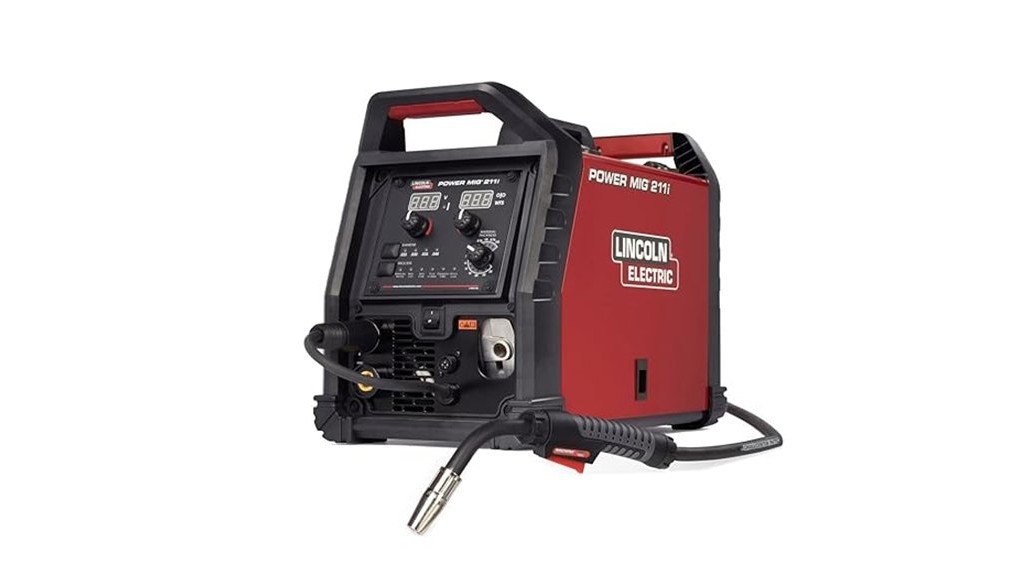
Choosing a MIG welder gets harder when you need enough output for heavier shop work but still want to use an ordinary 120V outlet when necessary. The Lincoln Electric POWER MIG 211i, model K6080-1, addresses that problem with 120V/230V input, MIG and flux-cored capability, and a maximum 211-amp output on 230V. It also has straightforward digital displays and knob controls instead of a complicated control panel. The main tradeoffs are its 41 lb weight, a 30% duty cycle at its 175-amp rated output, and the need to buy a compatible spool gun separately if aluminum welding is part of your plan.
Quick Verdict
Rating: 8.8/10, Recommended with caveats
Best For: Home shops, automotive work, maintenance, farm repairs, and light fabrication where you want a dependable dual-voltage MIG platform.
Bottom Line: The POWER MIG 211i combines a useful 120V/230V input range, simple controls, a sturdy wire-drive system, and up to 211 amps of output. It is less attractive if you want a very light machine, high-duty-cycle production welding, or aluminum capability without purchasing an additional spool gun.
| Specification | Detail |
|---|---|
| Brand | Lincoln Electric |
| Model | POWER MIG 211i, K6080-1 |
| Processes | MIG, flux-cored, spool-gun welding |
| Input Power | 120V or 230V, single-phase, 60 Hz |
| Output Range on 120V | 20 to 140 amps DC |
| Output Range on 230V | 20 to 211 amps DC |
| Rated Output | 175A at 22.75V, 30% duty cycle |
| Dimensions | 15.5 × 10.75 × 22 in (H × W × D) |
| Net Weight | 41 lb |
| Wire Drive | Integrated cast-aluminum drive system |
| Included Gun | Magnum PRO 100L, 10 ft |
| Aluminum Setup | Magnum PRO 100SG spool-gun ready; spool gun is a separate accessory |
| Enclosure Rating | IP21S |
| Warranty | 3-year parts and labor warranty stated in Lincoln Electric documentation, subject to warranty terms |
What Is the Lincoln Electric POWER MIG 211i?
The POWER MIG 211i is a constant-voltage DC wire welder intended for fabrication, maintenance, home-shop, farm, and autobody work. Lincoln Electric designed it around MIG and flux-cored welding, with an integrated control for a compatible spool gun when you want to weld aluminum.
The machine’s strongest feature is flexibility between power sources. On 120V, the output range is 20 to 140 amps. Connecting it to suitable 230V power opens the full 20 to 211-amp range. That makes the 211i useful when you sometimes work from household power but also have access to a higher-capacity shop circuit.
Before You Buy: Do not choose the POWER MIG 211i expecting full 211-amp performance from a 120V outlet. Its 120V output tops out at 140 amps. You need an appropriate 230V supply to access the machine’s higher output range.
Who Should Buy It?
Best For
- Home and small-shop welders who want both 120V and 230V operation.
- Automotive, farm, repair, and light-fabrication work using MIG or flux-cored wire.
- Buyers who value simple controls and established Lincoln Electric gun and consumable support.
Skip If
- You need a multi-process machine that also handles TIG or stick welding.
- You expect production-level welding at maximum output for long continuous periods.
- You need aluminum welding immediately and do not want to buy a separate spool gun.
Key Features of the Lincoln Electric POWER MIG 211i
Dual-Voltage Power
The 120V/230V design is one of the most useful reasons to choose this welder. You can use 120V for lighter work where compatible electrical service is available, then move to 230V when the job calls for substantially more output.
The machine includes an input adapter for its dual-voltage setup. You should still confirm your circuit, receptacle, breaker, extension-cord requirements, and input-power requirements in the Lincoln Electric manual rather than assuming any outlet is suitable.
Simple Controls and Digital Displays
The front interface uses seven-segment displays and basic knob controls. The control layout covers voltage, wire-feed speed, wire diameter, welding process, and material thickness. This is useful when you want a machine that is quick to understand without navigating layers of menus.
It remains important to treat suggested settings as a starting point. Joint design, wire type, shielding gas, stickout, metal condition, and welding position can all require adjustment.
Cast-Aluminum Wire Drive
Lincoln Electric uses an integrated cast-aluminum wire-drive system rather than treating the feeder as an afterthought. A stable wire path matters because erratic feeding can create an uneven arc, excess spatter, or repeated burnback problems.
The machine includes a 0.030 to 0.035-inch drive roll, a 0.025 to 0.035-inch wire guide, and knurled drive rolls for compatible flux-cored wire. Correct roll selection and drive tension still matter, so a feeding problem should not automatically be blamed on the welder.
Magnum PRO 100L Welding Gun
The standard package includes a 10-foot Magnum PRO 100L gun. Its over-molded handle is designed to improve grip and control while reducing hand fatigue. A 10-foot cable also gives you a useful working radius without making the wire path unnecessarily long.
Spool-Gun-Ready Aluminum Capability
The 211i has an integrated switch and interface setting for the Magnum PRO 100SG spool gun. A spool gun keeps soft aluminum wire close to the gun rather than pushing it through the full MIG-gun liner, which helps reduce feeding trouble.
The important purchasing detail is that the Magnum PRO 100SG is a recommended accessory, not part of the standard POWER MIG 211i package. Factor that extra equipment into your budget if aluminum is a major reason you are considering this machine.
Getting Started With the POWER MIG 211i: Setup and Operation
Start with the correct input power for the work you plan to do. Install the appropriate drive roll and wire, route the wire correctly through the feeder, set suitable drive-roll tension, and confirm that the contact tip matches the wire diameter.
For gas-shielded MIG welding, connect the supplied regulator and gas hose to the correct shielding-gas cylinder and secure the cylinder upright. For self-shielded flux-cored wire, follow the wire manufacturer’s polarity requirements because they can differ from solid-wire MIG setups.
Then select the welding process, wire diameter, and material thickness on the control panel. Fine-tune voltage and wire-feed speed when the joint or welding position requires it.
Pro Tip: When wire feeding becomes inconsistent, check the simplest causes first: spool drag, drive-roll groove, drive tension, liner condition, contact-tip size, and gun-cable bends. Excessive drive pressure can deform wire and create another feeding problem instead of fixing the first one.
How It Performs in Real Use
For Home Garage Projects
For brackets, repairs, automotive work, and general fabrication, the combination of a compact 22-inch-deep case and multiple carrying points makes the 211i easier to reposition than a large transformer-style shop welder. At 41 lb, however, it is portable rather than ultralight.
For 120V Work
The 120V option is valuable when 230V service is not available, but the lower input limits output to 140 amps. It makes sense for lighter jobs, repairs, and situations where maximum machine capacity is not required.
For Heavier 230V Work
Using suitable 230V power gives you access to the machine’s full 20 to 211-amp output range. The rated welding output is 175 amps at 22.75 volts with a 30% duty cycle. That means the machine is aimed at intermittent fabrication and repair rather than continuous high-amperage production.
For Aluminum
The spool-gun-ready design gives the 211i a practical route into aluminum MIG welding. You will need the compatible spool gun, suitable aluminum wire, correct shielding gas, and the setup recommended by Lincoln Electric for the material and thickness you are welding.
What Real Users Think About the POWER MIG 211i
Buyer feedback associated with the POWER MIG 211i commonly highlights the simple setup and straightforward controls. That makes sense for this machine because the interface centers on familiar variables such as process, wire diameter, material thickness, voltage, and wire-feed speed rather than a complex menu system.
Wire feeding is another important ownership point. Lincoln Electric specifically promotes the cast-aluminum drive system for consistent feeding, but any MIG machine can feed poorly when the drive roll, liner, tip, spool tension, or wire setup is incorrect. If feeding becomes inconsistent, checking those items is more useful than immediately increasing drive-roll pressure.
Common Issues and Limitations
Reduced output on 120V: Dual voltage does not mean identical welding capacity at both voltages. The output range is 20 to 140 amps on 120V versus 20 to 211 amps on 230V.
Spool gun costs extra: The machine is ready for the Magnum PRO 100SG, but the spool gun is not included with the standard K6080-1 package.
Duty-cycle limits: A 30% duty cycle at 175 amps is appropriate for many repair and fabrication jobs, but buyers doing long high-amperage welds should compare machines with higher rated duty cycles.
41 lb machine weight: Multiple handles make the case easier to carry, but 41 lb is noticeably heavier than some newer compact inverter welders.
Troubleshooting the POWER MIG 211i
If the wire hesitates or slips, confirm that you are using the correct drive-roll groove and that the roll is not overtightened. Inspect the gun liner and contact tip for obstruction or wear, keep the gun cable as straight as practical, and make sure the wire spool turns without excessive drag.
If the arc feels weak, confirm your input voltage and welding settings before assuming the machine has a fault. Running on 120V gives you less available output than 230V, and an unsuitable supply circuit or extension cord can create additional problems.
Excessive spatter or an unstable arc can also come from incorrect voltage or wire-feed speed, contaminated base metal, incorrect polarity, poor work-clamp contact, or unsuitable shielding-gas flow. Follow Lincoln Electric’s setup chart and operator manual before replacing components.
Compatibility and Safety
Arc welding exposes you to electric shock, intense arc radiation, hot metal, sparks, fumes, and compressed-gas hazards. Wear suitable eye, face, hand, and body protection, keep combustible material away from the welding area, and provide adequate ventilation or fume extraction.
The POWER MIG 211i carries an IP21S enclosure rating and Lincoln Electric documentation identifies it for indoor use. Do not treat that rating as permission to operate the welder in rain or wet conditions.
Shielding-gas cylinders should be secured upright and protected from impact. Before changing polarity, wiring, drive components, or gun configuration, disconnect input power and follow the manufacturer’s manual.
Pros and Cons
Pros
- Runs from either 120V or 230V power.
- Provides up to 211 amps of output on 230V.
- Simple digital displays and knob-based controls.
- Cast-aluminum wire drive and Magnum PRO 100L gun are standard.
- Ready to accept a compatible Magnum PRO 100SG spool gun for aluminum work.
Cons
- Full output is not available when operating from 120V.
- 30% duty cycle at the 175-amp rated output is not aimed at continuous production work.
- Aluminum welding requires a separately purchased compatible spool gun.
Is It Worth the Price?
The POWER MIG 211i sits closer to the premium end of the home-shop and light-industrial MIG category than entry-level inverter welders. Part of what you are paying for is the Lincoln Electric platform, including its Magnum gun system, established consumable ecosystem, dual-voltage capability, and a straightforward service-oriented design.
It offers stronger value when you expect to keep one MIG welder for both lighter 120V jobs and more demanding 230V work. It is harder to justify if your main goal is obtaining the largest number of welding processes for the lowest cost, because the 211i is focused on MIG, flux-cored, and spool-gun welding rather than TIG and stick.
How It Compares to Alternatives
The Miller Millermatic 211 PRO is a direct alternative if you want another premium dual-voltage MIG platform. Miller’s current 211 PRO is lighter and offers a different Auto-Set system, so it is worth comparing if portability and automated setup features rank high on your list.
The Hobart Handler 210 MVP is another established 120V/230V-class option. It uses a more traditional, heavier design, while the Lincoln makes more sense if you prefer an inverter-based machine with digital displays, multiple lift points, and the integrated spool-gun controls.
Frequently Asked Questions
Does the POWER MIG 211i run on both 120V and 230V?
Yes. Model K6080-1 supports 120V and 230V single-phase, 60 Hz input. Its available output is 20 to 140 amps on 120V and 20 to 211 amps on 230V.
How much does the Lincoln Electric POWER MIG 211i weigh?
Lincoln Electric lists the net weight at 41 lb. The case has multiple lift points, which helps when moving it around a garage or small shop.
Can the POWER MIG 211i weld aluminum?
It is spool-gun ready and has controls for the Magnum PRO 100SG spool gun. The spool gun is a separate accessory, so include that in your buying plan if aluminum welding is important.
Do you need a shielding-gas cylinder?
Not for compatible self-shielded flux-cored wire. Gas-shielded MIG welding requires the correct shielding gas, and the standard package includes an adjustable gas regulator and hose.
What is the POWER MIG 211i duty cycle?
Its primary rated output is 175 amps at 22.75 volts with a 30% duty cycle. You should follow the manufacturer’s duty-cycle limits instead of continuously welding at high output.
What comes with the POWER MIG 211i?
The standard package includes the POWER MIG 211i base unit, 10-foot Magnum PRO 100L gun, work cable and clamp, gas regulator and hose, gun liner, spindle adapter, input adapter, sample mild-steel MIG wire, and supporting wire-feed components.
What should you check if the wire feed becomes inconsistent?
Check spool tension, drive-roll selection and pressure, the gun liner, contact-tip size, wire condition, and sharp bends in the gun cable. Follow the manual when adjusting the feeder because excessive pressure can damage or deform the wire.
Who should skip the POWER MIG 211i?
Skip it if you specifically need TIG and stick processes in the same power source, very high continuous-duty production output, or an aluminum-ready package with the spool gun already included. A different welder may provide better value for those priorities.
The Bottom Line
The Lincoln Electric POWER MIG 211i K6080-1 is a strong choice when you want a focused MIG and flux-cored machine with simple controls, 120V/230V flexibility, a solid wire-drive system, and up to 211 amps on 230V. Buyers who need multi-process TIG/stick capability, a higher high-amperage duty cycle, or an included aluminum spool gun should compare alternatives before purchasing.