Disclosure: As an Amazon Associate, we earn from qualifying purchases. If you click a link on this page and make a purchase, we may receive a small commission at no extra cost to you.
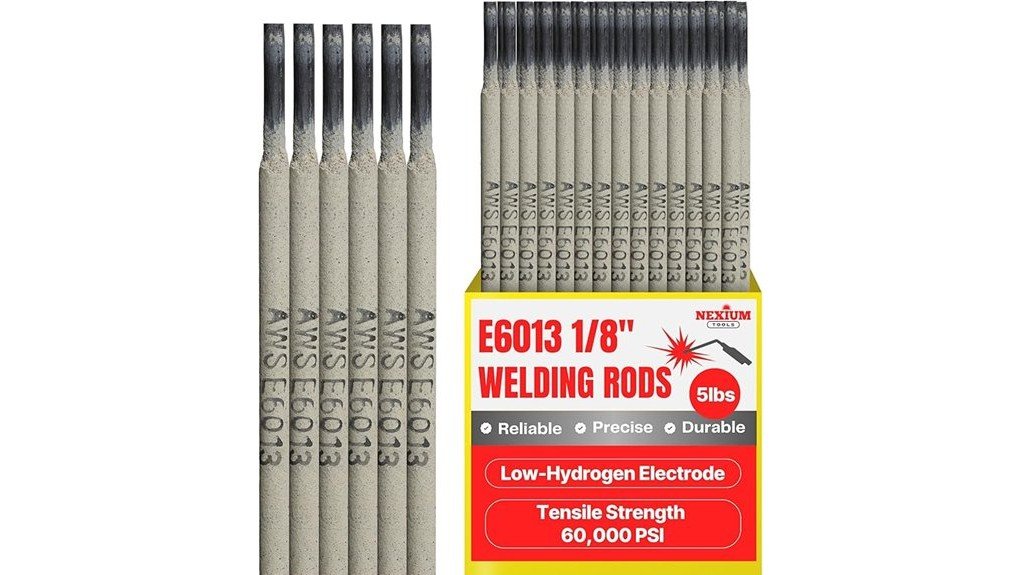
Choosing a stick electrode is less about buying the rod with the strongest marketing claims and more about matching the electrode to your steel, welder, and job. The NexiumTools 6013 Welding Rods are positioned as general-purpose electrodes with easy arc starting, all-position capability, low spatter, and AC/DC compatibility. Those traits can make them useful for repair work and everyday mild-steel fabrication, but you should confirm the rod diameter shown on the Amazon listing before ordering because currently available listing data is not fully consistent. This review explains where these rods make sense, where a different electrode may be better, and what you should check before striking an arc.
Quick Verdict
Rating: 7/10, Recommended with caveats
Best For: General mild-steel repairs, light fabrication, beginners practicing stick welding, and users who want an easy-running E6013-type electrode.
Bottom Line: NexiumTools 6013 rods offer the easy starting, positional flexibility, and 60,000 PSI strength class associated with E6013 electrodes. The main concern is inconsistent online listing data about the exact diameter and some copied E6011 wording, so verify the selected size and package label before use.
Key Specifications
| Specification | Detail |
|---|---|
| Brand | NEXIUM TOOLS |
| Electrode class | E6013 according to the product title |
| Product type | Stick welding electrodes |
| Material application | General-purpose mild/carbon steel welding |
| Diameter | Current accessible listing data shows 3/32 inch. Confirm the selected Amazon variant before purchase. |
| Welding positions | Flat, horizontal, vertical, and overhead |
| Power compatibility | AC and DC operation are consistent with the E6013 classification |
| Strength class | 60,000 PSI minimum tensile-strength class for E6013 |
| Promoted characteristics | Easy arc starting, stable operation, low spatter, and removable slag |
| Best use | General fabrication, repairs, practice, and non-critical mild-steel work where E6013 is appropriate |
Before You Buy: Confirm the electrode classification and diameter printed on the Amazon variant and physical package. Accessible listing data currently identifies the product as 6013 and shows a 3/32-inch size, while some copied feature text refers to E6011. Do not select welding parameters until you know exactly which electrode you received.
What Is the NexiumTools 6013 Welding Rod?
The NexiumTools 6013 is sold as a coated stick electrode for shielded metal arc welding, commonly called SMAW or stick welding. An E6013 electrode is a general-purpose carbon-steel electrode designed to work in multiple welding positions while providing a relatively smooth arc and manageable slag.
The classification also tells you more than the product name alone. The first two digits, 60, identify a minimum tensile-strength class of 60,000 PSI. The third digit, 1, indicates all-position capability. E6013 electrodes are commonly chosen for general fabrication and repair work where easy operation and bead appearance matter.
You should not interpret the product’s marketing language as permission to skip normal weld preparation. Cleaning loose rust, paint, oil, moisture, and contamination from the joint still gives you a better chance of producing a sound weld.
Who Should Buy It?
Best For
- You want a general-purpose electrode for mild-steel fabrication and repairs.
- You are learning stick welding and value an electrode class known for easy arc starting.
- You need an electrode that can be used in flat, horizontal, vertical, and overhead positions.
Skip If
- You need aggressive penetration through heavily contaminated steel, where an E6011 may be more appropriate.
- You need a specified low-hydrogen electrode for critical structural work, where E7018 is commonly required.
- You are welding aluminum or need a stainless-steel filler metal.
Arc Performance and Weld Control
One of the main reasons you might choose an E6013 electrode is controllability. The NexiumTools listing promotes easy arc striking and steady operation, traits that can reduce frustration when you are practicing starts, tack welds, or short repair beads.
The original product description also promotes low spatter and easier slag cleanup. Those characteristics matter because less cleanup can save time between passes and make it easier to inspect the bead after the slag is removed.
Do not confuse a smooth-running arc with unlimited penetration. E6013 is generally treated as a versatile general-purpose electrode rather than the first choice for jobs that specifically demand an aggressive digging arc.
All-Position Welding
E6013’s all-position classification gives you flexibility when the workpiece cannot be placed flat on a bench. You can use this electrode class for flat, horizontal, vertical, and overhead welds when your technique, amperage, joint design, and rod diameter are appropriate.
This flexibility can help with gates, frames, brackets, automotive sheet-steel repairs, shop fabrication, and maintenance work. Out-of-position welding is still more demanding than flat welding, so practice on scrap steel before making an important joint.
Pro Tip: Match your amperage to the exact electrode diameter and the recommendations on the package. A setting that works well for a 3/32-inch electrode may be wrong for a 1/8-inch electrode, especially when you move from flat welding to vertical or overhead work.
Power Compatibility and Strength
The E6013 classification is commonly compatible with AC and DC power sources, which is useful if your stick welder gives you more than one current option. The NexiumTools product is also promoted for AC/DC use.
The 60,000 PSI figure in the original article is consistent with the E6013 strength classification. It describes the minimum tensile-strength class associated with the deposited weld metal classification, not a guarantee that every finished joint will carry a particular load.
Your actual weld strength depends on much more than the electrode label. Joint design, steel condition, amperage, travel speed, arc length, fit-up, penetration, technique, and defects can all change the performance of a completed weld.
Surface Preparation and Contaminated Steel
The product listing promotes use on rusted or painted surfaces, but you should treat that as a convenience claim rather than a reason to weld through heavy contamination. Remove loose rust, paint, coatings, grease, and moisture whenever practical.
Cleaner steel helps you maintain a predictable arc and reduces the chance of trapping contamination in the weld. It also lets you inspect the base metal for cracks, thinning, or damage before you begin.
If your normal work involves badly rusted farm equipment, dirty outdoor steel, or joints where stronger digging action is the priority, compare this E6013 product with an E6011 electrode before buying.
How It Performs in Real Use
For General Shop Fabrication
For brackets, mild-steel frames, non-critical repairs, and practice coupons, E6013 is a practical electrode class. The easy-starting character can be especially helpful when you make repeated tack welds or short beads.
For Thin or Light Fabrication
E6013 electrodes are widely used for lighter fabrication because you can select a smaller diameter and suitable amperage to control heat input. You still need to match the rod size and settings to the actual metal thickness to avoid burn-through.
For Vertical or Overhead Work
The all-position rating gives you the option to weld where gravity makes puddle control harder. Reduce your expectations for speed and practice your technique first, especially if you normally weld only in the flat position.
For Outdoor Repair Work
Stick welding itself can be useful outdoors because it does not depend on an external shielding-gas bottle. However, rain, wet electrodes, strong wind, contaminated steel, and unsafe working conditions still create problems. Keep the rods dry and never weld in wet conditions that create an electrical or personal-safety hazard.
How to Use It Correctly
- Confirm the rod: Read the classification and diameter printed on the package before choosing amperage.
- Prepare the joint: Remove loose paint, rust, oil, and other contamination when practical.
- Check polarity: Follow the electrode packaging and your welder’s instructions instead of assuming one setting fits every machine.
- Use scrap first: Test your amperage and travel speed on similar steel before welding the actual part.
- Remove slag: Clean slag between passes before adding more weld metal.
- Keep electrodes dry: Store the rods as directed on the package and avoid exposing them unnecessarily to moisture.
Compatibility and Safety
E6013 is a mild/carbon-steel electrode classification. It should not be presented as a general electrode for aluminum or stainless steel. Those materials normally require filler metals and processes selected specifically for the base material.
Use a properly rated welding helmet, suitable welding gloves, flame-resistant clothing, and adequate ventilation. Protect nearby people from arc radiation and sparks, and remove flammable materials from the work area.
Painted, coated, plated, or unknown metals can release hazardous fumes when heated. Identify the material and coating before welding, follow the electrode and equipment instructions, and use professional guidance when you are unsure about a safety-critical job.
Pros and Cons
Pros
- E6013 classification supports flat, horizontal, vertical, and overhead welding.
- 60,000 PSI minimum tensile-strength class.
- Suitable for general-purpose mild-steel fabrication and repair work.
- Easy arc starting and manageable operation can suit newer stick welders.
- AC/DC capability gives you flexibility across compatible stick welders.
Cons
- Current online listing data is inconsistent about the exact diameter and contains some E6011 wording.
- E6013 is not the preferred electrode when you specifically need the aggressive penetration characteristics of E6011.
- It is not a substitute for a specified low-hydrogen electrode such as E7018 on jobs that require one.
Is It Worth the Price?
The NexiumTools 6013 is worth considering if you want a straightforward general-purpose electrode for mild-steel practice, repair, or fabrication and the current package quantity offers reasonable value for your needs. Its useful traits are not exotic. You are mainly paying for the convenience of a versatile E6013-type rod with easy starting, positional capability, and broad stick-welder compatibility.
Value becomes less attractive if the listing does not clearly show the diameter you need. Electrode diameter directly affects the amperage range and the type of work you can comfortably tackle, so check the variant carefully instead of buying only from the headline description.
It is also not the best fit if your work regularly requires a low-hydrogen structural electrode or a more aggressive rod for dirty steel. In those cases, choosing the correct electrode class matters more than saving money on a general-purpose pack.
How It Compares to Alternatives
A documented E6013 option from an established welding-consumables manufacturer, such as Hobart’s E6013 line or an ESAB E6013 electrode, may appeal to you if published technical data and clearly stated amperage ranges are priorities. The NexiumTools product makes more sense when its current Amazon variant matches the size you need and you want a basic general-purpose electrode.
If you need stronger digging action on rusty or contaminated carbon steel, compare E6011 electrodes. If your procedure calls for a low-hydrogen electrode and a 70,000 PSI strength class, compare E7018 instead. Electrode selection should follow the job requirements rather than the most impressive marketing description.
Frequently Asked Questions
What metal can NexiumTools 6013 rods weld?
E6013 is a general-purpose mild/carbon-steel electrode classification. Do not assume these rods are suitable for aluminum or stainless steel, because those materials normally require filler metals chosen specifically for the base material.
Are NexiumTools 6013 rods suitable for beginners?
They can be a practical choice for learning because E6013 electrodes are known for relatively easy arc starting and general-purpose operation. You should still practice amperage control, arc length, travel speed, and electrode angle on scrap steel before making an important weld.
Can you use these rods with an AC welder?
E6013 electrodes are commonly designed for AC and DC operation, and the NexiumTools listing also promotes AC/DC compatibility. Follow the exact package instructions and your welder manual when selecting current and polarity.
Are these rods 1/8 inch or 3/32 inch?
Current accessible listing data for the product shows a 3/32-inch variant, while the original article described 1/8 inch. Because Amazon variants can change and the available data is inconsistent, confirm the diameter displayed for the exact option you are ordering.
Can E6013 weld through rust or paint?
The product is promoted for use on less-than-perfect surfaces, but you should still clean the joint whenever practical. Removing loose rust, paint, grease, and contamination gives you better control and reduces avoidable weld problems.
How should you store the welding rods?
Keep the electrodes dry and protected from unnecessary moisture exposure. No NexiumTools-specific shelf-life claim was verified, so follow the storage instructions printed on the package instead of assuming the rods will remain usable for a fixed number of years.
When should you choose E6011 or E7018 instead?
Consider E6011 when you need a more aggressive digging arc for contaminated carbon steel. Consider E7018 when your welding procedure calls for a low-hydrogen electrode and higher strength. For safety-critical or code-controlled work, follow the approved welding procedure rather than substituting electrodes on your own.
The Bottom Line
The NexiumTools 6013 Welding Rods are worth considering for general mild-steel fabrication, repairs, practice, and jobs where easy starts and all-position flexibility are useful. You should skip them when your project specifically requires E6011, E7018, stainless-steel filler, aluminum filler, or another defined electrode.
The strongest reason to consider this product is the practical versatility of the E6013 classification. The main limitation is the inconsistent online product data, so verify the exact electrode class and diameter on the Amazon selection and package before setting up your welder.
Ready to Buy?
Check the current diameter, package details, and Amazon product information before you decide.