Disclosure: As an Amazon Associate, we earn from qualifying purchases. If you click a link on this page and make a purchase, we may receive a small commission at no extra cost to you.
Brazing refrigerant lines without the right nitrogen flow can leave oxidation inside the tubing, and that contamination can hurt system cleanliness over time. The AWLOLWA Nitrogen Purge Tool is made for HVAC work where you need a fast way to switch between higher purge flow and lower braze flow. This review helps you decide whether this simple nitrogen flow regulator belongs in your service bag. Its main strength is quick mechanical control, while its main limitation is that it still requires a separate nitrogen regulator.
Quick Verdict
Rating: 8/10
Best For: HVAC technicians, refrigeration installers, and maintenance pros who braze copper lines regularly
Bottom Line: The AWLOLWA Nitrogen Purge Tool gives you a simple Purge, Braze, and Off dial for cleaner HVAC brazing work. It is a practical field tool, but it is not a full regulator and does not provide a digital flow readout.
| Specification | Detail |
|---|---|
| Brand | AWLOLWA |
| ASIN | B0D5Y9JKX8 |
| Product Type | HVAC nitrogen purge and brazing flow tool |
| Control Design | Quick-change dial with Purge, Braze, and Off settings |
| Maximum Pressure | 200 psi |
| Recommended Inlet Pressure | 50 psi regulated inlet pressure |
| Purge Flow | 25–35 scfh at 50 psi inlet pressure |
| Braze Flow | 3–6 scfh at 50 psi inlet pressure |
| Connection Type | Standard 1/4-inch HVAC refrigerant hose fittings |
| Best Use | Purging and brazing copper refrigerant lines with nitrogen |
| Safety Note | Requires a separate nitrogen cylinder regulator before use |
What Is the AWLOLWA Nitrogen Purge Tool?
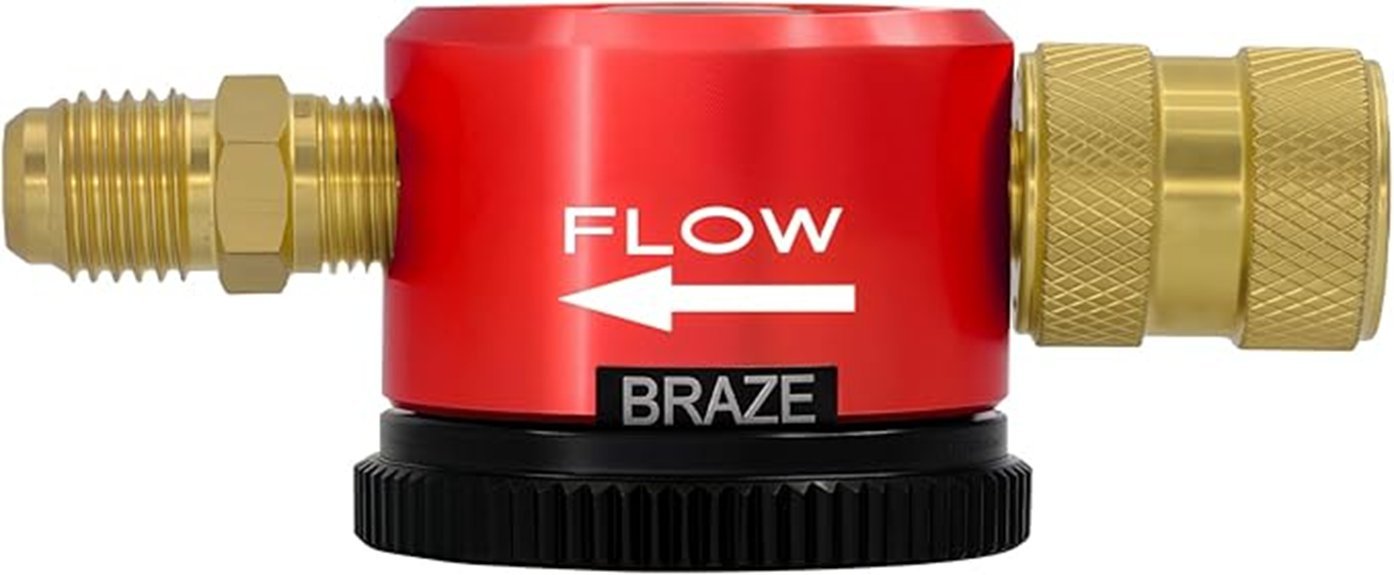
The AWLOLWA Nitrogen Purge Tool is a compact HVAC flow-control accessory for nitrogen purging and brazing work. It sits between your nitrogen regulator and refrigerant hose so you can switch flow levels with a dial instead of readjusting the main regulator each time.
The tool is designed around three simple settings: Purge, Braze, and Off. The purge setting moves more nitrogen through the line to help displace oxygen before heating. The braze setting drops flow to a lower range so you can maintain a protective nitrogen atmosphere while using less gas.
This is not a digital meter, leak detector, or full nitrogen regulator. It is best viewed as an add-on flow tool for technicians who already use a proper nitrogen cylinder, regulator, and HVAC hose setup.
Who Should Buy It?
Best For
- HVAC technicians who braze copper refrigerant lines often
- Installers who want fast switching between purge and braze flow
- Maintenance pros who already own a nitrogen cylinder and regulator
Skip If
- You need a complete regulator system in one purchase
- You want a digital flow display or fine metering readout
- You do not already have the correct nitrogen setup for HVAC work
Key Features and Build Quality
The main feature is the quick-change dial. Instead of opening and closing a needle valve repeatedly, you can move from Off to Purge, then to Braze as the job changes. That makes the tool easier to manage when you are working on several joints in one installation.
The tool is rated for up to 200 psi maximum pressure, with a recommended 50 psi regulated inlet pressure. That matters because the tool controls flow after regulation. You should not treat it as a direct cylinder-pressure control device.
Quick-Change Dial
The dial gives you three job-focused positions. Off helps prevent accidental gas release during setup. Purge gives you the higher 25–35 scfh flow range. Braze gives you the lower 3–6 scfh flow range for heating and joining copper.
Connection Compatibility
The tool uses standard 1/4-inch HVAC refrigerant hose fittings. That keeps setup familiar for technicians who already work with common manifold hoses and nitrogen regulator arrangements. Always confirm your hose ends before ordering, especially if your setup uses adapters or specialty hoses.
Simple Mechanical Design
Because the tool does not rely on batteries, screens, or app controls, it keeps the workflow simple. That is useful in vans, rooftops, mechanical rooms, and job sites where you want fewer things to adjust or troubleshoot.
Flow Control Performance
For purging, the 25–35 scfh flow range helps move nitrogen through the line before brazing. That higher flow is useful when you want to displace oxygen from copper tubing before you apply heat.
For brazing, the 3–6 scfh range gives you a lower flow that helps maintain a nitrogen blanket inside the line. This lower setting matters because too much flow can waste gas and may disturb the work area, while too little flow may not protect the tubing effectively.
The tool works best when your main regulator is set correctly first. The dial can simplify the job, but it cannot correct a poor regulator setup, leaking hose, or blocked line.
Pro Tip: Set the dial to Off before connecting hoses, then purge the line briefly before applying heat so nitrogen flow is stable when brazing starts.
Compatibility and Safety
This tool is intended for nitrogen use in HVAC and refrigeration service. You should use it with a proper nitrogen cylinder regulator and standard HVAC hoses that match the 1/4-inch fitting setup.
Do not connect it directly to a high-pressure nitrogen cylinder without regulation. The article-supported operating setup uses a 50 psi regulated inlet, and the tool is not meant to replace that regulator.
Before each job, inspect hoses, fittings, and connections for damage or leaks. Follow your employer’s HVAC safety procedures, local codes, and the instructions for your regulator, nitrogen cylinder, and brazing equipment.
Before You Buy: This tool controls nitrogen flow after regulation. It does not replace a nitrogen regulator, and it is not the right purchase if you need a complete cylinder-to-hose regulator kit.
Setup Tips Before First Use
Start with the dial in the Off position. Connect your nitrogen regulator to the cylinder, connect the hose to the tool, and confirm that all fittings are seated correctly before opening the nitrogen supply.
- Use a proper nitrogen regulator before this flow tool
- Set inlet pressure around the supported 50 psi range
- Check that your hoses use compatible 1/4-inch HVAC fittings
- Use Purge before brazing to help clear oxygen from the tubing
- Switch to Braze during heating to maintain lower nitrogen flow
- Turn the dial to Off before disconnecting hoses after the job
Common Mistakes to Avoid
The biggest mistake is treating this tool as the main pressure regulator. It is a flow-control accessory, so you still need to regulate cylinder pressure before nitrogen reaches the tool.
Another mistake is leaving the tool on the higher purge setting during the entire brazing process. The higher flow range is useful before brazing, but the lower braze setting is designed for the actual heating stage.
You should also avoid skipping leak checks. A loose hose fitting can waste nitrogen, create unstable flow, and make the tool seem less consistent than it really is.
How It Performs in Real Use
For Daily HVAC Service
In routine HVAC work, the dial saves time because you do not need to fine-tune a regulator for every transition. You can move from setup to purge to braze with fewer interruptions.
For Brazing Copper Lines
During copper brazing, the low-flow setting helps reduce internal oxidation by keeping nitrogen moving through the tubing. This is the main reason technicians buy a tool like this.
For New System Installation
On installations with several brazed joints, the tool helps keep the process consistent. You can use the same regulator setup and switch flow modes as you move from joint to joint.
For Field Durability
The simple mechanical design is a benefit for mobile technicians. With no digital screen or battery system, there are fewer delicate parts to manage in a tool bag or service van.
Pros and Cons
Pros
- Three-position dial makes Purge, Braze, and Off switching quick
- 25–35 scfh purge range supports oxygen displacement before heating
- 3–6 scfh braze range helps reduce gas waste during brazing
- Standard 1/4-inch HVAC fitting compatibility keeps setup familiar
- Simple non-digital design is easy to use in field service work
Cons
- Requires a separate nitrogen regulator before use
- No digital display, gauge, or precision flow readout
- Not ideal if your hose setup does not match 1/4-inch HVAC fittings
Want a simpler nitrogen brazing workflow?
Is It Worth the Price?
The AWLOLWA Nitrogen Purge Tool is worth considering if you already own the rest of your nitrogen setup and want faster flow switching during brazing jobs. It offers strong value for technicians who care about speed, repeatability, and a simple mechanical workflow.
It is less appealing if you need detailed flow measurement or an all-in-one regulator solution. In that case, a complete nitrogen regulator kit or a more precise flow-control setup may fit your work better.
For most field HVAC technicians, the value comes from saving small amounts of time across repeated brazing tasks. The tool is not complex, but that simplicity is also what makes it easy to keep in a service kit.
How It Compares to Alternatives
Compared to a basic needle valve setup, this tool is faster because the dial gives you defined Purge, Braze, and Off positions. A needle valve may offer more manual adjustment, but it usually takes more attention during the job.
Compared to a full nitrogen regulator kit, this tool is more limited because it does not control cylinder pressure by itself. Compared to advanced digital flow controllers, it is simpler and easier to maintain, but it does not give you a screen-based flow reading.
Frequently Asked Questions
Do you still need a nitrogen regulator with this tool?
Yes. This tool controls flow after pressure regulation, so you still need a proper nitrogen regulator connected to the cylinder. Do not use it as a direct replacement for a regulator.
What is the difference between Purge and Braze mode?
Purge mode uses a higher 25–35 scfh flow range to help clear oxygen from the line before heating. Braze mode drops flow to 3–6 scfh so nitrogen keeps moving while you braze without wasting as much gas.
Will it fit standard HVAC hoses?
The article-supported connection type is standard 1/4-inch HVAC refrigerant hose fittings. Check your hose ends before buying, especially if your setup uses adapters or nonstandard fittings.
Can beginners use the AWLOLWA Nitrogen Purge Tool?
The dial is simple, but the work still requires HVAC brazing knowledge and proper nitrogen handling. Beginners should follow training, tool instructions, and safe brazing procedures before using it on live installation work.
What inlet pressure should you use?
The supported setup uses about 50 psi regulated inlet pressure. Always set pressure with your main nitrogen regulator before relying on the purge tool dial.
Does it measure exact nitrogen flow?
No. It provides preset flow ranges for purging and brazing rather than a digital or gauge-based readout. If you need exact metering, compare it with a dedicated flow meter or higher-end controller.
Who should skip this nitrogen purge tool?
Skip it if you need a complete nitrogen regulator kit, digital flow tracking, or confirmed compatibility with a nonstandard hose setup. It is best for technicians who already have the required nitrogen gear.
The Bottom Line
The AWLOLWA Nitrogen Purge Tool is a smart buy for HVAC technicians who want quick, simple nitrogen flow switching during copper-line brazing. Its biggest strength is the practical Purge, Braze, and Off dial, while its biggest limitation is that it still depends on a separate regulator and compatible hose setup.
Buy it if you already have the right nitrogen equipment and want a cleaner workflow. Skip it if you need a complete regulator system or precise digital flow measurement.