Disclosure: As an Amazon Associate, we earn from qualifying purchases. If you click a link on this page and make a purchase, we may receive a small commission at no extra cost to you.
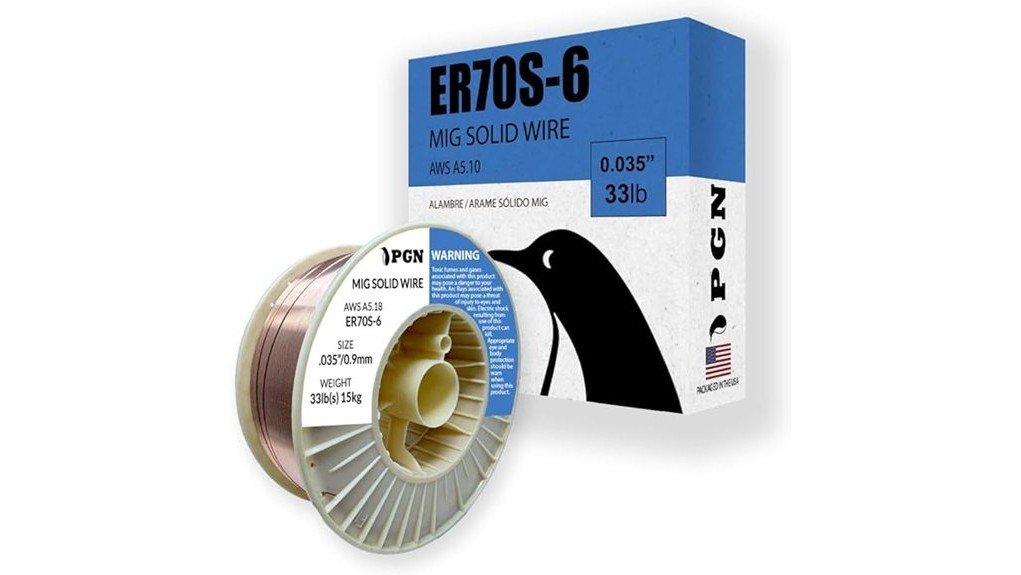
Choosing MIG wire is not just about diameter. You also need a wire that feeds smoothly, matches your base metal, and gives you a clean bead without wasting time on extra cleanup. The PGN Solid MIG Welding Wire ER70S-6, 0.035 inch, 33-pound spool is aimed at welders who want mild steel wire for regular shop work, repairs, and larger projects. Its strongest points are the 0.035-inch size, low-splatter behavior, and ER70S-6 chemistry, but the large spool means you should confirm your welder can accept it before you buy.
Quick Verdict
Rating: 8.5/10
Best For: MIG welders who run mild steel projects and want a large 0.035-inch ER70S-6 spool for steady shop use.
Bottom Line: PGN Solid MIG Welding Wire is a strong value if you need low splatter, stable arc behavior, and a 33-pound supply for repeat welding. Skip it if your machine cannot handle 0.035-inch solid wire or a full-size spool.
| Specification | Detail |
|---|---|
| Brand | PGN |
| Product type | Solid MIG welding wire |
| Wire classification | ER70S-6 |
| Wire diameter | 0.035 inch |
| Spool weight | 33 pounds |
| Material | Mild steel welding wire |
| Deoxidizers | High silicon and manganese content |
| Best use | MIG welding mild steel, including T-joints, butt welds, and lap welds |
| Shielding gas note | Use with appropriate MIG shielding gas, commonly an argon and carbon dioxide blend for mild steel |
| Package note | Article-supported packaging claim: tangle-free handling and storage |
Key Takeaways
- PGN Solid MIG Welding Wire is a 0.035-inch ER70S-6 mild steel wire for gas-shielded MIG welding.
- The 33-pound spool is better suited to frequent welding than occasional one-off repair work.
- High silicon and manganese deoxidizers help support smoother welds and cleaner bead appearance on mild steel.
- The wire is best matched with mild steel projects, not aluminum welding or flux-core-only setups.
- You should confirm drive-roll size, liner condition, contact tip size, shielding gas, and spool capacity before ordering.
What Is the PGN Solid MIG Welding Wire?
The PGN Solid MIG Welding Wire is a mild steel filler wire made for MIG welding with shielding gas. This reviewed version is the ER70S-6 variant in a 0.035-inch diameter on a 33-pound spool, giving you a larger supply than small hobby spools.
ER70S-6 wire is commonly chosen for mild steel because it contains silicon and manganese deoxidizers. In practical terms, that helps the puddle flow better and can improve weld appearance when your base metal is clean and your settings are dialed in.
This wire makes the most sense for welders who already run 0.035-inch solid wire and want a cost-conscious spool for repeated use. It is not the right pick for aluminum, self-shielded flux-core welding, or machines that cannot fit a 33-pound spool.
Before You Buy: Check your welder manual before ordering. A 33-pound spool and 0.035-inch solid wire may not fit compact machines that only accept smaller spools, different drive rolls, or flux-core wire.
Who Should Buy It?
Best For
- Welders who use 0.035-inch solid MIG wire for mild steel.
- Shops, farms, garages, and frequent hobby users who can use a 33-pound spool efficiently.
- Projects where low splatter, stable arc behavior, and a clean bead matter.
Skip If
- Your MIG welder does not accept 33-pound spools.
- You need aluminum wire, stainless wire, or self-shielded flux-core wire.
- You only weld occasionally and a smaller spool would stay cleaner in storage.
Performance and Quality of PGN Solid MIG Welding Wire
Performance depends on the full MIG setup, including wire speed, voltage, contact tip size, liner condition, drive-roll tension, and shielding gas. When those basics are right, the PGN 0.035-inch ER70S-6 wire is designed to feed steadily and produce a stable arc on mild steel.
The article-supported low-splatter claim is important because less spatter means less grinding and cleanup after the weld. That helps when you are making visible beads, fitting brackets, or working through several joints in a row.
Arc stability also affects how easy the wire feels to control. A steady arc can make it easier to maintain travel speed, keep the puddle consistent, and avoid uneven bead shape on T-joints, butt welds, and lap welds.
Wire Size, Feed Setup, and Compatibility
The 0.035-inch diameter is a common choice for mild steel welding, especially when you need more deposition than thinner wire can provide. It can be useful for general fabrication, repair brackets, frames, and medium-duty steel work when your machine output supports it.
You still need to match the wire to the machine. Use a 0.035-inch contact tip, the correct drive-roll groove, and a liner that is clean enough to feed solid wire without dragging. If the wire chatters, burns back, or bird-nests, the issue may be setup rather than the spool itself.
The 33-pound spool is a value advantage for frequent welders, but it is also a fit concern. Some smaller 120V and portable MIG units are built around 2-pound or 10-pound spools, so confirm spool capacity before you buy.
Pro Tip: Before loading a new 33-pound spool, clean the liner if feeding has been rough and set drive-roll tension just tight enough to feed without crushing the wire.
Material and Weld Quality
This PGN wire is described as mild steel wire with high silicon and manganese deoxidizers. Those deoxidizers help clean the weld puddle as you weld, which supports smoother beads and can make the wire more forgiving than basic mild steel wire.
That does not mean you can ignore surface prep. Remove heavy rust, paint, oil, and mill scale when possible. Cleaner base metal gives you a more consistent arc and helps the ER70S-6 chemistry do its job.
For best results, pair the wire with the shielding gas and settings recommended by your welder manual. A common mild steel MIG setup uses an argon and carbon dioxide blend, which can help with arc smoothness and spatter control.
Versatility and Applications
PGN Solid MIG Welding Wire fits a wide range of mild steel jobs. It can work for shop fabrication, repair work, brackets, automotive steel repairs where MIG is appropriate, farm fixes, and general metal projects.
The wire is also useful across common joint types. T-joints need good puddle control at the corner, butt welds need steady travel and fit-up, and lap welds need enough heat to tie both pieces together. The 0.035-inch size and stable arc behavior can help when your machine settings are matched to the metal thickness.
It is less suitable when the project calls for a different filler material. Do not use this mild steel wire for aluminum, and do not treat it as a replacement for stainless filler, silicon bronze, or self-shielded flux-core wire.
How It Performs in Real Use
For Shop Fabrication
In a shop setting, the 33-pound spool reduces how often you need to stop and change wire. That can save time when you are welding multiple brackets, frames, fixtures, or practice coupons in one session.
For Repair Work
For mild steel repairs, ER70S-6 wire can be a practical choice because the added deoxidizers support smoother welds. You should still grind or clean the repair area first, especially when the part has paint, oil, rust, or dirt.
For Longer Welding Sessions
The larger spool is most useful when you weld often. It gives you more wire on hand and can lower the chance of running out during a larger project, but it also needs dry, clean storage to prevent contamination.
For Learners and Hobby Welders
Newer welders may appreciate low splatter and stable arc behavior because both make bead problems easier to see. The main drawback is spool size, since many beginner machines are not built for a 33-pound spool.
Setup Tips Before First Use
- Confirm spool fit: Make sure your machine can mount and brake a 33-pound spool correctly.
- Match the consumables: Use a 0.035-inch contact tip and the correct drive-roll groove for solid wire.
- Set the gas: Use the shielding gas recommended for mild steel MIG welding and check for leaks at the regulator and hose.
- Start with test welds: Run a bead on scrap steel before welding the actual part.
- Store it dry: Keep the spool covered when not in use so dust, moisture, and shop debris do not affect feeding.
Common Mistakes to Avoid
One common mistake is using the wrong drive-roll groove or too much drive-roll tension. That can deform the wire, damage feeding, and create bird-nesting near the drive system.
Another mistake is assuming low-splatter wire can fix poor settings. Voltage, wire speed, travel angle, stickout, and gas flow still need to work together. If the bead is tall, cold, ropey, or covered in spatter, tune the machine before blaming the wire.
You should also avoid using this wire for the wrong metal. It is made for mild steel MIG welding, so aluminum requires different wire and a compatible feeding setup.
Pros and Cons
Pros
- 0.035-inch diameter is useful for many mild steel MIG welding jobs.
- ER70S-6 chemistry includes silicon and manganese deoxidizers for smoother welds.
- Low-splatter behavior can reduce cleanup time after welding.
- 33-pound spool offers strong value for frequent welders.
- Suitable for common joint types such as T-joints, butt welds, and lap welds.
Cons
- 33-pound spool may not fit smaller MIG welders.
- Not suitable for aluminum, stainless steel, or flux-core-only welding setups.
- Performance still depends on proper settings, clean steel, and correct shielding gas.
Value Proposition and Brand Commitment
The main value comes from the combination of a large 33-pound spool, common 0.035-inch wire size, and ER70S-6 mild steel chemistry. For a frequent welder, buying a larger spool can be more efficient than changing small spools often.
The value is lower if you weld only once in a while. A large spool can sit for a long time in a damp or dusty garage, and dirty wire can hurt feeding and weld quality. Store it properly if you do not expect to use it quickly.
Is It Worth the Price?
PGN Solid MIG Welding Wire is worth considering if you need a large supply of 0.035-inch mild steel MIG wire for regular work. It sits in the strong-value category because the spool size supports repeated welding without frequent replacements.
You get the most value if your machine already runs 0.035-inch solid wire well and accepts a 33-pound spool. You get less value if you need a smaller spool, a different wire material, or a self-shielded flux-core option.
The honest limitation is compatibility. The wire may be a smart buy for everyday use, but only if your welder, shielding gas, drive rolls, and contact tips are ready for it.
How It Compares to Alternatives
Compared with smaller 2-pound or 10-pound MIG wire spools, this PGN 33-pound spool is better for frequent use and longer shop sessions. Smaller spools may be better if you weld rarely or use a compact machine.
Compared with flux-core wire, this solid ER70S-6 wire is cleaner when used with proper shielding gas, but it is not the right choice for welders that need self-shielded outdoor convenience. Compared with aluminum MIG wire, it serves a completely different material, so match the wire to the metal before buying.
Frequently Asked Questions
What shielding gas should you use with PGN Solid MIG Welding Wire?
For mild steel MIG welding, an argon and carbon dioxide blend is commonly used. Always follow your welder manual and gas supplier guidance for the metal thickness and transfer mode you plan to run.
Can this wire be used for aluminum welding?
No. This is mild steel ER70S-6 wire, so it is not made for aluminum. Aluminum welding requires aluminum filler wire and a compatible MIG setup.
Will a 33-pound spool fit every MIG welder?
No. Many compact machines are designed for smaller spools. Check your machine manual for spool weight, spool diameter, spindle setup, and wire-size limits before ordering.
What contact tip size do you need?
Use a contact tip matched to 0.035-inch wire. A worn or wrong-size tip can cause poor arc starts, burnback, feeding problems, and inconsistent bead shape.
Is ER70S-6 good for dirty or rusty steel?
ER70S-6 includes deoxidizers that can help with mild surface contamination, but it is not a shortcut for poor prep. Remove heavy rust, paint, oil, and scale whenever possible for stronger, cleaner welds.
What projects is 0.035-inch wire best for?
It is a common choice for mild steel fabrication, brackets, repairs, and medium-duty shop work when your welder has enough output. For very thin sheet metal, some users may prefer smaller wire for finer heat control.
How should you store the spool?
Store the spool in a dry, covered area away from grinding dust and moisture. Clean wire feeds better and helps reduce arc problems caused by contamination.
Who should skip this PGN MIG wire?
Skip it if your machine cannot hold a 33-pound spool, if you need flux-core wire for gasless welding, or if your project uses aluminum or stainless steel. It is best for mild steel MIG welding with the correct gas and setup.
The Bottom Line
PGN Solid MIG Welding Wire is recommended with caveats for welders who need a 0.035-inch ER70S-6 mild steel wire in a large 33-pound spool. Its main strengths are low splatter, stable arc behavior, and strong value for repeat use, while the main limitation is machine and material compatibility.
Buy it if your MIG welder supports this wire size and spool weight. Skip it if you need aluminum wire, flux-core wire, or a smaller spool for occasional repairs.