Disclosure: As an Amazon Associate, we earn from qualifying purchases. If you click a link on this page and make a purchase, we may receive a small commission at no extra cost to you.
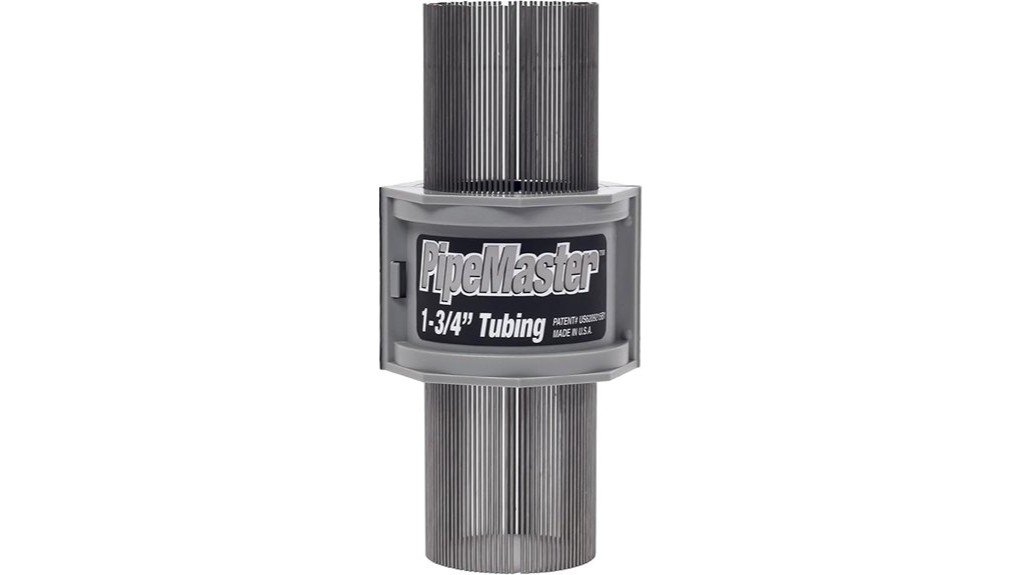
Getting a clean tube joint can take more time than the cut itself, especially when you are fitting round tubing against another curved surface. The PipeMaster P-T175 Contour Gauge helps you copy a 1-3/4 inch tube profile, trace it onto your workpiece, and reduce trial-and-error grinding. This review explains where it saves time, where it has limits, and who should treat it as a layout aid rather than a precision measuring instrument.
Quick Verdict
Rating: 8/10, Recommended with caveats
Best For: Welders, fabricators, roll cage builders, and DIY metalworkers fitting 1-3/4 inch OD tube
Bottom Line: The PipeMaster P-T175 speeds up tube coping layout and helps reduce wasted material. Its main tradeoff is that accuracy still depends on careful pin contact, clean tracing, and correct tube size selection.
Key Specifications
| Specification | Detail |
|---|---|
| Brand | PipeMaster |
| Model | P-T175 |
| Product Type | Pipe and tube contour gauge for coping layout |
| Tube Fit | Fits 1-3/4 inch OD tube |
| Metric Fit | 44.45 mm OD |
| Pin Material | Spring-temper stainless steel pins |
| Inner Core | 6061 aluminum |
| Housing | Rugged ABS shell |
| Design | Press, transfer, and trace layout guide |
| Best Use | Welding, fabrication, tube notching layout, coping, automotive, marine, and industrial projects |
| Size Note | Other PipeMaster sizes and kit options are available separately |
| Safety Note | Use as a layout tool only, not as a substitute for safe cutting, grinding, or welding practices |
What Is the PipeMaster P-T175 Contour Gauge?
The PipeMaster P-T175 is a contour gauge made for copying the shape of a tube intersection before you cut or grind the mating piece. It is sized for 1-3/4 inch OD tube, which makes it a practical option for many fabrication, roll cage, chassis, railing, and repair projects that use that tube size.
The tool uses spring-temper stainless steel pins that move against the contact surface and hold a profile you can transfer to the tube. You can then trace the contour with a marker or grease pencil before cutting. The 6061 aluminum inner core and ABS housing give it a tougher workshop feel than basic plastic household contour gauges.
It is not a digital gauge, a caliper, or a machining fixture. You should treat it as a hands-on template tool that helps you lay out cleaner cuts faster.
Build Quality and Materials
The strongest part of the PipeMaster P-T175 is its simple mechanical design. The spring-temper stainless steel pins are made to slide and capture the contour without needing batteries, software, or a digital display. That makes the tool easy to use in a dusty fabrication shop or at a jobsite where electronics may be less convenient.
The 6061 aluminum inner core adds stiffness, which matters when you press the gauge against a pipe or tube. A weaker core can flex and distort the profile, but this design gives you a firmer base for repeated layout work.
The ABS housing helps protect the tool from normal shop handling. You should still keep it away from heavy impact, welding spatter, grinding dust buildup, and direct heat because the housing and pin movement can suffer if abused.
Fit and Compatibility
The P-T175 is designed for 1-3/4 inch OD tube, also listed as 44.45 mm OD. This is an important buying point because PipeMaster tools are size-specific. You should not buy this version expecting one gauge to fit every tube diameter in your shop.
If you work with several tube sizes, check the exact OD before ordering. PipeMaster offers multiple sizes and kit options, so a different single gauge or a multi-size kit may make more sense for mixed fabrication work.
Before You Buy: This P-T175 version fits 1-3/4 inch OD tube. It is not a universal contour gauge for every pipe or tube size, so confirm your tube outside diameter before you order.
How It Works in Real Workshop Use
Daily Fabrication Tasks
For routine tube fitting, you press the gauge against the joint shape, let the pins form the profile, and transfer that line to the tube you plan to cut. This reduces repeated measuring and helps you make more consistent first cuts.
Pipe Coping and Tube Fitment
Tube coping often involves curved surfaces that are hard to mark by eye. The PipeMaster P-T175 helps you copy the mating shape, which can reduce gaps before welding. A cleaner fit may also reduce how much filler and rework you need.
Repair and Retrofit Work
Repair jobs often involve older parts, uneven shapes, or existing tube work that does not match a clean drawing. A physical contour gauge helps you copy the actual surface in front of you instead of relying only on measurements.
Small Workshop Projects
DIY builders can use the P-T175 for stands, frames, brackets, carts, rails, and other projects that use 1-3/4 inch tubing. It is most useful when you make repeated joints and want a faster layout process.
Ease of Use
The workflow is simple: press, transfer, trace, and cut. You do not need an app, a battery, or a separate measuring system to capture the contour. That makes the tool approachable for hobby users while still useful for experienced welders.
The main learning curve comes from pressure control. If you push too hard on one side, tilt the gauge, or let the pins shift during transfer, your traced line can move. You get the best result when you hold the gauge square to the tube and trace the profile before the pins are disturbed.
How to Use It Correctly
Start by cleaning loose debris, slag, or burrs from the tube area you want to copy. A rough surface can catch the pins and make the transferred shape less accurate. Press the gauge evenly against the joint area, then check that the pins have formed a smooth profile before marking your cut line.
Use a fine paint marker, soapstone, or grease pencil that shows clearly on your material. After cutting, test-fit the tube before welding. The PipeMaster can reduce rework, but you should still expect minor grinding or touch-up on some joints.
Pro Tip: Use light, even pressure when setting the pins, then mark the tube before moving the gauge around the bench. This helps prevent the profile from shifting during transfer.
Compatibility and Safety Notes
The PipeMaster P-T175 helps with layout, but it does not make cutting, grinding, or welding safer by itself. You still need proper eye protection, gloves, workholding, ventilation, and safe tool handling when you cut or weld the tube.
Keep the gauge away from hot metal and direct welding spatter. The stainless steel pins are built for repeated use, but the ABS housing and pin channels can be damaged by heat, heavy slag, or forceful bending.
For structural, racing, marine, or load-bearing fabrication, use this tool as one part of your layout process. Final fit, weld preparation, material choice, and weld quality still need proper skill and inspection.
Who Should Buy It?
Best For
- Welders and fabricators working with 1-3/4 inch OD tube
- Builders who make repeated tube coping cuts and want faster layout
- DIY metalworkers building frames, stands, rails, cages, or repair pieces
Skip If
- You need one gauge that fits many tube diameters
- You need machining-level dimensional accuracy
- You rarely work with curved joints, tube coping, or irregular profiles
Pros and Cons
Pros
- Fits 1-3/4 inch OD tube for common fabrication and roll cage work
- Spring-temper stainless steel pins capture curved profiles without electronics
- 6061 aluminum inner core gives the gauge a firmer workshop feel
- ABS housing helps protect the tool during normal shop use
- Can reduce recutting, grinding, and wasted tube when used carefully
Cons
- Size-specific design means it will not fit every tube in your shop
- Accuracy depends on steady pressure, careful transfer, and clean marking
- Not a substitute for calipers, CAD templates, or precision fixtures
Need a faster way to mark 1-3/4 inch tube joints?
Is It Worth the Price?
The PipeMaster P-T175 fits the budget-to-mid-range category for hands-on fabrication layout tools. Its value comes from time savings, cleaner first cuts, and less material waste when you often cope 1-3/4 inch tube.
It is worth considering if your projects involve repeated tube joints and you want a fast physical template. It is less compelling if you only make occasional flat cuts or if your shop already uses digital templates, dedicated notchers, and precision setup fixtures.
The best value comes when you match the gauge to the tube size you use most. If your projects use several outside diameters, compare PipeMaster kit options before buying a single-size tool.
How It Compares to Alternatives
Compared to basic plastic contour gauges, the PipeMaster P-T175 is more focused on tube and pipe fitting. The stainless steel pins, aluminum core, and ABS housing make it better suited to workshop layout than a general household profile gauge.
Compared to digital measuring tools or CAD-based templates, it is faster and simpler but less exact. Tube Master-style clamp gauges or dedicated tube notchers may offer more controlled setup for some builders, while the PipeMaster makes the most sense when you want quick profile transfer without adding a complex system.
Frequently Asked Questions
What tube size does the PipeMaster P-T175 fit?
The P-T175 is made for 1-3/4 inch OD tube, also listed as 44.45 mm OD. Check your tube outside diameter before buying because this is a size-specific tool.
Is the PipeMaster Contour Gauge accurate enough for welding?