Disclosure: As an Amazon Associate, we earn from qualifying purchases. If you click a link on this page and make a purchase, we may receive a small commission at no extra cost to you.
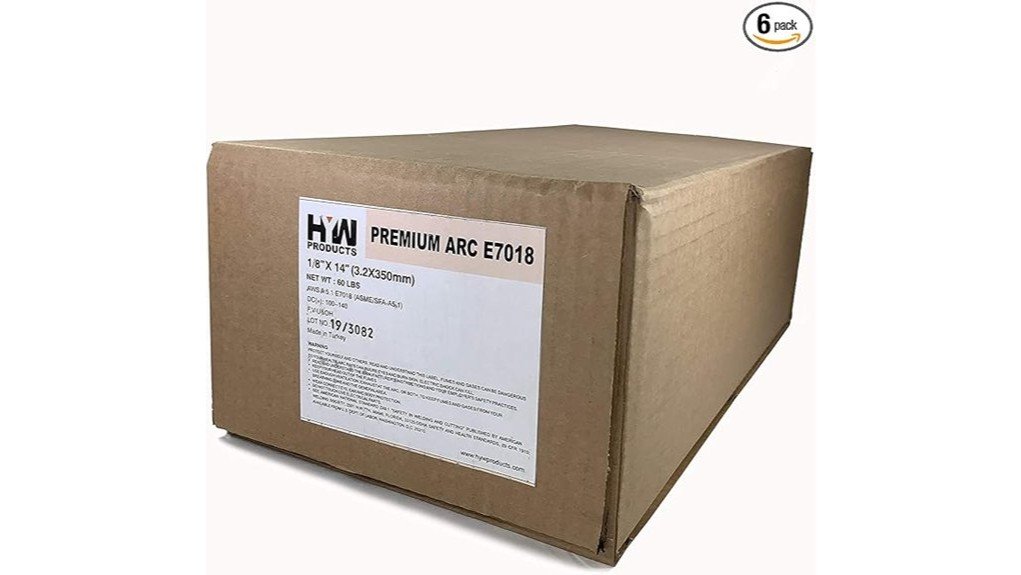
Buying E7018 electrodes in bulk can make sense for fabrication, repair, and structural work, but only when the rod size, machine setup, storage routine, and quantity fit your jobs. The Premium Arc E7018 package linked in this review is the 1/8-inch, 14-inch version sold as six 10 lb boxes, for 60 lb total. Its low-hydrogen E7018 design is aimed at smooth, strong stick welds in flat, horizontal, vertical-up, and overhead positions. The main tradeoff is that a 60 lb supply demands dry storage and may be excessive for occasional hobby use.
Quick Verdict
Rating: 8.7/10
Best For: Welders who regularly use 1/8-inch E7018 and can keep a large low-hydrogen supply properly stored.
Bottom Line: This bulk Premium Arc E7018 package gives you a useful 1/8-inch size, all-position capability except vertical-down, and a low-hydrogen electrode type suited to demanding steel work. The 60 lb quantity is practical for frequent use, but it creates a real storage and moisture-control burden for light users.
| Specification | Detail |
|---|---|
| Product | Premium Arc E7018 stick electrodes |
| AWS classification | E7018 |
| Welding process | SMAW / stick welding |
| Electrode diameter | 1/8 inch (3.2 mm) |
| Rod length | 14 inches |
| Package quantity | Six 10 lb boxes |
| Total package weight | 60 lb |
| Coating type | Low-hydrogen, iron-powder type |
| Welding positions | Flat, horizontal, vertical-up, and overhead |
| Article-listed amperage | 100 to 140 A for the 1/8-inch rod |
| Best use | Fabrication, repair, and steel work where E7018 is specified or appropriate |
| Storage note | Keep the low-hydrogen coating dry and follow the product label, welding procedure, and job requirements for exposure and redrying limits. |
Key Takeaways
- The linked product is a bulk 60 lb package of 1/8-inch Premium Arc E7018 electrodes, packed as six 10 lb boxes.
- E7018 is a low-hydrogen electrode classification designed for strong weld deposits and demanding steel applications.
- The 1/8-inch rods are 14 inches long and are intended for flat, horizontal, vertical-up, and overhead welding.
- The original article lists a 100 to 140 A working range, but your final setting should follow the electrode label, machine, polarity, joint, and qualified welding procedure when one applies.
- The biggest buying consideration is storage. A 60 lb low-hydrogen supply only makes sense if you can keep opened electrodes dry and use them at a reasonable rate.
What Is the Premium Arc E7018?
The Premium Arc E7018 is a shielded metal arc welding electrode with a low-hydrogen, iron-powder coating. The E7018 classification is commonly chosen when you need higher-strength weld metal, controlled hydrogen, a smooth arc, and a bead that is easier to clean than many fast-freeze electrodes.
This linked package is not a small trial box. It contains six 10 lb boxes of 1/8-inch electrodes, so it is aimed more at regular fabrication, repair, farm, shop, or contractor use than at someone who only burns a few rods each month. The product is especially useful when 1/8-inch E7018 is already a standard part of your welding routine.
Before You Buy: Do not choose this 60 lb bundle only because the cost per pound looks attractive. Low-hydrogen electrodes must stay dry, and code-controlled work may impose specific exposure, storage, lot, and procedure requirements that a retail listing alone cannot satisfy.
Who Should Buy It?
Best For
- Welders who regularly run 1/8-inch E7018 on steel fabrication or repair work.
- Shops that can store opened low-hydrogen electrodes correctly.
- Buyers who prefer a bulk six-box supply instead of reordering small packages.
Skip If
- You weld only occasionally and cannot keep opened rods in suitable dry storage.
- Your machine, job specification, or welding procedure calls for a different diameter, polarity, or electrode classification.
- You mainly need a deep-penetrating rod for dirty, rusty, or painted repair steel, where an E6011-type electrode may be a better first choice.
Low-Hydrogen Coating and Weld Strength
The most important feature is not the box size. It is the E7018 classification. E7018 electrodes use a low-hydrogen coating, which helps reduce hydrogen-related cracking risk when the electrodes are handled correctly. The classification also indicates a minimum tensile strength class of 70 ksi for deposited weld metal under the applicable AWS requirements.
That makes E7018 a common choice for higher-strength fabrication and many structural applications. It does not mean every E7018 rod is automatically approved for every structural job. If you are welding to a code, drawing, WPS, or customer specification, confirm the exact consumable requirements before striking an arc.
Arc Performance and Bead Quality
The original article highlights a smooth arc and minimal spatter, and those are practical reasons many welders choose E7018. A stable arc can make it easier to hold a consistent puddle, especially on fillets and multi-pass work. The iron-powder coating also supports a full slag cover that should be removed between passes.
You still need clean technique. A long arc, poor rod angle, excessive amperage, damp flux, or skipped slag removal can cause defects even when the electrode itself is capable of producing a clean bead. E7018 rewards a short, controlled arc and steady travel more than a whipping motion.
All-Position Capability
The 1/8-inch Premium Arc E7018 is suitable for flat, horizontal, vertical-up, and overhead work. That range makes one electrode useful across many common shop and field joints. For vertical welding, think vertical-up unless your exact procedure specifically allows something else. Standard E7018 guidance does not treat vertical-down as the normal position.
The all-position label does not remove the need to match rod diameter to the joint. A 1/8-inch electrode can be a versatile general size, but thin sheet, tight roots, or low-output machines may call for a smaller electrode and lower current.
Ideal Applications for E7018 Welding Rods
This product makes the most sense on steel work where E7018’s low-hydrogen characteristics, smooth arc, and strength class are useful. Typical examples include fabrication, equipment repair, structural components, shop projects, and maintenance work on steels that are appropriate for the electrode.
The product listing also describes use on hardenable, cold-rolled, and sulfur-bearing steels. Treat that as an application clue, not a blanket procedure. Hardenable and high-strength steels can require specific preheat, interpass temperature, filler selection, and post-weld controls, so follow the applicable welding procedure or qualified guidance for critical work.
How It Performs in Real Use
For Shop Fabrication
In a shop where 1/8-inch E7018 is already a standard electrode, the six-box format can reduce how often you reorder. You also have smaller 10 lb boxes inside the 60 lb total, which is more manageable than exposing one very large container at once. That packaging is useful only if unopened boxes stay sealed and opened rods are stored correctly.
For Repair Work
E7018 can produce strong, tidy repair welds on properly prepared steel. It is less forgiving of contamination than a fast-freeze E6011-style rod, so remove rust, scale, paint, oil, and moisture as completely as practical before welding. For dirty field repairs where preparation is limited, E6011 may be the more practical electrode for the first pass.
For Vertical-Up and Overhead Welding
The electrode’s position capability is a real advantage when you cannot rotate the work. A short arc, controlled puddle, correct travel angle, and conservative heat input matter more as you move out of position. Practice on scrap with the same thickness and joint orientation before committing to a critical weld.
For High-Volume Use
This is where the 60 lb bundle is easiest to justify. A busy shop can work through six 10 lb boxes while keeping unopened packages protected. A light user may save money per pound but lose that advantage if electrodes absorb moisture or sit unused for long periods.
Pro Tip: Open one 10 lb box at a time rather than exposing the full 60 lb supply. Keep the remaining boxes sealed, and move opened low-hydrogen electrodes to the storage method required by the manufacturer or your welding procedure.
How to Use It Correctly
- Confirm your machine setup: Make sure your welder can run the electrode at the required current and polarity for the product and job.
- Start with clean steel: Remove oil, water, paint, heavy rust, and loose scale from the joint area whenever possible.
- Keep a short arc: E7018 generally performs best with a close, controlled arc rather than a long whipping motion.
- Watch the amperage: The article lists 100 to 140 A for this 1/8-inch rod. Use that as a working reference only, then follow the product label and qualified procedure where required.
- Clean every pass: Remove slag fully before depositing another bead.
- Protect the coating: Discard rods with badly cracked, chipped, contaminated, or suspect flux rather than trying to force a poor weld.
Storage and Moisture Control
The original article gave a fixed shelf-life figure, but a simple number is not a reliable way to judge low-hydrogen electrodes. What matters is whether the packaging remains intact, how the rods were stored, how long opened electrodes were exposed, and what the manufacturer or job procedure requires.
Keep unopened boxes dry and protected from damage. Once a low-hydrogen package is opened, moisture pickup becomes a real concern. For work where hydrogen control matters, use appropriate heated storage and follow the electrode manufacturer’s exposure and redrying instructions rather than inventing your own oven cycle.
Safety and Job-Specification Checks
Stick welding exposes you to arc radiation, hot metal, sparks, fumes, electrical hazards, and fire risk. Use a suitable welding helmet, safety glasses, dry welding gloves, flame-resistant clothing, and protective footwear. Provide adequate ventilation and keep combustible materials away from the work area.
For structural, pressure, lifting, vehicle-frame, or other safety-critical welds, do not rely on a retail description alone. Follow the drawing, WPS, governing code, base-metal requirements, and any required welder qualification or inspection process.
Pros and Cons
Pros
- 1/8-inch, 14-inch format is a common general-purpose size for E7018 work.
- Low-hydrogen E7018 classification suits demanding steel fabrication when procedures call for it.
- Works in flat, horizontal, vertical-up, and overhead positions.
- Smooth arc and relatively low spatter can support clean-looking welds with proper technique.
- Six separate 10 lb boxes are easier to manage than exposing the entire 60 lb supply at once.
Cons
- A 60 lb purchase is more than many occasional welders need.
- Low-hydrogen electrodes require disciplined dry storage after opening.
- E7018 is less forgiving of dirty or poorly prepared steel than deep-penetrating E6011-type electrodes.
Is It Worth the Price?
This is a bulk-value purchase rather than a small-box convenience buy. You get the most value when you already know that 1/8-inch E7018 fits your machine and regular workload, and you can keep the six-box supply dry. For a shop that burns E7018 every week, buying 60 lb at once can be more practical than repeatedly ordering small packages.
For an occasional DIY welder, the value equation changes. A smaller box may cost more per pound but can reduce storage risk and unused inventory. The Premium Arc bundle is worth considering when quantity and repeat use matter more than minimum upfront spend.
How Does E7018 Compare to Other Welding Rods?
The original comparison treated E6011 and E6013 as flat/horizontal-only electrodes, which is not accurate. Both classifications are available for all-position welding. The more useful comparison is how the arc, penetration, coating, and typical use differ.
| Electrode | Typical Character | Positions | Best Fit |
|---|---|---|---|
| E7018 | Low-hydrogen, smooth arc, medium penetration, slag-covered bead | Flat, horizontal, vertical-up, overhead | Strength-focused fabrication and work where low-hydrogen electrodes are preferred or specified |
| E6011 | Forceful, deep-penetrating, fast-freeze arc | All-position | Repair, pipe, roots, and steel that cannot be cleaned as thoroughly |
| E6013 | Smooth, easy-running general-purpose arc with lighter penetration | All-position | Thin sheet, maintenance, short welds, and appearance-focused general work |
If you need a low-hydrogen electrode and stronger weld-metal classification, E7018 is the logical choice. If you need aggressive penetration on repair steel, compare E6011. If your priority is easy handling on thinner, cleaner material, E6013 may be easier to live with.
Frequently Asked Questions
What comes in the linked Premium Arc E7018 package?
The linked B07KL96FNH product is represented as six 10 lb boxes of 1/8-inch E7018 electrodes, for 60 lb total. The rods are 14 inches long.
Can 1/8-inch E7018 be used in every welding position?
It is an all-position classification for flat, horizontal, vertical-up, and overhead welding. Do not assume vertical-down is acceptable unless your exact electrode documentation and welding procedure allow it.
What amperage should you use for this 1/8-inch E7018?
The source article lists 100 to 140 A. Treat that as a starting reference, then use the electrode label, welder output, polarity, joint thickness, and qualified WPS when one applies.
Can you use E7018 on rusty or painted steel?
You should clean the joint as thoroughly as practical because E7018 is less tolerant of contamination than a deep-penetrating E6011-type electrode. Remove oil, moisture, paint, loose rust, and scale before welding whenever possible.
How should E7018 rods be stored after opening?
Keep them dry and follow the manufacturer’s exposure and storage instructions. When low-hydrogen control matters, opened electrodes are commonly kept in suitable heated storage rather than left exposed to shop air.
Is a 60 lb E7018 bundle good for beginners?
A beginner can learn with E7018, but buying 60 lb before you know your preferred diameter and machine settings is a large commitment. A smaller package may be smarter for practice, especially if you do not have proper low-hydrogen storage.
Is this E7018 automatically approved for structural welding?
No. An E7018 classification is useful information, but structural acceptance can depend on the exact consumable, lot documentation, storage history, WPS, base metal, code, and welder qualification. Verify those requirements for safety-critical work.
The Bottom Line
The Premium Arc E7018 1/8-inch, 60 lb bundle is a strong fit for welders who regularly use low-hydrogen electrodes and want six manageable 10 lb boxes for repeat shop or field work. Its main strengths are the E7018 strength class, smooth arc characteristics, and flat-to-overhead versatility, while its main limitation is the storage discipline and volume that come with buying 60 lb at once.
Choose it when 1/8-inch E7018 matches your machine, procedure, and workload. Skip the bulk bundle if you weld infrequently, need a different electrode size, or cannot keep opened rods properly dry.