Disclosure: As an Amazon Associate, we earn from qualifying purchases. If you click a link on this page and make a purchase, we may receive a small commission at no extra cost to you.
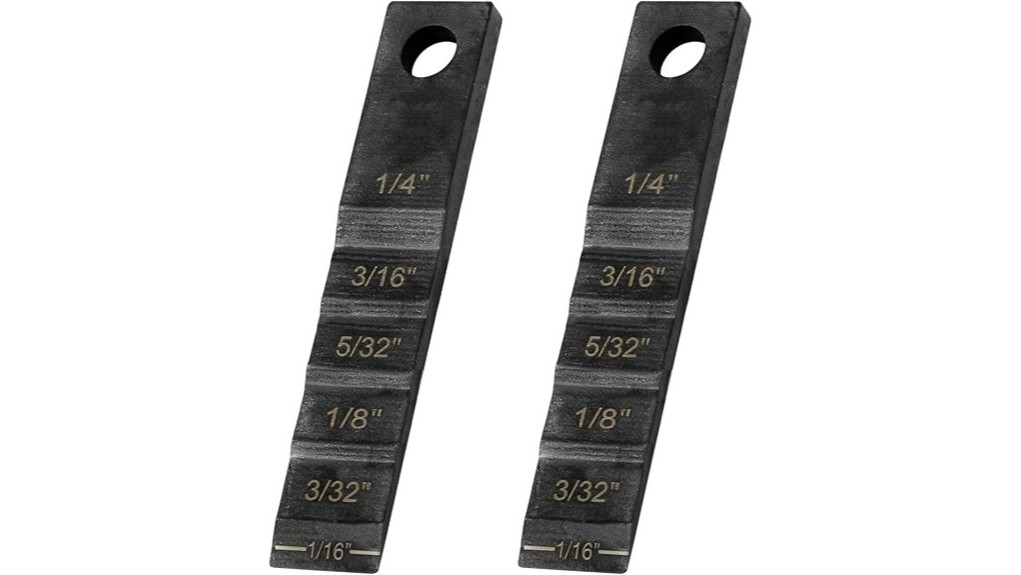
Getting a steady pipe gap can be frustrating when you are trying to tack, align, and weld without stopping to remeasure every few minutes. The 2130 Small Pipe Spacer Wedge Stepped Gauge is made for that job, giving you fixed gap steps from 1/16″ to 1/4″ in a compact 3/4″ x 4″ tool. Its biggest strength is simple, repeatable spacing during pipe fit-up, while its main limitation is that it only covers the listed gap sizes. This review helps you decide if the two-piece 2130 spacer wedge set is the right fit for your welding, pipe alignment, or shop layout work.
Quick Verdict
Rating: 8.1/10
Best For: Pipefitters, welders, and installers who need repeatable 1/16″ to 1/4″ spacing during pipe alignment.
Bottom Line: The 2130 Small Pipe Spacer Wedge is a practical fit-up aid if you want fixed spacing steps, a tapered wedge shape, and two pieces in one set. Skip it if you need a full measuring gauge, digital readout, or gap sizes outside its stepped range.
| Specification | Detail |
|---|---|
| Model | 2130 |
| Product type | Small pipe spacer wedge stepped gauge |
| Design | Tapered wedge with stepped gap measurements and clearance bar |
| Dimensions | 3/4″ x 4″ |
| Gap range | 1/16″ to 1/4″ |
| Marked gap steps | 1/16″, 3/32″, 1/8″, 5/32″, 3/16″, and 1/4″ |
| Material | High-strength carbon steel |
| Count | 2 pieces |
| Best use | Pipe fit-up, welding gap control, and pipeline alignment work |
| Care note | Wipe clean after use, inspect for wear, and store dry to help protect the carbon steel surface. |
Key Takeaways
- The 2130 Small Pipe Spacer Wedge measures 3/4″ x 4″ and comes as a two-piece set.
- It supports fixed gap checks from 1/16″ to 1/4″, including 3/32″, 1/8″, 5/32″, and 3/16″ steps.
- The tapered wedge shape helps you open or hold a gap while working on pipe alignment.
- High-strength carbon steel gives the tool a durable feel for shop and field fit-up work.
- It is best for repeatable spacing, not for measuring every possible pipe gap size.
What Is the 2130 Small Pipe Spacer Wedge?
The 2130 Small Pipe Spacer Wedge Stepped Gauge is a compact spacing tool for pipe welding and alignment. Instead of guessing the root gap or stopping to measure with a separate ruler, you can use its stepped wedge profile to check common gap sizes from 1/16″ to 1/4″.
The set includes two wedges, which is useful when you need support on more than one side of a joint or want a backup tool in your kit. The listed 3/4″ x 4″ size makes each piece small enough for a toolbox, welding cart, or service bag.
This tool is made for welders, pipefitters, and installers who need consistent pitch and repeatable fit-up. It is not a full layout system, but it can reduce trial and error when you only need one of the supported gap sizes.
Who Should Buy It?
Best For
- Welders who need repeatable 1/16″ to 1/4″ pipe spacing.
- Pipefitters who want a compact tool for quick fit-up checks.
- Shop or field crews that can use two wedges during alignment and tack-up.
Skip If
- You need gap sizes smaller than 1/16″ or larger than 1/4″.
- You want a multi-purpose inspection gauge with angle, bevel, or hi-lo measurements.
- You need verified warranty, weight, or certification details before buying.
Before You Buy: This is a stepped spacer wedge, not a full pipe inspection kit. Make sure the listed 1/16″ to 1/4″ gap range matches the joints, welding procedure, and fit-up standards you use.
Features and Functionality
Stepped Gap Control
The main feature is its stepped gap range. The tool lists 1/16″, 3/32″, 1/8″, 5/32″, 3/16″, and 1/4″ measurements, giving you several common spacing points for pipe fit-up.
That helps when you need a consistent root gap before tack welding. Instead of relying on a visual estimate, you can choose the nearest supported step and use it as a repeatable reference.
Tapered Wedge Shape
The tapered end helps you ease the tool into a joint and widen the gap in small increments. This can be useful when the pipe is close to position but needs a slight adjustment before tack-up.
Because the wedge is compact, you can use it in tighter work areas where a larger gauge may feel awkward. The tradeoff is that the tool only gives the marked gap steps, so it is less flexible than a full measuring gauge.
Two-Piece Set
The package includes two spacer wedges. That matters because pipe alignment often benefits from checking more than one position around the joint, especially when you are trying to keep a gap even before tacking.
A second piece also gives you a spare if one wedge is misplaced on a jobsite. For crews, the two-piece count can be more useful than a single small gauge.
Material Quality and Durability
The 2130 Small Pipe Spacer Wedge is listed as being made from high-strength carbon steel. For a pipe fit-up tool, that material choice makes sense because the wedge may face pressure, repeated contact, and occasional knocks during alignment work.
Carbon steel can handle demanding use, but it still needs basic care. Wipe the wedges clean after use, keep them dry, and avoid leaving them exposed to moisture for long periods. That simple habit can help protect the surface and keep the stepped edges easier to read and use.
Pro Tip: Keep one wedge in your main welding kit and one in your fit-up or layout pouch. That way you can check opposite sides of a joint without walking back to your cart.
Practical Applications and Usage
The 2130 spacer wedge is most useful when you need a physical gap reference during pipe welding preparation. It can help you set a consistent gap before tack welding, confirm spacing during alignment, and reduce small fit-up errors that lead to extra grinding or rework.
The listed 1/16″ to 1/4″ range covers several common small-gap situations. You can use the stepped profile to check the opening, then adjust the pipe position before committing to the weld.
It also works as a simple shop tool for installers who prefer fast, repeatable checks over complex measuring steps. The best results come when you use it alongside normal fit-up practices, not as a replacement for proper welding procedure, inspection, or professional judgment.
How It Performs in Real Use
For Pipe Fit-Up
During pipe fit-up, the wedge gives you a fast way to check whether the joint opening matches one of the marked gap sizes. This can save time when you are working through repeated joints and want a consistent setup before tacking.
For Tack Welding Prep
Before tack welding, a small mismatch in spacing can lead to uneven root conditions. The 2130 wedge helps you confirm the gap before the joint is locked in place. It is especially useful when you need a quick physical reference instead of a more detailed measuring tool.
For Field or Shop Work
The compact 3/4″ x 4″ size makes the wedge easy to carry in a pocket, bag, or welding cart drawer. It does not take much room, and the two-piece set gives you more flexibility when moving between workstations or pipe sections.
For Repeated Jobs
If you regularly work with the same gap sizes, a fixed stepped wedge can speed up your workflow. It will not replace careful inspection, but it can make repeated fit-up checks simpler and more consistent.
How to Use It Correctly
Start by confirming the required gap size for your weld procedure or job requirement. Then place the matching step of the wedge into the joint and check whether the fit is too tight, too loose, or close to the target spacing.
Use light, controlled pressure when positioning the wedge. Do not hammer the tool into a joint unless your work process specifically allows that type of adjustment, because forcing a wedge can damage the workpiece, distort the fit-up, or mark the tool.
After each use, remove slag, dust, oil, and moisture from the wedge. A quick wipe-down helps preserve the surface and keeps the steps easier to identify the next time you use it.
Compatibility and Safety
This spacer wedge is best suited for pipe alignment tasks where the desired gap falls within its listed 1/16″ to 1/4″ range. It may not be the right choice for very small precision gaps, larger fabrication openings, or specialty procedures that require a different measuring tool.
Because the wedge is made from carbon steel, use normal shop safety habits. Wear gloves when handling metal tools around sharp edges, hot work, or freshly cut pipe. Do not use the wedge as a pry bar, chisel, or striking tool unless the manufacturer specifically states that use is allowed.
For critical welds, code work, pressure piping, or inspected projects, always follow the approved welding procedure, project specifications, and the guidance of the qualified person responsible for the job.
Pros and Cons
Pros
- Supports six listed gap steps from 1/16″ to 1/4″.
- Compact 3/4″ x 4″ size is easy to carry in a welding kit.
- High-strength carbon steel construction is suited to repeated shop use.
- Tapered wedge design helps with quick spacing and alignment adjustments.
- Two-piece set gives you a spare or lets you check more than one point.
Cons
- Only covers the listed 1/16″ to 1/4″ gap range.
- Not a replacement for a full pipe inspection or welding gauge set.
- Verified weight, warranty, and certification details are not provided in the supplied product details.
Is It Worth the Price?
The 2130 Small Pipe Spacer Wedge looks like a strong value for the price if you need a simple, repeatable pipe spacing tool rather than a large inspection kit. The two-piece count adds value because you get a spare wedge or a second reference point during alignment.
It is worth considering if your work often involves 1/16″ to 1/4″ gaps and you want a compact tool that can stay in your welding bag. It is not the best fit if you need adjustable measurement across a wider range or verified documentation for highly controlled job requirements.
How It Compares to Alternatives
Compared with a basic ruler or tape measure, the 2130 wedge is faster for fixed pipe gap checks because the steps are already built into the tool. Compared with a full welding inspection gauge, it is simpler and easier to carry, but it does not cover as many measurements.
If you need bevel, angle, hi-lo, or weld profile checks, a broader welding gauge may be better. If you only need quick spacing at the listed gap sizes, the 2130 Small Pipe Spacer Wedge makes more sense as a compact fit-up aid.
Frequently Asked Questions
What gap sizes does the 2130 Small Pipe Spacer Wedge measure?
It lists six gap sizes: 1/16″, 3/32″, 1/8″, 5/32″, 3/16″, and 1/4″. That makes it useful for common small pipe fit-up gaps, but not for gaps outside that range.
How big is each spacer wedge?
Each wedge is listed at 3/4″ x 4″. The compact size makes it easy to keep in a toolbox, welding cart, or field service bag.
Is this a two-piece set?
Yes, the product details list 2 PCS. That gives you a spare wedge or lets you check more than one point around a pipe joint.
Can it replace a full welding inspection gauge?
No. This is mainly a spacer wedge for gap control and alignment. If you need hi-lo, bevel angle, weld size, or undercut measurements, you should use the proper inspection gauge for that work.
What material is the wedge made from?
The product details list high-strength carbon steel. That is a practical material for a shop tool, but you should keep it clean and dry to help limit surface corrosion.
Can it be used outdoors?
It can be useful for field work, but carbon steel tools should not be left wet or exposed. Wipe the wedges clean after outdoor use and store them in a dry kit or case.
What should I confirm before buying?
Confirm that the 1/16″ to 1/4″ stepped range matches the pipe gaps you use. Also check the current seller details for any weight, warranty, or package information that may matter for your jobsite or purchasing requirements.
The Bottom Line
The 2130 Small Pipe Spacer Wedge is a practical buy if you need a compact, two-piece tool for repeatable 1/16″ to 1/4″ pipe gap checks. Its strengths are the stepped wedge design, carbon steel construction, and small toolbox-friendly size. Skip it if you need a full inspection gauge, a wider measurement range, or verified documentation beyond the listed product details.