Disclosure: As an Amazon Associate, we earn from qualifying purchases. If you click a link on this page and make a purchase, we may receive a small commission at no extra cost to you.
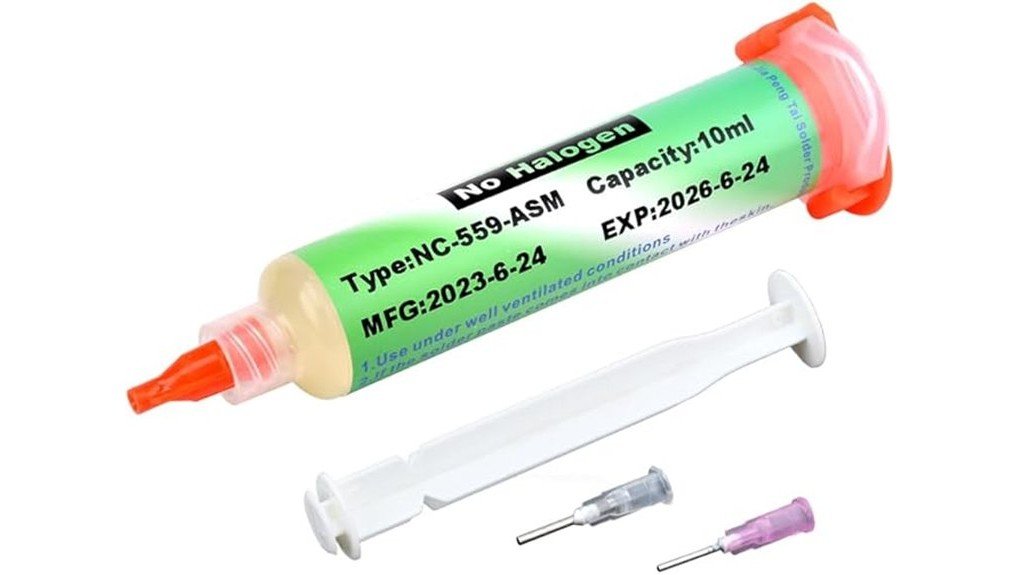
Small electronics repairs can fail fast when solder does not flow cleanly, especially around BGA pads, SMD parts, and USB socket pins. Solder Flux 559 is a 10cc no-clean soldering flux paste made for precise electronics work where you need better wetting, cleaner joints, and controlled placement. Its lead-free rosin formula and viscous yellow paste design make it useful for hobby repair benches, phone board work, small PCB fixes, and detailed rework jobs. It is not a magic fix for poor heat control or dirty surfaces, but it can make soldering easier when you apply it correctly.
Quick Verdict
Rating: 8.4/10, Recommended with caveats
Best For: Electronics repair users who need a controlled no-clean flux paste for BGA, SMD, USB socket, and small PCB soldering tasks.
Bottom Line: Solder Flux 559 is a practical choice if you want a small syringe-style flux paste that improves solder flow and joint adhesion. You should skip it if you need a fully verified industrial spec sheet, exact certification data, or a flux for plumbing, brazing, or non-electronics work.
| Specification | Detail |
|---|---|
| Product Name | Solder Flux 559 |
| Product Type | No-clean soldering flux paste |
| Size | 10cc / 10ml package |
| Formula Type | Lead-free rosin flux |
| Composition Detail | Hydrogenated rosin and mixed active agents, according to the source article |
| Paste Appearance | Viscous yellow paste |
| Residue Type | Transparent no-clean residue after soldering |
| Supported Uses | BGA, SMD, USB socket, tin soldering, and small electronics repair work |
| Application Method | Apply a thin layer with the included push rod or needle-style applicator |
| Storage Note | Store sealed in a cool, dry place after opening |
| Best Use | Detailed electronics soldering where controlled placement and better solder adhesion matter |
What Is the Solder Flux 559?
Solder Flux 559 is a no-clean soldering flux paste for electronics repair and rework. It comes in a 10cc, or 10ml, package and uses a lead-free rosin-based formula. The source article describes the paste as viscous and yellow, which helps it stay where you place it instead of running across the board.
The main job of this flux is to help solder wet the joint, flow into the contact area, and form a cleaner connection. That matters most when you work on small pads, narrow USB socket pins, BGA areas, and SMD components. In those jobs, a small amount of controlled flux can reduce frustration and help you avoid repeated heating.
The no-clean design means the residue is intended to be less demanding than many traditional flux residues. Still, no-clean does not mean you should ignore inspection. If residue blocks visual checks, gathers around connector contacts, or sits under sensitive areas, cleaning may still be the smarter choice.
Who Should Buy It?
Best For
- Electronics hobbyists repairing small PCB joints, USB sockets, and SMD parts.
- Repair bench users who want a paste-style flux that stays near the joint.
- Buyers who prefer a no-clean, lead-free rosin flux for detailed soldering tasks.
Skip If
- You need a product with fully verified manufacturer documentation, certification details, or exact industrial compliance data.
- You need flux for plumbing, brazing, stained glass, or heavy metal work rather than electronics.
- You want a watery liquid flux pen instead of a thicker paste applied with a needle or push rod.
Before You Buy: This review could not independently verify the Amazon listing details beyond the source article, so treat unsupported claims such as exact certifications, warranty terms, or manufacturer data as items to confirm on the product page before purchasing.
Key Benefits of Using Solder Flux 559
The biggest benefit of Solder Flux 559 is controlled solder flow. When you apply a thin amount to a clean joint, the paste can help solder spread across the contact area instead of beading up or refusing to wet the pad. That can make small electronics work feel more predictable.
The paste format also helps with precision. A thin liquid flux can spread quickly, but this viscous paste is easier to place around small pins, pads, and sockets. That makes it useful when you want flux in one area without flooding nearby components.
The no-clean residue is another practical advantage. The article states that Solder Flux 559 leaves a transparent residue after soldering, which can help keep finished repairs visually cleaner. You may still clean the area when residue is excessive, tacky, or close to connector mating surfaces.
Formula, Residue, and Material Notes
Solder Flux 559 uses a lead-free rosin flux formula. The article also identifies hydrogenated rosin and mixed active agents as part of its composition. For buyers, that matters because rosin-style fluxes are common in electronics soldering and are designed to help solder bond to metal surfaces.
The article also describes the formula as halogen-free. That is a useful detail for electronics users who care about residue behavior, but you should still check the current product page or label if you need formal compliance data for professional assembly work.
No-clean flux can reduce cleanup work, but it does not remove the need for good workmanship. Use enough flux to coat the joint area, not so much that it spreads across the board. Excess paste can make inspection harder, especially around tight connectors or dense component layouts.
Application Techniques for Optimal Results
Good flux does not replace clean surfaces. Before applying Solder Flux 559, remove loose debris, old burnt flux, and visible contamination from the work area. A clean pad gives the flux and solder a better chance to do their job.
Use the provided push rod or needle applicator to place a small amount of paste on the joint. A thin, even layer usually works better than a large blob. Too much paste can bubble, smoke, or leave extra residue that makes the finished repair harder to inspect.
Heat control matters as much as flux choice. Use a fine-tip soldering iron for small pads and avoid holding heat on one spot longer than needed. For USB socket pins or SMD work, steady hand placement and clean soldering iron tips can reduce bridge risk and component stress.
Pro Tip: Start with less flux than you think you need, then add a tiny amount only if the solder still refuses to flow. Over-applying paste can hide bridges and make cleanup harder on dense circuit boards.
How It Performs in Real Use
For BGA and SMD Rework
Solder Flux 559 makes the most sense for detailed rework where paste placement matters. Around BGA pads and SMD components, the viscous texture can help the flux stay near the target area during heating. That gives you more control than a thin liquid in tight spaces.
For USB Socket Repairs
USB socket pins often sit close together, so solder flow and bridge control both matter. A small amount of this paste can help solder bond to the pins and pads, but you still need a clean iron tip and careful heat placement. Inspect the area closely after soldering because flux residue can make tiny bridges harder to see.
For Hobby Electronics Projects
If you build or repair small electronics at home, this 10cc package gives you a compact amount of flux without taking much bench space. It works best as an add-on to your solder wire, iron, tweezers, wick, and cleaning tools. It is not a full soldering kit by itself.
For Occasional Repair Work
The small package size is useful if you only solder from time to time. Storage matters after opening, so keep the cap sealed and the paste away from heat and moisture. If the paste dries out, separates, or becomes difficult to dispense, it may not perform as intended.
Compatibility and Safety
Solder Flux 559 is aimed at electronics soldering, especially BGA, SMD, USB socket, and tin-based soldering tasks mentioned in the source article. It can be used with leaded solder according to the original FAQ, but many buyers will also consider it for lead-free electronics work because the flux itself is described as lead-free.
Use this product only in a ventilated workspace and follow the product label. Soldering can create fumes from flux and heated materials, so avoid breathing directly over the work area. If you work on expensive electronics, critical boards, or customer repairs, confirm the flux type and cleaning requirements before use.
Do not treat no-clean residue as a reason to skip inspection. Check for solder bridges, dull joints, leftover paste, and residue near connectors. Clean the board when appearance, performance, or future reliability matters.
Pros and Cons
Pros
- No-clean lead-free rosin formula supports cleaner electronics soldering work.
- Viscous yellow paste is easier to control around small pads and tight pins.
- Useful for BGA, SMD, USB socket, and other small electronics repair tasks.
- Transparent residue can make finished joints look cleaner than heavy visible residue.
- 10cc / 10ml package is compact enough for hobby benches and occasional repair work.
Cons
- Exact brand, warranty, and certification details were not verified from the source article.
- No-clean residue may still need cleaning for inspection-critical or connector-heavy repairs.
- Requires correct placement, clean surfaces, and proper heat control to work well.
Is It Worth the Price?
Solder Flux 559 is worth considering if you need a small, paste-style flux for electronics repair rather than a large shop-size supply. Its value comes from controlled application, no-clean convenience, and support for common small-board jobs like BGA, SMD, and USB socket repairs.
It is a smart buy for everyday electronics hobby work if you already have the right soldering iron, tips, solder, wick, and cleaning tools. The 10cc size should be enough for many small repairs because you only need a thin layer at the joint.
The main limitation is verification. Since exact manufacturer data, formal certifications, and warranty terms were not confirmed, professional users should check the current Amazon listing and product label before using it on paid customer work or high-reliability electronics.
How It Compares to Alternatives
Compared with liquid flux pens, Solder Flux 559 gives you more placement control because the paste is thicker and less likely to run across the board. That makes it better for tight pins and small pads, but a flux pen may feel faster for broad, simple through-hole soldering.
Compared with water-soluble flux, this no-clean paste aims to reduce mandatory cleanup. Water-soluble flux can be useful when a full cleaning process is part of your workflow, but it is less convenient for quick bench repairs. Solder Flux 559 makes the most sense when you want a compact paste for small electronics jobs and can inspect residue after soldering.
Frequently Asked Questions
Is Solder Flux 559 safe for sensitive components?
It is intended for electronics repair tasks such as BGA, SMD, and USB socket soldering. The flux can support cleaner soldering, but component safety still depends on heat control, dwell time, board condition, and correct technique.
Do you need to clean Solder Flux 559 after soldering?
The product is described as no-clean and leaves a transparent residue. You may still want to clean the area if residue is heavy, sticky, blocking inspection, or sitting near connector contacts.
Can Solder Flux 559 be used with leaded solder?
Yes, the original article states that Solder Flux 559 can be used with leaded solder. The flux itself is described as lead-free rosin flux, but you should still match your solder and process to the board you are repairing.
How should you apply Solder Flux 559?
Apply a thin, even layer to the joint using the push rod or needle-style applicator. For small SMD or USB socket work, place only enough paste to cover the target area without flooding nearby pins.
How should Solder Flux 559 be stored after opening?
Store it tightly sealed in a cool, dry place after opening. Keep it away from heat, moisture, dust, and direct sunlight so the paste stays easier to dispense.
What is the shelf life of Solder Flux 559?
The source article states that the shelf life is typically around 12 months when stored properly. Check the package label for the most accurate date, and do not use the paste if it looks dried out, contaminated, or unusually separated.
Is Solder Flux 559 compatible with all soldering irons?
It should work with common soldering irons used for electronics repair, but the iron tip and temperature control matter. A fine tip works better for small pads, while an overheated or dirty tip can still damage components or create poor joints.
Who should skip Solder Flux 559?
Skip it if you need a verified industrial data sheet, a flux for non-electronics metalwork, or a cleaning process with documented compliance requirements. It is also not ideal if you prefer a low-viscosity liquid flux pen for quick broad application.
The Bottom Line
Solder Flux 559 is a recommended choice for electronics users who need a compact no-clean rosin flux paste for BGA, SMD, USB socket, and small PCB repairs. Its main strength is controlled paste placement with clean solder flow support, while its main limitation is the lack of independently verified listing details in the available source. Skip it if you need formal documentation, heavy-duty non-electronics flux, or a fully verified professional production material.