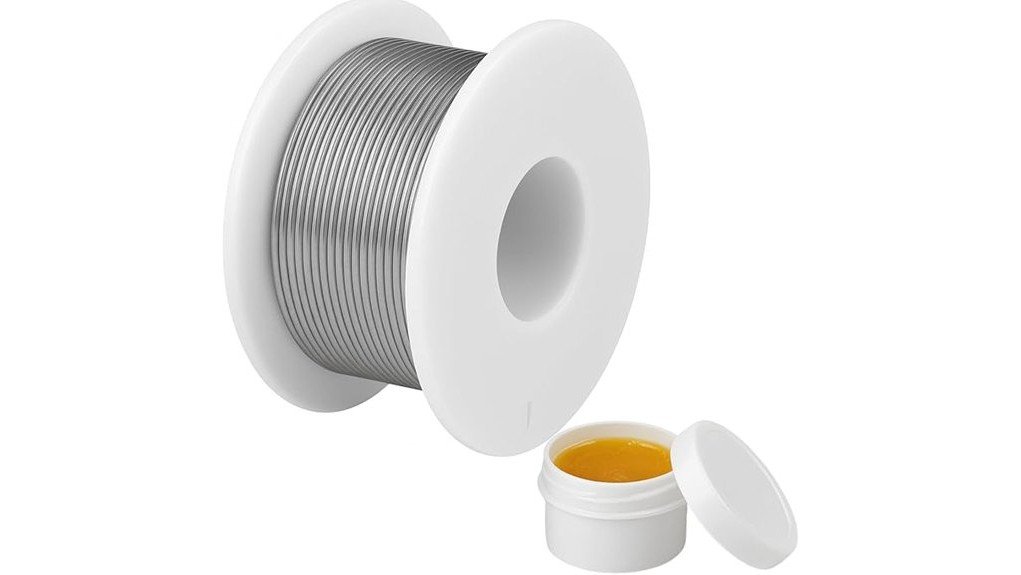
The PowerPath PP-1390 soldering kit is a small consumables pack: 50 g of 0.75 mm rosin-core tin-lead solder wire plus a tub of flux paste. It does not include an iron, so this PowerPath PP-1390 review is about whether the solder and flux suit your electronics work, based on the Amazon listing rather than hands-on testing. It is useful for circuit boards, cables and small repairs; skip it if you need lead-free solder.
Quick specs at a glance
| Item | Per the listing |
|---|---|
| Type | Solder wire and flux paste kit (no iron) |
| Solder weight / diameter | 50 g / 0.75 mm |
| Alloy | Tin-lead, rosin core (not lead-free) |
| Melting range | About 183–190°C (361–374°F) |
| Flux | Paste flux included |
| Kit size / weight | About 5.12 x 3.31 x 1.06 in / 2.39 oz |
The listing mentions mixed durability feedback and a modest rating, so check the current reviews and return terms before ordering.
Check current price on Amazon →
What it is and who it suits
A tin-lead rosin-core solder around 60/40 or 63/37 is what many hobbyists learn on, because it melts at a lower temperature than most lead-free alloys and flows easily. The 0.75 mm diameter suits through-hole parts and general wire work, and the paste flux helps on tinning wires, oxidized leads or stubborn joints.
This kit suits electronics repair, cables and small connector work. It does not suit anyone who needs RoHS-compliant lead-free work, plumbing for drinking water, or food-contact items. With only 50 g in the kit, it is a starter amount rather than a bulk supply.
How to check it fits your needs
- Lead content: the listing describes tin-lead solder. If your work requires lead-free solder, choose a different product.
- Diameter: 0.75 mm works for most through-hole work. Fine SMD work often uses thinner wire.
- Flux type: check whether the paste is rosin-based or no-clean, and whether it needs cleaning after use.
- Iron compatibility: any normal electronics iron that holds 300–350°C will do. You will need to supply the iron; see our TI-SMART soldering iron kit review for a kit option.
- Quantity: 50 g covers modest projects; heavier use calls for a larger spool.
Pros and limitations
| Pros | Limitations |
|---|---|
| Low melting range for easy flow | Contains lead; needs careful handling |
| Rosin core and paste flux in one pack | No iron or accessories |
| Compact and light | Small quantity |
| Useful for wires, boards and small joints | Reviews mention durability concerns |
Check current price on Amazon →
Using leaded solder and flux paste safely
- Wash your hands after handling solder, do not eat or drink at the bench, and keep it away from children.
- Ventilate the area. Rosin and flux smoke is irritating; a fan or fume extractor helps.
- Use a small dab of paste flux, heat the joint, then add solder. More flux does not make a better joint.
- Clean flux residue from boards if the flux is not labeled no-clean, since some residue can attract moisture over time.
- Do not use leaded solder on drinking-water plumbing, cookware or items that touch skin or food.
- Dispose of dross and scraps as your local rules require for lead-bearing waste.
Alternatives and related guides
- AIEX silver solder wire for torch brazing, a different kind of job.
- Solder wire holder stand to keep spools tidy.
- Hicello soldering iron kit if you also need an iron.
Frequently Asked Questions
Is the PowerPath PP-1390 solder lead-free?
No. The listing describes it as rosin-core tin-lead solder. That melts at a lower temperature than many lead-free alloys, but it contains lead, so wash your hands, ventilate the area and avoid using it for drinking-water plumbing or food-contact items.
What is the melting point of this solder?
The listing gives about 183 to 190°C (361 to 374°F). Your iron needs to run hotter than that to flow the solder well, commonly in the 300 to 350°C range, but not so hot that it burns the flux or damages parts.
Does the kit include a soldering iron?
No. The pack consists of solder wire and flux paste. You need to supply a suitable iron, a stand, and ideally a tip cleaner such as brass wool. Check the listing contents before ordering if you want a complete starter set.
Do I need to clean flux off after soldering?
It depends on the flux. Rosin residue is often harmless on simple projects but can attract dust or moisture on sensitive boards. If the flux is not marked no-clean, remove residue with isopropyl alcohol and a brush.
Conclusion
The PowerPath PP-1390 is a simple leaded solder and flux pack for electronics practice and light repairs. Confirm that leaded solder is acceptable for your work, and buy an iron separately.
Check current price on Amazon →