Disclosure: As an Amazon Associate, we earn from qualifying purchases. If you click a link on this page and make a purchase, we may receive a small commission at no extra cost to you.
Removing excess solder can be frustrating when a joint is crowded, a bridge forms between pins, or a component needs to come off cleanly. Solder Wick gives you a simple way to draw molten solder away from the joint using a fine copper braid and capillary action. This review looks at the 0.1-inch by 10-foot no-clean solder wick described in the listing content, including where it helps most and where you may need another desoldering tool. It is a practical choice for small electronics work, but it still requires heat control, clean technique, and care around sensitive components.
Quick Verdict
Rating: 8.2/10
Best For: hobbyists, electronics repair work, solder bridge cleanup, and small bench projects.
Bottom Line: This solder wick is worth considering if you want a compact, low-mess way to remove solder from small joints. Its 0.1-inch width gives you good control, but it is not the fastest option for large solder pads or heavy solder removal.
| Specification | Detail |
|---|---|
| Product type | Solder wick, also called desoldering braid |
| Material | High-quality copper braid |
| Design | Fine braided structure designed to absorb molten solder through capillary action |
| Width | 0.1 inch |
| Length | 10 feet |
| Residue note | No-clean characteristic helps minimize extra residue |
| Best use | Removing excess solder, fixing solder bridges, cleaning circuit board joints, and reclaiming components |
| Use settings | Home electronics, laboratories, education, repair benches, and small industry tasks |
| Storage note | Store in a cool, dry place away from moisture and direct sunlight |
What Is the Solder Wick?
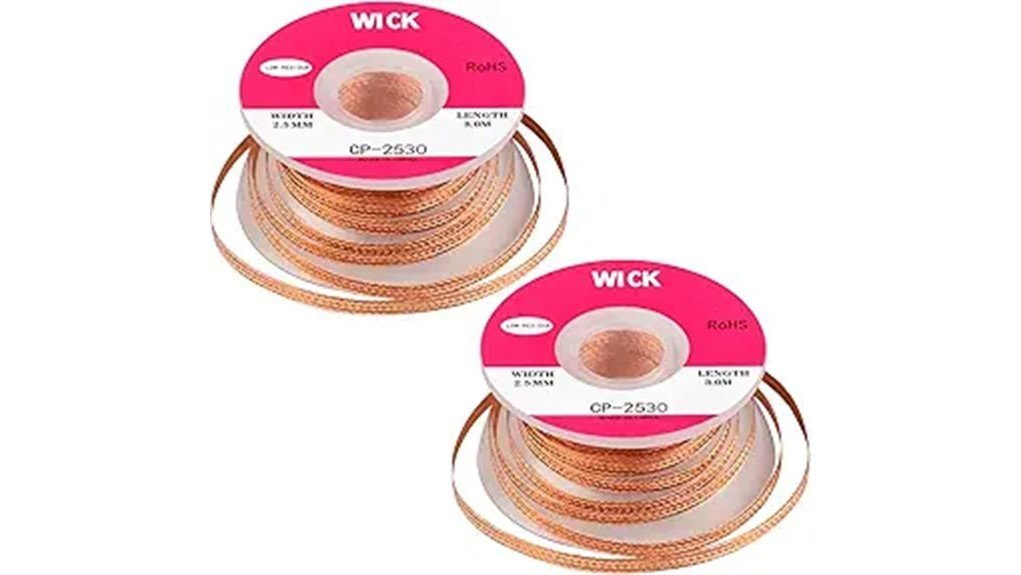
This Solder Wick is a copper desoldering braid used to remove unwanted solder from electronic joints. You place the braid over the joint, heat it with a soldering iron, and let the molten solder flow into the copper strands.
The article-supported size is 0.1 inch wide and 10 feet long. That width is useful for many small electronics tasks because it gives you more control than a bulky braid on tight circuit boards. The 10-foot length also gives you enough material for repeated repair jobs, practice work, or bench use.
The no-clean characteristic is a helpful detail if you want less residue after desoldering. It does not mean you can ignore good technique, but it can reduce the extra cleanup needed after small solder corrections.
Key Takeaways
- The solder wick uses a high-quality copper braid to absorb molten solder through capillary action.
- The 0.1-inch width is best suited for small to medium solder joints, fine repair work, and tight spaces.
- The 10-foot length gives you enough braid for multiple repair, learning, and cleanup tasks.
- The no-clean feature helps keep the work area cleaner, but careful heat control still matters.
- It is most useful for correcting solder bridges, freeing component leads, and cleaning excess solder from pads.
Who Should Buy It?
Best For
- You repair small electronics, circuit boards, wires, switches, or hobby projects.
- You need a narrow 0.1-inch braid for controlled solder removal in tight spaces.
- You want a low-residue desoldering option for occasional bench or lab use.
Skip If
- You need to remove large amounts of solder from big pads, shields, or heavy terminals.
- You do not have a soldering iron that can heat both the braid and the joint properly.
- You work mostly on heat-sensitive parts and need a powered desoldering station for faster removal.
Features and Benefits of Solder Wick
Copper Braid and Capillary Action
The main feature is the copper braid. When you heat the braid and the solder joint together, molten solder flows into the tiny spaces between the copper strands. This is the capillary action that makes solder wick useful for repair work.
For you, that means you can remove solder without needing a squeeze bulb, pump, or powered station for every small job. It works especially well when you need precision around pins, pads, and small joints.
0.1-Inch Width for Controlled Work
The 0.1-inch width is a practical middle ground for many electronics jobs. It is narrow enough for circuit board cleanup and wide enough to absorb a useful amount of solder when the joint is heated correctly.
This size is not ideal for every job. If you are clearing a large ground pad or a heavy solder blob, you may need wider braid, more heat, or a different desoldering tool.
10-Foot Length for Multiple Repairs
The 10-foot length gives you more than a single-use strip. Since you should move to a clean, unused section after solder fills the braid, the extra length helps you work through several joints or mistakes before needing more material.
That matters if you are learning to solder, repairing older electronics, or cleaning up several bridges on one board. Used sections should be trimmed away or moved aside because solder-filled braid does not absorb well.
No-Clean Characteristic
The no-clean feature helps reduce leftover residue compared with messier solder removal methods. This can save time when you are working on small boards, quick repairs, or projects where a neat finish matters.
No-clean does not mean zero care. You should still inspect the area after desoldering and follow the needs of the circuit, especially when working near sensitive parts, connectors, or fine-pitch components.
Before You Buy: This is a narrow 0.1-inch solder wick. It is best for controlled solder removal, not for clearing large solder areas quickly. For heavy desoldering, you may need a solder sucker, wider braid, or a powered desoldering station.
How It Performs in Real Use
For Fixing Solder Bridges
When two nearby pins are accidentally joined by extra solder, this wick gives you a controlled way to remove the bridge. Place the braid over the bridge, heat it with the iron, and lift it away after the solder flows into the copper.
For Through-Hole Component Repair
For through-hole parts, the wick can help remove solder from pads and leads before you pull the component free. It may take more than one pass if the joint has a lot of solder or connects to a large copper area that pulls heat away.
For Small Bench and Lab Work
In a repair bench, classroom, or lab setting, the 10-foot length gives you enough material for repeated practice and small corrections. It is simple to store and does not require charging, batteries, or moving parts.
For Learning and Hobby Projects
If you are still building soldering skill, this tool helps you recover from common mistakes. It lets you clean up excess solder, improve pad visibility, and practice careful heat placement without adding a complex tool to your kit.
How to Use Solder Wick Effectively
Start with a clean soldering iron tip and an unused section of wick. Place the solder wick directly over the solder joint you want to clean. Touch the iron tip to the top of the braid so heat passes through the braid and into the solder underneath.
Once the solder melts, it should move into the copper braid. Lift the wick and iron away together to avoid dragging the pad. Move to a fresh part of the braid for the next joint because a used section filled with solder will not absorb as well.
The original article notes about 350°C as a useful working temperature. Treat that as a starting point, not a fixed rule. Your solder type, iron tip, board size, and component sensitivity can all change the amount of heat needed.
Pro Tip: Keep the iron tip in contact with both the wick and the joint. If you heat only the braid, the solder may not melt fully. If you heat only the joint, the braid may not absorb fast enough.
Common Mistakes to Avoid
- Using the same section too long: Once the braid is full of solder, move to a clean section.
- Pulling before the solder melts: This can stress pads or leads. Let the solder flow first.
- Using too much heat for too long: Extra heat can damage pads, plastic parts, or sensitive components.
- Choosing the wrong width: Narrow braid is great for control, but larger solder areas may need a wider wick.
- Ignoring board safety: Disconnect power and avoid desoldering live circuits.
Compatibility and Safety
Solder wick is generally used on electronic solder joints, but the circuit matters. Some parts, boards, connectors, and pads can be sensitive to heat. If you are working on valuable equipment, high-voltage devices, batteries, or safety-critical electronics, get qualified help instead of guessing.
Use the tool in a ventilated area, keep the hot iron away from skin and cables, and return the iron to its stand when not in use. The copper braid becomes hot during use, so handle it by the cool portion and let used sections cool before trimming or discarding them.
For best storage, keep the wick in a cool, dry place away from moisture and direct sunlight. A small case or sealed drawer can help keep the braid clean and ready for later repairs.
Applications in Various Settings
This solder wick fits several practical repair settings because it is compact, simple, and does not need a power source by itself. You still need a soldering iron, but the braid is easy to keep in a toolkit, drawer, or lab bench organizer.
- Home repairs: Clean up soldering mistakes on small electronics and hobby boards.
- Electronic projects: Remove excess solder from pads, wires, and circuit board joints.
- Laboratories: Support careful work on small instruments and test boards.
- Educational settings: Help learners practice solder correction and component removal.
Pros and Cons
Pros
- High-quality copper braid supports strong solder absorption when heated correctly.
- 0.1-inch width gives you good control for small solder joints and tight spaces.
- 10-foot length provides enough material for several repairs or practice sessions.
- No-clean characteristic helps reduce extra residue and keeps the work area neater.
- Simple tool with no moving parts, batteries, or setup beyond a soldering iron.
Cons
- Not the fastest choice for large solder pads or heavy solder removal.
- Requires correct heat placement and a clean, unused section of braid.
- Used sections are not practical to reuse once filled with solder.
Is It Worth the Price?
This solder wick can be a strong value for the price if you regularly fix solder bridges, clean pads, or remove small components. You get a useful 10-foot length and a controlled 0.1-inch width, which makes it a smart buy for everyday bench use.
The most value goes to buyers who want a simple, compact desoldering tool for small repairs. It is not the best fit if your main work involves large solder joints, thick terminals, or high-volume desoldering where a powered tool may save time.
How It Compares to Alternatives
Compared with a manual solder sucker, solder wick gives you more control in tight areas and can be easier around small pins. A solder sucker may be faster for removing larger amounts of molten solder from through-hole joints, but it can be less precise in cramped spaces.
Compared with a powered desoldering pump or hot-air rework station, this wick is simpler and easier to store. Powered tools may be better for frequent repair work, larger components, or heavy solder removal. This Solder Wick makes the most sense when you want low-cost precision for small solder cleanup tasks.
Frequently Asked Questions
What is solder wick used for?
Solder wick is used to remove excess solder from electronic joints. It helps clean pads, fix solder bridges, and prepare component leads for removal.
Is the 0.1-inch width good for small electronics?
Yes, the 0.1-inch width is useful for many small electronics repairs because it gives you controlled contact with the joint. For very large pads or heavy solder, a wider braid or another desoldering tool may work faster.
Can solder wick be reused after use?
Used solder wick is usually not practical to reuse. Once a section is filled with solder, it loses absorption, so you should move to a clean section for the next joint.
What temperature should you use with solder wick?
The original article notes about 350°C as a useful starting point. Adjust based on your solder type, board size, and component sensitivity, and avoid holding heat on the joint longer than needed.
Is no-clean solder wick completely residue-free?
No-clean means it is designed to minimize residue, not that every job will look perfect without inspection. After desoldering, check the board and clean only if your project, board, or component requires it.
How should you store solder wick?
Store it in a cool, dry place away from moisture and direct sunlight. Keeping it in its package, a small case, or a clean drawer helps protect the braid from dirt and contamination.
Is solder wick better than a solder sucker?
Solder wick is often better for precise cleanup in tight spaces. A solder sucker can be better when you need to remove a larger amount of molten solder quickly from a through-hole joint.
Who should skip this solder wick?
Skip it if you mainly remove solder from large pads, high-mass terminals, or many joints in a row. In those cases, wider braid, a solder sucker, or a powered desoldering station may be a better fit.
The Bottom Line
This Solder Wick is a practical pick if you want a simple 0.1-inch by 10-foot copper braid for small electronics repair, solder bridge cleanup, and controlled desoldering. Its best strengths are precision, low mess, and easy storage, while its main limitation is that it is not ideal for large solder removal jobs. Skip it if you need high-volume desoldering speed, but keep it on your bench if you want a dependable tool for everyday solder corrections.