Disclosure: As an Amazon Associate, we earn from qualifying purchases. If you click a link on this page and make a purchase, we may receive a small commission at no extra cost to you.
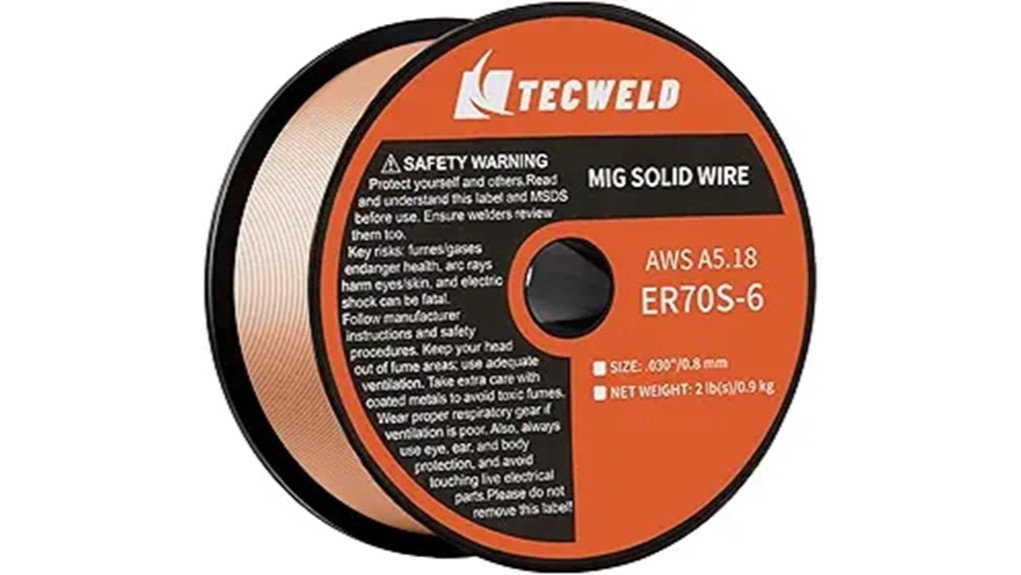
Picking MIG wire is not just about choosing the right diameter. You also need a wire that feeds smoothly, matches your shielding gas, and works with the kind of mild steel repairs you handle most. The Solid MIG Welding Wire ER70S-6 is a 2 lb, .030 in (0.8 mm) solid wire option for gas-shielded MIG welding on carbon steel. This review explains where it fits well, where it has limits, and what you should check before buying.
Quick Verdict
Rating: Recommended with caveats
Best For: DIY welders, auto body work, farm repairs, and light structural steel projects using gas-shielded MIG.
Bottom Line: This ER70S-6 wire makes sense if you want a small spool for mild steel welding with 100% CO2 or 75/25 argon/CO2 gas. The main tradeoff is that it still needs correct machine setup, shielding gas coverage, and clean enough steel for the best results.
| Specification | Detail |
|---|---|
| Product type | Solid MIG welding wire |
| Wire classification | ER70S-6 |
| Wire diameter | .030 in (0.8 mm) |
| Spool size | 2 lb spool |
| Shielding gas | 100% CO2 or 75/25 argon/CO2 |
| Best material match | Mild steel and carbon steel MIG welding |
| Spool design | ABS spool with reinforced rib design, according to the article details |
| Common uses | Auto body repair, sheet metal, structural steel, farm equipment, truck tanks, shafts, and machinery repairs |
| Safety note | Use with the correct MIG machine settings, shielding gas, ventilation, eye protection, gloves, and protective clothing. |
What Is the Solid MIG Welding Wire ER70S-6?
The Solid MIG Welding Wire ER70S-6 is a gas-shielded MIG wire made for welding mild steel and carbon steel. The ER70S-6 classification is popular because it uses higher manganese and silicon deoxidizers than some basic mild-steel wires, which can help when the steel has light mill scale or minor surface contamination.
This product is positioned as a small 2 lb spool in .030 in (0.8 mm) diameter. That size is practical for home garages, occasional repairs, auto panels, and smaller fabrication jobs where you do not need a large industrial spool.
Key Takeaways
- Best fit: Mild steel MIG welding with 100% CO2 or 75/25 argon/CO2 shielding gas.
- Useful diameter: The .030 in (0.8 mm) size works well for many light repair and sheet-metal jobs when your welder supports it.
- Small-spool convenience: The 2 lb spool is easier to store and manage than a large shop spool.
- Surface tolerance: ER70S-6 can handle light contamination better than some lower-deoxidizer wires, but clean metal still gives stronger, cleaner welds.
- Main limitation: It is not for aluminum, stainless steel, flux-core-only machines, or windy outdoor welding without protection.
Before You Buy: Confirm your MIG welder accepts .030 in solid wire and can run shielding gas. This is not self-shielded flux-core wire, so it needs gas coverage to protect the weld puddle.
Who Should Buy It?
Best For
- DIY welders using a gas-capable MIG welder for mild steel repairs.
- Auto body and sheet-metal users who want a manageable .030 in wire size.
- Farm, truck, and equipment repair users who need a small spool for occasional jobs.
Skip If
- You need aluminum, stainless steel, or flux-core wire.
- Your machine only accepts a different wire diameter or spool format.
- You mostly weld outdoors in wind and do not have a way to protect shielding gas.
Performance Features of ER70S-6 Welding Wire
ER70S-6 is known for reliable performance on mild steel because its deoxidizer content helps the weld puddle deal with light rust, oil residue, or mill scale better than some basic wires. That does not mean you should skip prep work. Cleaning the weld area still improves bead appearance, penetration consistency, and long-term joint quality.
The .030 in (0.8 mm) diameter gives you a useful middle ground for many hobby and repair machines. It can work for sheet metal and light fabrication when your wire speed, voltage, polarity, contact tip, and shielding gas flow match your welder’s setup chart.
- Good option for mild steel and carbon steel repairs.
- Works with common MIG shielding gas choices.
- Better suited to light and medium repair work than high-volume production welding.
- Needs correct setup to avoid burn-through, spatter, porosity, or poor fusion.
Gas Compatibility and Applications
This wire is described as compatible with both 100% CO2 and a 75/25 argon/CO2 mix. That gives you flexibility if you already keep one of those gases in your shop. You can usually keep the same ER70S-6 wire when changing between those gas types, but you should still adjust voltage, wire speed, and flow rate for the new setup.
For auto body work and thin sheet, many welders prefer a smoother arc and lower spatter setup. For general repair work, 100% CO2 can be useful when you want deeper penetration on mild steel, though it may create more spatter depending on the machine and settings.
The best uses include auto body panels, brackets, mild steel frames, agricultural repairs, truck tanks, shafts, and construction machinery repairs. Avoid using it on aluminum because aluminum requires a different filler wire, setup, and technique.
Spool Design and Workflow Efficiency
The 2 lb spool format is one of the most practical details for a small shop. It takes less storage space than a larger spool and makes sense if you only weld occasionally or keep different wire types on hand.
The article details describe an ABS spool with reinforced ribs and support for high feed speeds. In daily use, the real benefit is simple: a stable spool can help reduce feeding interruptions when the wire is installed correctly and the drive-roll tension is not too tight.
Pro Tip: Match the contact tip, drive roll groove, and liner condition to .030 in wire before judging the wire. Many feed problems come from worn tips, dirty liners, or incorrect drive-roll tension.
How It Performs in Real Use
For Auto Body and Thin Sheet Metal
The .030 in diameter can work well for auto panels when your machine is set low enough and you use short welds to control heat. This wire will not prevent burn-through by itself, so practice on scrap metal with the same thickness before welding the actual panel.
For Farm and Equipment Repairs
ER70S-6 is useful for mild steel repair work on brackets, frames, equipment guards, and similar parts. It handles light contamination better than some wires, but you should still grind away heavy rust, paint, grease, or oil before welding load-bearing parts.
For Structural Steel Projects
The ER70 strength class fits many mild-steel fabrication jobs, but the wire alone does not guarantee a safe structural weld. Joint design, metal thickness, machine output, prep work, and welding skill all matter.
For Outdoor or Mobile Repairs
You can use solid MIG wire outdoors only when shielding gas is protected from wind. If your repair area is exposed, self-shielded flux-core wire may be easier because gas-shielded MIG can develop porosity when the gas coverage blows away.
Setup Tips Before First Use
- Check polarity: Many solid MIG wire setups use DCEP, but you should follow your welder manual.
- Use the right contact tip: Install a .030 in contact tip for .030 in wire.
- Set drive-roll tension carefully: Too much tension can deform the wire and cause feeding problems.
- Store it dry: Keep the spool away from moisture to reduce rust risk.
- Test before the real weld: Run a bead on scrap steel and inspect for spatter, porosity, and penetration.
Compatibility and Safety
This wire is compatible with MIG welders designed for solid wire and shielding gas. It is not the right choice for flux-core-only machines, aluminum welding, or stainless steel welding unless your setup and filler metal are changed for those materials.
Use proper welding PPE every time. At minimum, you need a suitable welding helmet, eye protection, welding gloves, protective clothing, ventilation, and respiratory protection when conditions require it. Also follow your machine manual, wire label, gas-cylinder instructions, and local safety rules.
Pros and Cons
Pros
- ER70S-6 classification suits many mild steel MIG jobs.
- .030 in (0.8 mm) wire size is useful for sheet metal and light fabrication.
- Works with 100% CO2 or 75/25 argon/CO2 shielding gas.
- 2 lb spool is easy to store for occasional shop, garage, and repair use.
- Higher deoxidizer style helps with light mill scale or minor contamination.
Cons
- Not suitable for aluminum, stainless steel, or flux-core-only setups.
- Gas-shielded MIG can struggle outdoors if wind disrupts shielding gas.
- Small 2 lb spool may not be ideal for high-volume fabrication shops.
Is It Worth the Price?
This wire looks like a strong value for the price if you need a small ER70S-6 spool for occasional mild steel work. You get the convenience of a 2 lb spool, common gas compatibility, and a wire classification that fits many general MIG welding tasks.
It is worth considering if your work includes auto body patches, brackets, light fabrication, and farm repairs. It is not the best fit if you weld every day in a production shop, need a larger spool, or work mostly outside without wind protection.
How It Compares to Alternatives
Compared with ER70S-3 wire, ER70S-6 is often chosen when you want more tolerance for light mill scale or minor surface contamination. Compared with self-shielded flux-core wire, it can produce cleaner results in the right indoor setup, but it requires shielding gas.
If you mainly weld in a garage with gas available, this ER70S-6 spool makes sense. If you weld outdoors, repair dirty metal in the field, or do not want to use a gas cylinder, flux-core wire may be the more practical alternative.
Frequently Asked Questions
What type of welding machine works with ER70S-6 wire?
Use it with a MIG welder that supports solid wire, shielding gas, and .030 in wire. Check your welder manual for polarity, drive roll type, contact tip size, and spool compatibility.
Can you use this wire with 100% CO2?
Yes, the article states that this ER70S-6 wire works with 100% CO2. You may need to adjust voltage, wire speed, and gas flow compared with a 75/25 argon/CO2 setup.
Is ER70S-6 good for auto body repair?
Yes, it can work for auto body repair when your machine settings match the metal thickness. Use short welds, control heat, and practice on similar scrap metal to reduce the risk of burn-through.
Is this wire suitable for aluminum welding?
No. ER70S-6 is for mild steel and carbon steel, not aluminum. Aluminum requires the correct aluminum filler wire, machine setup, shielding gas, and technique.
Can you use ER70S-6 wire outdoors?
You can use it outdoors only if you protect the shielding gas from wind. In open windy areas, gas-shielded MIG can produce porous welds, so flux-core wire may be easier for field repairs.
What safety gear should you use with this MIG wire?
Use a welding helmet with the right shade, welding gloves, protective clothing, eye protection, and good ventilation. Use respiratory protection when fumes, coatings, confined spaces, or shop rules require it.
Who should skip this 2 lb spool?
Skip it if you need a large production spool, a different wire diameter, or a wire for aluminum or stainless steel. Also skip it if your welder cannot run solid wire with shielding gas.
The Bottom Line
The Solid MIG Welding Wire ER70S-6 is a good pick if you want a small .030 in spool for gas-shielded MIG welding on mild steel. Its strengths are gas flexibility, a practical 2 lb size, and useful performance on common repair work, while its limits are outdoor wind sensitivity, material compatibility, and the need for correct machine setup.
Buy it if you work on auto body panels, mild steel brackets, farm equipment, or light fabrication. Skip it if you need aluminum wire, flux-core wire, a larger spool, or a product with verified brand-specific warranty details.