Disclosure: As an Amazon Associate, we earn from qualifying purchases. If you click a link on this page and make a purchase, we may receive a small commission at no extra cost to you.
Plug welding thin automotive panels can get frustrating when the panels move, the weld sticks to the backing surface, or heat burns through the metal. The Steck Manufacturing Plugweld Pliers 23230 are designed to solve that specific problem by clamping panels at the weld point while using a copper alloy backing pad behind the hole. This review helps you decide whether this specialized locking plier is worth adding to your body shop, restoration bench, or MIG welding setup. It offers strong value for repeat plug weld work, but it is not meant to replace your full set of standard clamps.
Quick Verdict
Rating: 8/10
Best For: Auto body technicians, restoration builders, and MIG welders who perform repeated plug welds
Bottom Line: The Steck Manufacturing Plugweld Pliers 23230 give you precise panel clamping and a copper alloy backing pad that helps reduce burn-through and weld sticking. The tradeoff is narrow use: this is a plug welding tool, not a general-purpose fabrication clamp.
Key Specifications
| Specification | Detail |
|---|---|
| Brand | Steck Manufacturing |
| Model | 23230 / STC23230 |
| Product Type | Plug weld locking pliers |
| Material | Copper alloy backing pad with locking plier body |
| Handle Material | Plastic handle material listed by Amazon |
| Item Dimensions | 2 in. L x 1.8 in. W, as listed by Amazon |
| Item Weight | 14.4 oz, as listed by Amazon |
| Package Dimensions | 30.48 x 3.81 x 23.368 cm, as listed by Amazon |
| Package Weight | 0.9 lb, as listed by Amazon |
| UPC | 717290001470 |
| Count | 1 plugweld plier |
| Country of Origin | Taiwan, Province of China, as listed by Amazon |
| Best Use | Automotive plug welding, panel alignment, MIG welding support, and body repair work |
| Safety Note | Manufacturer and Amazon listings include a California Proposition 65 warning. |
What Is the Steck Manufacturing Plugweld Pliers 23230?
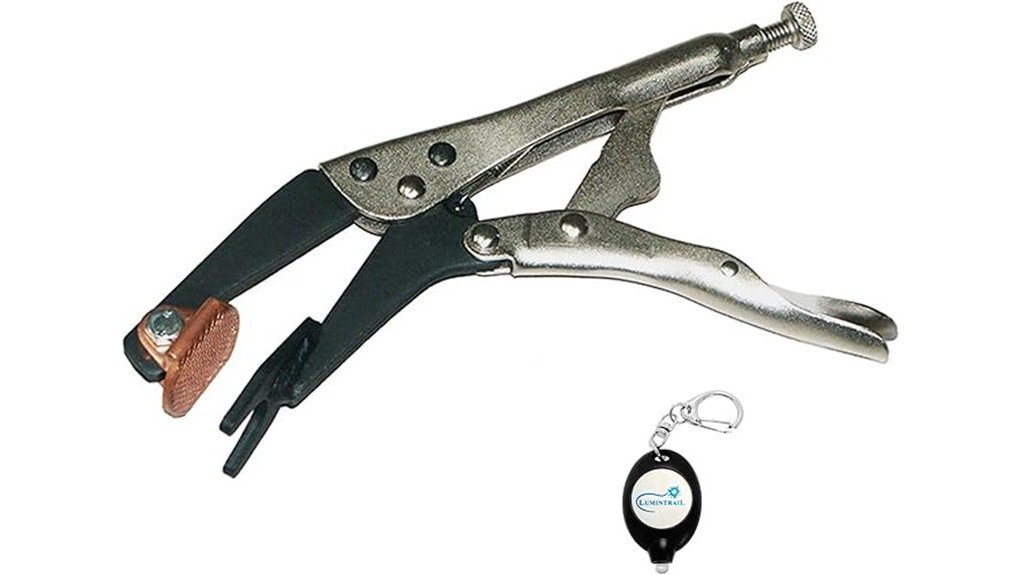
The Steck Manufacturing Plugweld Pliers 23230 are locking pliers built for one main job: holding two panels together while you make a plug weld. The tool places a copper alloy backing pad behind the weld area, so the weld is less likely to stick to the backing surface.
Steck designed this tool for automotive body repair, collision work, and restoration projects where spot weld replacement or plug weld consistency matters. It helps you clamp panels at the exact weld point while still leaving access for your MIG welder.
The main benefit is control. When sheet metal separates during welding, you can end up with poor penetration, uneven welds, or extra grinding work. These pliers help keep the panels tight, so you can focus on heat settings, hole prep, and weld quality.
Who Should Buy It?
Best For
- Auto body technicians replacing spot welds with plug welds
- Restoration builders working on rust repair panels and patch panels
- MIG welders who need better backing support behind plug weld holes
Skip If
- You need a general-purpose welding clamp for many fixture angles
- You rarely perform plug welds or sheet metal panel replacement
- Your project requires a magnetic backing tool or a larger fixture system
Before You Buy: This is a task-specific plug welding plier. Buy it for panel clamping and copper-backed plug weld support, not as a replacement for standard locking clamps, C-clamps, panel clamps, or welding magnets.
Key Features and Build Quality
Copper Alloy Backing Pad
The copper alloy backing pad is the feature that makes this tool different from a basic locking plier. Copper helps resist weld adhesion, so the weld is less likely to stick to the pad after you fill the plug weld hole.
This backing support also helps reduce burn-through risk when you weld thin sheet metal. It does not remove the need for correct welder settings, but it gives you a more forgiving surface behind the weld area.
Precise Panel Clamping
The plier design lets you clamp panels at the same location where you plan to weld. That matters because loose sheet metal can separate when heat enters the panel, especially around drilled plug weld holes.
Better panel contact helps the weld tie into both layers. For restoration and collision work, that can mean cleaner welds, less rework, and a stronger finished joint.
Locking Grip Design
The locking plier format gives you steady pressure without forcing you to squeeze the handles during the weld. This is useful when you need both hands free to position the MIG gun and control your travel speed.
The handle material is listed as plastic, while the tool uses a locking plier body with a copper alloy backing pad. The design is simple, but it fits the job well when you need repeatable clamping pressure.
Single-Tool Package
This listing is for one plugweld plier. That is enough for one weld position at a time, but some shops may want more than one if they regularly work across long seams or large replacement panels.
Compatibility and Safety Notes
The Steck 23230 is best matched with automotive sheet metal plug welding, especially when you use a MIG welder to join overlapping panels. It is not a universal fixture tool, and it may not reach every weld location on a curved panel, boxed section, or tight body cavity.
Use proper welding PPE, including eye protection, gloves, sleeves, and ventilation. The product listings include a California Proposition 65 warning, so review the product label and seller details before use if that warning applies to your buying decision.
Also check your panel thickness, hole size, welder settings, and access before relying on this tool. The copper backing can help with heat control, but it cannot correct poor surface prep, contaminated metal, or an incorrect welding setup.
How It Performs in Real Use
For Auto Body Repairs
In body repair work, these pliers help hold replacement panels, brackets, and overlapping sheet metal tight while you fill plug weld holes. The clamping position helps reduce panel lift, which is one of the common causes of weak plug welds.
For Rust Repair and Restoration
Rust repair often involves thin, uneven metal and patch panels that need careful heat control. The copper alloy backing pad gives you support behind the weld, which can help when you are filling holes near fragile surrounding metal.
For Repetitive Shop Welding
In a shop setting, repeatability matters. Once you get used to placing the pliers, you can clamp, weld, release, and move to the next plug weld without building a larger fixture for every small repair.
For Tight Access Areas
The tool works best when you have room to place the jaws and backing pad behind the weld area. It may be less useful inside closed sections, deep corners, or locations where the plier body blocks your welding gun angle.
Pro Tip: Clean both panel faces, remove paint around the weld area, and test your heat setting on scrap metal before welding the actual panel. The copper backing helps, but clean metal and correct settings still decide the final weld quality.
How to Use It Correctly
Start by preparing the panels the same way you would for any plug weld. Drill or punch the plug weld hole, clean the mating surfaces, and make sure the panels sit flat together before you clamp them.
Place the copper alloy pad behind the weld hole and lock the pliers so the panels stay tight. The pad should support the back side of the weld area without pushing the panels out of position.
After welding, allow the area to cool before moving too quickly along the seam. Working too fast on thin sheet metal can still create heat distortion, even with a backing pad in place.
Common Mistakes to Avoid
- Skipping surface prep: Paint, coatings, rust, and seam sealer can contaminate the weld and reduce penetration.
- Using it as a universal clamp: This tool is made for plug welding, not every fabrication setup.
- Overheating thin metal: The copper alloy pad helps, but you still need the right amperage, wire speed, and timing.
- Ignoring reach and access: Check that the pliers can reach the weld point before you begin fitting the panel.
Pros and Cons
Pros
- Copper alloy backing pad helps reduce weld sticking and burn-through risk
- Clamps panels directly at the plug weld location for better contact
- Supports higher heat and better penetration when used with proper technique
- Useful for automotive body repair, patch panels, and restoration work
- Locking grip helps keep pressure steady during repetitive welds
Cons
- Limited use outside plug welding and panel repair tasks
- Reach and jaw position may not work in every tight body cavity
- Still requires correct weld prep, heat settings, and practice
Is It Worth the Price?
The Steck Manufacturing Plugweld Pliers 23230 make the most sense as a mid-range specialty tool for welders who do plug welds often. If you repair panels, replace rusted sections, or work in a body shop, the tool can save time by improving clamping control at each weld point.
The value comes from the copper alloy backing pad and the focused locking plier design. A standard clamp may cost less and work in more situations, but it will not give you the same plug weld backing support.
Casual users should think carefully before buying. If you only need one or two plug welds for a small project, you may get more value from a basic clamp set unless burn-through control is your main concern.
How It Compares to Alternatives
Compared with standard locking pliers or C-clamps, the Steck 23230 is more specialized and more useful at the exact plug weld location. Basic clamps can hold panels, but they usually do not provide a copper alloy backing surface behind the weld.
Compared with magnetic plug weld tools, these pliers give you mechanical clamping pressure rather than magnetic holding force. A magnetic tool may be easier in some open areas, while the Steck pliers make more sense when you want the panels pulled tightly together at the weld point.
Frequently Asked Questions
What are the Steck Manufacturing Plugweld Pliers 23230 used for?
They are used to clamp overlapping panels during plug welding. The copper alloy backing pad supports the back side of the weld hole and helps reduce weld sticking and burn-through risk.
Can these pliers prevent burn-through completely?
No tool can fully prevent burn-through if the metal is too thin, dirty, or overheated. The copper alloy pad helps reduce the risk, but you still need proper welder settings and clean surface prep.
Will the weld stick to the copper alloy pad?
The product is designed so the weld will not stick to the copper alloy backing pad. That makes it easier to release the tool after the plug weld cools.
Can it replace regular welding clamps?
No. This tool is best for plug welding, while regular welding clamps are better for general fixturing, holding larger parts, and setting broader panel alignment.
Is it suitable for beginners?
Yes, beginners can use it for plug welding practice, especially on automotive sheet metal projects. You should still practice on scrap metal first because technique, heat control, and surface prep matter.
Does it work with MIG welding?
Yes, the tool is commonly used as a support tool for MIG plug welding. It helps hold the panels together while the backing pad supports the weld hole from behind.
Who should skip this tool?
Skip it if you need a broad clamp kit for many welding angles or rarely perform plug welds. It is a smart add-on for repeated panel welding, but it is too specialized for every shop task.
The Bottom Line
The Steck Manufacturing Plugweld Pliers 23230 are a strong choice if you frequently plug weld automotive panels and want better clamping control with copper-backed heat support. They are best for body repair, restoration, and repetitive MIG plug welding, but they are not the right tool for every clamping job.
Buy them if you want cleaner panel contact and less hassle around plug weld holes. Skip them if your work calls for a full fixture system, wide-reach clamps, or a general-purpose clamp set.