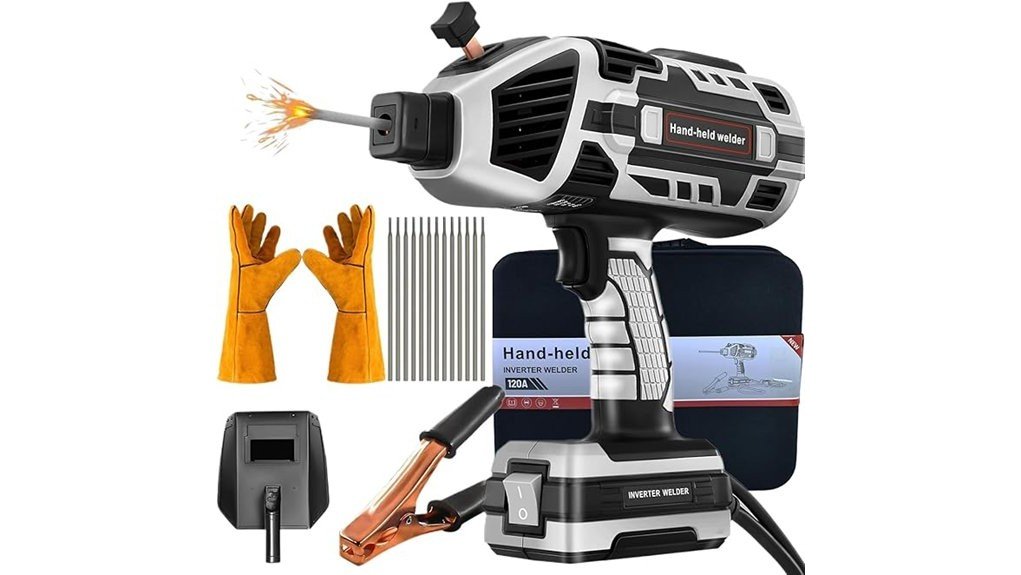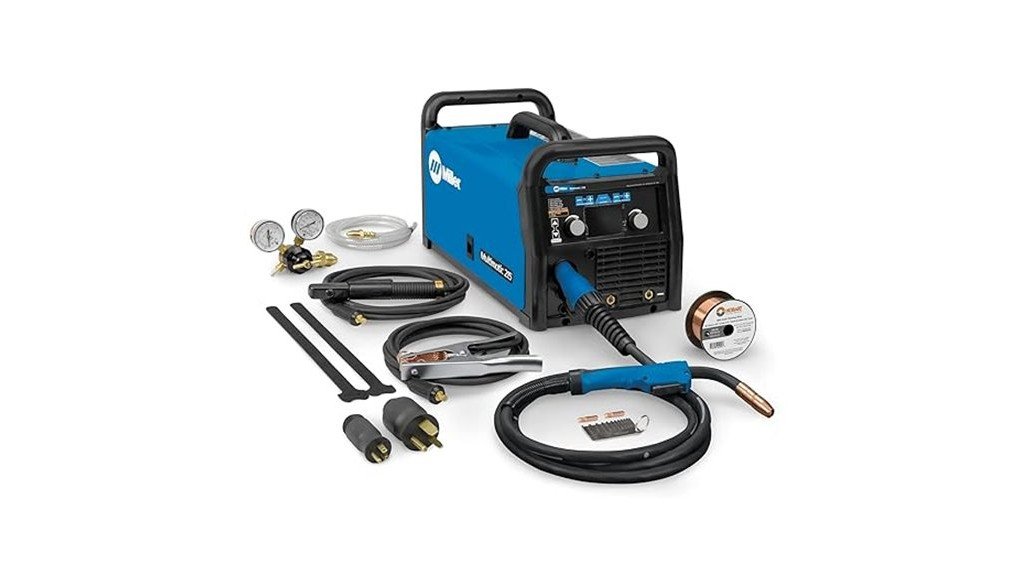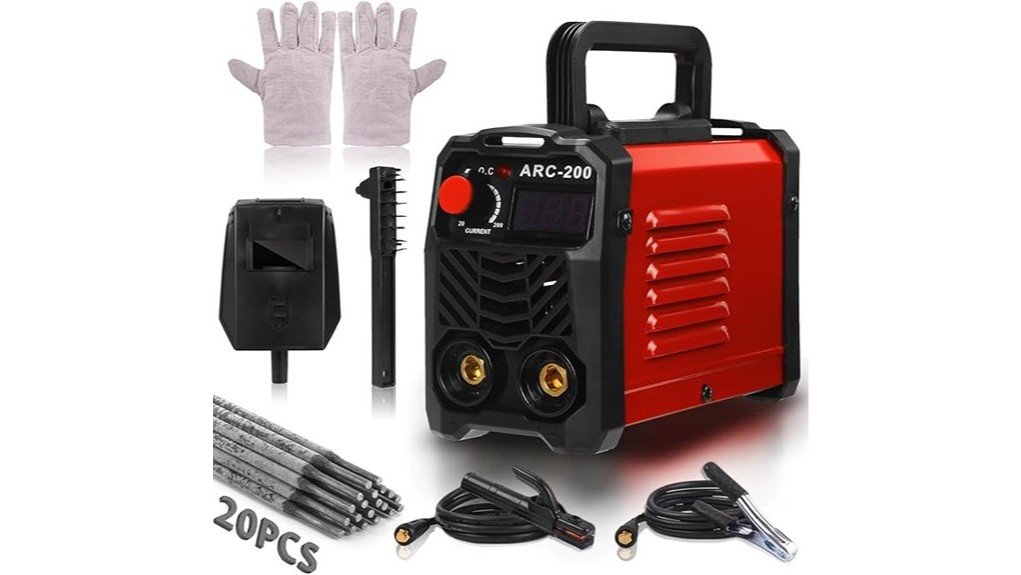
This compact 110V stick welder is a 6.54 lb inverter-style unit listed with an adjustable 10 to 200 A output, a hot start function, an LED current display and overheat protection. It is worth considering as a small, light welder for light repairs, hobby projects and tight spaces. Skip it if you expect to weld thick plate all day, because the real limits depend on duty cycle and your outlet, not just the headline amperage.
This compact stick welder review is based on the Amazon listing and general knowledge of small inverter welders, not hands-on testing. The listing does not name a brand, so verify the seller, manual and warranty before you buy.
Quick specs at a glance
| Item | Detail |
|---|---|
| Type | Portable stick (SMAW) inverter welder |
| Listed output | 10 to 200 A adjustable (treat as a maximum rating) |
| Input | Standard 110V (AC110V) outlet per listing |
| Weight and size | 6.54 lb; about 11.97 x 11.69 x 6.26 in |
| Listed features | Hot start, LED current display, overheat/overcurrent/overvoltage protection |
| Metals | Low-carbon steel and stainless per listing; not for aluminum |
| Listed thickness | Up to about 6.3 mm (roughly 1/4 in); verify against the duty cycle |
What this compact 110V stick welder is and who it suits
It is a lightweight stick welder aimed at beginners and DIY repair. Small inverters like this are easy to carry to a gate, trailer or fence job, and they are popular for occasional steel repairs.
- Good for: light fabrication, gate and trailer repairs, learning stick welding, jobs away from a shop.
- Less suited to: daily production work, heavy structural welds, aluminum, or thick plate without a 230V supply.
How to read the 200 A claim
A 110V household circuit can only deliver so much power. A welder drawing 15 to 20 A from a standard outlet cannot output 200 A continuously. Listings often show a peak or “up to” figure, with much lower usable current at 110V and a short duty cycle.
Look for the duty cycle in the manual or on the rating plate, written like “20% at X amps”. That tells you how many minutes out of ten the welder can run before it needs to cool. If the listing and manual don’t provide it, treat the machine as a light-duty tool.
The listed 6.3 mm thickness is best read as a maximum for a well-prepped joint with multiple passes, not a normal working thickness. For anything structural, use a welder with a documented rating and follow a code-approved procedure.
How to check it fits your setup
- Outlet and breaker: Confirm the plug type and the circuit rating. Use a dedicated circuit if possible, and avoid sharing it with other tools.
- Extension cords: If you must use one, keep it short and heavy gauge; thin cords cause voltage drop and nuisance tripping.
- Rods: Look for what rod sizes the manual supports. Small machines are usually happiest with 3/32 to 1/8 in rods such as 6013 or 7014.
- Accessories: Check that the electrode holder, ground clamp and cables are included and their cable length. A weak ground clamp can ruin the arc.
- Generator use: Only run it from a generator if the manual says so and the generator can supply the input current cleanly.
- Support: Since the brand isn’t named, check the return window and seller support.
Pros and limitations
Pros
- Very light and compact for carrying.
- Hot start helps rods strike; the LED display makes settings easier to repeat.
- Protection circuits help guard the machine against overheating and overload.
Limitations
- Not an aluminum welder; stick welding aluminum is not recommended.
- Limited by 110V power and duty cycle.
- Arc stability at low settings can feel less refined than on a branded unit, a common concern with budget inverters.
- Unknown brand means warranty and parts availability are uncertain.
Using it safely
- Use a rated auto-darkening helmet (typically shade 10 to 13 for stick) and leather gloves.
- Keep rods dry; low-hydrogen rods such as 7018 need dry storage.
- Clear flammables; slag and spatter travel.
- Ventilate, especially on stainless or coated steel.
- Let the machine cool when the overheat light comes on instead of bypassing it.
- Practice on scrap before welding anything load-bearing.
Alternatives and related guides
- AWT 155A mini stick welder review: a similar compact unit with a different rating
- Forney Easy Weld 100 ST review: a branded entry-level stick welder
- YesRight 200A mini stick welder review: another small 200A-listed machine
- E6013 welding rod review: an easy rod for small stick welders
Frequently Asked Questions
Can a 110V stick welder really output 200 amps?
Not continuously. A standard household circuit limits input power, so listed maximums are peak figures and usable current is lower, with a limited duty cycle. Check the manual for the duty cycle at 110V before relying on the 200 A number.
What rods should I use with a compact stick welder?
Small inverters usually run 3/32 to 1/8 in rods such as 6013, 7014 or 6011 well, but confirm in the manual. Choose rods by metal thickness and joint, and keep low-hydrogen rods dry.
Can this welder weld aluminum?
No. It is a stick welder for steel and stainless per the listing. Aluminum needs TIG with AC or MIG with a spool gun and argon, so choose different equipment for aluminum work.
Is a compact stick welder good for beginners?
It can be. Hot start and a digital display make setup easier and the light weight is convenient. Beginners should still practice on scrap, wear full PPE and avoid structural or safety-critical welds.
Final verdict
This compact 110V stick welder is a light, convenient option for small repairs and learning, as long as you treat the 200 A figure as a maximum and respect the duty cycle. Confirm the brand, warranty and cable package on the listing before buying.